
TL;DR

Get coffee and tea gear delivered free — and shop member deals
- Fast, free delivery on millions of items
- Access to Prime Big Deal Days deals on October 6–7
- Prime Video, Amazon Music and more included
Espresso depends on three key variables: grind size, brew ratio, and shot time. By adjusting these in a structured way, you can troubleshoot common issues and create consistently great espresso. Focus on taste and small tweaks rather than chasing perfect numbers alone.
Ever poured a shot of espresso that tasted flat, bitter, or sour, and wondered what went wrong? The secret isn’t just in the beans. It’s in how you control three key variables: grind size, brew ratio, and shot time.
Think of these three as corners of a triangle—each one influences the others. Mastering their relationship turns the sometimes intimidating process of espresso into a straightforward puzzle you can solve. Whether you’re a home barista or behind a busy café line, understanding this triangle makes dialing in your shot faster, more predictable, and more delicious.
Treat grind size, brew ratio, and shot time as interconnected clues, not isolated targets.
Make small adjustments—quarter turns on the grinder or slight changes in dose—and taste after each change.
Use taste as your ultimate guide, not just shot time or numbers.
Keep detailed notes to recognize patterns and improve consistency over time.
Remember: balance is key. When one variable shifts, others respond. Aim for harmony, not perfection.
The Espresso Triangle: Grind, Ratio & Time Made Simple
Three connected variables shape every shot you pull. Learn to read grind size, brew ratio, and extraction time as one balanced system—and turn frustrating shots into a solvable, repeatable puzzle.
Grind · Ratio · Time
Classic starting ratio — 18g in, 36g out
Typical shot window — a clue, not a rule
Three Corners, One Triangle
Each corner of the espresso triangle influences the other two. A too-fine grind slows flow and can push a shot bitter; a coarse grind speeds water through, leaving it thin and sour. Adjust one corner, and the others respond—so change one variable at a time.
Grind Size
Your most precise and immediate lever. Finer grounds increase surface area and slow water flow, extracting more. Coarser grounds speed water through the puck, extracting less.
Sour & fast → go finer · Bitter & slow → go coarserBrew Ratio
Dry coffee weight versus espresso yield. An 18g dose producing 36g of espresso is a 1:2 ratio. Lower ratios taste concentrated and intense; higher ratios are lighter and more delicate.
Weak & watery → lower ratio · Harsh → raise the ratioShot Time
A diagnostic indicator of how well your parameters are balanced—not a flavor target by itself. Fast shots point to coarse grind or low dose; slow shots to fine grind or a tight puck.
Time explains · Grind & ratio fix · Taste decidesThe Grind Spectrum
Grind size is a tradeoff between flavor complexity and manageability. Move along the spectrum in small, deliberate steps—about a quarter turn on the burrs—tasting after each change.
Incremental rule: a finer grind boosts complexity but may demand changes in time and dose; a coarser grind is easier to manage but risks weak, watery shots. Puck density and bean freshness also affect flow—so taste, note, repeat.
Brew Ratios at a Glance
The ratio changes extraction dynamics: concentrated shots pull more oils and solids for fuller body; longer yields highlight brightness and clarity. Measure dose and yield precisely every time.
| Ratio | Example (18g dose) | Profile | Body | Risk if unbalanced |
|---|---|---|---|---|
| 1:1 | 18g → 18g out | Ristretto — intense, syrupy, bold | ●●● Very full | ✗ Bitterness if overdone |
| 1:2 | 18g → 36g out | Classic balanced espresso — the starting point | ●● Full | ~ Forgiving, versatile |
| 1:3 | 18g → 54g out | Lungo — lighter, brighter, delicate | ●○ Lighter | ✗ Sourness if too long |
Shot Time: A Clue, Not a Goal
Shot time tells you how water is flowing through the puck. Read it alongside taste and visual cues—your palate is the final judge, not the stopwatch.
“Shot time is a helpful clue—but good shots can fall outside the textbook range. Let flavor decide when the shot is right.”
Putting It All Together
Treat the three corners as a balanced equation. Start from a repeatable baseline, pull, taste, and adjust one variable at a time—keeping notes so patterns emerge over sessions.
Set Baseline
18g dose, 1:2 ratio, target ~25–30s. Weigh everything.
Pull & Taste
Sour, bitter, weak, or harsh? Let the cup tell you.
Diagnose
Fast + sour = coarse / low dose. Slow + bitter = fine / tight puck.
Adjust One
¼-turn on the grinder or a small ratio change. Nothing else.
Log & Repeat
Record time, ratio, and taste. Consistency compounds.
Under-extracted
Shot ran fast? Grind finer or extend the yield slightly. Consider a small dose increase if flow stays quick.
Over-extracted
Shot ran slow? Coarsen the grind or shorten the yield. Watch for dryness and harshness creeping in.
What Exactly Is the Espresso Triangle & Why Does It Matter?
The espresso triangle is a simple way to visualize how grind, ratio, and time work together to shape your shot. If one corner is off, the others are affected. For example, a too-fine grind slows water flow, which can make your shot bitter or over-extracted. Conversely, a coarse grind speeds it up, risking a weak, under-extracted shot.
Understanding why these variables are interconnected helps you make smarter adjustments. For instance, if your shot pulls too quickly, tweaking the grind finer might be necessary, but you also need to consider if your dose or extraction time needs adjustment. Each change you make impacts the others, and recognizing this interplay helps prevent over-corrections that can lead to inconsistent results.
This model helps you troubleshoot: if your shot tastes off, tweak one variable, then taste again. It’s a straightforward way to take control—no more guesswork at the espresso machine.
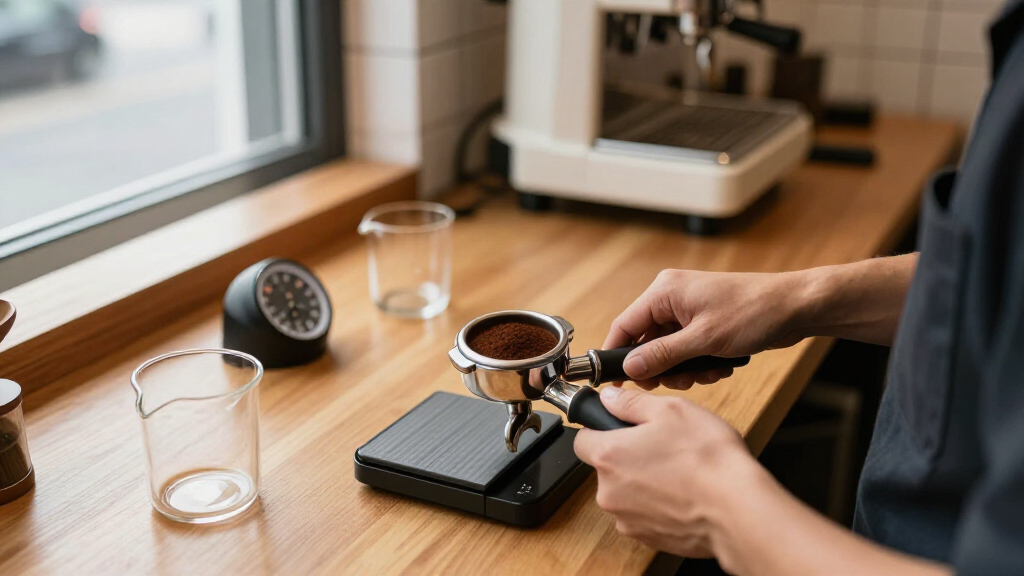
espresso grinder with adjustable grind size
As an affiliate, we earn on qualifying purchases.
As an affiliate, we earn on qualifying purchases.
How to Adjust Your Grind Size Without Ruining Your Shot
Adjusting your grind size is the most common first step when dialing in espresso. But why does a small change matter so much? Because grind size directly influences how water interacts with coffee particles. A finer grind increases surface area, slowing water flow and allowing more extraction. This typically enhances flavor if your shot was previously under-extracted, but going too fine can cause clogging or bitterness. Conversely, a coarser grind speeds water through the puck, risking under-extraction and sourness.
Understanding this tradeoff is crucial: a finer grind can improve flavor complexity but may require adjustments in shot time and dose to avoid over-extraction. Coarser grinds can lead to weak, watery shots but are easier to manage and less prone to clogging. The key is incremental changes—small, deliberate adjustments—so you can observe the effects without overshooting your target.
For example, if your shot pulls too quickly and tastes sour, try a slightly finer grind—just a quarter turn on your burrs—and taste again. If it takes too long and tastes bitter, coarsen the grind slightly. Recognizing the balance between grind size and extraction helps you develop a more intuitive sense of your equipment and beans, leading to more consistent results over time.
Remember, other factors like puck density or coffee freshness influence flow, but grind size remains your most precise and immediate control point. Small, thoughtful tweaks—like a quarter turn—are your best strategy for fine-tuning flavor without introducing new issues.
As an affiliate, we earn on qualifying purchases.
Mastering Brew Ratio: Your Shortcut to Consistency
Brew ratio is the relationship between the amount of dry coffee you start with and the final espresso weight. For example, using 18 grams of coffee to produce 36 grams of espresso is a 1:2 ratio. This ratio influences the strength, flavor concentration, and body of your shot. A lower ratio (more concentrated) generally results in a richer, more intense flavor, while a higher ratio (more diluted) produces a lighter, more delicate profile.
Why does this matter? Because adjusting the brew ratio changes the extraction dynamics. A more concentrated shot (lower ratio) extracts more oils and solids, leading to a fuller body and often more bitterness if overdone. A higher ratio can highlight brightness and clarity, but risks under-extraction if not balanced properly.
Consider your desired flavor profile: if your shot feels weak or watery, lowering the ratio—using more coffee or less water—can intensify the flavor. If it’s too bitter or harsh, increasing the ratio—more water or less coffee—can smooth out the profile. The key is consistency: measure your coffee and yield precisely each time, then tweak based on taste. This disciplined approach allows you to develop a reliable process tailored to your preferences and equipment.
Keep in mind that personal taste and bean type influence what ratios work best. Experiment with small adjustments, and over time, you’ll discover the optimal balance for your ideal espresso.
As an affiliate, we earn on qualifying purchases.
Time Is the Clue, Not the Goal: Why Shot Duration Matters
Shot time—usually 25 to 30 seconds—is a helpful clue, but not a strict rule. It’s how long water interacts with the coffee, affecting extraction and flavor. A shot pulling in less than 20 seconds often indicates under-extraction, leading to sour, thin, or weak flavors. Beyond 35 seconds, it risks over-extraction, which can bring out bitterness, dryness, and harshness.
Why does shot time matter? Because it’s a practical indicator of how well your parameters are balanced. A very fast shot often suggests your grind is too coarse or your dose too low, causing water to pass through too quickly. A slow shot indicates a fine grind or tight puck, leading to over-extraction. Recognizing these patterns helps you make targeted adjustments.
Use shot time as a guide, but always pair it with tasting and visual cues. If your shot is too fast and sour, try a finer grind or increase the dose slightly. If it’s too slow and bitter, coarsen the grind or reduce the dose. Small, deliberate tweaks—based on both flow and taste—are your best tools for dialing in a balanced shot.
Practicing with a timer helps you develop a sense of the flow and how it correlates with flavor. Remember, shot time is a helpful clue, but your palate and visual cues are equally important for fine-tuning your espresso.
As an affiliate, we earn on qualifying purchases.
Putting It All Together: The Perfect Espresso Formula
Now that you know the three corners—grind size, brew ratio, and shot time—it’s time to see how they work together. Think of them as a balanced equation: adjust one, and the others will respond. The goal is harmony, where flow, flavor, and strength align. Understanding this interplay allows you to anticipate how changes in one variable will influence the others, helping you avoid common pitfalls like over-extraction or under-extraction.
Here’s a quick step-by-step to dial in your shot:
- Start with a baseline—say, 18 grams of coffee, 1:2 ratio, 25 seconds.
- Pull a shot and taste. Is it sour, bitter, weak, or harsh?
- If sour or underdeveloped, go finer or extend the yield slightly, considering how the variables interact.
- If bitter or over-extracted, coarsen the grind or shorten the shot, keeping in mind how these changes affect flow and flavor.
- Adjust one variable at a time, keep notes, and repeat. Recognize that small tweaks can have significant effects, and patience is key to understanding how your specific setup responds.
This systematic approach transforms espresso dialing from a guessing game into a science. Over time, you’ll develop an intuitive sense of how each variable influences the others, enabling you to produce consistently balanced and flavorful shots with confidence.
Frequently Asked Questions
What does a 1:2 ratio really mean?
A 1:2 ratio means you start with 18 grams of coffee and end up with 36 grams of liquid espresso. It’s a way to control strength and extraction, with shorter ratios (like 1:1.5) being more concentrated and longer ones (like 1:3) lighter and more delicate.
Start timing as soon as you activate the pump. This captures the full extraction process, from first contact to the end. Watching the flow and tasting the shot afterward helps you understand how timing relates to flavor.
How fine should I grind for espresso?
It depends on your machine and beans, but generally aim for a texture similar to powdered sugar—fine enough to slow water flow but not so fine it causes clogging. Adjust slowly, tasting along the way.
Why does my shot run too fast or too slow?
Fast shots usually mean a coarse grind, a low dose, or a weak puck. Slow shots often result from too fine a grind, a tight puck, or too high a dose. Adjust grind size first—small, incremental changes are best.
Can I make good espresso without high-end equipment?
Yes. Even with a basic machine, understanding and controlling the triangle—especially grind and ratio—can dramatically improve your results. Focus on consistency, taste, and small tweaks.
Conclusion
Mastering the espresso triangle transforms a complex process into a manageable puzzle. Instead of chasing arbitrary numbers, you focus on the flavor and flow. With patience and small tweaks, you’ll produce espresso that’s rich, balanced, and consistently delicious.
Next time you pull a shot, think of the triangle—adjust one corner, listen to what your taste buds tell you, and enjoy the journey of perfecting your brew. Your best espresso is just a small turn away.
FALL Fall Picks
fall essentialsfall essentials
As an affiliate, we earn on qualifying purchases.