
TL;DR

Get coffee and tea gear delivered free — and shop member deals
- Fast, free delivery on millions of items
- Access to Prime Big Deal Days deals on October 6–7
- Prime Video, Amazon Music and more included
Grind size directly impacts how water flows through your coffee, shaping flavor and extraction. Small tweaks can turn a flat shot into a balanced, sweet espresso. Focus on taste and consistency for best results.
Ever notice how some shots taste bright and sharp, while others are full-bodied and smooth? That’s often down to one invisible hero: grind size. It’s like the secret dial you can turn to shape every cup—yet it’s usually the last thing people adjust.
Most baristas and home enthusiasts focus on tamping pressure or dose, but your grinder’s grind size holds the key to unlocking flavor. Small changes here can shift your shot from sour and thin to sweet, balanced, or even bitter. Understanding how grind size works means you’re in control, not just guessing or chasing numbers.
Treat grind size as the main flavor control—small adjustments make a big difference.
Adjust grind only after setting dose and other variables, not before.
Taste, not just timing, guides your perfect shot.
Coarse to fine, tweak gradually—record each step.
Remember, freshness and roast influence how your grind should be set.
Espresso Field Notes · Extraction 01
Grind Size Is the Hidden Dial Behind Espresso Flavor
A small change at the grinder can redirect water through the puck—and shift a shot from sharp and thin to sweet, balanced, or harsh. Learn to adjust with a steady recipe and your palate in the lead.
At a glance
The grinder shapes the path through the puck.
Finer grounds generally create more resistance and slow water; coarser grounds generally let it pass faster. That changes how extraction develops, so a small adjustment can alter sweetness, body, and sharpness. These are useful clues, not guarantees: dose, distribution, roast, freshness, and grinder design also matter.
From grind setting to what you taste
Think of the setting as a starting point. Aim for steady flow and a flavor you enjoy.
Fast, often sharp
Less resistance can let water move quickly. The cup may taste sour, watery, or underdeveloped. Try a slightly finer setting and taste again.
Balanced flow
A fine, even grind creates useful resistance without choking the shot. Look for a satisfying balance of sweetness, body, and clarity.
Slow, possibly harsh
Excess resistance can stall flow or contribute to uneven extraction. If the shot tastes bitter or dry, try a small move coarser.
Fine versus coarse: a cup-side comparison
Directionally useful patterns. Coffee and puck preparation can change the result.
| What changes | Finer grind | Coarser grind |
|---|---|---|
| Water flow | ↓Usually slower; more resistance | ↑Usually faster; less resistance |
| Extraction tendency | More contact and extraction potential | Less contact and extraction potential |
| Possible taste clue | ~Rich, intense; may turn bitter or dry | ~Bright; may turn sour or weak |
| When pushed too far | !Choking, uneven flow, or channeling | !Thin body and underdeveloped flavor |
A repeatable four-step dial-in
Keep the recipe steady so each grind adjustment gives you useful information.
Choose dose and yield
Start with a repeatable dose and a target such as a 1:2 ratio by weight.
Keep prep consistent
Maintain dose, yield, tamp, and puck preparation while you adjust.
Adjust one small step
Fast and sharp? Try finer. Very slow and harsh? Try coarser.
Keep what works
Record the setting and flavor. Let preference—not a universal timer—decide.
Grind is one part of a connected recipe
Changing several variables at once makes it harder to learn what improved the cup.
Dose & yield
A dose or target yield change affects the puck and the balance in the cup. Keep both consistent while dialing in grind.
Distribution & tamp
Uneven preparation can create weak spots and channeling. Grind changes alone may not fix inconsistent puck prep.
Freshness, roast & pressure
Different coffees and machines respond differently. Re-dial when the coffee changes; treat pressure and temperature as additional variables.
Small habits make better adjustments
Build a clear feedback loop instead of chasing a magic grinder number.
Change one setting
Adjust grind in small increments and keep the rest of the recipe steady.
Measure and record
Use a scale for dose and yield. Log settings, shot behavior, and what you taste.
One setting for every coffee
Freshness, roast, and grinder design affect how a coffee behaves. Re-dial when the beans change.
Timing as the only verdict
Shot time and appearance offer clues, but they cannot tell you whether the flavor is right for you.
Quick answers for the next shot
Use these cues as a place to start, then taste and adjust.
How fine should espresso be?
Fine enough to create resistance for your recipe, while still allowing steady flow. The right setting varies by grinder and coffee.
Why does my shot taste sour?
A fast, sharp shot can point to under-extraction. Try a small move finer, while keeping other variables steady.
Why does it taste bitter or dry?
A very slow shot may be a clue to excess resistance or extraction. Try slightly coarser and taste again.
Should I change grind or dose first?
Choose and hold a consistent dose first, then use small grind adjustments to tune the flow and flavor.
Can grind size fix channeling?
Not by itself. Check distribution and puck preparation; channeling can persist even when the grind seems suitable.
Do grinder numbers transfer?
No universal setting exists. Different grinder designs and particle distributions mean the same number can produce different grounds.
The takeaway
Turn the dial slowly. Let the cup answer.
Keep your recipe consistent, make one small grind change, and taste the result. The best shot is not just a number on a timer—it is the balance you enjoy.
Why Grind Size Is the Most Powerful Flavor Switch You Have
Grind size controls how water interacts with your coffee. Finer grounds increase resistance, slowing water down and giving it more time to extract flavor. Coarser grounds let water pass quickly, often resulting in underdeveloped taste.
Imagine pouring syrup versus water through a sponge. The syrup (finer grind) takes longer to seep through, extracting rich flavors. Water (coarser grind) moves fast, often missing out on sweetness and body.
For example, a shot with a too-fine grind might choke the machine, producing a bitter, over-extracted brew. Conversely, a too-coarse grind leads to a weak, sour shot that lacks body. The art lies in finding that sweet spot where flow and extraction balance perfectly.
Why does this matter? Because the flow rate dictated by grind size influences what compounds are extracted and in what quantities. Too fast, and you risk under-extraction—missing out on sweetness and complexity. Too slow, and over-extraction introduces bitterness and dullness. The tradeoff is precision: small adjustments can dramatically shift the flavor profile, giving you control over the final taste.
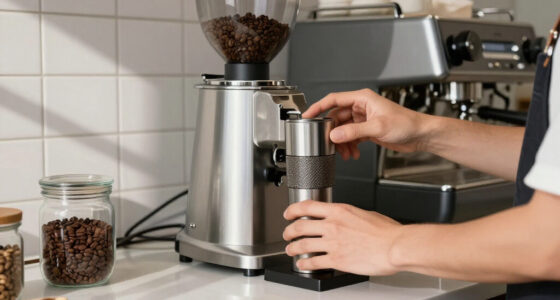
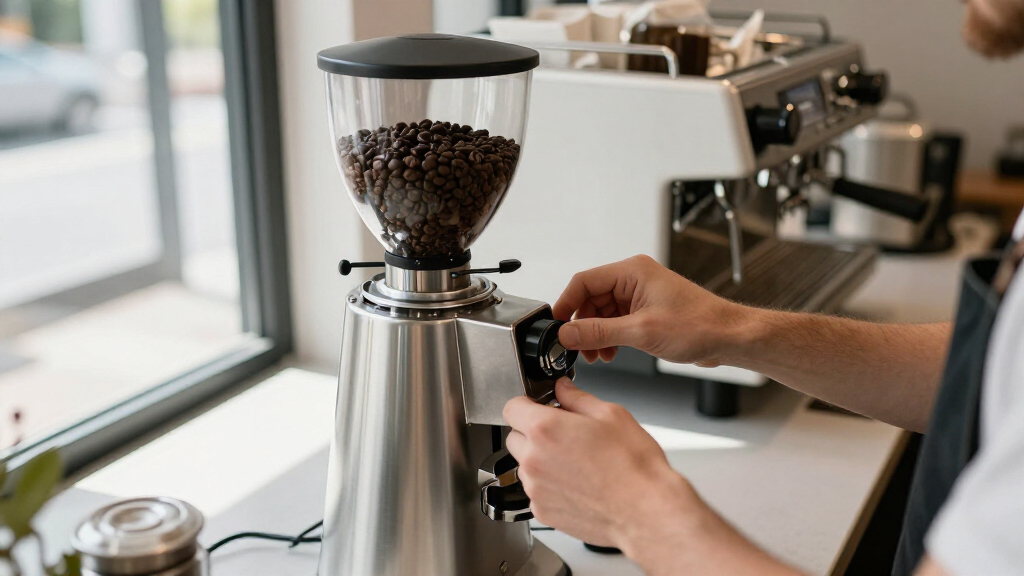
espresso grinder with grind size adjustment
As an affiliate, we earn on qualifying purchases.
As an affiliate, we earn on qualifying purchases.
How to Tell If Your Grind Size Is Right Without Guesswork
Timing helps, but taste rules. Here’s a simple method to dial in your grind size:
- Set your dose and target yield, like a 1:2 ratio.
- Keep your tamp, dose, and machine temperature steady.
- Adjust the grind in small steps—finer if the shot is fast and sour, coarser if it’s slow and bitter.
- Record each change and taste. Small differences tell the story.
Why does this method work? Because the timing and taste together reveal how the grind interacts with other variables. A shot pouring too quickly and tasting sour indicates under-extraction, often due to too coarse a grind. Conversely, slow pouring with bitter notes suggests over-extraction, often caused by too fine a grind. Fine-tuning based on these cues allows you to find that sweet spot where flow and flavor align naturally, giving you consistent results over time.
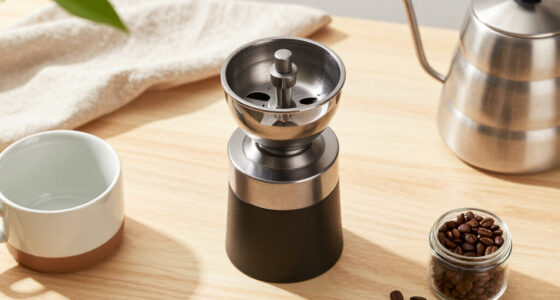
manual coffee grinder for espresso
As an affiliate, we earn on qualifying purchases.
As an affiliate, we earn on qualifying purchases.
The Relationship Between Grind Size and Other Brew Variables
Grind size doesn’t work alone. It interacts with dose, tamping, temperature, and pressure. Changing one variable can shift the entire flavor profile.
For example, increasing the dose without adjusting grind size can lead to over-extraction, resulting in a bitter and heavy cup. Conversely, a finer grind may require a shorter shot time to prevent bitterness. These interactions are crucial because they highlight the interconnected nature of brewing; a change in one area can ripple through the entire process, affecting flavor, body, and clarity. Recognizing these tradeoffs helps you develop a more nuanced approach—understanding that optimizing your espresso involves balancing multiple variables simultaneously for harmony.
Think of your espresso as a puzzle—each piece affects the others. Adjusting grind size is often the first step, but always consider the whole picture to achieve a well-rounded shot.
As an affiliate, we earn on qualifying purchases.
Comparison Table: Fine vs. Coarse Grind — What Happens in Your Cup
| Feature | Fine Grind | Coarse Grind |
|---|---|---|
| Flow Rate | Slower, more resistance | Faster, less resistance |
| Extraction Time | Longer, more extraction | Shorter, less extraction |
| Flavor Profile | Rich, full-bodied, sometimes bitter | Bright, sour, weak |
| Choking Risk | High if too fine | Low |
As an affiliate, we earn on qualifying purchases.
Practical Tips for Perfecting Your Grind Size
- Start with the manufacturer’s recommended setting. Adjust in tiny increments.
- Use a scale to keep your dose consistent.
- Record each change to track what works best.
- Pay attention to taste. Don’t just rely on shot timing.
- Remember, freshness and roast level influence how fine or coarse your grind should be.
For example, a dark roast might need a slightly coarser grind than a light roast for balanced extraction.
Common Mistakes That Wreck Your Grind and How to Fix Them
Many struggle because they assume a single grind setting works for all coffees or ignore subtle taste clues. Here are typical pitfalls:
- Chasing a perfect shot by changing too many variables at once. Fix: adjust one thing, usually grind size first.
- Using a grind that’s too fine, causing channeling or stalls. Fix: go coarser until flow improves.
- Ignoring taste and relying only on shot time. Fix: taste every shot and adjust accordingly.
For example, if your espresso stalls or tastes overly bitter, try a coarser grind first—often the simplest fix.
Frequently Asked Questions
How fine should espresso be ground?
Espresso should be ground fine enough to create resistance without stalling the shot or causing channeling. Typically, it’s similar to table salt, but this varies by grinder and coffee. Adjust until the shot flows steadily and tastes balanced.Why is my espresso sour?
A sour taste usually means under-extraction, often caused by a grind that’s too coarse or shot timing that’s too quick. Try a slightly finer grind and taste again. Remember, other factors like roast level also matter.Why does my espresso taste bitter?
Bitterness often results from over-extraction, which can happen with a grind that’s too fine or a shot that runs too long. Coarsening the grind slightly or shortening the shot can help balance flavors.Should I change grind size or dose first?
Start by adjusting the grind size while keeping the dose and other variables steady. Once the shot flow and flavor improve, you can fine-tune dose or other factors if needed.Can grind size fix channeling?
Finer grind alone rarely solves channeling, which is often caused by uneven distribution or poor puck prep. Ensuring a level, well-tamped puck is crucial before adjusting grind size.Conclusion
Your grinder’s grind size is like a secret sauce for espresso. Small, thoughtful tweaks hold the power to unlock sweetness, balance, and richness in every shot. Instead of chasing numbers or timing, trust your palate—let the taste tell you when it’s just right.
Next time you pull an espresso, think of grind size as your hidden dial. Turn it slowly, taste deeply, and enjoy the richer, more layered flavors you create. The perfect shot isn’t just a number—it’s a story your senses tell.
Fall Picks
fall essentials
As an affiliate, we earn on qualifying purchases.