
TL;DR

Get coffee and tea gear delivered free — and shop member deals
- Fast, free delivery on millions of items
- Access to Prime Big Deal Days deals on October 6–7
- Prime Video, Amazon Music and more included
Flat and conical burrs each have unique advantages, but their impact on flavor depends more on burr quality, alignment, and brewing style. Neither shape guarantees better coffee—context matters.
Ever wonder why coffee fanatics get into heated debates over burr shapes? It’s not just about tradition or brand loyalty. The real story is about how these shapes influence grind consistency, extraction, and ultimately, flavor.
In this guide, you’ll learn what makes flat and conical burrs different, why the arguments persist, and how to choose the right grinder for your brewing style. Spoiler: shape matters less than you think, but understanding the nuances can make your coffee taste way better.
Burr shape alone doesn’t determine coffee flavor—quality, alignment, and maintenance matter more.
Flat burrs excel in espresso for their uniformity, but conicals can produce richer, fuller-bodied cups for pour-over or drip.
Size and speed influence heat and grind time, impacting flavor; bigger and faster isn’t always better.
Regular cleaning and proper calibration keep your burrs performing at their best, regardless of shape.
Choose a grinder based on your brewing style, budget, and how much control you want, not just burr shape.
Coffee mechanics · A field guide
Burrs Explained: Flat, Conical, and Why Coffee People Argue About Them
Two shapes, plenty of opinions. Learn how burr geometry, alignment, and your brew method shape the cup—and why shape alone cannot pick a winner.
Two shapes, two grinding paths
Both burr types cut beans between moving and stationary surfaces. Their construction differs, but neither shape guarantees a particular flavor.
Flat burrs · Facing discs
Beans travel outward
Two ring-shaped discs face one another. One rotates while the other stays still, drawing beans through the teeth and out toward the edge. Flats are often associated with uniformity and clear flavor separation, especially in espresso.
Conical burrs · Nested surfaces
Beans move downward
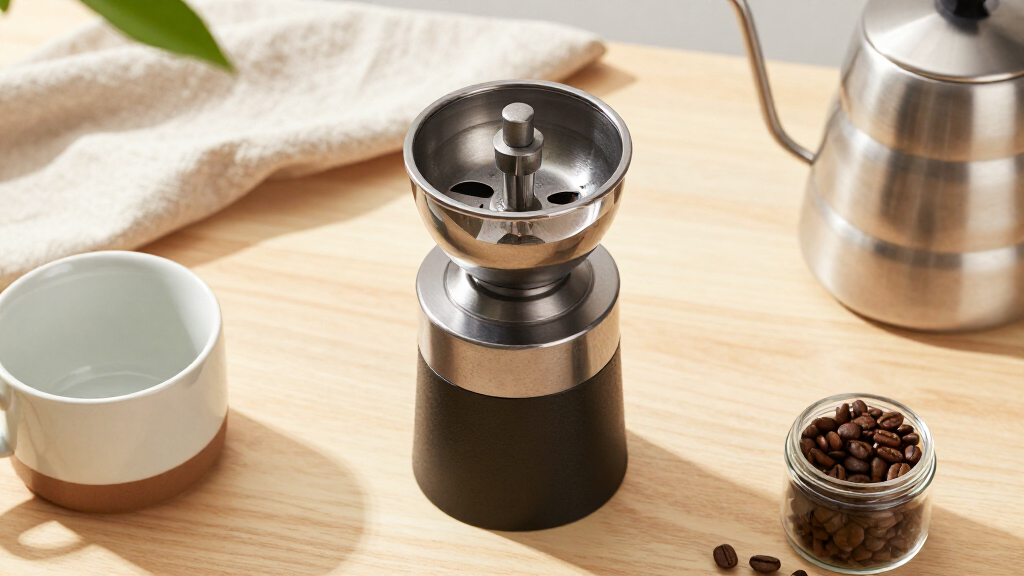
A cone-shaped inner burr rotates inside a stationary outer burr. Beans pass through the cutting surfaces and fall below. Conicals range from hand grinders to commercial machines and can be precise when well designed.
Beans enter the burr set.
Teeth break beans into particles.
Particle sizes affect extraction.
Recipe turns grounds into flavor.
Why the debate sticks
Some drinkers report that flats bring clarity and separation, while particular conical grinders bring body or sweetness. Those are reported tendencies, not dependable rules.
What fans often say
Flat burrs can make flavors feel distinct and focused. Conical burrs can make a cup feel fuller or more blended. Different people may taste the same coffee differently.
What changes the result
Tooth geometry, alignment, particle distribution, roast, and recipe all shape extraction. Grinder settings may differ even when two grinders reach a similar extraction.
The marker represents variation: grinder design and brewing choices can shift the cup across this spectrum.
What matters beyond shape
A grinder is a system. These factors can change consistency, flavor, and everyday workflow as much as the burr category.
| Factor | What to look for | Why it matters |
|---|---|---|
| Burr geometry | Tooth height, angle, spacing, and sharpness | Shapes how beans are cut and particle sizes are distributed. |
| Alignment | Even contact and consistent manufacturing | Poor alignment can create uneven grounds and extraction. |
| Size & speed | Grinding time, heat management, and batch size | Can affect workflow and heat; bigger is not automatically better. |
| Grinder design | Motor, retention, adjustment, and build quality | Influences control, convenience, and consistency. |
| Upkeep | Cleaning, calibration, and wear | Dirty or dull burrs can reduce performance over time. |
Choose for the coffee you make
Both shapes can work well across brew methods. Start with the grinder’s quality and adjustment range, then weigh workflow and budget.
For espresso
Prioritize fine control
Look for precise, repeatable adjustment and consistent grinding. Flat and conical burr grinders can both make excellent espresso when the grinder is well built and calibrated.
For filter brewing
Balance cup and workflow
Consider the particle distribution and workflow you prefer. Try the grinder with your beans and recipe; shape alone cannot promise clarity, body, or sweetness.
Keep beans, roast, dose, water, and recipe as consistent as possible. Dial in each grinder separately, then compare the cups. Clean and calibrate regularly, and follow the maker’s guidance for burr wear and replacement.
The five takeaways
A quick checklist for cutting through the burr arguments.
Shape alone does not determine flavor. Quality, alignment, and maintenance count.
Flats are often linked with uniformity; conicals with body. Neither outcome is guaranteed.
Size and speed affect time and heat, but bigger or faster is not always better.
Cleaning and proper calibration help keep any burr set performing well.
Choose for your brew style, budget, and preferred level of control.
What Exactly Are Flat and Conical Burrs? Here’s the Difference in a Nutshell
Flat burrs are two ring-shaped discs that face each other, with the beans getting crushed between them. One disc stays still, while the other spins, slicing beans into smaller pieces. Conical burrs feature a cone-shaped inner burr that rotates inside a stationary outer burr, pulling beans inward and grinding them as they fall through.
Imagine a flat burr like a pair of scissors lying flat—sharp edges slicing through coffee beans evenly. Conical burrs are more like a funnel, guiding beans into a sharp point that crushes and grinds as they move downward.
Real-world example: Many espresso grinders use flat burrs for their precision, while conical burrs are popular in hand grinders for their speed and user-friendly design.
Understanding these differences helps you see how each shape influences not just the grinding process but also the flavor extraction. Flat burrs tend to produce a uniform particle size, which is crucial for espresso’s clarity, but this uniformity can sometimes lead to over-extraction if not dialed in properly. Conical burrs often generate a wider particle size distribution, which can enhance the complexity in brewing methods like pour-over, but may sacrifice some precision in particle size consistency. Recognizing these tradeoffs enables you to select a grinder aligned with your preferred brewing method and flavor goals.
As an affiliate, we earn on qualifying purchases.
Why Do Coffee People Argue About Flat vs. Conical? The Core of the Debate
The heart of the debate is how each burr shape influences grind size, particle distribution, and ultimately, flavor clarity or body. Some say flat burrs produce a more uniform grind—leading to cleaner, sharper espresso shots. Others argue conical burrs create a richer, fuller body, especially in pour-over or drip brewing.
But it’s not just shape. Variables like burr material, sharpness, alignment, and grinder speed play crucial roles. For example, a poorly manufactured flat burr grinder can be inconsistent, just as a high-quality conical grinder can outperform a cheap flat one.
Understanding these factors reveals that the shape is just one piece of a larger puzzle. For instance, flat burrs often require more precise calibration to avoid uneven extraction, which can lead to bitterness or sourness if misaligned. Conical burrs, on the other hand, tend to be more forgiving for home baristas but might produce a broader range of particle sizes that affect clarity. The key takeaway? While shape influences certain characteristics, the overall quality, maintenance, and calibration of the grinder determine the final flavor profile. This explains why passionate debates persist—because the nuances and tradeoffs are complex and context-dependent.
best burr coffee grinder for espresso
As an affiliate, we earn on qualifying purchases.
As an affiliate, we earn on qualifying purchases.
How Burr Geometry and Design Shape Your Coffee’s Flavor
Burr geometry isn’t just about shape but how tooth design and alignment affect grind quality. Think of it like a racecar engine—tiny differences in design can lead to big changes in performance. Sharp, well-aligned burrs produce even grounds, which equal more consistent extraction.
For example, a flat burr with a precise, toothy surface can cut beans into uniform particles, ideal for espresso. Meanwhile, a conical burr with a slightly broader tooth profile might produce a mix of particle sizes, which can be beneficial for filter coffee.
And don’t forget burr material—stainless steel, ceramic, or composite. Each material impacts sharpness and wear rate, influencing flavor over time. Regular cleaning and maintenance are essential to keep burrs performing at their best.
Delving deeper, the tooth design—such as the height, angle, and spacing—affects how evenly the beans are sliced. For instance, a sharper, more aggressive tooth profile can create finer grounds but may also wear faster, requiring more frequent replacement. Conversely, a gentler tooth design might last longer but could produce slightly uneven particle sizes if not precisely engineered. The alignment ensures that each bean is processed uniformly; misalignment introduces inconsistencies that can lead to uneven extraction and off-flavors. Material choice influences how well the burrs retain their sharpness and how they interact with different beans, affecting flavor extraction and longevity. Ultimately, these intricate design considerations directly impact the flavor clarity, body, and overall quality of your brew—making it worth understanding the tradeoffs involved.
As an affiliate, we earn on qualifying purchases.
Size, Speed, and How They Change Your Coffee — Not Just Burr Shape
Size matters, but not in the way you might think. Larger burrs can grind faster and handle bigger quantities, but they don’t automatically make better coffee. Speed influences heat buildup, which can subtly affect flavor and aroma. Faster grinders may generate more heat, risking slight coffee scorch or uneven extraction.
For instance, a commercial flat burr grinder with 83mm burrs can produce consistent espresso shots in seconds, but if the grinder runs too fast without proper cooling, it might alter the flavor. Conversely, a slower conical grinder often preserves more delicate aromas due to less heat.
Understanding the relationship between size and speed is crucial because larger, high-speed grinders tend to produce more heat, which can lead to thermal degradation of delicate aromatic compounds. This means that even a high-quality burr set can produce off-flavors if the grinder is not designed to dissipate heat effectively. Conversely, slower, smaller grinders often generate less heat and may better preserve subtle nuances but may be less efficient for larger quantities. The key is balancing size, speed, and your brewing needs—if you’re making espresso multiple times a day, a robust, slightly faster grinder might be worth the tradeoff, but for delicate pour-over, slower is often better. Recognizing these tradeoffs helps you choose a grinder that maintains flavor integrity during the grinding process.
As an affiliate, we earn on qualifying purchases.
Beyond Shape: What Really Affects Your Coffee’s Taste
It’s tempting to think burr shape is the main factor in flavor, but it’s only part of the story. Factors like burr alignment, grind size distribution, and even how often you clean your grinder matter more.
For example, a well-maintained flat burr grinder with perfect alignment can produce more consistent grounds than a conical grinder with misaligned burrs. Similarly, a grinder that retains less coffee between uses helps maintain particle size consistency over time.
Brewing method also plays a role. Espresso demands fine, uniform grounds, while pour-over benefits from a broader particle size spread. Adjust your grinder accordingly, regardless of burr shape.
Furthermore, the consistency of your grind directly impacts extraction. Uneven grounds lead to over-extraction or under-extraction, which can cause sourness, bitterness, or flatness in your brew. Proper calibration and regular maintenance are essential to keep your grinder performing its best—regardless of whether it has flat or conical burrs. Prioritizing these factors ensures that your coffee’s flavor is governed more by how well your grinder is maintained and adjusted than by the shape of its burrs.
Latest Trends and How They Influence Your Choice
Grinding technology is evolving fast. Manufacturers now focus on precise adjustments, lower retention, and burr sets tailored for specific brews. Some brands market conical burrs that emphasize sweetness, while others promote flat burrs for clarity.
Real-world example: The rise of grinders with stepless adjustment allows you to dial in your grind with extreme precision—more important than whether the burr is flat or conical.
In recent years, innovations like low-retention designs and modular burr sets have shifted focus from shape to overall performance and customization. These advancements mean that the traditional emphasis on flat versus conical is less relevant than the grinder’s ability to offer precise control, minimal grind retention, and durability. For example, a grinder with stepless adjustment lets you fine-tune your grind to an exact particle size, which can be more impactful on flavor than the burr’s shape. Therefore, staying informed about these trends helps you choose a grinder that aligns with your brewing goals and offers long-term consistency—regardless of burr shape.
Quick Guide: Which Burr Type Is Better for Your Coffee Style?
Both flat and conical burrs can make excellent coffee—if you choose the right grinder. Here’s a quick guide:
- Espresso: Both work, but flat burrs are preferred for their consistency and sharpness. Aim for grinders with precise adjustment and minimal retention. The uniformity of flat burrs helps achieve the fine, consistent grind necessary for high-pressure extraction, but they require careful calibration to prevent over-extraction. Conical burrs can also produce good espresso but may need more frequent adjustment to maintain particle uniformity.
- Pour-over and filter: conical burrs often produce a broader particle spread, which can enhance clarity and body, but flat burrs also excel if fine-tuned correctly. The broader distribution from conical burrs allows for more flexibility in grind size, which is beneficial for slow, controlled extraction processes. Flat burrs, with their uniform particle size, can also deliver excellent results if properly calibrated, providing clarity and consistency.
- French press: Larger particle size matters more, so choose grinders that can produce coarse, even grounds regardless of shape. The main concern here is uniformity at coarser settings; both burr types can achieve this if designed well.
The key: don’t rely solely on shape. Focus on build quality, adjustability, and maintenance, ensuring your grinder can meet the demands of your preferred brewing method for the best flavor.
Frequently Asked Questions
Are flat burrs always better for espresso?
Not necessarily. Flat burrs are popular for espresso because of their consistent grind size, but a high-quality conical grinder can also produce excellent shots. It’s more about the grinder’s overall design, adjustment range, and maintenance than just shape.
Do conical burrs produce more body in coffee?
Some enthusiasts report that conical burrs yield a fuller, more rounded flavor profile, especially in filter brewing. However, this depends heavily on grind size, particle distribution, and brewing method, not just the shape.
How often should I replace burrs?
The lifespan varies with use and bean type. Many manufacturers recommend replacing burrs after about 500 to 1,000 pounds of coffee, but signs of dullness—like inconsistent grind size—are better indicators. Regular cleaning also extends their life.
Can switching burr types change my coffee’s flavor?
Swapping burrs can influence flavor, especially if you change from flat to conical or vice versa. But compatibility, alignment, and calibration are crucial. It’s not a guaranteed flavor transformation, but it can alter your results.
What should I prioritize when buying a grinder?
Focus on brewing method compatibility, adjustment range, build quality, and ease of cleaning. Burr shape is just one factor. A well-made grinder that suits your needs will produce better results than focusing solely on shape.
Conclusion
Your perfect cup depends on more than just burr shape. Focus on grinder quality, maintenance, and matching your brewing method. Burrs are a tool—use them well, and your coffee will show it.
Next time you hear a debate about flat versus conical, remember: it’s about how the whole grinder performs, not just the shape. Good coffee starts with understanding what really influences flavor.
Fall Picks
fall essentials
As an affiliate, we earn on qualifying purchases.