TL;DR
A whole-house filter is usually more than a coffee maker needs because coffee quality depends on mineral balance, alkalinity, chlorine, and odor—not simply on removing as much as possible. Check your water report or test your well, then try a maintained pitcher, faucet, or under-sink filter matched to the problem. Consider whole-house treatment when the issue affects many taps or appliances, and verify that the system targets the specific concern.
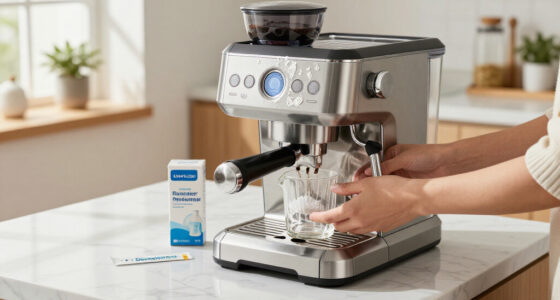
Your coffee maker can sit beside a polished whole-house filter and still brew a flat, sour, or chalky cup. That’s because filtered water isn’t automatically coffee-ready: what matters is the mix of minerals, alkalinity, chlorine, and odors reaching the brewer.

Get coffee and tea gear delivered free with Prime
- Fast, free delivery on millions of items
- Prime Video, Amazon Music and more included
- Member-only deals all year
A whole-house water filter treats water as it enters your home, so it can help when sediment, odors, or a documented water concern affects more than your coffee. But for one brewer, a pitcher, faucet, or under-sink filter may solve the actual problem with less expense and plumbing work. Here’s how to tell the difference.
You’ll learn what water contributes to extraction, what common filter types actually do, and how to choose a sensible first step. For example, if your kettle builds scale but your tap water tastes fine, you may need a different approach than a household dealing with a strong chlorine smell at every faucet.
For coffee alone, try a maintained pitcher, faucet, or under-sink filter before considering whole-house treatment.
Match filtration to the problem: carbon can reduce chlorine taste, while sediment filters do not generally remove dissolved minerals.
A softener can reduce scale-forming calcium and magnesium, but softened water is not automatically better for brewing.
The Specialty Coffee Association’s commonly cited reference is about 150 mg/L TDS, but TDS does not identify which minerals make up that reading.
Check utility reports or test private-well water, then verify a system’s exact performance claims for any specific contaminant.
Whole-House Filters for Coffee
A whole-house filter is usually more than one coffee maker needs. Match treatment to the water problem, since removing more does not automatically make better coffee.
What shapes the cup
Minerals help extraction, while alkalinity affects perceived acidity; chlorine and odors can carry through.
Support extraction
Very low-mineral water can taste flat or sharp; very hard water can taste chalky and cause scale.
Balances acidity
Too much bicarbonate can mute brightness; too little can make coffee seem unusually sour.
Can reach the cup
Activated carbon may reduce chlorine taste and odors when suited to the water and maintained.
Choose treatment by the problem
Filter types target different things; a system label alone does not establish what it removes.
| System | What it can do | What to watch for |
|---|---|---|
| Sediment filter | Catches particles | Does not generally remove dissolved minerals or chlorine |
| Activated carbon | Can reduce chlorine taste and odors | Performance depends on design, flow, and maintenance |
| Water softener | Reduces scale-forming calcium and magnesium | Softened water is not automatically better for coffee |
| Reverse osmosis | Removes many dissolved substances | Water often needs remineralization for brewing |
Start with your water
Check a report or test first, then pick a treatment for the specific concern.
Review your utility water report or test private-well water.
Look for chlorine taste, odors, sediment, or scale.
For coffee alone, try a maintained pitcher, faucet, or under-sink filter suited to the problem.
When whole-house treatment fits
Broader treatment may make sense when the same verified concern affects many household uses.
- Sediment or unpleasant taste and odor affect multiple taps.
- A documented concern or significant scale affects the home.
- You want treatment for appliances, showers, and laundry too.
- Start with a point-of-use filter matched to the issue.
- Verify performance claims for any specific contaminant.
- Remember: TDS does not identify which minerals are present.
Why balanced water makes coffee taste better
Whole-house filters for coffee help only if they improve the water’s specific traits: mineral balance, alkalinity, chlorine taste, or odor. Calcium and magnesium support extraction by interacting with coffee compounds; bicarbonate buffers acids and can soften perceived acidity. That buffering is useful when water is very low in alkalinity, but too much can mute the bright, fruit-like notes in a light roast. Removing minerals indiscriminately can create the opposite problem: coffee may taste thin or sharply sour because the water has less capacity to extract and balance flavor.
Think of water as the stage your coffee performs on. A medium roast that tastes lively with one tap water might seem dull with water high in bicarbonate, while very low-mineral water can make a cup taste unusually sharp. The Specialty Coffee Association’s commonly cited guidance puts brewing water near 150 mg/L TDS, with a broad acceptable range around 75–250 mg/L [1]. That’s a useful reference, not a magic recipe. The range leaves room for different beans and preferences; it also means a reading within the range does not guarantee a satisfying cup.
TDS measures total dissolved material, not its identity. Two glasses can both read 150 mg/L and still contain different minerals, so they may brew differently. Imagine your neighbor’s meter showing the same number as yours even though their coffee tastes chalkier; their water may contain more scale-forming minerals or alkalinity. The meter cannot distinguish those substances, so it can flag a broad change but cannot tell you which treatment or recipe adjustment will help.
Water also affects the machine. Hard water can leave pale, crusty scale in a kettle and inside a coffee maker, slowing heating and increasing maintenance. Scale can make equipment harder to clean and, if allowed to build up, interfere with reliable operation. Chlorine and some odors can carry into the cup, and activated carbon may reduce them when the filter is suited to the water and maintained on schedule. These are separate problems: carbon may improve flavor without reducing hardness, while scale control can protect equipment without removing the taste or odor you notice.
Products Worth Considering

Cuisinart Air Fryer Toaster Oven Combo, 7-in-1, 0.6 cu. ft., Stainless Steel, TOA-55

De'Longhi Magnifica Duo Fully Automatic Espresso Machine with Milk Frother, Silver

Le Creuset Toughened Nonstick PRO Fry Pan Set, 2-Piece
As an affiliate, we earn on qualifying purchases.
What each filter type changes at your tap
A filter’s label does not tell you what it removes. Whole-house systems can combine sediment, carbon, softening, or specialty stages, and each targets different things. A house water filter designed to catch grit won’t necessarily change dissolved minerals or chlorine; a carbon stage may improve chlorine taste and odor, depending on its media, flow rate, and upkeep. That distinction affects both the result and the cost: adding stages that do not address your water issue adds equipment and maintenance without necessarily improving the cup.
That distinction matters when you match a system to a real kitchen problem. If the water from every cold tap smells faintly of chlorine, carbon treatment may help. If your espresso machine develops scale quickly, carbon alone is unlikely to solve the issue because it generally does not soften water. A treatment that works at the right flow and is maintained can make a noticeable difference; an undersized or overdue filter may not perform as expected, even if its media is suitable in principle.
| System type | What it can do | What to watch for |
|---|---|---|
| Sediment filter | Catches particles such as grit or rust flakes | Does not generally remove dissolved minerals or chlorine |
| Activated carbon | Can reduce chlorine taste and many odors | Performance depends on design, flow, and filter changes |
| Water softener | Reduces scale-forming calcium and magnesium by exchanging them for sodium or potassium | Softened water isn’t automatically ideal for coffee; added sodium or potassium can affect taste |
| Reverse osmosis (RO) | Removes many dissolved substances | Very low-mineral water often needs remineralization for brewing; maintenance matters |
Treatment is not interchangeable: a softener and carbon filter solve different problems. For instance, a household might use a softener to reduce scale but still need a separate drinking-water treatment for chlorine taste or a particular contaminant. An RO system is more commonly installed at a drinking-water tap than across the whole house. The tradeoff is scope: treating one drinking tap can target brewing water efficiently, while whole-home treatment can address many uses but must handle higher flow and brings greater installation and upkeep demands.
When a whole-house filter earns its place
A whole-house system makes sense when a water problem affects the whole home, not just one coffee machine. Persistent sediment, unpleasant taste or odor at multiple taps, significant scale, or a documented contaminant concern can make treatment at the point where water enters the home worth investigating. The benefit is that treatment reaches showers, laundry, and appliances as well as the kitchen. That broad coverage matters when the same problem is disrupting several parts of daily life; it is harder to justify when the only goal is changing one brewer’s water.
For example, picture a family whose shower, laundry, kettle, and coffee maker all show the same sediment or odor issue. Treating one kitchen faucet might improve brewing water, but it leaves the other household uses untouched. A system chosen for the verified problem could serve the wider need, provided its capacity and performance claims fit the home’s water and flow rate. A whole-house installation also treats water used where drinking-water quality may not be needed, so the extra equipment, plumbing, and recurring media costs should be weighed against the household-wide benefit.
Use this short checklist before considering an installation:
- Identify the pattern. Is the issue chlorine taste, scale, visible particles, odor, or a health-related concern? Notice whether it appears at one tap or throughout the home. A problem limited to one faucet may point to that fixture or plumbing, while a consistent issue across taps suggests a broader source.
- Check the water information. Review your utility’s water-quality report. If you rely on a private well, arrange testing through a qualified lab; consider a tap test if home plumbing could affect results. The source matters because a treatment suitable for a municipal chlorine taste concern may not address a well-water contaminant.
- Match the treatment to the finding. Carbon may help with chlorine taste. A softener may reduce scale. A contaminant-specific system needs performance evidence for that particular contaminant. Matching claims to test results prevents paying for a system that changes something you do not need changed.
- Compare household and brewing needs. Ask whether whole-home treatment will solve enough everyday problems to justify plumbing work, maintenance, and ongoing filter or media costs. If brewing is the sole concern, estimate what a point-of-use option would solve before taking on a larger system.
Test first, choose second. A system advertised for “cleaner water” does not establish that it reduces lead, PFAS, arsenic, or any other specific substance. Check the exact model, verified reduction claims, operating conditions, and maintenance requirements. A certification applies to defined claims; it does not mean a filter removes everything. If the result identifies a health concern, use the relevant verified performance claim as the basis for treatment, rather than relying on taste or a general filtration label.
Why a small filter often solves the coffee problem
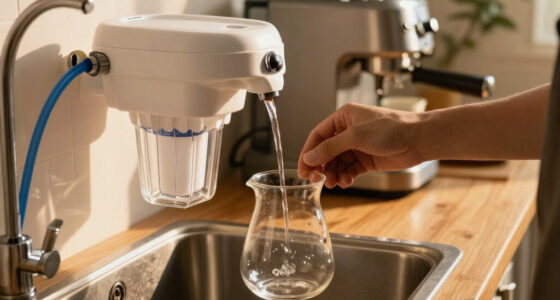
For coffee alone, point-of-use treatment is usually the practical first move. A pitcher, faucet-mounted unit, or under-sink filter treats the water you drink and brew without sending all household water through the same equipment. That can mean lower installation cost and less plumbing work when the only complaint is a chlorine note in your morning cup. It also lets you change only the water used for brewing, which is useful when the rest of the home’s water works well.
Say your kitchen tap water smells faintly like a swimming pool, but the shower and laundry are fine. A properly maintained carbon filter at the sink may address that taste without treating every tap. If the water tastes pleasant but your brewer scales quickly, a carbon-only solution may disappoint; you’ll want to investigate hardness and select treatment accordingly. The distinction helps avoid confusing a better-tasting cup with protection from scale: improvement in one does not prove the other problem has been solved.
Water choice also involves tradeoffs. Softening can limit scale by replacing calcium and magnesium, but that doesn’t automatically give you balanced coffee water. The reduced scale can help equipment maintenance, while the changed mineral content may not suit the flavor you want. RO can provide a clean starting point when dissolved substances are a concern, yet its low-mineral output often benefits from controlled remineralization. That adds another step to maintain and tune, but it lets you restore some minerals rather than accept very low-mineral water as-is. Distilled water has very few minerals and is generally not ideal as-is; some machine makers advise against it, so check your brewer’s manual and warranty guidance.
Choose a filter for a named problem, then taste the result and keep up with changes. For instance, a busy household that forgets filter replacements may get worse performance from an overdue cartridge than from a simple, regularly changed option. Follow the maker’s rated capacity and schedule, and account for your local water and actual use. The best fit is the system whose expected improvement is worth its upkeep—not necessarily the one with the most treatment stages.
A simple plan for better brewing water
You can make a better choice in a few deliberate steps: start with what you know about your water, test where needed, and treat the finding instead of chasing maximum filtration. That keeps the coffee maker needs in view while avoiding a system that changes water in ways your brew does not benefit from.
Consider a practical Saturday morning example. Your kettle has a thin white crust, but the tap water doesn’t smell odd. First, look at the utility report or test the water for hardness and alkalinity. If the result points to hard water, you can investigate scale control; if your actual complaint is chlorine flavor instead, a maintained carbon filter may be the better trial.
- Write down the symptom. Note whether you taste chlorine, smell an odor, see sediment, or find scale. Record which taps show it.
- Find reliable water information. Read the municipal report or arrange a qualified private-well test. Test at the tap if plumbing may affect the result.
- Pick one targeted treatment. Use the system’s verified claims and intended flow conditions to match it to the finding.
- Try the water in a familiar brew. Keep your coffee, grind, and recipe steady so you can notice whether the water changed the cup.
- Maintain the equipment. Replace filters on schedule and descale your brewer as its manufacturer directs.
Change one thing at a time. If you switch beans, grinder settings, and water treatment together, you won’t know which caused the brighter cup or the bitter aftertaste. A repeatable brew gives you a fair comparison, much like tasting two coffees side by side from the same grinder.
What coffee water numbers can—and can’t—tell you
Water numbers are clues, not a complete flavor forecast. TDS gives you the amount of dissolved material overall, while a detailed water report can identify specific substances and a water test can address the concern you’re investigating. The same TDS reading can mask different calcium, magnesium, or bicarbonate levels, each of which can shift extraction and perceived acidity. That is why a single number can help compare water before and after treatment but cannot explain by itself why one cup tastes balanced and another seems dull.
The commonly cited Specialty Coffee Association guidance near 150 mg/L TDS, with a broad range of about 75–250 mg/L, gives home brewers a reference point [1]. It does not mean every cup tastes best at exactly 150 mg/L, or that every reading in the range tastes the same. A light roast brewed with high alkalinity, for example, may lose some of its sparkle even if the total dissolved solids appear reasonable. The guidance is best treated as a starting point for understanding water, then checked against the actual taste and the composition of your supply.
Recent consumer attention to lead, PFAS, arsenic, and other contaminants has also made specific testing and claims more relevant. Some systems are designed and certified for particular reductions; many are not. A smart monitor can remind you that a cartridge is nearing its rated life, but an app cannot replace a water test or proof that the filter addresses a contaminant. This distinction matters because a system can improve taste while leaving a particular contaminant unchanged, and a taste test cannot establish safety.
Use the right evidence for the right question. A TDS meter can track broad changes, but it cannot verify a specific contaminant reduction or reveal the full mineral recipe. If you want to know whether a system handles a named concern, check the exact model’s verified performance claim and conditions; if you want to know why a cup tastes sour, look at alkalinity and brewing variables too. Each measure answers a narrower question, so combining water information with a consistent brew gives you a more useful diagnosis than treating any one reading as a verdict.
Frequently Asked Questions
Do I need a whole-house filter to make better coffee?
Usually, no. Identify whether the issue is chlorine taste, hardness, alkalinity, or a specific contaminant, then choose a treatment that addresses it. A point-of-use filter often covers a coffee-only concern.
Will filtered water always make coffee taste better?
No. Carbon filtration may reduce chlorine taste or odor, but very low-mineral or poorly matched water can brew flat, sharp, or sour coffee. The result depends on what the filter changes.
Is softened water good for coffee?
Not automatically. A softener reduces calcium and magnesium by exchanging them for sodium or potassium, which can reduce scale but may affect flavor. Softened water can still need a separate brewing-water plan.
Is reverse-osmosis water good for coffee?
It can be a clean starting point, but it often needs remineralization. RO removes many dissolved substances, leaving water with few minerals to support extraction. Check the RO system, remineralization specifications, and your machine manual.
Does a TDS meter tell me whether my water is right for coffee?
Only partly. TDS measures the total dissolved material, not which minerals or substances are present. Two waters with the same reading can brew differently, so a detailed report or targeted test gives more context.
Can a whole-house filter remove lead or PFAS?
Only if the specific system is designed and verified for that reduction. Check the exact model, contaminant claim, operating conditions, and upkeep requirements. A generic filtration label does not prove removal of a particular contaminant.
What should I do first if my coffee maker keeps scaling?
Check the water’s hardness and follow the brewer’s descaling instructions. Carbon filters generally do not soften water, so they may not prevent scale. A water report or suitable test can help you choose the next treatment.
Conclusion
Start with the water problem you can name. If your coffee tastes of chlorine, try suitable, maintained carbon filtration; if scale is the issue, investigate hardness and scale control; if you have a contaminant concern, test and verify the exact treatment claim. A whole-house system earns its cost when it helps across the home.
Keep the goal simple: water balanced for the brew, not filtration for its own sake. Your best next cup may begin with a water report and a clean kettle, not a new set of pipes.