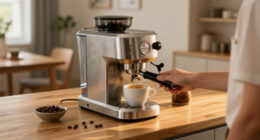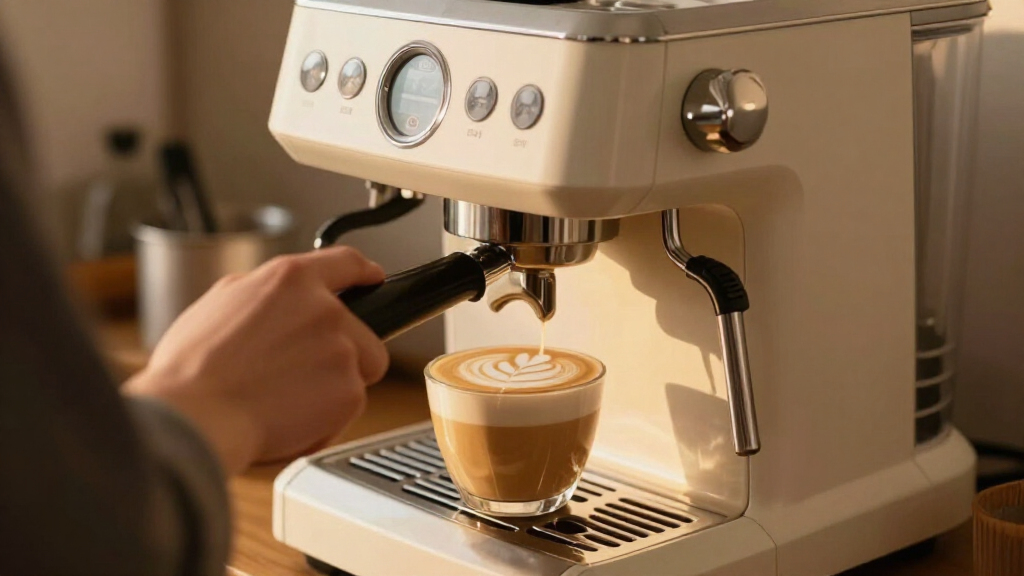
The Breville Barista Pro (BES878BSS) earns my top spot for latte art because its fast heat-up and powerful dry steam produce the microfoam that rosettas and tulips demand. Close behind, the Breville Barista Express Impress simplifies dosing and tamping without sacrificing wand performance, making it the strongest pick for beginners who still want café-quality milk. The main tradeoff in this category is convenience versus control: fully automatic Bosch machines handle everything for you but foam milk less precisely, while semi-automatics demand practice but reward you with better pour-ability. Budget picks like the CASABREWS and CHULUX can steam milk, but weaker wands and small boilers limit how fine your foam gets. Read on for the full ranked breakdown, buying guide, and FAQs.

Get coffee and tea gear delivered free with Prime
- Fast, free delivery on millions of items
- Prime Video, Amazon Music and more included
- Member-only deals all year
Complete the kit


Key Takeaways
- Breville‘s lineup dominated the top of this ranking because its ThermoJet heating systems reach steaming temperature in seconds and deliver dry, consistent steam — the single biggest factor for latte art microfoam.
- All three Bosch fully automatic machines landed mid-pack: their automatic milk systems are convenient, but pre-programmed frothing rarely produces the paint-like texture manual wands achieve.
- The budget machines under $200 (CASABREWS, CHULUX, Rowan) share a common weakness — wet steam and single-boiler design — which caps how fine your microfoam gets no matter how good your technique becomes.
- The Barista Express Impress beat the standard Barista Express for beginners because its assisted tamping removes the most common cause of uneven extraction, letting you focus your practice time on milk texturing.
- A 58mm portafilter, found on the AMZCHEF and higher-end Brevilles, gives more even extraction than 51mm baskets — a subtle spec that noticeably affects crema quality, which affects how well your art reads on top of the drink.
| Breville BES876BSS Barista Express Impress, Brushed Stainless Steel |  | Best Overall | Grinder: Integrated conical burr, 25 settings | Dosing: Intelligent dosing with auto-dose correction | Tamping: Assisted tamping at 10kg with barista twist finish | VIEW LATEST PRICE | See Our Full Breakdown |
| Bosch 300 Series Fully Automatic Espresso Machine with Grinder and Steam Wand |  | Best for Busy Mornings | Type: Fully automatic espresso machine | Grinder: Durable ceramic burr | Milk System: Milk Express adjustable in-cup frother | VIEW LATEST PRICE | See Our Full Breakdown |
| Breville BES870XL Barista Express Espresso Machine, Brushed Stainless Steel |  | Best Value for Serious Learners | Grinder: Integrated conical burr | Bean Hopper: 1/2 lb | Water Tank: 67 oz | VIEW LATEST PRICE | See Our Full Breakdown |
| CASABREWS Ultra Espresso Machine with Steam Wand |  | Best Budget-Friendly Steam Wand | Type: Semi-automatic espresso machine | Pump Pressure: 20 bars | Power: 1350 watts | VIEW LATEST PRICE | See Our Full Breakdown |
| Bosch 800 Series VeroCafe Fully Automatic Coffee and Espresso Machine, Black |  | Best Premium Convenience Pick | Model: TPU60309 | Beverage Options: Up to 35 via Home Connect app | Coffee Strength Settings: 4 | VIEW LATEST PRICE | See Our Full Breakdown |
| Rowan Espresso Machine Nova Reverie RCE5011 |  | Best Workflow Streamliner | Pump: 15-bar Italian ULKA pump with pre-infusion at 9-bar extraction | Temperature Control: PID + NTC, ±1°C, three adjustable temperature levels | Grind Adjustment: 30 precision settings | VIEW LATEST PRICE | See Our Full Breakdown |
| CHULUX Slim Espresso Machine with Milk Frother |  | Best Budget Compact Pick | Pump Pressure: 20 bar Italian pump | Heating: 1350W boiler, 30-second preheat | Dimensions: 11.7″ D x 5.5″ W x 12.5″ H, 7.8 lbs | VIEW LATEST PRICE | See Our Full Breakdown |
| AMZCHEF Espresso Machine with Grinder and Temperature Control |  | Best for Experimenters | Grind Settings: 44 adjustable settings | Temperature Control: 190°F–201°F | Water Tank: 60 oz | VIEW LATEST PRICE | See Our Full Breakdown |
| Breville BES878BSS Barista Pro Espresso Machine |  | Best Overall | Heating System: ThermoJet, 3-second heat-up, 1680W | Grinder: Integrated conical burr grinder with dose control | Temperature Control: PID digital (±2°C) | VIEW LATEST PRICE | See Our Full Breakdown |
| Bosch 800 Series Fully Automatic Coffee and Espresso Machine |  | Best for Effortless Milk Drinks | Model: TQU60307, Bosch 800 Series (VeroCafe) | Display: Large touchscreen | Connectivity: Home Connect app with remote brewing | VIEW LATEST PRICE | See Our Full Breakdown |
| espresso machines for latte art | Water Tank |
|---|---|
| Breville BES876BSS Barista Exp | 2 liters |
| Bosch 300 Series Fully Automat | — |
| Breville BES870XL Barista Expr | 67 oz |
| CASABREWS Ultra Espresso Machi | 73 oz removable |
| Bosch 800 Series VeroCafe Full | — |
| Rowan Espresso Machine Nova Re | — |
| CHULUX Slim Espresso Machine w | 40 oz removable |
| AMZCHEF Espresso Machine with | 60 oz |
| Breville BES878BSS Barista Pro | 67 oz |
| Bosch 800 Series Fully Automat | — |
More Details on Our Top Picks
Breville BES876BSS Barista Express Impress, Brushed Stainless Steel
The Barista Express Impress earns the top spot because it solves the two problems that ruin latte art at home: inconsistent espresso and poorly textured milk. The Impress puck system auto-corrects dosing and applies a consistent 10kg tamp, which means the base of every latte stays stable while you focus on the wand. That assisted tamping is what separates it from the standard Breville Barista Express, which leaves dosing entirely to your skill. The manual steam wand is the real draw here — unlike the Bosch 300 Series, which automates milk work, this machine forces you to texture microfoam yourself, and it gives you enough power to do it well.
The tradeoff is size and commitment. At 23.7 pounds and 14.5 inches wide, it demands counter space, and you still have to learn wand technique. But for anyone serious about pouring rosettas, this is the most complete package.
Pros:- Assisted tamping and auto-dose correction keep espresso shots consistent while you learn milk texturing
- Powerful manual steam wand purpose-built for latte-art-quality microfoam
- Integrated conical burr grinder with 25 settings eliminates the need for a separate grinder
- PID-controlled Thermocoil stabilizes brew temperature shot after shot
Cons:- Bulky footprint at 14.5 inches wide and nearly 24 pounds
- Manual milk texturing has a real learning curve before pours look clean
- Premium feature set carries a premium price compared with simpler machines
Best for: Home baristas who want café-grade microfoam and are willing to practice wand technique with training wheels on the espresso side
Not ideal for: Buyers who want push-button drinks with zero learning curve — the manual steam wand requires real practice
- Grinder:Integrated conical burr, 25 settings
- Dosing:Intelligent dosing with auto-dose correction
- Tamping:Assisted tamping at 10kg with barista twist finish
- Heating:Thermocoil with PID control
- Water Tank:2 liters
- Bean Hopper:250g
- Portafilter:54mm stainless steel
- Power:1600 watts
Our verdict“If latte art is the goal and you want the best balance of steam power, espresso consistency, and grow-into-it flexibility, this is the machine to buy.”
Bosch 300 Series Fully Automatic Espresso Machine with Grinder and Steam Wand
Not everyone has ten minutes to texture milk by hand before work. The Bosch 300 Series takes the opposite approach from the Barista Express Impress: it automates everything, including one-touch milk drinks through its Milk Express in-cup frother. That convenience comes at a cost for this specific roundup, though — the frother produces drinkable foam rather than the dense, paintable microfoam latte art demands. Compared with the CASABREWS Ultra, which gives you a proper steam wand at a fraction of the complexity, this Bosch trades artistry for speed.
Where it earns its place is as the realistic pick for people who value a good latte over a pretty one. The ceramic grinder keeps beans cool and aromatic, the Double Cup mode handles two drinks at once, and the removable brew unit cleans up faster than any semi-automatic here.
Pros:- OneTouch milk-based beverages with no wand technique required
- Ceramic grinder preserves aroma without overheating beans
- Removable front-access brew unit with dishwasher-safe parts makes cleanup fast
- Double Cup function serves two drinks simultaneously
Cons:- In-cup frother produces foam for drinking, not microfoam for art
- Sized for individuals and couples; heavy households will find it undersized
- Far less hands-on control over extraction than semi-automatic rivals
Best for: Commuters and couples who want a decent milk coffee in one button press and cleanup in minutes
Not ideal for: Latte art enthusiasts — the in-cup frother cannot produce the glossy microfoam needed for pours
- Type:Fully automatic espresso machine
- Grinder:Durable ceramic burr
- Milk System:Milk Express adjustable in-cup frother
- Strength Levels:5
- Display:Easy Select LCD with illuminated sensor keys
- Special Functions:OneTouch milk drinks, Double Cup
- Dimensions:14.8 x 9.7 x 16.5 inches
Our verdict“A smart buy if speed and low maintenance outrank pourable microfoam on your priority list.”
Breville BES870XL Barista Express Espresso Machine, Brushed Stainless Steel
The original Barista Express remains the value benchmark because it delivers the two non-negotiables for latte art — a genuine steam wand and fresh-ground espresso — without the assisted features that push its sibling, the Barista Express Impress, up the price ladder. You give up the auto-dosing and assisted tamp, which means your first dozen shots will be trial and error. What you keep is full manual control, which is exactly what some learners prefer: understanding grind, dose, and tamp from day one builds skills the Impress would otherwise soften.
The powerful steam wand textures milk into real microfoam, something the fully automatic Bosch machines simply can’t replicate. Compared with the CASABREWS Ultra, the built-in grinder is the deciding advantage — one purchase covers beans-to-extraction in under a minute. The catch is that consistency depends entirely on you, and grind recalibration is a regular chore when you switch beans.
Pros:- Integrated conical burr grinder delivers fresh grounds on demand, no separate purchase needed
- Manual steam wand produces genuine latte-art microfoam
- PID temperature control and low-pressure pre-infusion support balanced extraction
- Beans to espresso in under a minute once dialed in
Cons:- Full manual operation demands learning and practice for consistent shots
- Grind settings need readjustment whenever you change beans
- Lacks the assisted tamping and dose correction of the newer Impress model
Best for: Budget-conscious beginners who want to learn every variable of espresso and milk texturing hands-on
Not ideal for: Impatient drinkers who want repeatable results without dialing in — the learning curve is real
- Grinder:Integrated conical burr
- Bean Hopper:1/2 lb
- Water Tank:67 oz
- Temperature Control:PID digital
- Portafilter:54mm stainless steel
- Power:1600 watts
- Warranty:1 year limited
Our verdict“The smartest spend for anyone who wants latte-art-capable equipment and is happy to earn the skill rather than pay for shortcuts.”
CASABREWS Ultra Espresso Machine with Steam Wand
The CASABREWS Ultra is the entry ticket to latte art. Its steam wand genuinely produces microfoam, which at this price point puts it ahead of machines like the CHULUX Slim, whose frother is better suited to cappuccino foam than pourable art. The 58mm portafilter is a thoughtful touch — it’s the commercial standard size, so aftermarket accessories, baskets, and tampers are plentiful and cheap. Compared with the Barista Express, you lose the built-in grinder, so you’ll need a separate grinder or pre-ground coffee, which limits how fresh your espresso base can be.
The four temperature settings are useful but only apply to brewing, not steaming, so milk texturing is a one-temp affair. Still, for someone testing whether latte art is a hobby or a phase, spending less upfront makes sense — you can always upgrade later without regretting a big investment.
Pros:- Real steam wand capable of latte-art-grade microfoam at an accessible price
- Commercial-standard 58mm portafilter opens up cheap accessory upgrades
- Four adjustable brewing temperature settings for shot tuning
- Compact 13.6-pound footprint with a large removable 73 oz tank
Cons:- No integrated grinder, so espresso quality depends on your separate gear
- Temperature controls affect brewing only, not milk steaming
- Build and steam power lag behind the Breville machines when pulling multiple drinks
Best for: First-time espresso buyers experimenting with latte art who already own a grinder or accept pre-ground coffee
Not ideal for: Anyone wanting an all-in-one setup — no built-in grinder means an extra purchase and less fresh shots
- Type:Semi-automatic espresso machine
- Pump Pressure:20 bars
- Power:1350 watts
- Portafilter:58mm with one- and two-cup filters
- Water Tank:73 oz removable
- Controls:Buttons with LCD display
- Dimensions:12.2 x 10.31 x 12.9 inches
- Weight:13.6 pounds
Our verdict“The lowest-risk way to find out if you’ll actually pour rosettas every morning — capable wand, standard portafilter, minimal commitment.”
Bosch 800 Series VeroCafe Fully Automatic Coffee and Espresso Machine, Black
The Bosch 800 Series VeroCafe is the most feature-rich machine in this lineup, with up to 35 beverages via the Home Connect app and remote brewing from your phone. But its role here needs honesty: like its sibling the 300 Series, it’s a convenience machine first, and its automated milk system prioritizes consistent drinks over art-ready microfoam. Where it beats the 300 Series decisively is customization — adjustable strength, size, aroma, and milk ratio let you fine-tune a latte to exact taste, something no one-touch preset can match.
Against the manual Breville machines, the comparison is philosophical: the VeroCafe removes you from the process, which is either its greatest strength or its fatal flaw depending on what you want from latte art. Add the large footprint and this is a machine for households that drink a dozen milk beverages a week and want them identical every time.
Pros:- Up to 35 beverage options with remote brewing through the Home Connect app
- Deep customization of strength, size, aroma profile, and milk ratio
- Aroma Max System controls grind flow, temperature, and water volume per drink
- Combined cleaning and descaling program keeps maintenance guided and simple
Cons:- Automated milk system produces consistent drinks, not pourable latte-art microfoam
- Large footprint takes up substantial counter real estate
- Premium automation carries a premium price with less hands-on control
Best for: Tech-forward households that drink many milk-based drinks daily and value app control and consistency over hands-on craft
Not ideal for: Latte art hobbyists — automated milk delivery can’t replicate wand-textured microfoam, and the footprint eats counter space
- Model:TPU60309
- Beverage Options:Up to 35 via Home Connect app
- Coffee Strength Settings:4
- Aroma Options:3
- Display:Active Select touchscreen
- Connectivity:Home Connect app with remote brewing
- Dimensions:12.2 x 15 x 18.4 inches
- Included:Mavea water filter, milk frother hose, welcome kit
Our verdict“Choose this if your priority is app-driven variety and identical lattes on demand — skip it if the pour itself is what you love.”
Rowan Espresso Machine Nova Reverie RCE5011
Latte art lives or dies on consistency, and the Nova Reverie attacks that problem from an unusual angle: an integrated grind-distribute-tamp system with a calibrated 30 lb tamper. Uneven pucks are the number-one cause of inconsistent shots, and this machine removes that variable almost entirely — a genuine advantage over the Breville Barista Express, which still asks you to tamp by hand. The 58mm commercial-grade portafilter is another differentiator; most home machines in this class use 54mm, and the wider basket produces denser crema and accepts a deep aftermarket accessory ecosystem, which matters once you start chasing tulips and rosettas. The 1500W dry steam wand claims microfoam in about 13 seconds, faster than the CASABREWS Ultra, though the single-boiler design means alternating between brewing and steaming.
Pros:- Integrated grind, distribution, and calibrated 30 lb tamping removes the biggest source of shot inconsistency
- 58mm commercial portafilter produces rich crema and supports aftermarket precision baskets
- PID + NTC temperature control within ±1°C for repeatable extraction
- 1500W high-power dry steam creates silky microfoam in roughly 13 seconds
Cons:- All-in-one convenience means more internal components that can fail compared to simpler machines
- 30 grind settings offer fewer adjustment steps than dedicated grinders like the AMZCHEF’s 44
Best for: Aspiring latte artists who want café-level puck consistency without buying a separate grinder, distributor, and tamper
Not ideal for: Buyers who want to hand-tamp and fine-tune every variable themselves — the automated tamping workflow leaves less room for manual technique
- Pump:15-bar Italian ULKA pump with pre-infusion at 9-bar extraction
- Temperature Control:PID + NTC, ±1°C, three adjustable temperature levels
- Grind Adjustment:30 precision settings
- Portafilter:58mm commercial-grade stainless steel
- Steam System:1500W dry steam, 3-layer cool-touch wand
- Heat-Up Time:20 seconds (Rowan Flash-Heating Boiler)
- Maintenance:One-touch auto-cleaning of group head, spouts, wand, and lines
Our verdict“This pick makes the most sense for latte-art-focused buyers who value a repeatable, café-style workflow over hands-on tinkering.”
CHULUX Slim Espresso Machine with Milk Frother
Not everyone learning latte art wants to commit serious money, and the CHULUX Slim is the low-risk entry point in this lineup. At just 5.5 inches wide, it fits where nothing else here can — a dorm shelf, an office corner, a tiny apartment counter — and its real-time pressure gauge is a surprisingly useful teaching tool: watching the needle tells a beginner whether their grind and dose are in the right zone. That feedback loop is something the pricier Rowan Nova Reverie handles for you automatically, which is precisely the tradeoff. The steam wand can produce workable microfoam, but it demands patience and technique to get paint-like milk, so expect a learning curve before your first readable heart.
Pros:- Slim 5.5-inch footprint fits kitchens and offices where full-size machines can’t
- Real-time pressure gauge helps beginners diagnose grind and dose issues
- Pre-infusion and 30-second heat-up make quick daily drinks realistic
- 40 oz water tank and removable drip tray keep daily use low-hassle
Cons:- Ground-coffee-only design means buying a separate grinder for espresso-quality freshness
- Steam wand lacks the power and dryness needed for consistently glossy microfoam
Best for: Beginners and space-constrained users who want to practice steaming and pouring without a big investment
Not ideal for: Anyone chasing polished, competition-style microfoam — the steam power and thermal stability fall short of the Breville Barista Pro for fine latte art
- Pump Pressure:20 bar Italian pump
- Heating:1350W boiler, 30-second preheat
- Dimensions:11.7″ D x 5.5″ W x 12.5″ H, 7.8 lbs
- Water Tank:40 oz removable
- Controls:Pressure gauge, pre-infusion, auto shut-off after 25 minutes
- Coffee Input:Ground coffee
Our verdict“A sensible starter machine for practicing milk texturing in tight spaces, but serious latte artists will outgrow its steam performance.”
AMZCHEF Espresso Machine with Grinder and Temperature Control
The AMZCHEF earns its spot by offering more tuning range than anything else at its price. With 44 grind settings and temperature control from 190°F to 201°F, it lets you match extraction to the exact bean you’re pouring — darker roasts at lower temps, light roasts pushed hotter — a level of adjustment the CHULUX Slim simply doesn’t offer. The 1350W steam wand produces genuine microfoam, and the smart touch screen showing grind time, brew time, and temperature makes dialing-in repeatable rather than guesswork. Compared with the Breville Barista Pro, the tradeoff is refinement: AMZCHEF gives you more raw adjustability, while Breville delivers faster heat-up and a more polished experience. The one-touch cold brew mode is a nice bonus for households with mixed tastes.
Pros:- 44 grind settings span espresso through French press, the widest range in this lineup
- Precision 190°F–201°F temperature control lets you match extraction to roast level
- 1350W steam wand textures milk fine enough for latte art
- One-touch cold brew mode adds versatility beyond espresso
Cons:- Steep learning curve despite the touch screen — 44 settings can overwhelm newcomers
- Large footprint thanks to the built-in grinder and 60 oz tank
Best for: Tinkering home baristas who want to fine-tune grind and temperature bean-by-bean without paying premium-brand prices
Not ideal for: Set-and-forget drinkers who want café drinks with zero learning curve — the Bosch 800 Series handles that far better
- Grind Settings:44 adjustable settings
- Temperature Control:190°F–201°F
- Water Tank:60 oz
- Steam Wand:8mm stainless steel, 1350W
- Display:IMD HD smart touch screen
- Special Modes:Cold brew mode, descaling function
Our verdict“The right choice for buyers who see latte art as part of a broader hobby in espresso experimentation.”
Breville BES878BSS Barista Pro Espresso Machine
If the goal is one machine that does everything latte art requires — fresh grounds, stable temperature, paintable microfoam — the Breville Barista Pro is the most complete package here. Its ThermoJet heater hits extraction temperature in 3 seconds, dramatically faster than the Rowan Nova Reverie’s 20 seconds and a real convenience when you’re pulling a shot and steaming milk back-to-back for guests. The integrated conical burr grinder with dose control keeps each shot consistent, and the manual steam wand gives you the hands-on control that latte art genuinely demands — an important distinction from the fully automatic Bosch 800 Series, whose automated milk system trades artistry for convenience. The LCD interface with progress animations shortens the beginner’s path from setup to first rosetta. The cost of all this capability is counter space and a price that stings.
Pros:- 3-second ThermoJet heat-up eliminates the wait between brewing and steaming sessions
- Integrated conical burr grinder with dose control delivers fresh, consistent grounds
- Manual steam wand produces true latte-art-quality microfoam
- Beginner-friendly LCD with progress animations plus a full accessory kit including a milk jug
Cons:- Manual steam wand takes practice — early attempts at microfoam will be uneven
- Large countertop footprint and premium price compared to entry-level rivals
Best for: Buyers who want one machine to carry them from first shot to confident latte art, with room to grow for years
Not ideal for: Small kitchens and tight budgets — the footprint is large and cheaper picks like the AMZCHEF cover the basics for less
- Heating System:ThermoJet, 3-second heat-up, 1680W
- Grinder:Integrated conical burr grinder with dose control
- Temperature Control:PID digital (±2°C)
- Water Tank:67 oz
- Bean Hopper:1/2 lb
- Accessories:Single & dual wall baskets, Razor tool, 480 ml milk jug, cleaning kit, water filter
- Warranty:2-year limited
Our verdict“The best single purchase for someone committed to learning latte art properly on a machine that won’t need upgrading.”
Bosch 800 Series Fully Automatic Coffee and Espresso Machine
Here’s the honest caveat for this roundup: fully automatic machines are the wrong tool for serious latte art, because automated milk texturing can’t fully replicate a hand-steamed pitcher. But if your priority is a great milk drink every morning with near-zero effort — and latte art is a nice-to-have rather than a passion — the Bosch 800 Series VeroCafe is the strongest choice. Its large touchscreen and 35+ beverage options with adjustable strength, size, and milk ratio make it effortless for a whole household, something the hands-on Breville Barista Pro can’t match for non-enthusiast family members. Home Connect remote brewing means drinks can be started from bed. The Calc’n Clean combined cleaning program also reduces the maintenance burden that scares people away from automatics, though repairs on complex machines like this can be costly down the road.
Pros:- 35+ beverages with adjustable strength, size, milk ratio, and aroma from a large touchscreen
- Home Connect app enables remote brewing and scheduling
- Combined Calc’n Clean program simplifies maintenance
- Integrated milk container and included accessories create a complete setup out of the box
Cons:- Automated milk texturing produces good foam but not the fine microfoam needed for detailed latte art
- Complex fully automatic design can be expensive to repair if components fail
Best for: Busy households that want one-touch customized lattes and cappuccinos for multiple people with minimal effort
Not ideal for: Latte art hobbyists — the automated milk system removes the manual microfoam control that pouring requires
- Model:TQU60307, Bosch 800 Series (VeroCafe)
- Display:Large touchscreen
- Connectivity:Home Connect app with remote brewing
- Beverages:35+ drink options
- Adjustability:Strength, size, milk ratio, aroma
- Maintenance:Combined Calc’n Clean cleaning and descaling program
- Includes:Mavea water filter, integrated milk container, milk adapter, welcome kit
Our verdict“The pick for convenience-first households that value effortless milk drinks over hands-on latte art practice.”
How We Picked
I judged every machine through one narrow lens: can it reliably produce pourable microfoam and a stable crema canvas? That broke down into four criteria. First, steam wand quality — power, dryness of the steam, and whether the wand is single-hole (harder to control) or multi-hole (better for beginners). Second, temperature stability, because latte art needs espresso with consistent crema, and machines that fluctuate during a shot produce blotchy foundations. Third, workflow and learning curve — a machine that fights you on grinding or tamping leaves less attention for milk texturing. Fourth, build and recovery time, since pulling a shot and steaming milk back-to-back exposes weak boilers quickly.
The ranking reflects a clear hierarchy that emerged from this comparison: fast-heating semi-automatics with strong wands at the top, capable-but-compromised fully automatics in the middle, and budget single-boiler machines at the bottom — not because they’re bad machines, but because their steam systems put a hard ceiling on foam quality. Where two machines scored similarly, I gave the edge to the one with the gentler learning curve, since latte art rewards machines that let you practice more shots in less time.
Factors to Consider When Choosing Best Espresso Machines For Latte Art
Before you commit to a machine, it helps to understand what actually makes latte art possible — because plenty of espresso machines make great coffee and terrible canvas. These are the factors that separated the winners from the rest in this comparison, plus the mistakes I’d avoid as a first-time buyer.Steam Wand Power and Steam Dryness
The single biggest differentiator in this category is how dry and powerful the steam is. Wet steam injects water into your milk, diluting it and producing large, soapy bubbles that collapse before you can pour. Dry steam, by contrast, lets you roll the milk into a glossy, paint-like microfoam that holds its shape in a rosetta. Machines with Thermoblock or ThermoJet heating (like the Brevilles here) tend to deliver drier steam than budget single-boiler units. A common mistake is buying a machine with a pannarello-style or sleeved wand — these auto-aerate and can’t be controlled finely enough for art. If the wand has a removable sleeve, that’s a decent sign you can upgrade your technique later. Also check whether the wand articulates; a stiff wand pointed at a fixed angle makes finding the correct whirlpool position in the pitcher much harder.
Single Boiler vs. Dual Boiler vs. Heat Exchanger
Architecture determines your workflow. A single-boiler machine (most of the budget picks here) must switch between brew and steam temperature, adding 30–60 seconds between pulling your shot and steaming — during which your crema starts to fade, and latte art is poured onto fresh crema. ThermoJet and dual-boiler systems steam almost instantly or simultaneously, which keeps your whole drink assembly tight. For latte art specifically, the fresher the crema when milk lands, the sharper your contrast. If you only make one or two drinks a day, a single boiler is workable — just pull the shot, steam immediately, and accept a slightly softer canvas. If you make multiple drinks or practice pours repeatedly, the wait becomes genuinely frustrating and I’d pay more for faster architecture.
Grinder Quality and Dose Consistency
Latte art starts before the milk: uneven extraction produces mottled, unstable crema that your art will smear across. Built-in grinders vary enormously — the Breville units in this lineup grind fine enough with enough adjustment range to dial in properly, while cheaper combo machines often max out too coarse or produce inconsistent particle sizes. If you buy a machine without a grinder, budget for a decent separate burr grinder, because pre-ground coffee goes stale within hours and stale coffee produces thin crema. Dose consistency matters just as much; this is why the Barista Express Impress’s assisted tamp scored so well for beginners — it removes a variable. A practical tip: whatever machine you choose, weigh your first few doses with a small scale. You’ll learn more about your machine in one week of weighing than a month of guessing.
Manual Control vs. Fully Automatic Convenience
This is the philosophical fork in the road. Fully automatic machines (the Bosch models here) grind, dose, brew, and often froth at the press of a button — wonderful for daily coffee, mediocre for latte art, because automated milk systems prioritize speed and temperature over texture. Semi-automatic machines put you in charge of the steam wand, which is exactly where latte art lives. My honest advice: if latte art is a genuine goal rather than a nice-to-have, skip fully automatic machines entirely, even attractive ones. The tradeoff you accept with semi-automatic is a real learning curve — expect two weeks of daily milk practice before your first passable heart. Buyers who want both convenience and art ability should lean toward semi-automatics with assisted features (impressive tampers, guided displays) rather than full automation.
Portafilter Size and Pressure Stability
Two specs that look like fine print actually matter for art. A 58mm portafilter distributes water across the puck more evenly than the 51mm filters common on budget machines, producing more even extraction and better crema. It also means standard accessories — tamper mats, distribution tools, precision baskets — fit your machine, which helps your technique grow. Pressure stability is the other hidden factor: machines that use cheap vibration pumps without regulation can spike or sag mid-shot. You can’t easily test this in a store, so look for indicators like PID temperature control (found on the Barista Pro) or a brand’s reputation for shot consistency. Cheaper machines with 15-bar marketing claims aren’t actually better — 9 bars at the puck is the target, and stability beats raw pressure every time.
Milk Capacity, Recovery Time, and Realistic Use
Think about how you’ll actually use the machine. If you make drinks for two people every morning, recovery time — how quickly the machine is ready for a second steam cycle — becomes a daily annoyance on budget single boilers. Water tank size matters too: small tanks mean refilling mid-session, and running a steam wand dry mid-pitcher is a fast way to learn bad habits. Also consider wand height clearance: some compact machines sit so low under cabinets that fitting a proper 12oz latte art pitcher at the right angle is awkward. Finally, be realistic about maintenance. Machines with automatic cleaning cycles (the Bosches excel here) remove friction, while manual machines need backflushing and wand wiping rituals. The best machine for latte art is one you’ll actually use daily — a pristine machine that’s too fussy to maintain produces no art at all.
Frequently Asked Questions
Can I make latte art with a fully automatic machine like the Bosch 300 or 800 Series?
You can, but with a ceiling on quality. Fully automatic machines in this lineup brew excellent espresso, yet their milk systems — even ones with integrated wands — typically auto-aerate or limit your control over steam tip placement, which is the core skill of microfoam. The Bosch 800 Series comes closest because its wand allows some manual intervention, but the experience still isn’t equivalent to a Breville semi-automatic. If you picture yourself pouring hearts and rosettas regularly, I’d steer you toward a semi-automatic from the start rather than upgrading later. Fully automatics make the most sense for buyers who want one-button café drinks and only occasionally attempt art.
Is the Breville Barista Pro worth the step up over the Barista Express?
For latte art specifically, yes, and the reason is speed. The Barista Pro’s ThermoJet heater reaches steaming temperature in a few seconds, while the Barista Express’s Thermoblock takes noticeably longer and requires a purge cycle between brewing and steaming. That delay matters because latte art is poured onto fresh crema, and every second your shot sits waiting, the canvas degrades. The Pro also adds an LCD interface with temperature adjustment, which helps you keep extraction consistent shot after shot. If your budget is tight, the Express is still fully capable — plenty of people learn latte art on it — but the Pro removes friction that you’ll feel every single morning.
Can a beginner learn latte art on a budget machine like the CASABREWS or CHULUX?
You can learn the fundamentals — pitcher angle, whirlpool, pour speed — and basic shapes like hearts are achievable. The honest limitation is that budget machines produce wetter, weaker steam, so your microfoam will have larger bubbles and a shorter working window before it separates. That means your art may look acceptable for ten seconds and then blur, which can be discouraging when you’re practicing. If budget forces this choice, buy a proper frothing pitcher, use whole milk (it forgives more), and steam smaller volumes where weaker steam is less of a handicap. But if you can stretch to a Breville-level machine, the difference in foam quality genuinely accelerates your learning curve.
Do I need a built-in grinder, or should I buy the machine and grinder separately?
A built-in grinder is the more practical choice for most beginners because it removes a whole category of decisions and keeps your workflow compact. The Breville machines in this roundup pair grinders well-matched to their baskets, and the Impress even assists with tamping. Separately, a dedicated burr grinder often outperforms built-ins at the same total spend — finer adjustment steps, less retention, and it stays useful if you ever upgrade machines. The catch is that pre-ground or stale beans are fatal to crema, and crema is your canvas, so whichever route you take, grinding fresh immediately before each shot is non-negotiable. My rule of thumb: built-in for simplicity and counter space, separate grinder if you see espresso as a long-term hobby.
What milk works best for latte art on these machines?
Whole dairy milk remains the easiest to texture because its fat and protein balance stabilizes microfoam and gives you a longer window to pour before the foam sets. Lower-fat milks steam faster and can over-aerate before you notice, which is why beginners often get better results with whole milk while learning. Plant milks vary wildly: barista-edition oat and almond milks are formulated with added protein and steam beautifully on any wand here, while standard cartons of almond or soy tend to froth into coarse bubbles that collapse. One practical note: smaller machines with weaker steam (the budget picks) handle alternative milks worse because they can’t generate the whirlpool force these milks need. Whatever milk you use, start cold — cold milk buys you more steaming time before it scalds.
Conclusion
The right pick here depends less on budget and more on how seriously you want to pursue latte art. For the best overall choice, the Breville Barista Pro pairs instant steam with stable extraction — the two things latte art depends on most. For beginners, the Barista Express Impress is the smarter entry point because assisted tamping and dosing let you pour your attention into milk texturing. As a value pick, the standard Breville Barista Express delivers most of the latte-art capability of its siblings for less, and the CASABREWS Ultra covers anyone on a tight budget who accepts a foam-quality ceiling. For convenience-first buyers who want café drinks with only occasional art attempts, the Bosch 800 Series machines brew beautifully and clean themselves. And if you need something compact for a small kitchen or desk, the CHULUX Slim or Rowan Nova fit where nothing else will — just temper your latte art expectations accordingly. Whatever you choose, remember that the machine is only half the equation: fresh beans, cold milk, and daily practice turn any of these into a latte art tool.
Fall Picks
fall essentials
As an affiliate, we earn on qualifying purchases.