TL;DR

Get coffee and tea gear delivered free with Prime
- Fast, free delivery on millions of items
- Prime Video, Amazon Music and more included
- Member-only deals all year
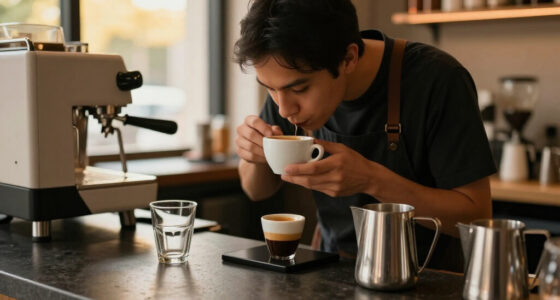
Tasting espresso without pretense means noticing three things — sweetness, acidity, and balance — across the shot’s short life as it cools from ~65–70°C to room temperature. Side-by-side comparison of two shots teaches your palate more than any flavor wheel, and most ‘off’ flavors (sour or harsh bitter) come from extraction problems, not an untrained tongue.
Last month I watched a friend take one sip of espresso, pause dramatically, and announce “notes of bergamot and white peach.” Then he leaned over and whispered: “I have no idea what bergamot is.” That honest whisper is really about where most of us live with espresso.
There’s a growing sentiment in coffee culture that the competition-scorecard approach — 36 flavor descriptors per shot, SCA cupping forms, slurping rituals — has made everyday drinkers feel like their palates aren’t good enough. They are. You taste food every day and make fine distinctions without a scorecard.
This guide covers what to actually notice in a sip, the only three balance checks that matter, four judgment-free home exercises, and when fancy vocabulary earns its keep. No gear beyond a spoon, some water, and two cups of coffee.
Judge every shot on three checks only — sweetness, acidity, and balance — and remember that sour means under-extracted while drying astringency means over-extr…
Taste each shot at 3–4 temperature points as it cools from ~65–70°C to room temperature; most fruit and sweetness appears only after the first two minutes.
Compare two shots side by side rather than tasting solo — comparison trains your palate faster than any vocabulary list or flavor wheel.
Dilute with a splash of still water (as many professionals do) to cut espresso’s 8–12% concentration down and reveal flavors hidden behind intensity.
Skip crema aesthetics as a quality signal — tiger striping reflects freshness and bean oils, and crema naturally fades 1–4 weeks post-roast.
How to Taste Espresso Without Pretending to Be a Judge
No cupping forms. No 36 flavor descriptors. Just three honest checks — sweetness, acidity, and balance — tracked across a shot’s short life as it cools. Your palate is already good enough.
What Happens in One Sip
Espresso tasting is simply paying attention to a 25–40 ml shot across its short life. The shot changes under your nose the whole time — defined by preparation (18–20 g of coffee at ≈9 bar for 25–30 seconds), not by bean or roast.
Aroma
Smell the dry grounds, then the crema. Fruit and floral notes often vanish by the time the shot lands in the cup — retronasal olfaction does most of the work of “taste.”
Initial Sip
The attack. At 8–12% concentration, bitterness and body get shouty — like a song with the volume turned up eight times.
Mid-Palate
Where sweetness, acidity, and body register. Tip of the tongue picks up sweetness; the back catches bitterness.
Finish
The aftertaste. Rounded and chocolatey is the goal; drying and grippy is over-extraction — a brewing problem, not a sophistication test.
The Only 3 Balance Checks That Matter
Three honest questions cover what everyday tasters can genuinely perceive — and they map directly onto what’s happening in your machine.
Sweetness
Not sugar — a natural, rounded, caramelized, juicy quality. If your shot tastes sour or sharp like lemon juice on steroids, that’s usually under-extraction: grind finer or extend the shot.
Acidity
The brightness that makes a shot lively instead of flat. Light roasts lean fruity; dark roasts trade it for roasty depth. Neither is wrong — the question is whether it sparkles or stings.
Bitterness & Balance
Bitterness is part of the profile, like dark chocolate. The flaw is astringency: a drying, sandpaper grip that puckers your tongue — that’s over-extraction, and it’s fixable.
| What You Taste | Verdict | Likely Cause | Fix |
|---|---|---|---|
| Sour, sharp, thin | ✗ Sour | Under-extracted (grind too coarse, shot too fast) | Grind finer; aim for 25–30 seconds |
| Rounded, sweet, juicy | ✓ Balanced | Balanced extraction (~18–22% yield) | Change nothing — this is the target |
| Harsh, drying, astringent | ~ Over-extracted | Over-extracted (grind too fine, shot dragged) | Grind coarser or cut the shot earlier |
Why Your Shot Tastes Better at Minute Four Than Minute One
Volatile aromas become easier to perceive as heat drops, and bitterness registers less intensely. Judge a scalding shot once and you’ve judged a book by its first page — the coffee hasn’t changed; your perception has.
The cooling curve test: taste the same shot at four points. Dark roast shots often reveal their sweetness only when cool. Most fruit and sweetness appears after the first two minutes — but finish within fifteen (milk drinks: discard after two hours at room temperature).
- Skip crema aesthetics Tiger striping reflects freshness and bean oils, not quality — and crema naturally fades 1–4 weeks post-roast.
- Don’t judge early That bitter first sip often softens into something chocolatey and round by minute four.
- Cold isn’t the enemy Your tongue simply works better on liquids that aren’t near-scalding.
4 Home Exercises That Train Your Palate
The fastest way to learn is comparison, not vocabulary — flavor vocabulary is learned through association, never innate.
The One-Word Exercise
Describe each shot with a single honest word before elaborating. “Bright.” “Heavy.” “Sour.” Maybe just “yum.” One true word beats five borrowed ones.
Side-by-Side Comparison
Pull two shots — different roasts, or the same beans pulled fast and slow. Taste alternately. Your brain is a comparison machine, not an absolute-measurement device.
The Milk Test
Split one shot: half straight, half with a splash of milk. A balanced shot stays pleasant in milk; an over-extracted one turns harsh and drying.
The Dilution Splash
Add still water to cut the 8–12% concentration down toward filter strength, revealing flavors hidden behind intensity — a professional trick, not a cheat.
When does fancy vocabulary earn its keep? Only after you’ve built associations. You can’t name “peach” in a coffee until you’ve learned what that aroma smells like on its own. The flavor wheel is a reference tool — not a requirement.
What Happens in One Sip (And Why Espresso Hits Different)
Espresso tasting is the practice of paying attention to a 25–40 ml shot across its short life — aroma first, then the initial sip, the middle of the palate, and the finish. That’s it. No scorecard required. The shot changes under your nose the whole time because espresso is defined by preparation (roughly 18–20 g of coffee pushed through at ≈9 bar pressure for 25–30 seconds), not by bean or roast.
Here’s what makes espresso so much louder than filter coffee: concentration. A shot runs about 8–12% dissolved solids compared to 1.2–1.5% for drip. Think of it like listening to a song with the volume turned up eight times — you notice things you’d miss, but some things (bitterness, body) get shouty. Plus, espresso is an emulsion: oils and CO₂ whipped into those tiny bubbles we call crema, which changes both texture and how aroma reaches your nose.
That small serving size also means a tight window. A filter coffee gives you twenty minutes to noodle over it. Espresso gives you maybe five before it’s cold — although, as you’ll see, cold isn’t the enemy most people think it is.
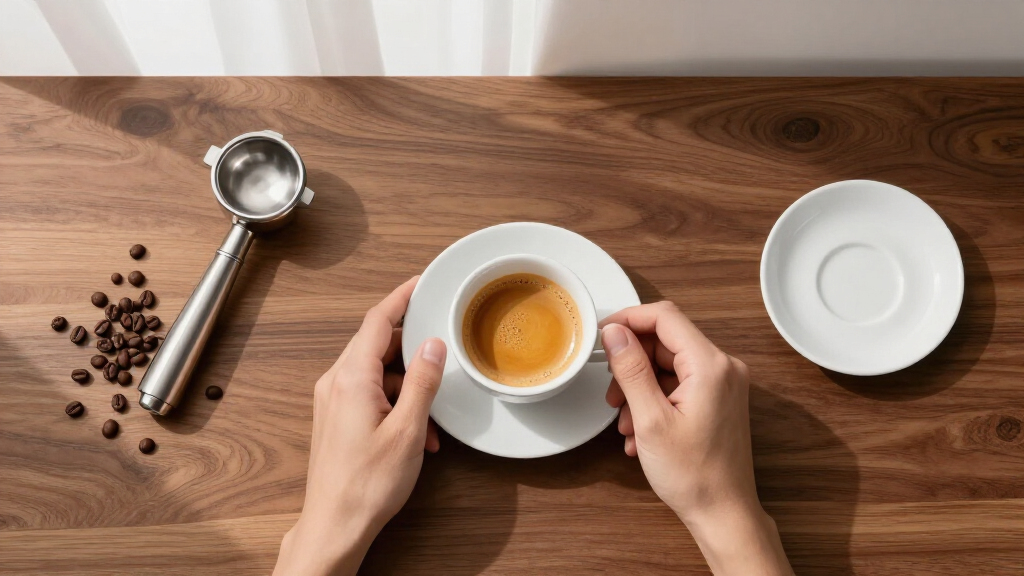
Try this once: before you sip, smell the dry grounds in the portafilter, then smell the crema. You’ll often catch fruit or floral aromas in the grounds that vanish by the time the shot lands in the cup. Smell does most of the work of “taste” — retronasal olfaction, the aroma that travels from the back of your mouth to your nose, is where most flavor actually lives.
The Only 3 Balance Checks That Matter
You can evaluate any shot of espresso with three honest questions: is it sweet, is the acidity pleasant or sharp, and is the bitterness rounded or harsh? Forget the 36-descriptor cupping form. These three checks — sweetness, acidity, balance — cover what everyday tasters can genuinely perceive, and they map directly onto what’s happening in your machine.
Sweetness isn’t about sugar. A well-extracted shot has a natural, rounded sweetness — think caramelized, juicy, satisfying. If your shot tastes sour or sharp like lemon juice on steroids, that’s usually under-extraction: the water didn’t pull enough from the grounds. Grind finer or extend the shot.
Acidity is the brightness — the thing that makes a shot lively instead of flat. Light roasts lean fruity and bright; dark roasts trade that for roasty depth. Neither is wrong. The question is whether the acidity sparkles or stings.
Bitterness and balance trip people up most. Is bitter espresso bad? No — bitterness is part of the profile, the way it’s part of dark chocolate or grapefruit IPA. The flaw is astringency: a drying, grippy, sandpaper sensation that makes your tongue feel puckered. That’s over-extraction, and it’s a brewing problem, not a sophistication test.
| What you taste | Likely cause | Fix |
|---|---|---|
| Sour, sharp, thin | Under-extracted (grind too coarse, shot too fast) | Grind finer; aim for 25–30 seconds |
| Rounded, sweet, juicy | Balanced extraction (~18–22% yield) | Change nothing — this is the target |
| Harsh, drying, astringent | Over-extracted (grind too fine, shot dragged) | Grind coarser or cut the shot earlier |
A quick tip from the pro world: professionals often add a splash of water to a shot to dilute it back toward filter strength. At 8x concentration, some flavors hide behind the intensity. A splash of still water can reveal whether that “bitter” shot is actually balanced underneath.
Why Your Shot Tastes Better at Minute Four Than Minute One
Espresso tastes different as it cools because volatile aroma compounds become easier to perceive at lower temperatures and bitterness registers less intensely — many flavors only appear as a shot drops from roughly 65–70°C toward room temperature. If you taste a shot once while it’s scalding hot and write it off, you’ve judged a book by its first page.
The coffee itself hasn’t changed. Your perception has. Aroma compounds volatilize differently as heat drops, and your tongue simply does a better job with liquids that aren’t near-scalding. That bitter first sip often softens into something chocolatey and round by minute four.
Espressoguide’s favorite free exercise is the cooling curve test: taste the same shot at four points — hot (around 65°C), warm (around 45°C), cool (around 30°C), and room temperature. Most people are startled by how much a single shot transforms. Fruits show up late. Dark roast shots often reveal their sweetness only when cool.
One food-safety note worth keeping: don’t let that curiosity stretch too long. Espresso left sitting for hours is a bacterial playground, and milk-based drinks are worse — keep milk drinks refrigerated and discard anything with milk that’s sat at room temperature beyond two hours. Taste the cooling curve within fifteen minutes, then move on.
4 Home Exercises That Train Your Palate Without Turning You Into a Snob
The fastest way to learn how to taste espresso is comparison — not vocabulary. Sensory science backs this up: you can’t name “peach” in a coffee until you’ve learned what that aroma smells like on its own. Flavor vocabulary is learned through association, never innate. So build associations, one honest word at a time.
- The one-word exercise. Before you elaborate on anything, describe each shot with a single honest word. “Bright.” “Heavy.” “Sour.” Maybe just “yum.” One true word beats five borrowed ones.
- Side-by-side comparison. Pull two shots — different roasts, or the same beans pulled differently (one fast, one slow). Taste them alternately. This single exercise teaches more than a month of solo tasting, because your brain is a comparison machine, not an absolute-measurement device.
- The milk test. Split one shot: half straight, half with a splash of milk. A balanced shot stays pleasant in milk; an over-extracted shot turns harsh and drying. How a shot behaves in milk reveals balance faster than any scorecard.
- Smell everything at home. Open your spice rack. Smell cinnamon, cardamom, cacao, dried fruit. This is what expensive aroma kits do, and your kitchen does it free. You’re building the scent library that makes tasting vocabulary possible later.
Do you need to slurp? It helps — slurping aerates the coffee across your whole palate, spreading flavor to the tip (where you sense sweetness), the sides (acidity), and the back (bitterness). It’s a tool, not a performance. Sip quietly if you prefer. Nobody’s scoring style points.
The Tasting Mistakes Almost Everyone Makes (Including the Pretend Judges)
The most common espresso tasting mistake is using borrowed vocabulary without perceiving anything behind it — saying “bergamot” because the bag said bergamot. The notes on a coffee bag are producer and roaster guidance, not a checklist. Perception varies enormously between people, partly due to genetics (some people are “supertasters” with denser taste buds), partly due to what you’ve learned to notice.
Other traps worth naming:
- Judging the crema like a scorecard item. Tiger striping looks gorgeous, but it’s mostly a function of freshness and bean oils, not quality. Crema fades naturally one to four weeks post-roast as CO₂ escapes — a two-week-old bag of excellent coffee can pour blond and taste phenomenal.
- Confusing preference with quality. You might personally love a dark, syrupy traditional roast and find modern light-roast espresso thin. Both can be excellently made. “I don’t like it” and “it’s badly made” are different sentences.
- Judging too early. That first scalding sip is the worst possible data point. Wait two minutes and the same shot may taste like caramel.
- Tasting past fatigue. Palate fatigue sets in fast — professional cuppers cleanse between samples and limit how many they taste for exactly this reason. After three or four shots, your tongue is lying to you. Water, a plain cracker, and a reset.
There’s a reason baristas on YouTube and TikTok actively mock over-the-top tasting rituals: the industry itself has shifted from gatekeeping to accessibility, and many cafés now skip flowery tasting notes on menus entirely. Everyday drinkers feel this shift — you’re allowed to be part of it.
When Fancy Vocabulary Actually Earns Its Keep
Flavor vocabulary becomes useful exactly when it’s descriptive, not performative — when a word helps you communicate what you taste or helps you notice something new. The SCA Coffee Tasters Flavor Wheel (updated 2016 in partnership with the Sensory Spectrum team) is a genuinely good reference tool: start in the center with broad categories, move outward only when something specific clicks. It’s a map, not a mandate.
Practical moments when vocabulary pays off:
- Talking to your roaster. “It tastes drying and harsh at the end” gets you better help than “it’s bad.” Specific words, specific fixes.
- Dialing in a new bag. “Sour and sharp” means grind finer; “bitter and hollow” means coarser. Naming the flaw names the fix.
- Remembering what you liked. “Juicy and berry-like” is a better shopping note than “the blue bag, I think.”
A relevant trend: the rise of lighter-roast “modern espresso” and high-ratio styles like turbo shots — longer, faster pulls that produce sweeter, tea-like shots many novices find easier to taste than the traditional dark, syrupy style. If traditional espresso has always tasted like burnt toast to you, a light-roast or turbo-style shot might be your doorway in. Traditionalists, especially in Italy, remain unconvinced. Both camps are right about their own preferences.
And should you drink the crema, or stir or spoon it off? Pure preference. Stirring homogenizes the shot so the first sip matches the last — many baristas recommend a quick stir precisely because an unstirred shot starts intensely bitter at the top. Either choice is correct.
Frequently Asked Questions
Am I supposed to taste all the flavor notes printed on the bag?
No. Those notes are producer and roaster guidance — a general map of the coffee’s character, not a checklist. Perception varies hugely between people due to genetics and learned aroma associations. If you taste “chocolate” and the bag says “apricot,” you’re not doing it wrong.
Why does my espresso just taste bitter or sour?
Almost always extraction, not your palate. Sour and sharp means under-extraction — grind finer or extend the shot toward 25–30 seconds. Harsh and drying means over-extraction — grind coarser or stop the shot earlier. Also taste the shot again as it cools; bitterness registers less at lower temperatures.
Should I drink the crema or stir it off?
Either works — it’s preference. Crema is concentrated and bitter, so an unstirred shot’s first sip tastes more intense than the rest. Stirring homogenizes the shot so every sip matches. Many baristas recommend a quick stir for exactly this reason.
Is light roast or dark roast better for espresso?
Neither — it’s preference-dependent. Light roasts lean fruity, floral, and bright (the “modern espresso” style); dark roasts lean chocolatey, roasty, and heavy. If traditional espresso always tastes burnt to you, try a lighter roast or a longer, higher-ratio shot, which tends to taste sweeter and more tea-like.
How do I train my palate without becoming a snob?
Comparative tasting — two shots side by side — plus the one-word exercise: describe each shot with a single honest word before elaborating. Smell spices, fruit, and cacao at home to build the scent library that makes specific vocabulary possible later. Skip the performance; keep the attention.
Conclusion
Tasting espresso without pretending to be a judge means trusting your own palate, using one honest word before five borrowed ones, and comparing instead of performing. The difference between tasting and just drinking is attention — no cupping spoon, aroma kit, or flavor wheel required. A spoon, some water, and two shots beat any gear you can buy.
Next shot you pull: sip it hot, wait three minutes, sip it again, and notice what changed. Your palate has been collecting data your whole life. Today you just read the results.
Halloween Picks
halloween
As an affiliate, we earn on qualifying purchases.