
TL;DR

Get coffee and tea gear delivered free with Prime
- Fast, free delivery on millions of items
- Prime Video, Amazon Music and more included
- Member-only deals all year
Espresso recipes look precise because small changes in dose, yield, grind, and flow can noticeably change a concentrated drink. Measurements help you repeat a shot and troubleshoot it; they are reference points, while taste decides whether the recipe works for your coffee and equipment.
A difference of just a few grams can turn a sweet, balanced espresso into a sharp or dry one. That’s why a recipe might tell you to use 18 grams of coffee, yield 36 grams of espresso, and finish in about 28 seconds.
Those numbers can look like strict rules. They work better as landmarks: they help you repeat a shot, spot changes, and make sensible adjustments. Here’s what each number tells you—and how to let taste guide the final recipe.
Dose measures the dry coffee in the basket; yield measures espresso weight in the cup.
An 18-gram dose and 36-gram yield make a 1:2 ratio, a common starting point rather than a universal ideal.
Use time to check how a shot flows, not to score its quality; taste can reveal problems the timer misses.
Keep dose steady, adjust grind to guide flow, then change yield to tune flavor one step at a time.
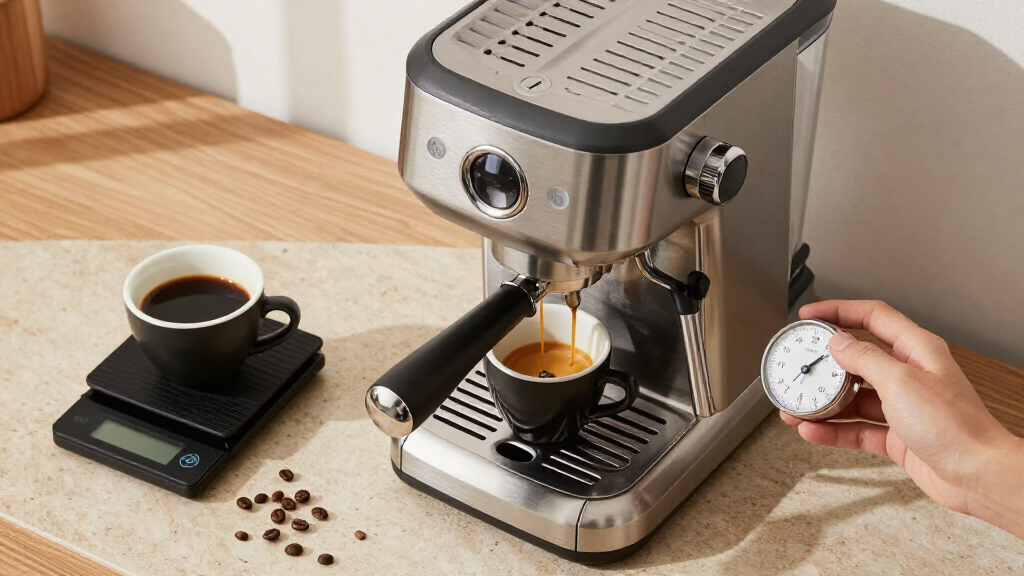
A small scale that fits under your cup can help with repeatability; a premium model is not required.
A practical guide to the numbers in your cup
Why Espresso Recipes Look So Precise
A few grams or a small grind change can shift a concentrated shot from sweet and balanced to sharp or dry. Measurements help you repeat and troubleshoot; taste decides whether the recipe works for your coffee and equipment.
At a glance / the useful takeaway
Precision gives you a map.
Taste picks the route.
A recipe makes a shot easier to repeat, compare, and adjust. It cannot promise that a particular coffee, grinder, basket, or palate will love the result.
Dose is the dry coffee in the basket; choose an amount that suits its size.
Yield is the espresso’s weight in the cup and shapes concentration.
18 g in and 36 g out equals 1:2, a common start rather than an ideal for all.
Use time to notice changes in flow. It does not grade the shot.
Hold dose steady, guide flow with grind, then adjust yield to tune flavor.
01 / Read the recipe
Four numbers, four different jobs
Together, dose, yield, ratio, and time describe what went in, what came out, and how quickly water moved through the coffee.
| Measure | What it tells you | Example |
|---|---|---|
| Dose | Dry coffee placed in the basket. It should fit the basket’s size. | 18 grams of ground coffee |
| Yield | Espresso weight in the cup; it affects concentration and how much soluble material reaches the drink. | 36 grams of espresso |
| Brew ratio | The relationship between dose and yield. A starting point you can tune for the coffee. | 18 g in, 36 g out = 1:2 |
| Time | A diagnostic clue about flow. Compare it with your usual shot and recipe. | About 28 seconds |
Why weigh instead of eyeballing volume? Crema can make a fresh shot look fuller than the liquid underneath. A scale measures beverage weight through that foamy layer, making shots easier to compare.
02 / A repeatable routine
Make one change at a time
The point of a recipe is not to chase every number. Use it to make a shot you can repeat, then let the cup guide the next adjustment.
Set dose
Pick an amount that suits your basket. Keep it steady.
Choose yield
Start with a target such as 36 g from 18 g.
Prepare evenly
Distribute and tamp so water can flow evenly.
Pull and record
Weigh the drink and note the time as a flow check.
Taste, adjust
Change one variable, then see what the cup tells you.
If a shot runs fast and tastes weak, keep the dose steady, grind a little finer, and pull again. Changing dose, yield, and grind together hides which adjustment helped.
03 / Let flavor lead
Time can’t taste your espresso
A shot can hit its expected time and still taste harsh, thin, sour, or unbalanced. Taste suggestions are hypotheses to try, not guarantees.
Try a longer yield or finer grind
These changes may help bring more sweetness and balance into the cup. Change one first, then taste again.
Try a shorter yield or coarser grind
A smaller output or a change to flow may soften the result. Keep the rest of your routine consistent.
A much faster or slower shot can point to grind, puck preparation, or setup changes. It is not a quality score.
A shot that tastes sour and dry can have uneven extraction, even when its total time looks right.
Check preparation and the coffee bed before assuming the timer alone explains the cup.
04 / Why recipes vary
The same numbers can make a different cup
Coffee and equipment change how a recipe behaves. Your best ratio depends on the beans, your setup, and the flavors you enjoy.
Variables around the coffee
These categories interact; the bars are a visual checklist, not a measurement of relative impact.
A ratio is a preference, too
A light roast may suit you with a longer ratio for sweetness and clarity. Another coffee or a preference for a richer, more concentrated shot may point to a shorter yield. Neither is universally right.
Modern grinders, precision baskets, and pressure or flow controls offer more ways to experiment. Dose, yield, grind, and even puck preparation are plenty to start with.
05 / Tools and online recipes
Measure simply. Borrow recipes wisely.
Small scales and timed shots make home espresso easier to track. Online recipes make approaches easier to compare, but each one reflects a particular coffee and setup.
A small scale that fits under your cup and reads in tenths of a gram makes weighing convenient. A premium model is not required for a consistent routine.
Many people stop a shot by beverage weight and use time as a flow check. Treat posted numbers as a first attempt, then adjust for your beans and equipment.
Why precise espresso numbers make shots easier to repeat
Why espresso recipes look so precise is simple: espresso concentrates coffee into a small drink, so small changes in brewing can have a noticeable effect on taste. A measured dose and yield give you a repeatable starting point, while time helps you see whether water flowed through the coffee as expected.
Say you pull a shot that tastes sweet and balanced before work. If you write down the dose, yield, and time, you can try to make that same cup tomorrow. Without those notes, “about a double shot” could mean a different amount of coffee or a longer pour, and the result may taste thinner or more bitter.
Numbers also let you troubleshoot one change at a time. If you keep the dose and yield steady but grind a little finer, you can taste what that adjustment did instead of guessing which part of the recipe changed.
What dose, yield, ratio, and time tell you
Espresso recipes often specify dose, yield, brew ratio, and time because each describes a different part of the shot. Together, these numbers help you understand how much coffee went in, how much drink came out, and how quickly water moved through the puck.
For example, a recipe might specify numbers such as 18 grams of coffee in and 36 grams of espresso out. That’s a 1:2 brew ratio: for each gram of dry coffee, the cup holds two grams of espresso. It’s a popular place to begin, not a promise that every coffee tastes best at that ratio.
| Measurement | What it tells you | Example |
|---|---|---|
| Dose | Dry coffee placed in the basket; it should suit the basket’s size. | 18 grams of ground coffee |
| Yield | Weight of espresso in the cup; it affects concentration and how much soluble material enters the drink. | 36 grams of espresso |
| Brew ratio | The relationship between dose and yield. | 18 grams in, 36 grams out = 1:2 |
| Time | A clue about how quickly the shot flows. | About 28 seconds, depending on the recipe and setup |
Time is a diagnostic clue, not a quality score. If a shot suddenly runs much faster than usual, grind size, puck preparation, or the machine setup may have changed. A shot that lands on the expected time can still taste harsh, thin, or sour.
Weight helps you measure espresso more consistently than volume. A fresh shot’s crema can rise into a thick golden layer, making a measuring cup look full even when the amount of liquid below it differs. A scale tracks the drink’s weight through that foamy surface.
How to use a recipe without chasing every number
Why espresso recipes look so precise becomes clearer when you use them to guide a repeatable routine, then taste the result. Start with the coffee and basket in front of you; a recipe written for another grinder or a different basket may need adjustment.
- Choose a starting dose that suits your basket, and keep it consistent between shots.
- Set a target yield, such as 36 grams from an 18-gram dose, to give yourself a starting ratio.
- Grind and prepare the puck evenly so water can pass through the coffee without favoring one channel.
- Pull the shot and record its time while measuring the espresso’s weight.
- Taste, then change one variable. If the shot tastes sharp or thin, try a longer yield or a finer grind. If it tastes overly bitter or dry, try a shorter yield or a coarser grind.
Imagine your morning shot runs much faster than the recipe’s rough timing and tastes weak. Keep the dose the same, grind a little finer, and pull another shot. If you change the dose, yield, and grind all at once, you won’t know which adjustment helped.
Taste suggestions are starting hypotheses, not guarantees. A sour taste can point toward under-extraction, but uneven flow can leave some parts of the puck tasting sour while others taste bitter. Check the coffee bed and your preparation before assuming the timer alone explains the cup.
Why one recipe can taste different with another coffee
Why espresso recipes look so precise does not mean one set of numbers works for every bean and machine. Origin, processing, roast, age, and storage affect how a coffee behaves, while your grinder, basket, water, and preferences affect the result in the cup.
A light-roast coffee may taste better to you with a longer ratio that brings out sweetness and clarity. Another coffee, or your preference for a richer and more concentrated shot, may lead you to try a shorter yield. Neither choice makes one recipe universally right.
Grind and puck preparation matter because they influence where water flows. Picture a shot that reaches 28 seconds but tastes both sharp and dry. That mixed result can point to uneven extraction; matching the time has not made the water reach every part of the puck evenly.
Modern grinders, precision baskets, and machines with pressure or flow controls give experienced home baristas more ways to experiment. For most people, dose, yield, grind, and even preparation provide plenty to work with. Start with those basics before adding more variables.
How scales and online recipes help—and where they fall short
Why espresso recipes look so precise is partly a story of easier measurement: small scales and timed shots let home baristas track dose and yield instead of judging a pour by eye. Online recipe sharing also makes it simple to compare approaches, though a posted recipe may fit a different coffee, basket, or grinder.
A small scale that fits under your cup and reads in tenths of a gram can make weighing more convenient. You do not need a premium model to build a consistent routine. If you only change one thing at a time and write down the result, an ordinary suitable scale can still help you learn.
For repeatability, many people stop a shot by beverage weight and use time as a check on flow. Machine design and personal workflow can affect that choice. Follow a routine you can repeat, then record whether the resulting espresso tastes good.
Precise online recipes can create the impression that every shot must hit a narrow target. In practice, the same numbers can taste different from one setup to another. Treat a shared recipe as a useful first attempt, then adjust it to your beans and equipment.
A simple way to find your own good starting point
Why espresso recipes look so precise matters most when you use a recipe to make a decision. Choose a repeatable dose and yield, observe the time, and taste; then make one small change and see what happens.
If you are not sure where to begin, keep a short note beside your machine. Record the coffee, dose, yield, time, grind adjustment, and a few words about taste. A note like “18 in, 36 out, fast, thin” gives you something useful to work from on your next shot.
- Keep dose consistent while you learn how your basket behaves.
- Adjust grind to bring the shot into a workable flow range.
- Change yield to tune taste once the flow looks reasonable.
- Change one variable at a time so you can connect each adjustment to its result.
Time alone cannot tell you how much caffeine is in a shot; coffee type, dose, extraction, and serving size also matter. The most useful recipe is a record of what worked for this coffee on this setup—not a guarantee that every future shot will match it exactly.
Frequently Asked Questions
Why does an espresso recipe give a time if grind changes it?
Time helps you check how the shot flows, so a faster or slower pour can alert you to a change in grind, puck preparation, or machine setup. It is a diagnostic clue, not a quality score; taste tells you whether the shot suits you.
Is a 1:2 espresso ratio the correct ratio?
A 1:2 ratio is a common starting point, such as 18 grams of coffee yielding 36 grams of espresso. A shorter or longer ratio may taste better with a particular coffee, roast, or preference.
Should I stop the shot by time or by weight?
Many people stop by beverage weight for repeatability and use time to check the shot’s flow. Your machine and routine can affect which method feels practical, so choose a method you can repeat.
Why does my espresso taste bad when I matched the recipe?
Matching the numbers does not guarantee balanced taste. The recipe may not suit your coffee or setup, or uneven puck preparation may send water through the grounds inconsistently. Check freshness, grind, basket fit, and preparation, then change one variable at a time.
Why do espresso recipes use grams instead of milliliters?
Weight gives you a more consistent measure of espresso output than volume. Crema changes how full a measuring cup looks, so volume can be misleading from one shot to the next.
Conclusion
Use espresso numbers to repeat a shot and learn from each adjustment, then let taste guide the recipe. Dose and yield give you landmarks, and time gives you a clue; together, they turn the next cup from guesswork into a small, useful experiment.
Keep your notes simple. A few measured grams today can lead to a much sweeter cup tomorrow.
Evergreen bestsellers Picks
bestsellers
As an affiliate, we earn on qualifying purchases.