TL;DR

Get coffee and tea gear delivered free — and shop member deals
- Fast, free delivery on millions of items
- Access to Prime Big Deal Days deals on October 6–7
- Prime Video, Amazon Music and more included
Brew temperature affects which coffee compounds dissolve into the cup and how quickly they do so, changing a coffee’s strength and flavor balance. Hotter water can speed extraction, while cooler water can leave a short brew thin or sour, but temperature alone does not determine acidity or bitterness. Start around 90–96°C (195–205°F) for many hot-brew recipes, keep other variables steady, and adjust in small steps.
A cup can taste lemon-bright one morning and harshly bitter the next, even when you use the same beans. Sometimes the difference is just a few degrees in your kettle—but temperature is not a flavor switch that turns acidity up or bitterness down.
Brew temperature affects which coffee compounds dissolve into the cup and how quickly they do. That changes extraction, strength, and the way flavors balance. Yet grind size, roast, brew time, water, and method all play a part, so the same temperature can make one coffee sing and another taste rough.
Here, you’ll learn why brew temperature changes acidity and bitterness, how to tell sourness from natural brightness, and how to test a better setting without changing your whole recipe. You’ll also get a simple troubleshooting process for a thin, sour cup or a bitter, drying one. Think of temperature as a steering wheel, not the whole car.
Hotter water generally speeds extraction, but it does not automatically make every coffee more bitter.
Coffee tasters use “acidity” to mean a bright flavor impression as well as the presence of acids; bright taste does not prove low pH.
For many hot-brew recipes, 90–96°C (195–205°F) is a starting range, not a universal best temperature.
When coffee tastes sour or harsh, adjust one variable at a time and keep the beans, dose, grind, water, and method steady during a temperature test.
Cold brew often tastes smoother, but perceived smoothness does not prove it has lower measured acidity or less caffeine.
What brew temperature changes in your cup
Brew temperature changes how quickly water extracts coffee compounds and which compounds make it into your cup. Hotter water generally speeds extraction; cooler water slows it. In a fixed-length brew, that difference can shift a cup from thin and sharp to stronger and more balanced—or, if extraction becomes excessive or uneven, toward harshness and dryness.
Water doesn’t pull every flavor out in one sweep. It dissolves a mixture of acids, sugars, aromatic compounds, and substances associated with bitterness, and those don’t all enter the brew at the same pace. Temperature influences extraction speed, while the coffee’s roast and structure help determine what’s available to extract. Picture steeping a tea bag: a hotter mug changes how quickly the color and flavor spread, but the leaf and steep time still matter.
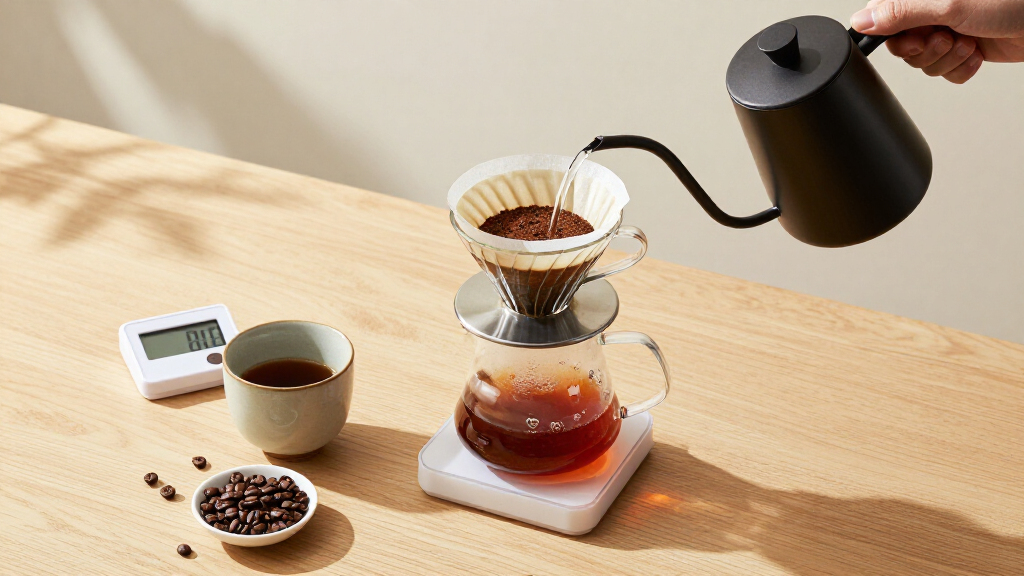
That’s why “hotter means more bitter” is too simple. A hotter pour over a light roast might bring out more sweetness and round out a sour edge; the same adjustment in a fine-ground, dark roast could push an already strong cup toward a rough finish. Temperature interacts with grind and time, rather than working alone.
For many hot-brew recipes, 90–96°C (195–205°F) is a useful starting range, not a universal law. If your brewer offers temperature control, try small changes within its guidance. If it doesn’t, consistency still helps: use the same kettle routine, dose, grind, and pour, then judge the cup.
coffee brewing temperature thermometer
As an affiliate, we earn on qualifying purchases.
As an affiliate, we earn on qualifying purchases.
Why brew temperature changes acidity and bitterness differently
Why brew temperature changes acidity and bitterness is best answered by separating extraction from taste: temperature affects extraction speed, while the coffee’s ingredients and your brewing recipe shape what you perceive. Hotter water can extract more in the same time, but it doesn’t automatically make a cup more acidic or more bitter. The result depends on which compounds are present and how the rest of the recipe behaves.
Acidity has two meanings in coffee conversation. Chemically, acids are present in the brew; in tasting, “acidity” often means a lively, bright impression, like citrus, apple, or berries. A bright-tasting coffee does not necessarily have a particularly low pH. So if your washed light roast tastes like lemon, that impression isn’t proof that you need to cool the water.
Bitterness has its own complications. Roast-derived flavors can taste bitter even when you brew carefully, especially in a dark roast. A very fine grind, long contact time, or uneven extraction can also make bitterness and drying flavors stand out. Temperature may intensify extraction, but it cannot tell you which of those factors caused the taste by itself.
Try a practical comparison: brew the same medium roast twice, keeping the dose, grinder, water, and method the same, but use water a few degrees apart. If the warmer cup tastes fuller and sweeter, the cooler cup may have been under-extracted. If it feels dry and rough, the hotter setting may have pushed this particular recipe too far. Taste is evidence; one sip isn’t a diagnosis.
coffee extraction temperature control
As an affiliate, we earn on qualifying purchases.
As an affiliate, we earn on qualifying purchases.
How to tell a sour brew from naturally bright coffee
A sour, thin brew often points to under-extraction, while a bright, balanced coffee can taste lively without being faulty. The clues are in the whole sip: under-extracted coffee may feel hollow, sharp, and short-lived, while pleasant brightness usually sits alongside sweetness, aroma, and a fuller finish. Temperature is one possible adjustment, not the only explanation.
Imagine you’ve bought a light roast that smells of berries, but your morning pour over tastes like tart lemon water. If the cup is weak and disappears quickly, try slightly hotter water or a longer brew before changing everything. If it has a strong berry aroma and a juicy, clean finish, that brightness may be the character of the bean rather than a brewing problem. Brightness with sweetness differs from sourness without balance.
Grind size and contact time matter here. A grind that is too coarse can let water pass through quickly, leaving a short pour over under-extracted. A hotter setting might help, but it may not fix a brew that drains in half the intended time. Similarly, a light roast can need a different recipe from a dark roast, even when both use the same brewer.
Use your senses in order: notice whether the coffee smells developed, whether the first taste brings sweetness as well as tang, and whether the finish feels clean or thin. If you’re uncertain, taste it after it cools a little; very hot coffee can hide detail. Then adjust one variable, make another cup, and compare. That gives you a useful answer instead of a string of guesses.
As an affiliate, we earn on qualifying purchases.
What to change when coffee tastes bitter or drying
If coffee tastes harsh, bitter, or drying, try slightly cooler water or shorter contact time, then check whether your grind is unusually fine. Those changes can reduce how much extraction happens in your recipe, but they won’t erase bitterness that comes from a dark roast. The best fix depends on whether the problem comes from the beans, the brewing, or both.
Say you’re brewing a dark roast in a French press and the cup leaves a dry feeling on your tongue. The roast itself may contribute a bitter, smoky flavor; a long steep or a very fine grind could add to it. First, keep the dose and water constant and shorten the steep slightly. If the result improves, time was likely part of the issue. If not, lower the temperature a little or try a coarser grind on the next brew.
Change one variable at a time. If you cool the water, coarsen the grind, and cut the steep all at once, you won’t know which change helped. Also check your coffee-to-water ratio: coffee that’s simply too concentrated can taste intense and bitter, even if extraction is reasonable.
Think of troubleshooting like tuning a guitar one string at a time. If every adjustment happens at once, you can’t hear which one brought the melody back. A small temperature change is easy to test, but it isn’t always more powerful than grind size or brew time. If your cup tastes bitter but not dry, the roast may be the main story; if it tastes bitter and puckering, extraction deserves a closer look.
As an affiliate, we earn on qualifying purchases.
A simple temperature test you can run at home
You can find a better brewing temperature by changing temperature alone while keeping your coffee, grind, dose, water, and brew method constant. Make two small brews side by side, taste them under similar conditions, and write down what changes. This simple comparison is more useful than adjusting several settings until one cup happens to taste good.
- Pick a starting recipe. Use your usual beans and method, and measure the same coffee and water for each brew. For many hot-brew methods, a starting point somewhere around 90–96°C (195–205°F) works, though your brewer’s instructions should guide you.
- Choose two nearby temperatures. Keep the difference modest rather than comparing near-boiling water with a much cooler brew. Use a thermometer or a kettle with temperature control when available.
- Brew both cups the same way. Match the grind, pour pattern, contact time, and water. Even a small difference in dose or pour speed can muddy the comparison.
- Taste and take notes. Look for sweetness, brightness, bitterness, body, and a dry finish. Taste at a similar serving temperature because aroma and heat influence what you notice.
- Repeat the better setting, then adjust one more step if needed. A single tasting is useful, but repeating it helps you avoid mistaking a random brewing difference for a temperature effect.
For example, if the warmer cup tastes sweeter but not harsh, keep that setting and make it again tomorrow. If both cups taste sour, check grind size and brew time next; temperature may not be the main obstacle. A short notebook entry—beans, temperature, and one taste note—can save you from repeating the same experiment every morning.
Consistency makes the test meaningful. If the kettle cools while you grind, record when you measured the water. If you brew espresso, follow the machine’s operating guidance and change one setting at a time. The goal isn’t to find a magic number; it’s to find a repeatable recipe that suits your coffee.
How cold brew changes the temperature story
Cold brew extracts coffee at a lower temperature over a much longer time, so it can taste smoother and less sharply bright to many people. That flavor impression does not mean cold brew is always chemically less acidic, less bitter, or lower in caffeine. Beans, grind, steep time, coffee-to-water ratio, filtration, and dilution all shape the finished drink.
For instance, a jar of coarsely ground coffee steeped in the refrigerator overnight can taste rounder than a quick hot pour over made from the same beans. The long steep gives cool water time to extract flavor that a short, cool brew might leave behind. Yet one batch can still taste harsh if the recipe runs too long or the coffee is ground too finely.
Perceived acidity and measured acidity are different questions. A smooth-tasting cold brew may feel less tangy, but you can’t infer its pH from that impression alone. Nor can you assume it contains less caffeine: the amount depends on the recipe and serving, including how much concentrate you dilute.
When you compare cold brew with hot coffee, treat it as a different method, not a clean temperature experiment. If you want to test temperature itself, hold other variables steady as much as possible. If you simply want a less sharp iced drink, try a cold-brew recipe you enjoy, then adjust steep time, ratio, and dilution one at a time. Keep prepared coffee refrigerated and follow safe food-handling practices; don’t leave a batch sitting at room temperature for extended periods.
Which brewing variable should you adjust first?
Choose your first adjustment based on what the cup tastes like and how it was brewed: a small temperature change is easy to test, while grind size, time, and ratio may matter more in some recipes. No single variable always deserves first place. The aim is to make one controlled change, taste the result, and keep the adjustment only if it improves the cup.
| What you notice | First test | What to keep steady |
|---|---|---|
| Sour, thin, and short-lived | Try slightly hotter water or a little more contact time | Keep dose and grind the same for that test |
| Harsh, bitter, and drying | Try slightly cooler water or shorten contact time | Keep ratio and method constant |
| Strong but unpleasantly intense | Check the coffee-to-water ratio | Keep grind and temperature constant |
| Weak despite a reasonable temperature | Check grind size and brew time | Keep dose, water, and method constant |
Imagine your morning drip coffee tastes both weak and sour. It may be tempting to raise the temperature, grind finer, add coffee, and slow the pour all at once. Instead, check whether the water is moving through the bed too quickly; then test either a modestly finer grind or a slightly longer brew. If the coffee gains body and sweetness, you’ve learned something specific.
Use the table as a starting point, not a verdict. A dark roast can taste bitter because of the roast, while a naturally bright bean may remain lively after a well-balanced brew. Water chemistry and brewer design also influence results. Change only what you can measure and repeat, and let the cup—not a fixed rule—tell you whether the adjustment helped.
Frequently Asked Questions
Does hotter water make coffee more acidic?
Not automatically. Hotter water can speed extraction, but perceived brightness depends on the coffee’s acids, other flavor compounds, roast, and recipe. A bright-tasting cup also does not necessarily have a particularly low pH.
Does hotter water always make coffee more bitter?
No. It may extract coffee faster, which can make harsh or drying flavors stand out if the brew becomes excessive or uneven. Roast, grind size, contact time, water, and brew method also affect bitterness.
What is the best temperature for brewing coffee?
There is no single best temperature for every bean and method. Many hot-brew recipes start around 90–96°C (195–205°F), but follow your brewer’s guidance and adjust to taste. A few degrees can change the result, especially alongside a fine grind or long brew time.
Why does my coffee taste sour?
A thin, sharp, short-lived cup can point to under-extraction, which may respond to slightly hotter water, more contact time, or a finer grind. But a naturally bright light roast can taste citrusy even when brewed well. Look for sweetness and balance before deciding that every tangy note is a flaw.
Is cold brew less acidic than hot coffee?
Cold brew often tastes smoother and less sharply bright, but that taste alone does not prove lower measured acidity. The beans, steep time, grind, ratio, filtration, and dilution all affect the finished drink. Keep cold brew refrigerated and handle it as a perishable prepared beverage.
Conclusion
Remember that temperature steers extraction; it doesn’t dictate flavor by itself. Start within your brewer’s guidance, keep your recipe steady, and adjust water temperature in small steps when a cup tastes thin, sour, harsh, or drying. If the taste doesn’t improve, check grind, time, roast, and ratio instead of forcing the temperature to solve everything.
Make one change, brew again, and let the next cup tell you what worked. The best setting is the one that turns your beans into a cup you’re happy to finish.
Halloween Picks
halloween
As an affiliate, we earn on qualifying purchases.