
TL;DR

Get coffee and tea gear delivered free with Prime
- Fast, free delivery on millions of items
- Prime Video, Amazon Music and more included
- Member-only deals all year
Pressure decline is a gradual reduction in brewing pressure during an espresso shot. As the puck changes, a lower pressure can alter how water moves through it, which may change extraction, texture, or the risk of uneven flow. A gentler finish can help one recipe and make another taste thin or sharp; no curve guarantees a flavor outcome. Compare matched shots and let taste guide your adjustments.
A shot can start with a rush and finish with a thin, pale trickle—and that change in the cup may start with what happens to pressure as water moves through the coffee. A pressure decline means brewing pressure falls during the shot, rather than staying at one level from start to finish.
That falling curve changes the force available to move water through the puck. If pressure drops as the bed opens up, it may reduce stress on fragile paths late in the shot. If it drops before the puck is well wetted or extraction has progressed enough, water may move less effectively and the cup can taste thin, sour, or less intense. The result depends on the coffee and the whole recipe.
Here, you’ll learn what pressure decline is, how it can change espresso flavor, and how to compare profiles without letting grind, yield, or puck preparation muddy the result. You don’t need to chase a complicated curve. You need a fair comparison and a cup that tastes better to you.
Pressure decline means brewing pressure falls during the shot instead of staying at one level from start to finish.
Pressure and flow are connected through puck resistance, but they measure different things; a flow-controlled machine may show falling pressure while maintaini…
A declining profile may alter sweetness, acidity, bitterness, and body, but it does not guarantee a sweeter or less bitter shot.
For a fair test, keep coffee, dose, grind, water, temperature, puck preparation, and yield steady while changing only the profile.
Use taste to guide small adjustments; a pressure reading or shot time alone cannot tell you whether the espresso improved.
How Pressure Decline Can Change Espresso Flavor
A falling pressure curve changes the force pushing water through the puck. It may shift flow, extraction, texture, and balance—but no curve guarantees a flavor outcome.
What pressure decline means
Pressure decline is a gradual reduction in brewing pressure during a shot, rather than holding one level from start to finish. It may be programmed, follow a changing flow phase, or arise as puck resistance changes. The effect depends on the coffee, machine, and full recipe.
Pressure describes force; flow describes how quickly water moves. They are connected through puck resistance, but they are not interchangeable.
A gentler late phase may suit one puck and recipe. A steep or early decline can leave another shot thin, hollow, or sharp.
Keep coffee, dose, grind, water, temperature, preparation, and yield steady to learn what the pressure profile changed.
A changing bed, not a fixed filter
Early in a shot, dry grounds absorb water and resist flow. As the puck wets and extraction progresses, pathways can change; particles may shift and water may pass more easily. A declining curve changes the force acting on that evolving bed.
Ease late-shot stress
If the puck becomes more permeable, lowering pressure may reduce how strongly an established weak path dominates. It cannot close a channel or make uneven preparation uniform.
Less effective flow
If pressure falls too early or too steeply, the remaining bed may receive less effective flow. Depending on the recipe, the cup can taste weak, sour, or hollow.
A machine may measure pressure at the pump or elsewhere in the hydraulic system. That reading does not necessarily equal pressure at the puck, and it is not a direct flavor reading.
What might shift in the cup?
Pressure affects the conditions under which water passes through coffee; it cannot dictate flavor by itself. Roast, age, grind, water, dose, yield, temperature, and puck preparation all shape extraction and perception.
Gentler finish
A late decline may soften a harsh or drying finish in some setups. Treat this as a result to taste for, not a promised effect.
Sweetness & acidity
A balanced extraction can make sweetness easier to perceive. If extraction drops too much, sharp acidity may stand out instead.
Lighter body
A dense shot may feel thinner or less intense if the profile does not extract effectively for that coffee and puck.
Pressure and flow tell different parts of the story
Pressure is the push; flow is the amount of water moving. A flow-controlled machine may keep its target steady while pressure falls as puck resistance changes. Another machine may translate a programmed pressure drop into a different flow pattern.
One shot, several moving parts
These tracks show that pressure, flow, and puck resistance are distinct variables that interact. They are conceptual illustrations, not universal curves or numeric measurements.
Track lengths are visual cues only; they do not represent measured values, shot timing, or a recommended profile.
Compare profiles without changing the whole recipe
A clean comparison helps you tell whether the profile contributed to a difference. Keep the recipe steady, change only pressure behavior, then judge the cups. Blind tasting can help reduce expectation bias.
Lock the recipe
Use the same coffee, dose, grind, water, temperature, puck prep, and yield.
Change one profile
Compare steady pressure with the decline you want to explore.
Record the shot
Note profile, time, yield, and pressure or flow readings when available.
Taste, then adjust
Compare balance, texture, and aftertaste. Make one small change at a time.
| Cup observation | What it may suggest | Useful next check |
|---|---|---|
| Harsh, dry, or uneven | Possible channeling, puck prep issues, or a profile mismatch | Check distribution and preparation alongside pressure behavior |
| Sour, hollow, or weak | Possible extraction shortfall or another recipe variable | Review when the decline begins; compare matched shots |
| Balanced, clear, and pleasant | Promising result for this coffee and recipe | Repeat the comparison before settling on the profile |
Three quick clarifications
Does declining pressure make espresso sweeter?
It can with some coffees and recipes, but it does not guarantee sweetness. Compare matched shots and taste the whole cup.
Is declining pressure the same as declining flow?
No. They are related through puck resistance and machine behavior, but a flow target can stay steady while pressure falls.
Does pressure always fall naturally?
No. Pump behavior, machine controls, measurement location, and puck resistance all affect the pressure shown during a shot.
What Pressure Decline Changes Inside Your Espresso Puck
Pressure decline is a gradual reduction in brewing pressure during an espresso shot, rather than holding pressure steady from beginning to end. It changes the force pushing water through the coffee bed, but the effect depends on how the puck resists that water and how the machine controls the shot.
Think of the puck as a compact, changing filter. Early in a shot, dry coffee absorbs water and resists the flow. As the bed wets and extraction progresses, its pathways can change; coffee particles may shift, and water can pass through more easily. If resistance falls, pressure behavior can change too. A machine may program a decline, or pressure may shift as the puck becomes easier to flow through.
This matters because the puck is not a uniform filter with identical pathways. Small differences in density can make one area easier for water to pass through than another. A steady high force may keep driving water through an established weak path, while a programmed decline can reduce that force later. That could limit how strongly the path dominates, but it cannot close it or make an uneven puck uniform. The tradeoff is that less force may also mean less effective flow through the rest of the bed, depending on the machine and recipe.
Imagine two shots using the same coffee and dose. One holds a steady target pressure, while the other gradually eases pressure near the end. The second shot puts less force on a puck that has already begun to open up. That may affect how evenly water travels through it, but it does not guarantee a sweeter cup. A channel caused by uneven distribution can still steer water through one weak spot.
It also helps to check where your machine measures pressure. A display may report pressure at the pump or elsewhere in the hydraulic system, which does not necessarily match the pressure at the puck. Treat the display as useful information about your machine’s behavior, not a direct flavor reading. Pressure is one part of extraction; grind, dose, yield, temperature, freshness, and puck preparation all matter too.
As an affiliate, we earn on qualifying purchases.
How Pressure Decline Can Shift Sweetness, Acidity, and Body
How pressure decline can change espresso flavor depends on how the falling force affects extraction across the shot. A well-matched decline may help a coffee taste more balanced or feel gentler, while a drop that starts too soon can leave the cup weak, hollow, or sour.
Flavor isn’t neatly divided into ingredients that arrive one after another, with sweetness switched on by a pressure curve. The coffee’s roast, age, grind, water, and yield all shape what you taste. Pressure affects the conditions for water to pass through the puck; it cannot dictate the result on its own. Claims that every declining profile cuts bitterness or boosts sweetness skip that important variation.
The useful question is not whether a curve “adds sweetness,” but whether it changes the balance of the shot in a way you prefer. If a coffee tastes harsh and drying, a gentler late phase might reduce the impression of astringency in that setup. If the same decline reduces extraction too much, sweetness can become harder to perceive because sharp acidity and a hollow middle dominate. These are possible outcomes, not direct chemical switches; tasting the whole cup is more informative than assigning one flavor to one pressure segment.
For a practical example, imagine a medium-roast coffee that tastes harsh and dry in a steady-pressure shot. A gradual late decline might soften the finish for that recipe. But if you pull the same coffee with a decline that begins early, the shot may become watery or hollow instead. The curve is a change in brewing conditions, not a built-in sweetness setting.
Body can shift along with flavor. A shot that feels dense and syrupy may seem lighter under a profile that extracts less effectively for that coffee. A brighter cup may be welcome if it tastes clear and lively; it may be unpleasant if the acidity turns sharp. Judge the cup by balance, texture, and aftertaste, rather than assuming a pressure number tells you whether the result is good.
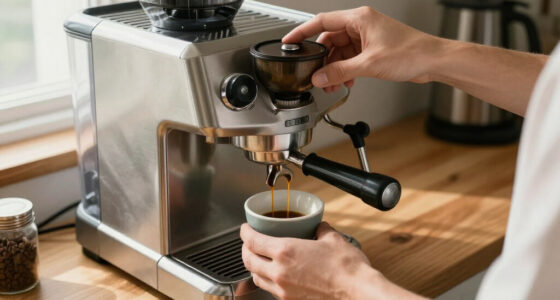
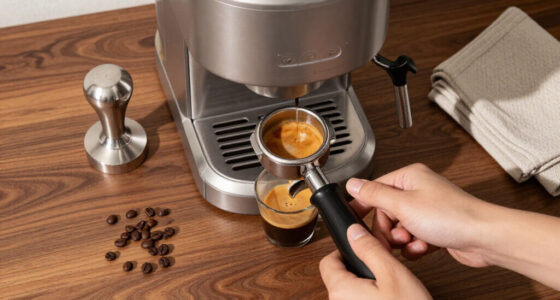
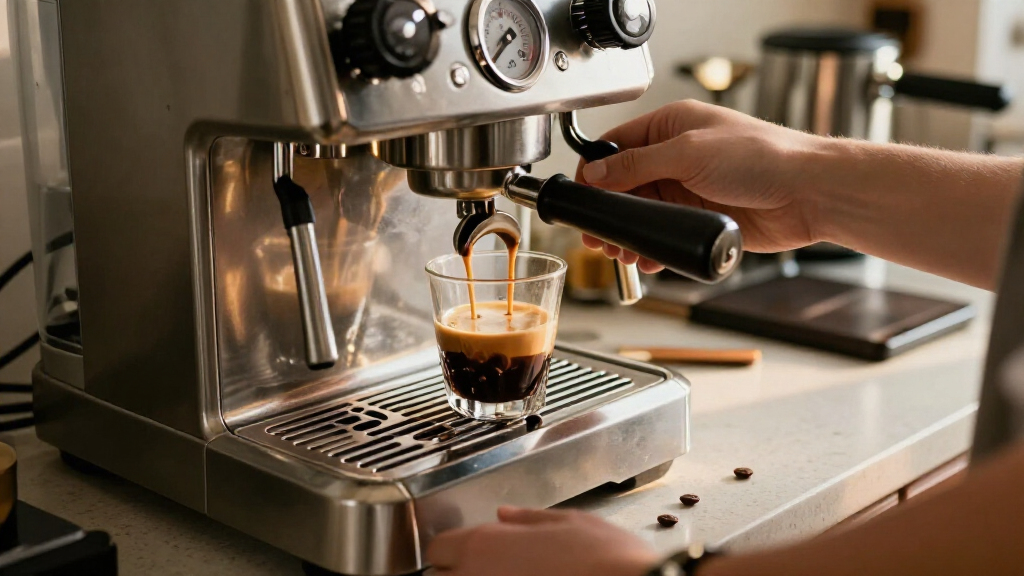
home espresso machine with pressure control
As an affiliate, we earn on qualifying purchases.
As an affiliate, we earn on qualifying purchases.
Pressure and Flow Tell Different Parts of the Story
Pressure describes force; flow describes how quickly water moves through the machine and coffee puck. The two affect each other because a puck’s resistance shapes the relationship between them, but they are not interchangeable. A pressure decline does not automatically mean flow is declining.
This distinction matters on machines that control flow. Suppose a machine aims to keep flow steady while the puck becomes more permeable late in the shot. Pressure may fall as less force is needed to maintain that flow. You could see a pressure decline even though the machine’s flow target has not changed. On another machine, a programmed pressure drop may lead to a different flow pattern.
It’s a bit like running water through a hose: pressure is the push, while flow is the amount of water passing through. A kink or a wider opening changes how the two behave together. Coffee is more complicated than a garden hose, but the analogy explains why a pressure reading alone cannot tell you exactly what water did inside your puck.
When reading a shot log, note what the machine measures and controls. Record pressure, flow, shot time, and yield when those readings are available. If your machine only shows pressure, use that reading as context and compare cups made with the same recipe. In brewing pressure, the puck and machine form a moving system; one number cannot describe the whole shot.
espresso shot timer and pressure gauge
As an affiliate, we earn on qualifying purchases.
As an affiliate, we earn on qualifying purchases.
Compare Pressure Profiles Without Changing the Whole Recipe
To find out whether pressure decline helps your coffee, change the pressure profile while keeping the rest of the recipe steady. Match the coffee, dose, grind, water, temperature, puck preparation, and final yield as closely as you can. Otherwise, a grind adjustment or a different shot volume can explain the flavor change just as easily as pressure.
- Choose one coffee and recipe. Weigh the dose and yield, and keep your grinder setting, water, and temperature fixed.
- Pull a reference shot. Use your usual profile and write down shot time, pressure behavior, and how the cup tastes.
- Change only the profile. Try a small, gradual decline if your machine allows it. Avoid changing grind or yield at the same time.
- Repeat and compare. Make another pair if possible, and taste blind or ask someone else to label the cups.
- Record the result. Note balance, sweetness, acidity, body, dryness, and aftertaste—not just the time or pressure number.
For example, if your usual recipe uses 18 grams of coffee and yields 36 grams of espresso, keep those amounts the same across both profiles. That way, you can compare how the shots feel and taste without a bigger yield diluting one cup.
Use clean equipment and fresh water, and handle hot parts carefully. Espresso is served hot, so let the cups cool enough to taste safely; flavor also changes as a shot cools. A side-by-side tasting often makes small differences easier to spot than trying to remember yesterday’s espresso. Keep notes short and concrete: “rounder finish, less dry” tells you more than “better.”
As an affiliate, we earn on qualifying purchases.
Use the Cup to Diagnose a Profile That Misses
A sour, hollow, or weak shot can mean the profile isn’t extracting enough for that recipe, while a harsh, dry, or uneven shot calls for a closer look at puck preparation and channeling as well as pressure. These flavors are clues, not a one-to-one diagnosis; several brewing variables can lead to a similar cup.
Say you try a decline and the espresso loses its syrupy feel, with a sharp, lemony edge. The drop may start too early or be too steep for that coffee. But before blaming pressure, check whether the shot reached the same yield and whether your grind or distribution changed. A small difference in puck preparation can send water through uneven paths.
If the cup tastes bitter and papery, easing pressure late might help in some setups, but first inspect the puck and your recipe. A channel can form when water finds a low-resistance route through the coffee. Lower late-shot pressure may reduce stress on the puck, yet it cannot reliably repair uneven distribution or a poor tamp. Prep still matters.
Make one small change at a time. If the decline seems too aggressive, test a gentler curve while keeping the recipe fixed. If the profile is sound but the shot still tastes off, return to the usual curve and adjust grind or yield separately. Let the cup lead the next change: the goal is a clear improvement, not a more impressive graph.
Choose a Starting Point That Fits Your Machine and Coffee
There is no universal pressure curve that suits every machine, coffee, and recipe. A conventional profile around 9 bar is a familiar reference point, but it does not serve as a complete recipe or a promise of a particular flavor. Use your machine’s guidance, then make small changes you can taste.
A profiling machine lets you set pressure or flow behavior more deliberately. That gives you a useful way to experiment, though extra controls don’t remove the need for consistent preparation. With a conventional machine that offers little profile control, focus first on a repeatable dose, grind, distribution, tamp, and yield. You can make excellent espresso without adjusting pressure through every phase of a shot.
Roast level can inform a test, but it cannot decide the answer for you. One light roast may taste clearer with one profile, while another tastes sharp or thin under it. A dark roast might benefit from a softer finish in one setup, yet lose body if the pressure decline is too steep. The bean and recipe matter more than a simple light-versus-dark rule.
If you’re learning a new machine, start with the manufacturer’s recommended settings and establish a good-tasting reference shot. Then test a modest decline and compare it with your usual result. When the change is subtle or inconsistent, spend your attention on variables that have a bigger effect for your setup. Repeatability beats complexity when you’re trying to learn what changes the cup.
Frequently Asked Questions
Does declining pressure make espresso sweeter?
It can make a particular coffee taste more balanced or bring out a sweeter impression, but it does not guarantee sweetness. The coffee, grind, yield, temperature, and puck preparation all matter. Compare matched shots to see whether the profile helps your recipe.
Is declining pressure the same as declining flow?
No. Pressure is force, while flow is how quickly water moves. They interact through puck resistance, so pressure can fall while a machine keeps its flow target steady.
Does pressure always decline naturally during a shot?
No. A machine may hold a set pressure for part of a shot, while resistance in the puck changes. The pressure at the puck may also differ from the machine’s displayed reading, depending on where it measures pressure and how the machine works.
Can pressure decline prevent channeling?
A late decline may ease stress on the puck in some setups, but it cannot reliably fix poor distribution or tamping. If a shot tastes uneven, check puck preparation and repeatability along with the pressure profile.
Will pressure decline work better for light or dark roasts?
There is no dependable rule by roast level. One coffee may taste more balanced under a declining profile, while another becomes thin or sharp. Test matched shots and decide from the cup.
What pressure should I start with?
A conventional profile around 9 bar is a familiar reference, but your machine’s guidance and the coffee’s behavior matter more than a universal target. Establish a repeatable, good-tasting shot first, then try a small profile change.
Conclusion
Change one part of the pressure curve, then let the cup tell you what happened. Keep your dose, grind, yield, temperature, and puck preparation steady so you can separate a real flavor difference from recipe noise. A gentler finish may suit one coffee and leave another thin; your own matched tasting is the useful evidence.
Write down what you taste, not just what the machine displays. When the next shot pours, treat the pressure curve like a quiet hand on the flow: useful, sometimes revealing, and never a substitute for tasting the espresso.
Halloween Picks
halloween
As an affiliate, we earn on qualifying purchases.