
TL;DR

Get coffee and tea gear delivered free with Prime
- Fast, free delivery on millions of items
- Prime Video, Amazon Music and more included
- Member-only deals all year
Espresso ratio compares the dry coffee dose with the espresso yield by weight, not volume. Starting at 1:2 is a solid baseline, then tweak based on taste and extraction. Measuring by weight makes your shots more consistent than relying on volume alone.
Ever poured an espresso and felt it was just off—too sour, too bitter, or just bland? The secret often lies in understanding the espresso ratio. It’s a simple concept, but one that trips up many because it’s misunderstood or applied inconsistently.
In this guide, you’ll learn how to use ratios as a powerful tool to perfect your brewing, troubleshoot common issues, and finally stop guessing. Whether you’re brewing at home or behind a busy bar, mastering espresso ratios will make your shots more reliable and delicious.
Use weight-based measurements for the most consistent espresso results, not volume.
Start with a 1:2 ratio—18 g of coffee yields about 36 g of espresso—and tweak from there.
Adjust one variable at a time—grind, yield, temperature—to troubleshoot and refine your shot.
Taste is the ultimate guide; don’t rely solely on brew time or ratios.
Roast level and equipment influence the ideal ratio, so experiment within flexible ranges.
The Espresso Ratio Cheat Sheet That Finally Makes Sense
An espresso ratio compares the dry coffee dose with the espresso yield by weight — not volume. Start at 1:2, tweak based on taste, and stop guessing. Whether you brew at home or behind a busy bar, weight-based ratios make every shot more reliable and delicious.
What Exactly Is an Espresso Ratio?
An espresso ratio compares the weight of dry coffee in your portafilter to the weight of espresso that ends up in your cup. It isn’t just a fancy metric — it directly influences how your shot tastes and how well it’s extracted.
Weight, Not Volume
Crema, bubbles, and settling change a shot’s volume but never its weight. A scale keeps results consistent where a measuring cup fails wildly.
Simple Math
Ratio = yield ÷ dose. 36 g of espresso from 18 g of coffee is 36 ÷ 18 = 2, written as 1:2. Any recipe with grams in and grams out works this way.
A Tool, Not a Rule
The same ratio tastes different with different beans, roasts, and machines. Treat ratios as flexible starting points guided by your palate.
Common Ratios and What They Mean
From an 18 g dose, three broad ranges cover nearly every shot style — from syrupy ristretto to a long, delicate lungo.
| Ratio | Yield from 18 g dose | Typical Character | Best For |
|---|---|---|---|
| 1:1 – 1:1.5 | 18 – 27 g out | Very concentrated, intense, almost syrupy | Dark roasts · milk drinks |
| 1:2 ★ | 36 g out | Balanced, versatile — the reliable starting point | Most coffees · dialing in |
| 1:2.5 – 1:3 | 45 – 54 g out | Lighter, longer, more extracted — some find it weaker | Light roasts · filter-like clarity |
How to Pick the Perfect Ratio for Your Coffee
A repeatable five-step loop for finding what works — then refining it. Keep the dose stable while you experiment with yields.
Weigh the Dose
Start with 18 g of dry coffee for a double shot.
Set a Target
Begin with 1:2 — that means 36 g of espresso out.
Stop on Weight
Use a scale and stop the shot when it hits target yield.
Taste the Shot
Balanced? Sour? Bitter? Your palate is the diagnostic.
Adjust One Thing
Grind or yield — then record the result and repeat.
Fix Common Problems With One Ratio Move
When your espresso isn’t tasting right, adjusting the ratio fixes it faster than changing multiple variables at once. Diagnose by taste first — brew time alone can’t tell you what’s wrong.
Insufficient Extraction
Try a slightly longer yield (e.g. 1:2 → 1:2.5) or a finer grind. This increases extraction and pulls more flavor from the coffee.
Excessive Extraction
Reduce the yield or go coarser. Less extraction often results in a smoother, more balanced taste.
Not Enough Concentration
Increase the dose or use a shorter yield, focusing on a more concentrated, heavier shot.
Hitting Target Isn’t Everything
A shot reaching its target yield in the target time is not automatically well extracted. Pressure, puck prep, and water all play a role.
Your Roast Picks Your Starting Ratio
Roast level changes solubility: lighter roasts often shine at longer ratios, while darker roasts peak shorter and more concentrated. A lightly roasted Ethiopian might peak at 1:3; a dark Brazilian at 1:1.5.
Yield by Ratio — From the Same 18 g Dose
How much espresso each ratio produces in the cup. Equipment matters too: machines with stable pressure give more consistent results, while home setups may need a coarser grind or different yield.
Five Habits for Perfect Ratios Every Time
Practice makes perfect — the more you measure, record, and taste, the more natural dialing in your espresso becomes.
Use a Scale and Timer
Track dose, yield, and brew time precisely — grams and seconds, not eyeballing.
Keep Your Dose Consistent
Switching doses makes it impossible to compare results shot to shot.
Record Everything
Coffee, grind setting, yield, time, and tasting notes — every single shot.
Adjust One Variable at a Time
Small, isolated tweaks lead to real understanding of what improved the cup.
Trust Your Palate
Taste is the ultimate guide — not brew time, not ratios. A shot hitting its numbers is not automatically delicious; adjust ratios to match your flavor preferences and let taste have the final word.
What Exactly Is an Espresso Ratio and Why Should You Care?
An espresso ratio compares the weight of dry coffee in your portafilter to the weight of the espresso that ends up in your cup. For example, if you start with 18 grams of coffee and get 36 grams of espresso, your ratio is 1:2.
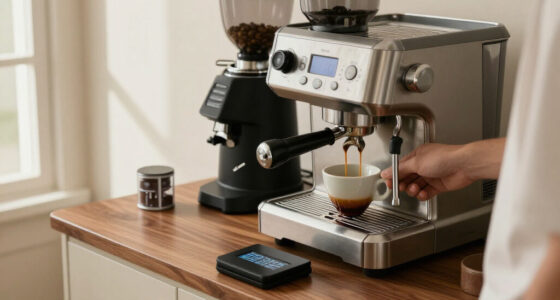
This number isn’t just a fancy metric; it directly influences how your shot tastes and how well it’s extracted. Using weight instead of volume makes your results more consistent because crema, density, and settling change the volume but not the weight. Imagine trying to measure a shot by volume—crema, bubbles, and settling can make that wildly unreliable. Weight keeps things straightforward.
According to espresso experts, starting at 1:2 is a reliable baseline—balanced, not too intense, not too weak. From there, you can tweak to match your coffee and taste preferences.
As an affiliate, we earn on qualifying purchases.
How to Pick the Perfect Ratio for Your Coffee
Choosing the right ratio depends on several factors: the bean, roast level, grind size, and personal taste. Here’s a straightforward process to find what works for you:
- Weigh your dry coffee dose—start with 18 grams for a double shot.
- Decide on a target ratio—begin with 1:2 (36 grams of espresso).
- Use a scale to stop the shot when the scale hits that target weight.
- Take a sip—does it taste balanced? Too sour? Too bitter?
- Adjust one variable: grind finer or coarser, or try a slightly different yield.
For example, if your shot is sour and thin, try a slightly longer yield or a finer grind. If it’s bitter and harsh, shorten the yield or go coarser.
Remember: taste is the best guide. Keep your dose consistent while dialing in different yields. Record your results—what worked, what didn’t—and tweak accordingly.
Most baristas and serious home brewers swear by a scale and timer, making it easier to replicate your perfect shot every time.
espresso shot glass with measurement
As an affiliate, we earn on qualifying purchases.
As an affiliate, we earn on qualifying purchases.
Common Espresso Ratios and What They Mean
Here’s a quick comparison table to help you understand the typical ratios and their flavor profiles:
| Ratio | Example (from 18 g dose) | Typical Character |
|---|---|---|
| 1:1 to 1:1.5 | 18–27 g out | Very concentrated, intense, almost syrupy |
| 1:2 | 36 g out | Balanced, versatile, good starting point |
| 1:2.5 to 1:3 | 45–54 g out | Lighter, longer, more extracted, some may find it weaker |
Keep in mind, these are guidelines. Your favorite shot might fall outside these ranges depending on your beans or roast level.
For example, a dark roast might taste better at a shorter ratio, emphasizing body and richness. A light roast could benefit from a longer yield to highlight brightness and complexity.
Remember: the goal is taste. Use the ratio as a tool, not a strict rule.
As an affiliate, we earn on qualifying purchases.
Troubleshooting Common Espresso Problems Using Ratios
When your espresso isn’t tasting right, adjusting the ratio can fix it faster than changing multiple variables at once. Here’s how to troubleshoot:
- Sour or underdeveloped shot: Try a slightly longer yield or a finer grind. This increases extraction, pulling more flavor from the coffee.
- Bitter or harsh shot: Reduce yield or go coarser. Less extraction often results in a smoother, more balanced taste.
- Thin or weak: Increase dose or use a shorter yield, focusing on a more concentrated shot.
For example, if your shot comes out sour and watery, try increasing the yield from 1:2 to 1:2.5 while keeping the dose at 18 g. Taste and adjust from there.
Remember: taste comes first. Use a scale, stopwatch, and record your results to see what works.
Over time, you’ll develop an intuition for how ratio adjustments impact flavor—making your espresso more predictable and satisfying.
As an affiliate, we earn on qualifying purchases.
How Roast Level and Equipment Affect Your Ratios
Roast level and your espresso machine both influence the ideal ratio. A lighter roast often benefits from a longer extraction—think 1:2.5 or 1:3—because it’s less soluble. Darker roasts tend to taste better with a shorter, more concentrated shot at around 1:1.5 to 1:2.
Equipment also matters. A high-end machine with good pressure stability will give more consistent results. A home setup with a smaller basket or less pressure control might need adjustments—like a coarser grind or different yield—to get the flavor you want.
For example, a lightly roasted Ethiopian bean might shine at a 1:3 ratio, while a dark Brazilian roast could peak at 1:1.5.
Experimenting within these ranges helps you discover what best suits your beans and machine, rather than blindly following preset ratios.
Why Measuring by Weight Is the Smarter Choice
Measuring espresso by weight beats volume every time. Crema, bubbles, and settling make volume measurements unreliable. A scale gives you precise control over the dose and yield, leading to more consistent results.
Imagine brewing two shots with the same volume but different densities—one might be watery, the other rich and creamy. Weight reveals the true difference, helping you fine-tune your process.
Most professional baristas use grams and a timer. It’s the secret to replicability, especially when experimenting with ratios or troubleshooting.
For example, if you want a 1:2 ratio, zero in on 18 g of coffee and stop when the scale hits 36 g of espresso. No guesswork, no variability.
Final Tips for Perfecting Your Espresso Ratios
Here’s a quick checklist to keep your ratios on point:
- Use a scale and timer to track dose, yield, and brew time precisely.
- Keep your dose consistent—switching doses makes it hard to compare results.
- Record everything: coffee, grind setting, yield, time, and tasting notes.
- Adjust one variable at a time—small tweaks lead to better understanding.
- Trust your palate. Taste often and adjust ratios to match your flavor preferences.
Practice makes perfect. The more you measure, record, and taste, the more natural dialing in your espresso will become.
Frequently Asked Questions
What is the best espresso ratio for flavor?
There’s no one-size-fits-all. Start at 1:2, then adjust based on the coffee, roast level, and your taste preferences. Taste is the best guide—if it’s too sour, try a longer yield; if bitter, go shorter.How do I calculate the ratio easily?
Divide the espresso weight by the dry coffee dose. For example, if you use 18 g of coffee and get 36 g of espresso, your ratio is 36 ÷ 18 = 2, or 1:2.Why is weighing better than measuring volume?
Because crema, bubbles, and settling make volume measurements unreliable. Weight provides consistent, repeatable results, essential for dialing in your shot.Does brew time matter more than ratio?
Brew time is a useful diagnostic but not a strict rule. A shot can hit the target ratio in 25 seconds or 40 seconds—what matters most is how it tastes.How should I adjust if my espresso tastes off?
Start by changing the grind or yield one at a time. For sour shots, extend the yield or grind finer. For bitter shots, shorten the yield or go coarser. Use tasting notes to guide your tweaks.Conclusion
Mastering espresso ratios transforms a guessing game into a predictable art. Focus on weight, keep detailed notes, and let taste be your guide. That way, every shot can be a step closer to perfect.
Remember: espresso is a dance between variables—ratio, grind, time, temperature. The more control you gain, the better your results will taste. So grab your scale, start experimenting, and enjoy the process of making espresso that finally makes sense.
Halloween Picks
halloween
As an affiliate, we earn on qualifying purchases.