
TL;DR

Get coffee and tea gear delivered free with Prime
- Fast, free delivery on millions of items
- Prime Video, Amazon Music and more included
- Member-only deals all year
In an Italian café, a plain *caffè* usually means espresso, and ordering or paying may work differently from one bar to the next. Check whether you want *al banco* at the counter or *al tavolo* at a table, follow the posted routine, and treat customs such as morning cappuccino as habits—not rules you can break.
You can walk into an Italian café, say un caffè, and get a small espresso—not a mug of filter coffee. The drink is simple; the routine around it can feel like a puzzle. Do you pay first? Is that table price different? And will anyone care if you order cappuccino after lunch?
Italian café etiquette is less about rigid rules than understanding how a particular café works locally. This guide gives you phrases to use, explains the difference between counter and table service, and sorts everyday habits from tourist myths, so you can order with confidence without pretending to be someone you’re not.
Think of each café as a small stage with its own choreography: watch for a cashier, notice where locals stand, and take your cue from the menu. A friendly buongiorno and a little patience will take you further than memorizing a list of supposedly unbreakable rules.
Check whether a café wants you to pay at the cashier first or order directly at the counter; both systems are common.
Order un caffè for a standard espresso, and ask for a doppio , macchiato , or lungo when you want a variation.
Compare posted al banco and al tavolo prices before choosing between standing and sitting.
Cappuccino is commonly a morning drink, but ordering it later is allowed; the custom is a habit, not a prohibition.
Tipping is optional for routine coffee service; check the bill for a service charge or coperto before leaving extra money.
How to Order Espresso Without Guessing the Café’s Routine
Italian café etiquette starts with one practical move: check where people order and pay before joining a line. Some cafés ask you to pay at the cashier and carry the receipt, or scontrino, to the barista; others let you order and pay directly at the counter. This difference matters most when a café is busy: paying in the wrong place can mean waiting twice or having to explain your order again. A quick glance at the room can save you from ordering twice.
Look for a separate till, a queue forming near the register, or customers holding small slips of paper. If you can’t tell, ask “Dove si ordina?”—“Where do I order?” That question is clear and polite, even if your Italian stops there. Say buongiorno in the morning or buonasera later, then add per favore and grazie. These greetings also help establish a courteous exchange without requiring a long conversation.
For example, you enter a busy bar near a train station and see people pay at a register before moving toward the espresso machine. Follow that pattern: pay for un caffè, keep the receipt handy, and show it at the bar. In a quieter neighborhood café, the barista may take your order and payment together. There is no single nationwide sequence, so observation beats assumption. Matching the local system keeps the line moving and helps you avoid paying twice or mistaking a receipt for a bill still due.
Keep your order short when the bar is busy. Try “Un caffè, per favore” for espresso, or “Un cappuccino, per favore” for cappuccino. A smile and a clear order matter more than a perfect accent; if the counter is crowded, step aside after ordering so the next customer can reach the bar. This is practical courtesy: the counter is often shared workspace, not a place to settle in while others are trying to order.
Products Worth Considering

Breville Bambino Espresso Machine, Brushed Stainless Steel (BES450BSS)

Cuisinart MultiClad Pro 12-Piece Stainless Steel Cookware Set

Cuisinart 8-in-1 Air Fryer Toaster Oven with Grill, 1800W, Stainless Steel (TOA-70NAS)
As an affiliate, we earn on qualifying purchases.
What “Un Caffè” Gets You—and How to Ask for a Different Cup
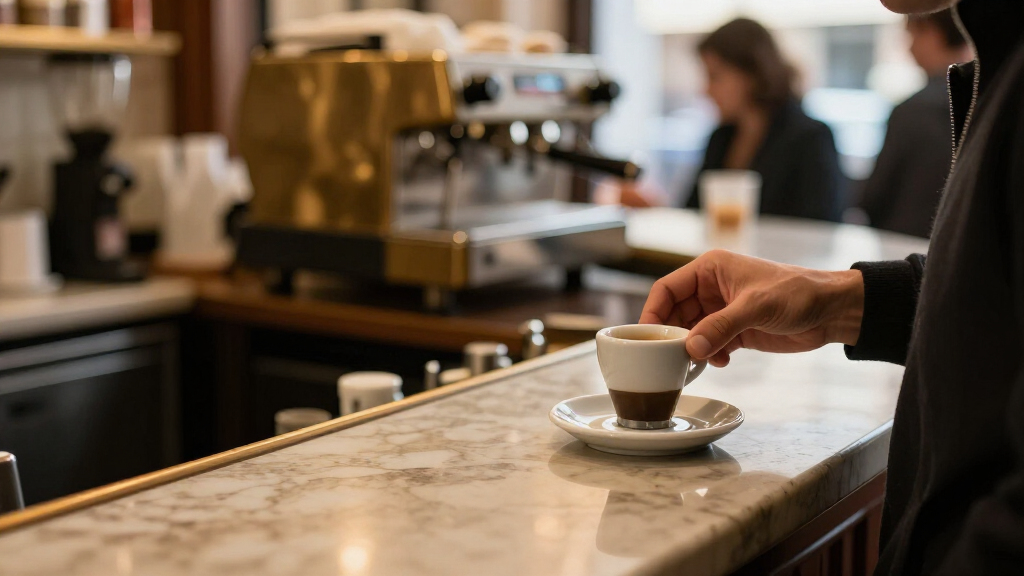
In an Italian café, “un caffè” usually means a single espresso. It arrives in a small cup, dark and concentrated, often with a thin layer of crema. If you expect a large drip coffee, that tiny cup can be a surprise; the local word for everyday coffee points to espresso by default. Knowing this before you order helps you choose by strength and size rather than assuming that “coffee” means the same thing everywhere.
Use a few simple terms to steer your order. Ask for a doppio for a double espresso, a macchiato for espresso marked with a little milk, or a lungo for a longer pull. A macchiato can be served with hot or cold milk, so you can specify caldo or freddo if that detail matters. Preparation and terminology can vary from one café to another. Each option changes the balance of intensity, volume, or milk, so asking for a variation is more useful than ordering several drinks just to find one that suits you.
Imagine you usually drink a long coffee and find a straight espresso too intense. You could ask for a caffè americano, which is espresso lengthened with hot water, or ask whether the café serves filter coffee. Availability varies, particularly at traditional espresso bars. An americano offers more volume but has a different taste from a large brewed coffee; filter coffee, when available, may be closer to what you know. If you want coffee to take away, try “da portare via”; takeaway is possible, though a quick drink at the bar remains a familiar scene.
These names are useful starting points, not a secret code you must master. Say what you want plainly, and ask for clarification if the menu uses unfamiliar terms. A barista can tell you what a specific house serves; a friendly question is better than ordering a drink based on a guess. That small exchange is especially helpful if you have a preference about strength, milk, or cup size, since the same label may not promise identical preparation everywhere.
When to Stand at the Bar—and When a Table Makes Sense
Al banco means having your coffee at the counter, while al tavolo means sitting at a table. Counter service is often quick and less expensive, whereas a table may carry a service charge or higher listed price, particularly in busy tourist areas. Check the menu or posted prices before settling in; there is no reliable single price rule for every Italian café. The choice is not only about cost: counter service suits a short stop, while a table buys you time and a place to rest, sometimes at a premium.
At a traditional bar, customers may drink espresso standing up, set down a small cup, and head back to work within minutes. You can do the same if you want a quick stop between sightseeing and a museum. If you have a stroller, need to rest, or want to linger over a pastry, choose a table if the café offers one—and check whether table service changes the bill. For someone watching a budget, the counter may be the sensible option; for someone who values a pause, the added cost may be worth it.
Neither choice is more authentic. Standing is practical, not a test of your cultural credentials. Sitting can be a lovely way to watch the square wake up, but a historic café facing a famous piazza may charge far more for a table than a neighborhood bar. Prices and policies change, so read the current menu rather than relying on a travel tip that names a fixed fee. Comparing the listed prices lets you decide whether the view, service, and time at the table are worth the difference to you.
If you’re uncertain, ask whether the counter and table prices differ before ordering. Picture a couple with ten minutes before a train: standing at the bar is efficient. A family taking a slow breakfast may prefer seats. Match the setting to your plans, and treat any price difference as part of the choice. Asking first is easier than discovering a higher price after sitting down, and it lets you choose knowingly rather than treating one way of drinking coffee as the only correct one.
What to Order in the Morning—and What Changes After Lunch
Cappuccino is a common breakfast choice in Italy, usually paired with a pastry such as a cornetto. After lunch, many people switch to a plain espresso. That’s a strong everyday convention, not a law: cafés will still serve you cappuccino later, even if the order marks you as a visitor in some settings. Understanding the pattern helps you read what people around you are doing, but it need not determine what you drink.
The idea that ordering milk after a meal is rude or harmful is an oversimplification. Italian routines often favor milk-based drinks in the morning, but personal preferences differ, and café customs vary. If you want a cappuccino at 3 p.m., order one. If you would rather blend in with the quick post-lunch rhythm, ask for un caffè. The tradeoff is social rather than practical: following the local rhythm may help you feel less conspicuous, while ordering what you prefer makes the experience yours.
A typical breakfast might look like a warm cappuccino and a flaky cornetto eaten at the counter. The pastry resembles a croissant, though recipes, names, and fillings vary by region; you may see plain, jam-filled, or cream-filled versions. That sweet, buttery bite softens the coffee’s roasted edge. Ask what fillings are available if the display case doesn’t make them clear. This pairing is popular partly because it makes a quick, satisfying breakfast; it is a familiar option, not a required combination.
For a useful mental picture, treat the morning custom like a local rhythm, not a dress code: you can follow it, or choose differently without causing a scene. Your order is yours to make. A simple “cappuccino, per favore” works in the morning or afternoon; the difference is what people around you commonly choose, not what the café permits. That distinction lets you take part in local habits when they suit you without mistaking convention for a rule.
How to Read the Bill, Service Charge, and Tip
Tipping for a routine espresso is optional, and cafés do not generally expect a large tip. Some customers leave small change for good service, but first check the menu or bill for a service charge or coperto. A coperto is a per-person cover charge that may appear in cafés or restaurants; it is separate from a tip and should be listed where applicable. Distinguishing the two matters because adding a tip to a bill that already includes a charge can lead you to pay extra without realizing what the listed amount covers.
Suppose you sit down at a café on a central square and see a charge added to the bill. Don’t assume it is an unexpected tip: check the itemized receipt and menu to see whether it is a cover or service charge. If you paid at a cashier before ordering, keep your receipt until you understand how that café handles payment. Different venues may use different systems. If something remains unclear, asking staff to explain it is more reliable than guessing from the name of the charge alone.
Prices can vary sharply between a neighborhood counter and a historic venue with a view. That difference doesn’t automatically mean anyone has made a mistake; seating, location, and service can affect what you pay. Read posted prices before choosing where to sit, and ask a staff member to explain a charge if the bill doesn’t make sense. Checking in advance makes the price part of your decision: you can choose a quick, inexpensive espresso or pay more for the setting and a longer stop.
There’s no need to calculate a complicated gratuity for a quick espresso. If service was especially kind and you want to leave a few coins, you can. If you don’t, that is also normal. The useful habit is to distinguish an optional gesture from a charge already included, so you can pay with confidence rather than guessing at the counter. In short, treat a tip as a choice about service, not as an automatic percentage you must add to every coffee.
How to Fit In Without Turning Coffee Into a Rulebook
The easiest way to feel at home in an Italian café is to stay polite, observant, and flexible. Customs are useful clues, not a pass-or-fail test. Watch where customers queue, notice whether they stand or sit, and copy the pace of the room when it suits you. A bustling commuter bar and a slow specialty café may have very different expectations. Reading those differences helps you choose how to behave without assuming that one café represents the whole country.
A few customs help you read the moment. Greet the barista with buongiorno or buonasera; say per favore when ordering and grazie when served. If the café is crowded, keep your order concise and avoid blocking the counter after your drink arrives. If it’s quiet and has comfortable seating, lingering may be welcome—especially in newer specialty cafés. The same small courtesies work in both settings, but adjusting your pace shows consideration for the people sharing the space.
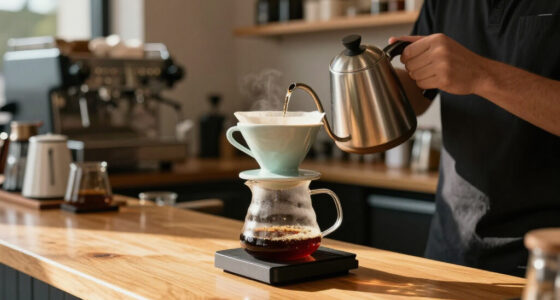
Italian coffee culture is changing gradually. Specialty coffee has become more visible in larger cities, with cafés offering carefully sourced beans, alternative brewing methods, and longer menus alongside traditional espresso bars. One café may ask you to stand for a quick espresso; another may invite you to sit and talk through a pour-over. Follow the venue in front of you, not a stereotype about what all Italians do. This flexibility matters because expectations built around a traditional bar may not fit a café designed for slower tasting and conversation.
For instance, a first-time visitor might arrive at a neighborhood bar, see regulars order at the counter, and copy their routine. Later, at a specialty café, the same visitor can ask about a filter brew and take a seat. That adaptability is the real lesson: etiquette is less about rigid rules than understanding how cafés work locally. By noticing the setting and choosing what fits, you can be respectful without sacrificing your own comfort or turning a simple coffee into a performance.
Frequently Asked Questions
Can I order a cappuccino in the afternoon in Italy?
Yes. Cafés will serve cappuccino in the afternoon, though many Italians commonly choose milk-based coffee at breakfast and espresso later in the day. The custom may make your order stand out, but it is not a ban.
Why does “un caffè” mean espresso?
In everyday Italian café use, un caffè generally means a single espresso. If you want another style, ask for a caffè americano or check whether the café offers filter coffee.
Do I pay before or after ordering?
It depends on the café. Some ask you to pay at a cashier first and take the receipt to the barista; others let you order and pay at the counter. Watch what customers do or ask, “Dove si ordina?”
Is coffee cheaper at the counter than at a table?
Often, but not everywhere. A café may charge more for al tavolo table service than al banco counter service, especially in tourist areas. Check the posted menu because prices and policies vary.
Should I tip the barista for espresso?
A tip is optional, not generally expected for a routine espresso. You can leave small change if you wish, but check whether the bill already includes a service charge or coperto.
What does “macchiato” mean in an Italian café?
A macchiato is usually espresso with a little milk. If you want to specify hot or cold milk, ask for macchiato caldo or macchiato freddo; preparation can vary by café.
Conclusion
Remember one thing: read the café you’re in. Check the prices, notice where people order, and use a few courteous Italian words. Then order what you actually want—espresso at the bar, cappuccino after lunch, or a longer coffee if the café serves one.
Italian café etiquette isn’t a locked door; it’s a rhythm you can pick up one small cup at a time. Watch, listen, say grazie, and enjoy the coffee.