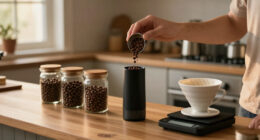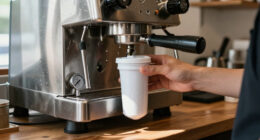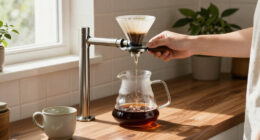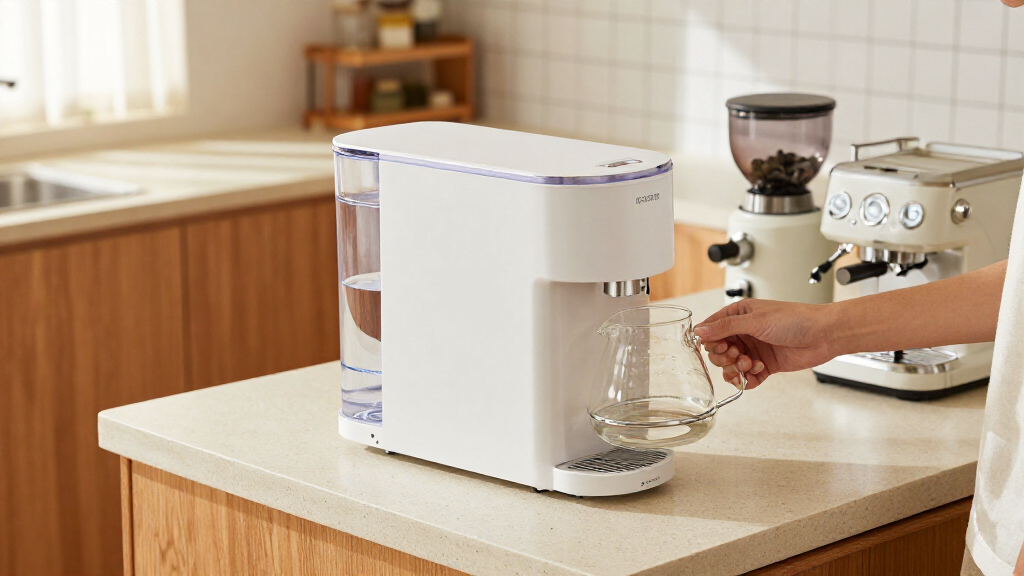
The best countertop reverse osmosis systems for coffee reduce unwanted tap-water flavors while giving you practical control over the minerals that shape extraction. I rank the Waterdrop M6SL as the best overall pick for its mineral-focused approach, with the AquaTru Classic standing out for buyers who prioritize established multi-stage filtration and the DREO Autofill Pitcher for a more convenient serving setup. The main tradeoffs are mineral balance, countertop space, dispensing style, and the ongoing work of replacing filters. No single system suits every coffee routine, so read on for the full breakdown and the buying factors that can matter more than a long list of filtration claims.

Get coffee and tea gear delivered free with Prime
- Fast, free delivery on millions of items
- Prime Video, Amazon Music and more included
- Member-only deals all year
Complete the kit


Key Takeaways
- Mineral handling separates the leading coffee picks: the Waterdrop M6SL’s mineral-focused design gives it an edge for buyers who want filtered water with a more coffee-oriented finish, while systems without added minerals may call for separate water adjustment.
- Convenience comes in different forms: DREO’s autofill pitcher favors easy serving, while hot-and-cold countertop models prioritize ready-to-use temperatures; neither feature replaces checking filtration and maintenance details.
- Carafe material changes the daily experience: the AquaTru Glass Carafe and Bluevua RO100ROPOT-Lite appeal to buyers who prefer glass, while larger or more feature-rich units may suit higher-volume routines.
- Portable RO and under-sink RO are not interchangeable: most picks sit on the counter and need no plumbing, while the Waterdrop G3P600 is a tankless installation-style system that makes more sense for a fixed kitchen setup.
- Filter upkeep belongs in the comparison: a system that fits the counter but requires inconvenient filter access or a maintenance routine you will neglect can be a poor coffee choice, even when its filtration claims look compelling.
| Waterdrop M6SL Mineral Reverse Osmosis Water Filter Countertop RO System |  | Best for Coffee Flavor Balance | Filtration Stages: 8 | RO Membrane Pore Size: 0.0001 µm | Tank Capacity: 185 oz (135 oz tap / 50 oz waste) | VIEW LATEST PRICE | See Our Full Breakdown |
| AquaTru Classic Countertop Reverse Osmosis Water Purifier |  | Best Heavy-Duty Reliability | Purification Method: Reverse Osmosis | Capacity: 2.7 liters | Dimensions: 14″ L x 12″ W x 14″ H | VIEW LATEST PRICE | See Our Full Breakdown |
| DREO Countertop Reverse Osmosis Water Filter with Autofill Pitcher |  | Best for Tech-Savvy Users | Contaminant Reduction: 99.9% | Pure-to-drain Ratio: 3:1 | Capacity: 3 liters | VIEW LATEST PRICE | See Our Full Breakdown |
| Bluevua RO100ROPOT Countertop Reverse Osmosis Water Filter System |  | Best for Eco-Conscious Brewers | Purification Method: Reverse Osmosis with Remineralization | Capacity: 12 liters | Pure to Drain Ratio: 2:1 | VIEW LATEST PRICE | See Our Full Breakdown |
| Countertop Reverse Osmosis Water Filter – 5‑Stage RO System, Portable No‑Installation Purifier for Home, Kitchen, Office & RV |  | Best Budget-Friendly Efficiency | Pure-to-Drain Ratio: 5:1 | Raw Water Tank Capacity: 5 L | Purified Water Tank Capacity: 2 L | VIEW LATEST PRICE | See Our Full Breakdown |
| Natureflow NF-Y60AC Reverse Osmosis System Countertop Hot Cold Water Filter |  | Best for Coffee Temperature Control | Purification method: Reverse osmosis | Filtration stages: 10-stage | Temperature range: 41°F to 210°F | VIEW LATEST PRICE | See Our Full Breakdown |
| Bluevua RO100ROPOT-Lite Countertop Reverse Osmosis Water Filter |  | Best Compact Glass-Carafe Pick | Purification method: Reverse osmosis | Filtration stages: 5-stage | Membrane pore size: 0.0001 μm | VIEW LATEST PRICE | See Our Full Breakdown |
| Waterdrop C1S Countertop Reverse Osmosis Water Filter |  | Best for Small Countertops | Model: WD-C1S | Purification method: Reverse osmosis | Filtration stages: 6-stage | VIEW LATEST PRICE | See Our Full Breakdown |
| AquaTru Glass Carafe Countertop Reverse Osmosis Water Filter |  | Best for Verified Contaminant Reduction | Purification method: Reverse osmosis | Filtration stages: 4-stage | Maximum supported source-water TDS: 300 ppm | VIEW LATEST PRICE | See Our Full Breakdown |
| Waterdrop G3P600 Tankless Reverse Osmosis Water Filter System with Silver Faucet |  | Best High-Volume Installed Option | Installation: Under sink | Filtration stages: 8-stage reverse osmosis | Daily capacity: 600 gallons | VIEW LATEST PRICE | See Our Full Breakdown |
| countertop reverse osmosis systems for coffee | Dimensions | Filtration Stages | Purification Method | Pure-to-drain Ratio |
|---|---|---|---|---|
| Waterdrop M6SL Mineral Reverse | 15.9" L x 9.3" W x 14.5" H | 8 | — | — |
| AquaTru Classic Countertop Rev | 14" L x 12" W x 14" H | — | Reverse Osmosis | — |
| DREO Countertop Reverse Osmosi | 14.5 × 6.7 × 13.4 inches | — | — | 3:1 |
| Bluevua RO100ROPOT Countertop | 10.9" L x 15.4" W x 14.3" H | — | Reverse Osmosis with Remineralization | — |
| Countertop Reverse Osmosis Wat | 12.99" L x 12.99" W x 3" H | — | — | 5:1 |
| Natureflow NF-Y60AC Reverse Os | 16.7 × 11.8 × 18 in | 10-stage | Reverse osmosis | 4:1 |
| Bluevua RO100ROPOT-Lite Counte | 9.7 × 9.5 × 14.1 in | 5-stage | Reverse osmosis | 3:1 |
| Waterdrop C1S Countertop Rever | 11.7 × 8.3 × 13.7 in | 6-stage | Reverse osmosis | 3:1 |
| AquaTru Glass Carafe Counterto | 14 × 7.5 × 13 in | 4-stage | Reverse osmosis | — |
| Waterdrop G3P600 Tankless Reve | 18.12 × 5.67 × 17.72 in | 8-stage reverse osmosis | — | 2:1 |
More Details on Our Top Picks
Waterdrop M6SL Mineral Reverse Osmosis Water Filter Countertop RO System
This system is the strongest contender for coffee enthusiasts who care about mineral content. Unlike the DREO Countertop Reverse Osmosis Water Filter, which strips water down to near-purity, the Waterdrop M6SL adds back potassium, calcium, sodium, and magnesium after filtration. This remineralization step is critical because ultra-pure water can taste flat, while balanced mineral water enhances extraction and sweetness in brewed coffee. The detachable glass pitcher is another standout feature; it avoids the plastic aftertaste some users report with BPA-free plastic tanks, ensuring your water tastes neutral before it hits your grinder. However, the 3:1 pure-to-drain ratio means you are discarding a significant amount of tap water, which might annoy those focused on conservation. It’s a trade-off for flavor fidelity: you get complex, balanced water at the cost of efficiency and manual refilling.
Pros:- Adds specific minerals (K, Ca, Na, Mg) to improve coffee extraction and taste.
- Glass pitcher prevents plastic odors or tastes from leaching into filtered water.
- 8-stage filtration effectively removes PFAS and heavy metals that alter flavor.
Cons:- 3:1 waste ratio is less efficient than newer low-waste models.
- Manual refill process interrupts workflow compared to plumbed systems.
- Glass components require careful handling to avoid breakage.
Best for: Specialty coffee brewers who want precise mineral control to enhance extraction and sweetness.
Not ideal for: Users focused on water conservation or those who dislike manually refilling tanks every few hours.
- Filtration Stages:8
- RO Membrane Pore Size:0.0001 µm
- Tank Capacity:185 oz (135 oz tap / 50 oz waste)
- Pure to Drain Ratio:3:1
- Filter Life Cycle:12 months
- Dimensions:15.9″ L x 9.3″ W x 14.5″ H
- Minerals Added:K⁺, Ca²⁺, Na⁺, Mg²⁺
Our verdict“Choose this if you believe mineral content is the secret ingredient to better coffee and don’t mind the manual refill.”
AquaTru Classic Countertop Reverse Osmosis Water Purifier
The AquaTru Classic stands out for its robust build quality and extensive certification list, removing 84 contaminants including microplastics. Compared to the lighter DREO Countertop Reverse Osmosis Water Filter, the AquaTru feels like a permanent appliance rather than a gadget, weighing nearly 23 pounds. This stability is beneficial if your countertop vibrates during grinding, as the unit won’t shift. Its NSF/ANSI certifications provide peace of mind that the filtration performance is independently verified, which is rare in the countertop RO market. The downside is its 2.7-liter capacity, which is smaller than the Waterdrop M6SL’s tank. For a busy household brewing multiple pots of coffee, this means more frequent refilling. It’s a solid, no-nonsense choice if you prioritize proven contaminant removal over aesthetic flair or large capacity.
Pros:- Certified to remove 84 specific contaminants including PFOA and PFOS.
- Heavy, stable base prevents movement during operation.
- Long-lasting filters reduce the frequency of maintenance tasks.
Cons:- Small 2.7L capacity requires frequent refilling for heavy coffee drinkers.
- Heavy weight makes it difficult to move or clean surrounding counters.
- Plastic tank may retain odors longer than glass alternatives.
Best for: Users who prioritize proven, certified contaminant removal and sturdy build quality over sleek design.
Not ideal for: People with limited countertop space or those who want to brew large batches without frequent refills.
- Purification Method:Reverse Osmosis
- Capacity:2.7 liters
- Dimensions:14″ L x 12″ W x 14″ H
- Weight:22.8 pounds
- Filter Life:600-1200 gallons (6 months to 2 years)
- Certifications:NSF/ANSI 41, 53, 58, 401, P473
- Max TDS:500 PPM
Our verdict“A reliable workhorse for those who want maximum contaminant safety and don’t mind a bulkier footprint.”
DREO Countertop Reverse Osmosis Water Filter with Autofill Pitcher
This model appeals to users who want data and convenience. The built-in TDS meter lets you monitor water purity in real-time, a feature the AquaTru Classic lacks. For coffee lovers, knowing the Total Dissolved Solids (TDS) is helpful for dialing in recipes, as high TDS can mute flavors. The autofill pitcher simplifies the process: you fill the pitcher, drop it in, and the machine handles the rest. However, the 6-month filter life is shorter than the 12-24 month cycles seen in the Bluevua RO100ROPOT and Waterdrop M6SL, meaning higher long-term maintenance costs. The 3-liter capacity is also modest. It’s a good entry point for tech-focused buyers who value visibility into their water quality, but the frequent filter changes and smaller tank might feel restrictive for daily heavy use.
Pros:- Real-time TDS display helps monitor water purity for coffee extraction.
- Autofill pitcher reduces manual pouring effort.
- Self-cleaning function helps maintain system hygiene automatically.
Cons:- Short 6-month filter lifespan increases long-term operating costs.
- Small 3-liter capacity limits continuous brewing capability.
- Plastic construction may not appeal to those avoiding synthetic materials.
Best for: Tech-oriented users who want to monitor TDS levels and prefer automated filling mechanisms.
Not ideal for: Users who want low maintenance costs or large water reserves for multiple brews.
- Contaminant Reduction:99.9%
- Pure-to-drain Ratio:3:1
- Capacity:3 liters
- Dimensions:14.5 × 6.7 × 13.4 inches
- Weight:9.5 pounds
- Filter Life Cycle:6 months
- Features:Built-in TDS meter, self-cleaning, autofill pitcher
Our verdict“Ideal for those who want digital feedback on their water quality and don’t mind replacing filters twice a year.”
Bluevua RO100ROPOT Countertop Reverse Osmosis Water Filter System
The Bluevua RO100ROPOT balances efficiency with quality. Its 2:1 pure-to-drain ratio is better than the Waterdrop M6SL’s 3:1 ratio, meaning less water goes down the drain for every liter of coffee-ready water produced. The borosilicate glass carafe is a premium touch that resists heat and stains, unlike the plastic tanks in the AquaTru Classic. It also includes a remineralization stage, which, like the Waterdrop, helps balance pH for better taste. The 12-liter total capacity is substantial, allowing for multiple pots of coffee before refilling. The trade-off is the lower flow rate (0.26 L/min), which can feel slow if you’re in a hurry. It’s a strong choice for those who want a sustainable, glass-based system with decent capacity, provided they can tolerate a slower filtration cycle.
Pros:- Efficient 2:1 pure-to-drain ratio reduces water waste.
- Large 12-liter capacity supports multiple brew cycles.
- Borosilicate glass carafe is durable and free from plastic tastes.
Cons:- Slow filtration speed (0.26 L/min) requires planning ahead.
- Large footprint may overwhelm smaller kitchen counters.
- Plastic base components may feel less premium than the glass carafe.
Best for: Eco-conscious users who prefer glass containers and want a better water-efficiency ratio.
Not ideal for: Those who need fast filtration or have very limited countertop depth due to its size.
- Purification Method:Reverse Osmosis with Remineralization
- Capacity:12 liters
- Pure to Drain Ratio:2:1
- Filter Life Cycle:24 months
- Dimensions:10.9″ L x 15.4″ W x 14.3″ H
- Material:Borosilicate Glass
- Maximum Flow Rate:0.26 liters per minute
Our verdict“A sustainable, glass-based option for users who value water efficiency and large capacity over speed.”
Countertop Reverse Osmosis Water Filter – 5‑Stage RO System, Portable No‑Installation Purifier for Home, Kitchen, Office & RV
This Aigerri unit is the most efficient option in this lineup with a 5:1 pure-to-drain ratio, significantly outperforming the Waterdrop M6SL and DREO models in water conservation. If you are brewing coffee daily and want to minimize water waste, this is the logical choice. It is also remarkably compact and lightweight (16 ounces), making it portable enough for RVs or small apartments where the bulky AquaTru Classic wouldn’t fit. However, the 2-liter purified tank is quite small, requiring frequent refills for larger households. The build quality is also more utilitarian, lacking the glass components or advanced TDS monitoring found in pricier rivals. It’s a no-frills solution for users who prioritize water efficiency and portability over premium materials or smart features.
Pros:- Industry-leading 5:1 pure-to-drain ratio minimizes water waste.
- Extremely compact and lightweight, ideal for tight spaces or travel.
- Simple 5-stage filtration improves taste without complex setup.
Cons:- Small 2-liter purified capacity requires frequent manual refilling.
- Basic build quality lacks the premium feel of glass or metal models.
- No TDS meter or smart monitoring features included.
Best for: RV owners, small apartment dwellers, or users prioritizing maximum water conservation.
Not ideal for: Households needing large volumes of water or those who prefer glass containers and smart displays.
- Pure-to-Drain Ratio:5:1
- Raw Water Tank Capacity:5 L
- Purified Water Tank Capacity:2 L
- Dimensions:12.99″ L x 12.99″ W x 3″ H
- Weight:16 ounces
- Filter Stages:5
- Total Filtration Capacity:529 gallons
Our verdict“A practical, high-efficiency choice for small spaces or travel, though it lacks premium features.”
Natureflow NF-Y60AC Reverse Osmosis System Countertop Hot Cold Water Filter
The Natureflow NF-Y60AC is the most coffee-focused choice here if you want purified water ready at a specific temperature without heating a kettle. Its 11 temperature presets reach up to 210°F, while compressor cooling also covers cold drinks; that makes it more versatile at the beverage station than the room-temperature-only Waterdrop C1S. Mineralization adds calcium, magnesium, potassium, and strontium after RO filtration, which may appeal to people who find highly purified water too flat for coffee. The tradeoff is a substantial countertop footprint and 32.6-pound weight, plus a 5-liter capacity that calls for regular refilling. Its 10.2-inch rotating screen and long stated filter life add convenience, but buyers should be comfortable with a more complex appliance than a simple carafe system.
Pros:- Eleven temperature settings, including heat up to 210°F, suit different coffee and tea routines.
- Compressor cooling provides cold water as well as hot water.
- Mineralization adds calcium, magnesium, potassium, and strontium after RO filtration.
- The display tracks TDS, filter status, and temperature.
Cons:- Large and heavy compared with compact countertop options such as the Waterdrop C1S.
- The 5-liter capacity means frequent refills for households with high water use.
- Hot-and-cold functions and a rotating touchscreen add complexity beyond a basic carafe purifier.
Best for: Coffee drinkers who want selectable hot-water temperatures, chilled water, and mineralized RO water from one countertop appliance.
Not ideal for: Small kitchens or buyers seeking a lightweight, simple purifier; its 32.6-pound body and 16.7-by-11.8-inch footprint take meaningful counter space.
- Purification method:Reverse osmosis
- Filtration stages:10-stage
- Temperature range:41°F to 210°F
- Temperature presets:11
- Water capacity:5 liters
- Dimensions:16.7 × 11.8 × 18 in
- Weight:32.6 lb
- Filter life:RO filter: 4 years; mineral and pre-filter: 2 years
- Pure-to-drain ratio:4:1
Our verdict“Choose the Natureflow if coffee temperature control and hot-and-cold dispensing matter more than a compact, lightweight setup.”
Bluevua RO100ROPOT-Lite Countertop Reverse Osmosis Water Filter
The Bluevua RO100ROPOT-Lite suits a one- or two-person coffee routine where a glass vessel and modest counter footprint matter more than instant hot water. Its borosilicate glass carafe gives you a ready-to-pour supply for a kettle or coffee machine, while the display tracks water quality and filter life. Compared with the larger, hot-and-cold Natureflow NF-Y60AC, this is a simpler, lighter setup; unlike that model, it does not heat water for brewing. The stated 3:1 pure-to-drain ratio also makes its water use easier to justify than systems with less favorable recovery. The main compromise is throughput: delivery takes up to three minutes, and the compact capacity is better suited to light daily use than multiple coffee drinkers or frequent batch brewing.
Pros:- Borosilicate glass carafe provides a non-plastic vessel for purified water.
- Compact countertop format requires no plumbing installation.
- 3:1 pure-to-drain ratio uses water more efficiently than a 1:4 ratio.
- Display provides filter-life alerts and water-quality monitoring.
Cons:- Does not heat water, so coffee brewing still requires a kettle or separate appliance.
- Water delivery can take up to three minutes.
- Its small-household positioning may be limiting for high-volume brewing.
Best for: One- or two-person households that want countertop RO water collected in a glass carafe for a separate kettle or coffee machine.
Not ideal for: Busy households needing fast, continuous water or users who want the purifier itself to dispense brewing-temperature water.
- Purification method:Reverse osmosis
- Filtration stages:5-stage
- Membrane pore size:0.0001 μm
- Pure-to-drain ratio:3:1
- Maximum flow rate:0.26 L/min
- Dimensions:9.7 × 9.5 × 14.1 in
- Filter life:1 year
- Carafe material:Borosilicate glass
Our verdict“Pick the Bluevua Lite for a compact glass-carafe setup serving one or two coffee drinkers, not for built-in hot-water convenience.”
Waterdrop C1S Countertop Reverse Osmosis Water Filter
For a tight kitchen, the Waterdrop C1S keeps the setup unusually compact without giving up countertop RO filtration. Its 11.7-by-8.3-inch footprint is smaller than the Natureflow NF-Y60AC, and the detachable 34-ounce tank can move to the refrigerator when you want chilled purified water. For coffee, that means clean water is close at hand for a kettle or machine, but it will not heat water itself. The six-stage system and touch display add monitoring without plumbing or a permanent installation. Its 3:1 pure-to-drain ratio is another practical advantage for regular use. The constraints are clear: output is room temperature only, the package includes just one portable tank, and the source water must stay within the stated 500 ppm TDS limit.
Pros:- Compact dimensions suit crowded countertops.
- Detachable 34-ounce tank can be moved to a refrigerator.
- Touchscreen displays TDS and filter-life information.
- 3:1 pure-to-drain ratio supports more efficient water use.
Cons:- Dispenses room-temperature water only, so brewing requires a separate heating appliance.
- Includes only one portable tank.
- Not specified for well water or source water above 500 ppm TDS.
Best for: Apartment dwellers and coffee drinkers with limited counter space who want portable purified water for a separate kettle or brewer.
Not ideal for: Buyers seeking built-in hot dispensing, multiple included portable tanks, or treatment for source water above 500 ppm TDS.
- Model:WD-C1S
- Purification method:Reverse osmosis
- Filtration stages:6-stage
- Membrane pore size:0.0001 μm
- Pure-to-drain ratio:3:1
- Portable tank capacity:34 oz
- Dimensions:11.7 × 8.3 × 13.7 in
- Filter lifespan:12 months
- Maximum supported source-water TDS:500 ppm
Our verdict“Choose the C1S when counter space and a portable tank matter more than direct hot-water dispensing.”
AquaTru Glass Carafe Countertop Reverse Osmosis Water Filter
The AquaTru Glass Carafe is the pick for coffee drinkers who prioritize documented contaminant reduction and a glass serving vessel over built-in temperature features. Its four-stage RO filtration is described as IAPMO-certified to NSF standards, and the removable glass carafe makes it straightforward to pour water into a kettle, brewer, or ice tray. Compared with the compact Waterdrop C1S, AquaTru emphasizes certification and a broader stated contaminant list, while the C1S offers a detachable portable tank and a 3:1 efficiency ratio. AquaTru does not heat water, so it is less convenient than the Natureflow for quick coffee preparation. Filter replacement schedules also vary by cartridge, and the unit supports source water only up to 300 ppm TDS. It makes more sense for buyers who value filtration documentation and carafe use than app-like temperature control.
Pros:- IAPMO certification to NSF standards is stated for the filtration system.
- Glass carafe with lid is convenient for pouring into coffee equipment.
- Four-stage filtration targets contaminants including fluoride, lead, and PFAS.
- Countertop operation requires no plumbing or drilling.
Cons:- Does not dispense heated water for coffee brewing.
- Maximum supported source-water TDS is 300 ppm.
- Filter replacement intervals differ by cartridge, requiring more than one schedule to track.
Best for: Coffee drinkers who want a glass carafe and third-party certification information for a countertop RO system.
Not ideal for: Those who want built-in hot water, a more efficient stated pure-to-drain ratio, or treatment for source water above 300 ppm TDS.
- Purification method:Reverse osmosis
- Filtration stages:4-stage
- Maximum supported source-water TDS:300 ppm
- Maximum flow rate:0.5 gpm
- Dimensions:14 × 7.5 × 13 in
- Pre/carbon filter life:6 months or 300 gallons
- RO filter life:1 year or 600 gallons
- Carafe material:Borosilicate glass
Our verdict“Choose AquaTru if a glass carafe and stated third-party filtration certification outrank built-in heating or compact portability.”
Waterdrop G3P600 Tankless Reverse Osmosis Water Filter System with Silver Faucet
The Waterdrop G3P600 is the outlier in this group: it is an under-sink system, not a countertop purifier. I include it for coffee households that can accept installation in exchange for a dedicated faucet and high-volume output. Its stated 600-gallon-per-day capacity and 8-ounce fill time of eight seconds make repeated kettle fills more convenient than relying on the smaller reservoirs of the countertop Bluevua RO100ROPOT-Lite or Waterdrop C1S. The smart faucet also shows TDS and filter life, keeping basic monitoring at the point of dispense. The tradeoff is a real installation commitment: it needs cabinet room, an under-sink electrical outlet, and an 87 psi operating pressure. It does not provide heated water, either, so a kettle remains part of the coffee setup.
Pros:- High stated capacity supports frequent kettle and coffee-machine refills.
- Smart faucet displays TDS and filter life at the point of use.
- 2:1 pure-water-to-drain ratio is specified.
- Tool-free filter replacement is designed to take about three seconds.
Cons:- Under-sink installation means it is not a countertop system and is less portable.
- Requires cabinet space and an under-sink electrical outlet.
- Does not heat water, so coffee brewing still needs a kettle or brewer with heating.
Best for: High-volume coffee households with an under-sink electrical outlet that want fast, continuous RO water from a dedicated faucet.
Not ideal for: Renters or buyers who need a portable, no-install countertop purifier, or kitchens without cabinet space and under-sink power.
- Installation:Under sink
- Filtration stages:8-stage reverse osmosis
- Daily capacity:600 gallons
- Pure-to-drain ratio:2:1
- Maximum flow rate:0.42 gpm
- Cup fill time:8 oz in 8 seconds
- Dimensions:18.12 × 5.67 × 17.72 in
- Maximum supported source-water TDS:1500 ppm
- Certifications:NSF/ANSI 42, 58, and 372; FCC
Our verdict“Choose the G3P600 only if you want high-volume, installed RO water and have the cabinet space and electrical connection it requires.”
How We Picked
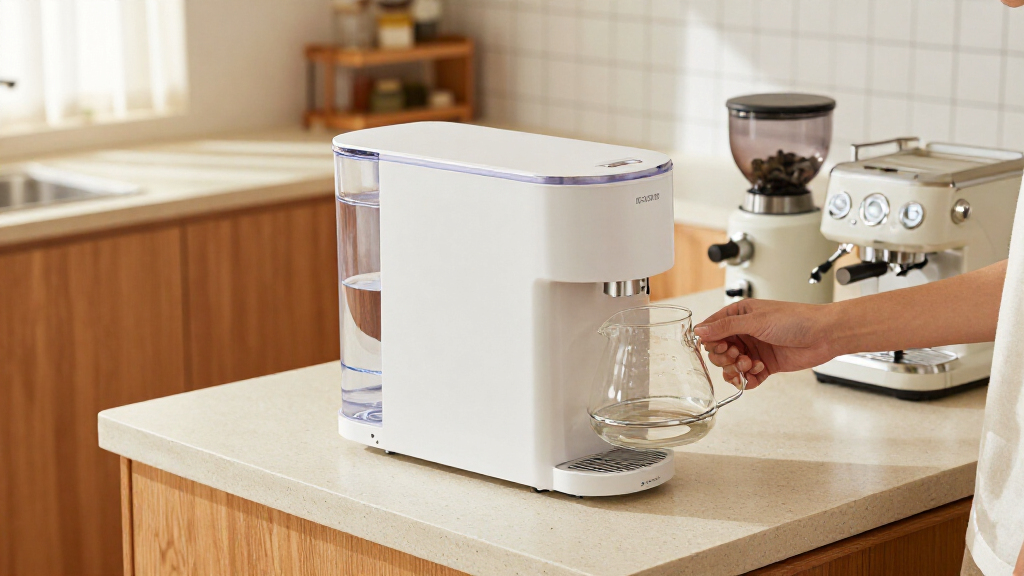
I ranked these systems around the needs of coffee drinkers rather than treating filtration claims as the whole story. I looked at whether a design offers a way to manage mineral content, how easy it is to fill and dispense water during a brewing routine, the likely countertop and storage demands, and whether the format suits occasional cups or frequent brewing. I also weighed practical details such as carafe material, temperature options, portability, installation needs, and the maintenance burden implied by the system’s design.
The Waterdrop M6SL leads because its mineral-focused positioning aligns closely with coffee buyers who want more than purified water alone. The AquaTru Classic and DREO earn distinct places for filtration-centered use and easier serving, while glass-carafe and compact models suit narrower preferences. The tankless Waterdrop G3P600 ranks as a specific-use alternative rather than a countertop match: it may suit a permanent kitchen installation, but it does not fit shoppers seeking a portable, no-install unit. Product specifications and claims can vary by model or listing, so I recommend confirming current filter details and care instructions before buying.
| countertop reverse osmosis systems for coffee | Purification Method |
|---|---|
| Waterdrop M6SL Mineral Reverse | — |
| AquaTru Classic Countertop Rev | Reverse Osmosis |
| DREO Countertop Reverse Osmosi | — |
| Bluevua RO100ROPOT Countertop | Reverse Osmosis with Remineralization |
| Countertop Reverse Osmosis Wat | — |
| Natureflow NF-Y60AC Reverse Os | Reverse osmosis |
| Bluevua RO100ROPOT-Lite Counte | Reverse osmosis |
| Waterdrop C1S Countertop Rever | Reverse osmosis |
| AquaTru Glass Carafe Counterto | Reverse osmosis |
| Waterdrop G3P600 Tankless Reve | — |
Factors to Consider When Choosing Best Countertop Reverse Osmosis Systems For Coffee
Choosing an RO system for coffee means balancing water chemistry with the routine around your brewer. I would start with how you want the water to taste and behave, then check whether the system’s footprint, dispensing method, and upkeep fit your kitchen. These broader factors can help distinguish a good coffee-water setup from a purifier that simply looks capable on paper.
Decide Whether You Want Minerals Added Back
Reverse osmosis removes many dissolved substances, but coffee brewing depends on water composition as well as cleanliness. A mineralizing stage can make a system more convenient for someone who wants filtered water with minerals added back, though it does not mean every cup will match a preferred brewing profile. If you already use a mineral concentrate or recipe, a system without remineralization may give you more direct control. Avoid assuming that “mineral” on a product name guarantees the exact water chemistry your coffee needs; check what the manufacturer says the stage does. For buyers who change beans and brew methods often, adjustability may matter more than a built-in mineral feature. The right choice depends on whether you value a simple routine or precise control over water composition.
Match Output and Serving Style to Your Brewing Routine
A single pour-over each morning creates different demands from filling a kettle for several people or preparing a full day’s batch. Pitchers and carafes can make water easy to store and pour, while direct dispensing may suit frequent use without repeated transfers. Hot-water functions can save a step, but they do not automatically replace a brewing kettle, which may offer better control over temperature and pouring. Check how much water the unit can hold or dispense before a refill, and think about whether you will brew coffee and use the same supply for drinking. A mismatch here often leads to constant refilling or wasted counter space. Choose around your actual daily volume, not an imagined maximum-use scenario.
Measure the Full Countertop Footprint
Countertop RO units need room not only for the appliance but also for filling, removing a pitcher, and accessing filters. Measure the space beneath cabinets as well as the width and depth available; a unit that technically fits may be awkward to use if its lid cannot open freely. Consider where the water reservoir will sit and whether you can reach a sink easily when it needs filling or cleaning. Glass carafes may be pleasant to pour from but require careful handling and storage. If the kitchen is shared or compact, a simpler, smaller unit may be easier to live with than a feature-heavy model. Check the product dimensions and clearance needs rather than relying on lifestyle photos.
Compare Maintenance, Not Just Filter Stages
Filter-stage counts alone do not tell you how demanding ownership will be. Check which filters need replacement, how often the maker recommends changing them, whether the system signals service needs, and how easy the parts are to obtain. For coffee, neglected filters can undermine the taste and convenience that prompted the purchase. Also account for routine cleaning of reservoirs, pitchers, and water-contact surfaces; these tasks are separate from changing cartridges. A system with a straightforward care routine may serve you better than one with more features that you rarely maintain. Before choosing, make sure the upkeep is realistic for your schedule and the manufacturer provides clear instructions.
Choose Portable Countertop or Installed Tankless
Most products in this roundup are designed to sit on the counter and operate without plumbing, which suits renters and people who may move the unit. A tankless system such as the Waterdrop G3P600 is a different commitment: it is intended for a fixed installation and should not be treated as a portable countertop purifier. Installed units can make water access more integrated into kitchen use, but they call for suitable plumbing, space, and installation planning. Before buying, verify the exact model’s connection requirements instead of relying on the broad “countertop” wording in a search listing. This distinction matters especially for renters, RV owners, and anyone who wants to avoid modifying a kitchen. Pick the format first, then compare the features within that format.
Frequently Asked Questions
Do I need a remineralizing RO system to make good coffee?
No single system feature guarantees a preferred cup, but mineral content can affect extraction and flavor. A remineralizing model offers a simpler route if you want minerals added back after RO filtration. If you already adjust brewing water with a separate product, a non-remineralizing unit can leave that step in your hands. Check the maker’s description of the mineral stage rather than assuming it creates a specific coffee-water profile. Choose based on whether convenience or fine control matters more to your routine.
Can I use RO water straight from the system in my espresso machine?
Check your espresso machine’s water guidance before using water from any RO system. Some machines call for water with a certain mineral range, and very low-mineral water may not match those requirements. A remineralizing stage may help, but you should not assume it meets the machine maker’s specification without checking. If you use a separate mineral recipe, test or follow that recipe consistently rather than mixing methods by guesswork. This is especially relevant for machines with water-quality requirements tied to scale management or warranty terms.
Should I choose a glass carafe or an autofill pitcher for coffee water?
Choose the format that best fits how you move water from the purifier to your brewer. A glass carafe may appeal if you prefer glass for serving or storing water, while an autofill pitcher emphasizes easier access and less manual handling. Neither feature tells you by itself how much water the system can produce or how often you will refill it. Check capacity, pouring comfort, cleaning instructions, and where the vessel will sit between brews. If the carafe will be handled often, account for the care required to avoid chips or breakage.
Is a hot-and-cold RO unit a better choice than a standard countertop purifier for coffee?
It can be convenient if you regularly need water at different temperatures, but temperature settings do not guarantee the level of control a coffee brewer requires. Pour-over and other manual methods may benefit from a separate kettle with adjustable temperature and a suitable spout. A hot-and-cold unit can make sense for a shared kitchen where the same appliance serves several drink preferences. Compare its footprint, dispensing method, and maintenance needs with a simpler purifier before paying for temperature features. If coffee is the main use, water quality and mineral handling should remain central to the decision.
Does the Waterdrop G3P600 belong on a countertop shortlist?
Only if you are open to an installed, tankless setup rather than a portable countertop appliance. Its inclusion is useful for comparing approaches, but it does not match the no-install format of most other products here. Confirm plumbing and installation requirements, available space, and whether the system suits your home before treating it as an alternative. For renters, RV users, or anyone who wants to move the purifier between rooms, a countertop model is the more relevant category. If you want an integrated kitchen water supply, compare installed-system requirements separately from countertop conveniences.
Conclusion
For most coffee drinkers seeking a countertop purifier, I recommend the Waterdrop M6SL as the best overall because its mineral-focused design speaks directly to coffee-water preferences. The Bluevua RO100ROPOT-Lite is my best-value-style choice for shoppers prioritizing a simpler, glass-carafe format, while the AquaTru Classic is the best premium-leaning pick for buyers who put filtration-centered design first. For beginners, the DREO Autofill Pitcher is the clearest fit when easy day-to-day serving matters more than fine-tuning the setup. Choose the AquaTru Glass Carafe if glass is your priority, a hot-and-cold model if temperature convenience serves the whole household, or the Waterdrop G3P600 only if you specifically want a fixed tankless installation. Match the format and maintenance routine to your kitchen before deciding which filtration features deserve the most weight.