TL;DR

Get coffee and tea gear delivered free with Prime
- Fast, free delivery on millions of items
- Prime Video, Amazon Music and more included
- Member-only deals all year
A PID espresso machine uses feedback to keep a boiler closer to a selected temperature, which can improve shot-to-shot consistency and make temperature experiments repeatable. It does not guarantee the water reaches the coffee puck at the displayed temperature or fix problems with grinding, dosing, or technique. Before buying, check which boiler the PID controls and follow the machine’s warm-up instructions.
A machine can display 93°C and still send water to your coffee at a different temperature. The number usually describes what a sensor detects near a boiler, while heat shifts as water travels through the group head and into the puck. That small distinction explains both the appeal and the limits of a PID.
PID temperature control helps a machine hold its boiler closer to a chosen target. That can make back-to-back shots more consistent and let you test how a small temperature change affects a coffee’s flavor. It won’t rescue stale beans or an uneven grind, though. Think of it as a steadier dial for one part of your brewing setup, not a shortcut to perfect espresso.
In this guide, you’ll learn what PID stands for, what it changes in the cup, and what to check before paying extra. You’ll also see why the same temperature setting can behave differently on a single-boiler, heat-exchanger, or dual-boiler machine. If you make several drinks in a row, that difference can show up before the second cup is poured.
A PID uses feedback to keep a boiler closer to a chosen temperature, reducing some heating swings.
A displayed setpoint is a sensor reading near the boiler, not proof of the exact temperature at the coffee puck.
Small temperature changes are easiest to evaluate when you keep dose, yield, grind, and preparation steady.
Check whether the PID controls the brew boiler, steam boiler, or both before comparing machines.
Allow the full machine to warm up and follow its flush routine; a PID does not replace those steps.
BREWING CONTROL / FIELD GUIDE 01
PID Espresso Machines: What Temperature Control Changes
A PID can steady boiler temperature, help back-to-back shots start from similar conditions, and make small flavor experiments repeatable. It is a useful control for one part of the brew—not a promise that water reaches the coffee puck at the number on the display.
“93°C” usually describes what a sensor detects near a boiler.
Heat shifts on the way through the group head. Warm-up, flow, and machine design all shape the water that reaches the coffee.AT A GLANCE
A steadier dial, with clear limits
A PID uses feedback to keep a boiler closer to a selected temperature. That can reduce some heating swings and make temperature tests easier to repeat. It does not fix stale beans, uneven grinding, inconsistent dosing, or technique.
The sensor measures its own location, often in or near the boiler—not the coffee puck.
FIVE TAKEAWAYS
- 01A PID keeps boiler temperature closer to a chosen target, reducing some heating swings.
- 02The display is a sensor reading, not proof of the exact temperature at the puck.
- 03For useful temperature tests, hold dose, yield, grind, and preparation steady.
- 04Check whether the PID controls the brew boiler, steam boiler, or both.
- 05Warm the full machine and follow its flush routine; PID control does not replace either step.
01 / HOW THE CONTROL WORKS
Feedback narrows the heating swings
PID stands for proportional–integral–derivative. The controller responds to how far temperature has drifted from the target, how long the error has lasted, and how quickly it is changing. It adjusts heater power in a more measured way than a basic thermostat’s wider on-off cycle.
How far off?
Responds to the size of the gap between the measured temperature and the selected target.
For how long?
Accounts for temperature error that persists, helping the controller correct a lasting drift.
How fast is it moving?
Responds to the rate of temperature change, helping shape the heating response as conditions shift.
02 / SHOT-TO-SHOT CONSISTENCY
More repeatable starts for the next shot
Pull a shot, steam milk, then make another. On a machine with a wide thermostat cycle, the heater may switch off before the first shot and back on during recovery. A PID can make the brew boiler’s return toward its target more predictable.
The everyday benefit is often repeatability, rather than a dramatic flavor change in one cup. It becomes easier to judge the coffee when the grinder, dose, and preparation are already consistent.
03 / FLAVOR EXPERIMENTS
Change one variable at a time
A repeatable temperature setting makes it easier to return to a known point and test a small adjustment. Brew temperature affects how quickly soluble compounds dissolve, but the best setting depends on the coffee, roast, recipe, and your taste.
When a light roast tastes sharp
First check grind and recipe. Then compare a small temperature increase as one possible adjustment—not a universal rule.
When a dark roast tastes harsh
A slightly lower setting may be worth testing. Taste and compare while keeping the rest of the recipe steady.
Dose, yield, grind, prep
If several variables change together, the cup cannot tell you which change shifted the flavor.
04 / MACHINE DESIGN
Check which boiler the PID controls
A front display does not tell you by itself which heating circuit is regulated. Look at the manual or manufacturer specifications. Brew and steam control can be separate, and the machine’s boiler layout changes how temperature and workflow behave.
Single-boiler
The same boiler handles brewing and steaming at different operating temperatures. You may need to wait between tasks; PID control does not remove that design tradeoff.
Heat exchanger
Brew water passes through a tube within a steam boiler. Its temperature behavior and workflow differ from a dual-boiler machine.
Dual-boiler
Separate brew and steam boilers can support independent settings when the PID controls both circuits. Verify what the model actually regulates.
Sensor placement, calibration, group-head design, warm-up time, flush routines, and flow can all affect water temperature before it reaches the coffee. Follow the machine’s warm-up instructions.
05 / BEFORE YOU BUY
Six checks beyond the word “PID”
Which circuit? Confirm whether the controller regulates brew, steam, or both boilers.
Useful adjustment? Check that the temperature range and controls suit how you brew.
Full warm-up? A boiler can reach its target before the group head and portafilter are stable.
What does the number mean? Sensor location and calibration vary; the display may not equal puck temperature.
What machine type? Single-boiler, heat-exchanger, and dual-boiler designs behave differently.
What is the workflow? PID may reduce temperature surfing on some machines, but routines still depend on the model.
THE BREWING CHAIN
Where temperature fits in the cup
Temperature control is most useful when the rest of the setup is repeatable enough for comparisons to mean something.
A PID keeps boiler temperature closer to your target
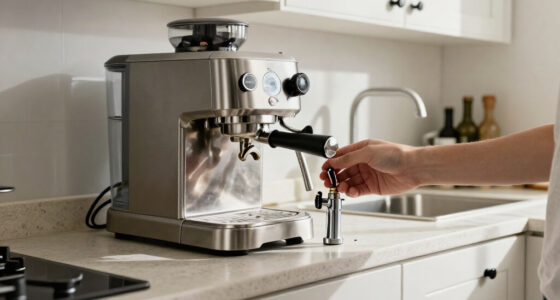
A PID espresso machine uses a feedback controller to keep a boiler near a chosen temperature by adjusting power to its heating element. PID stands for proportional–integral–derivative: the controller responds to how far the temperature has drifted, how long the error has lasted, and how quickly it is changing. That lets it respond in a more measured way than a basic thermostat’s wider on-off cycle.
Imagine you’re pulling one shot, then another a minute later. In a thermostat-controlled machine, the heater may have switched off just before the first shot and back on during recovery. The second shot can then meet water at a different point in the heating cycle. A PID can reduce that swing, so the two shots have a better chance of starting from similar boiler conditions.
“Closer to the target” matters: it does not mean the temperature never moves. The sensor reads temperature at its own location, usually in or near the boiler, and the controller reacts to that reading. Water can lose or gain heat as it moves through the machine, especially if the group head and portafilter are still warming.
So treat a PID’s displayed number as a useful reference for the machine, not a direct reading from the coffee puck. If the screen says 93°C, that doesn’t prove the brew water hits the coffee at exactly 93°C. Warm-up time, group-head design, flushing, and flow all affect what happens on the way.
As an affiliate, we earn on qualifying purchases.
Steadier brewing makes back-to-back shots easier to repeat
PID espresso machines can reduce boiler temperature swings, which helps make successive shots more consistent when you prepare several drinks. A steadier starting point makes it easier to compare one shot with the next, especially when the grinder, dose, and preparation stay the same. The PID’s strongest everyday benefit is often repeatability, rather than a dramatic flavor upgrade in a single cup.
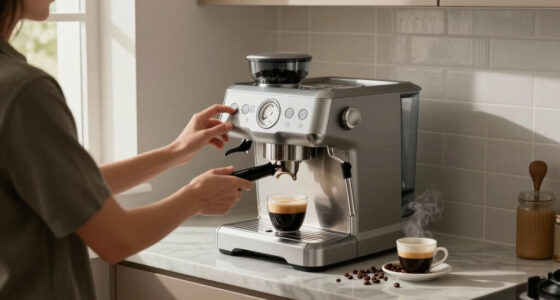
Say you’re making cappuccinos for two people before work. You pull the first shot, steam milk, then return to the machine for the second. A machine without tight temperature control may have changed state while you steamed. A PID can make the brew boiler’s recovery more predictable, so the second shot is less likely to start from a noticeably different boiler temperature.
There are limits. The PID only helps with variables it controls; it cannot make a dose weighed loosely on Monday match one eyeballed on Tuesday. If your grind changes, your distribution leaves clumps, or your tamp varies, those choices can change extraction more than a small temperature adjustment. Consistency depends on the whole routine.
That is why temperature control becomes more useful as your other habits settle in. Once you use the same coffee dose and repeatable preparation, a temperature difference becomes easier to spot. If every shot comes from a new grind setting and a different dose, the PID’s steadier boiler may be hard to appreciate in the cup.
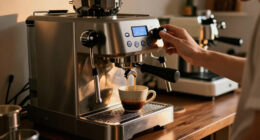
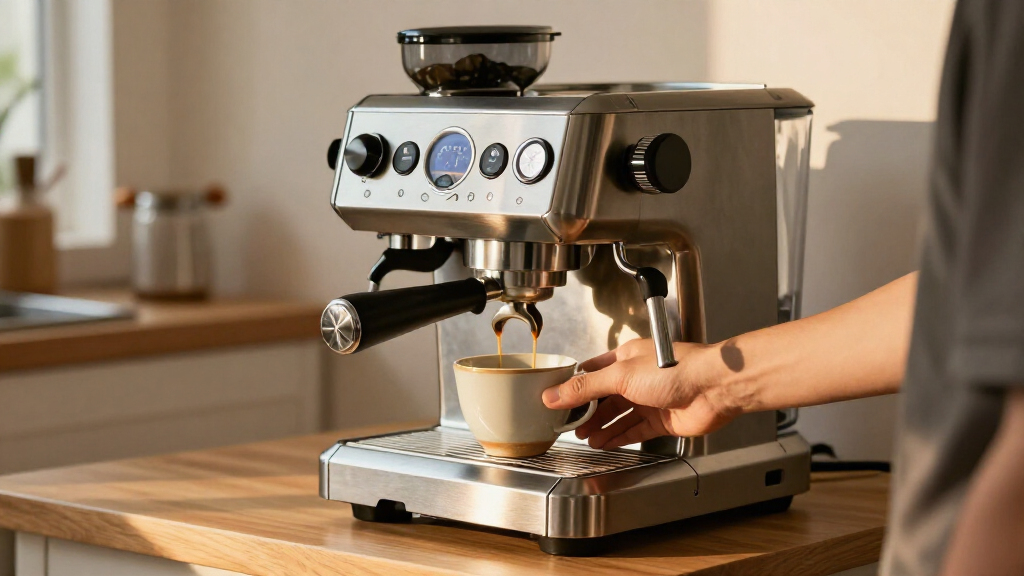
espresso machine with temperature control
As an affiliate, we earn on qualifying purchases.
As an affiliate, we earn on qualifying purchases.
Small temperature changes help you tune a coffee’s flavor
PID espresso machines make temperature experiments easier to repeat: you can return to a known setting, change it slightly, and compare the results with the same coffee and recipe. Brew temperature affects how quickly soluble compounds dissolve, so changing it can shift the balance in the cup. The right setting depends on the beans, roast, recipe, and your taste.
For example, you might find a light roast tastes a little sharp at your usual setting. After checking your grind and recipe, you could try a small increase and compare another shot. A darker roast that tastes harsh or bitter may lead you to test a slightly lower setting instead. These are starting points for tasting, not universal rules that every light or dark coffee must follow.
Keep the experiment simple. Hold dose, yield, grind, and preparation steady while changing temperature in small steps. If you alter the grind and the temperature at once, you won’t know which change moved the flavor. You may notice a brighter, sweeter, or more bitter result, but the cup alone won’t prove that temperature caused it unless other variables stayed put.
A PID makes this process more repeatable; it does not guarantee the temperature at the puck matches the display. A machine’s sensor placement and group-head temperature still matter. Record the displayed setting and your recipe so you can revisit a result, while remembering that the setting is one reference point, not the whole brewing story.
As an affiliate, we earn on qualifying purchases.
Check which boiler the PID actually controls
A PID controls only the heating circuit assigned to it. Depending on the machine, it may regulate the brew boiler, the steam boiler, or both. A display on the front doesn’t tell you by itself which circuit the controller manages, so check the manual or manufacturer specifications before you assume it will stabilize both espresso and milk steaming. This distinction matters because the brew boiler affects extraction conditions, while the steam boiler supports milk steaming; control over one does not automatically improve the other.
On a single-boiler machine, the same boiler handles brewing and steaming at different operating temperatures. You may need to wait as the machine moves between those tasks, and a PID doesn’t remove that design tradeoff. A heat-exchanger machine has a different arrangement: brew water passes through a tube within a steam boiler, so the brewing workflow and temperature behavior differ from a dual-boiler model. The boiler layout affects both how quickly you can move between tasks and how directly a displayed setting describes brew-water conditions.
A dual-boiler machine has separate brew and steam boilers. If the PID controls both, it can help you set their temperatures independently; if it controls only the brew boiler, steam performance may still depend on a separate control system. Picture making two flat whites: the brew boiler’s setting affects extraction, while the steam boiler’s temperature relates to the steam supply. One control does not automatically govern both, so compare the control layout with the drinks you usually make.
Use this checklist when comparing machines:
- Identify the controlled boiler: brew, steam, or both. This tells you which part of your workflow can benefit from the setting.
- Check adjustment options: a temperature display may not offer a broad or convenient range. A control you can’t readily adjust may matter less if you rarely change coffee.
- Read the warm-up guidance: the boiler can reach its target before the group and portafilter are ready, so the display alone may not tell you when the first shot will be consistent.
- Confirm model-specific features: PID controls and temperature ranges vary by machine and market. Similar names or screen layouts don’t guarantee the same control over brewing and steaming.
As an affiliate, we earn on qualifying purchases.
Give the whole machine time to warm up
A boiler reaching its target does not mean the whole brew path is ready. The group head, portafilter, and other metal parts take time to heat, and their temperature affects water on the way to the coffee. Follow the machine’s warm-up instructions instead of treating the moment the display reaches its setpoint as a green light for the first shot. This distinction is practical: a stable boiler reading cannot compensate for a cool group pulling heat from the water.
Here’s a familiar kitchen scenario: you turn on the machine, see the display settle, and rush to pull a shot. The boiler may be near its target while the portafilter still feels cool in your hand. That cooler metal can pull heat from the water. Leaving the portafilter locked in during warm-up, if the manual recommends it, can bring more of the brew path closer to operating temperature and make the first shot less of an exception.
Flushing can also affect temperature, but the right routine depends on the machine. On some designs, a brief flush helps prepare the brew path; on others, a flush changes the temperature in ways you need to account for. Follow the instructions for your model, and use the same routine when comparing shots. A repeatable flush matters because changing its length or timing can add another temperature variable to your comparison.
Thermostat-controlled machines sometimes prompt users to practice temperature surfing: timing a shot around the heater’s cycle to approximate a preferred brewing temperature. A PID can reduce the need for that timing if it controls the brew boiler effectively, but it does not remove warm-up or flushing considerations. The practical goal is a repeatable routine, not a magic display number.
PID control and pressure profiling change different parts of extraction
Temperature control changes how the machine heats water; pressure profiling changes how it applies pressure during extraction. A PID controller cannot create a pressure profile, and a pressure-control feature does not by itself stabilize boiler temperature. Some machines offer both, but they solve separate brewing problems and call for separate learning.
For a simple example, a PID might let you return to the same brew-boiler setting for two shots. A pressure-profiling control might let you change pressure during the shot, such as using a gentler start. If you change both controls at once, the cup may taste different, but it becomes harder to tell which adjustment mattered. Test one variable at a time when you’re learning what your coffee responds to.
Pre-infusion is another distinct feature: it wets the coffee puck before the main extraction, according to the machine’s design. It does not mean the brew water is temperature-stable, just as a PID does not add a pre-infusion stage. If you’re comparing controls or shopping for features, make sure you know which part of the process each one affects.
If you’re interested in how machines manage pressure, Espressoguide’s guide to espresso machines with pressure profiling covers that separate control. Think back to the first cup: a steady temperature gives you a more dependable starting point, while pressure and pre-infusion shape other parts of the shot.
Pay extra for a PID when repeatable control matters to you
A PID is most useful when you want repeatability or plan to experiment with brew temperature. If you make several drinks in a row, work with different coffees, or like recording and repeating a recipe, direct temperature adjustment can make the machine easier to use. If you’re happy with your current results and rarely change coffee or workflow, the benefit may feel modest. The tradeoff is paying for control that can support a more deliberate routine, even though it won’t automatically improve a shot prepared inconsistently.
Imagine two buyers. One makes a single morning espresso with the same beans, lets the machine warm up, and enjoys the cup without changing settings. The other switches between a light roast and a darker blend, then makes drinks for guests. The second buyer has more reason to value a PID because returning to a setting and comparing coffees is part of the routine. For the first buyer, the money may have more practical value in a grinder or other feature they use every day.
Compare what the feature actually offers:
| What to check | Why it matters |
|---|---|
| Which boiler the PID controls | It tells you whether the feature affects brewing, steaming, or both. |
| How the temperature can be adjusted | A display without usable adjustment may offer less control than you expect. |
| Warm-up and flush instructions | These shape the temperature behavior you get during real use. |
| Other machine features | A PID does not replace good grinding, preparation, pressure control, or workflow. |
Machine features and availability vary by model and market, so verify details in the manual or specifications for the exact machine. Don’t assume every PID offers separate brew and steam settings or the same adjustment range. Judge the feature by what it controls and how you’ll use it each week.
Frequently Asked Questions
What does PID mean on an espresso machine?
PID stands for proportional–integral–derivative. It describes a feedback controller that uses temperature error, how long it lasts, and how quickly it changes to adjust the heating element. On an espresso machine, it helps keep a boiler closer to its selected target.
Does a PID make espresso taste better?
A PID can make brewing conditions more repeatable and help you test how temperature changes affect a coffee. It cannot correct stale beans, an uneven grind, or inconsistent preparation. You’re more likely to notice its value when the rest of your recipe is already steady.
What temperature should I use for espresso?
There is no single temperature setting that suits every machine, coffee, and recipe. Start with your machine’s recommended range, then make small adjustments while keeping your dose, yield, and grind consistent. Treat the displayed setpoint as a machine reference, not a guaranteed reading at the coffee puck.
Does a PID control steam temperature too?
Only if the machine’s design and control system include the steam boiler or circuit. Some machines regulate the brew boiler alone, while others offer separate brew and steam control. Check the exact machine manual rather than assuming the display covers both.
Do you still need to temperature surf with a PID?
Usually, a PID that controls the brew boiler reduces the need to time shots around a thermostat’s heating cycle. You still need to allow the machine to warm up and follow its flushing instructions. The group head and portafilter can lag behind the boiler’s displayed temperature.
Does a PID replace pre-infusion or pressure profiling?
No. A PID manages heating, while pre-infusion and pressure profiling affect how water enters or moves through the coffee puck. A machine may include all of these features, but each controls a different part of brewing.
Conclusion
Think of a PID as a steadier reference point for your espresso routine. It can help you repeat shots and test temperature changes, but the grinder, coffee, preparation, machine design, and warm-up all shape what reaches the cup. Check which boiler the controller manages, then decide whether that control matches how you brew.
Start with the machine’s recommended setting, keep your recipe steady, and change temperature in small steps when you want to experiment. A good shot begins before the first drip: warm metal, a settled routine, and a number you can return to tomorrow.
Columbus Day / Indigenous Peoples' Day Picks
long weekend sales
As an affiliate, we earn on qualifying purchases.