
TL;DR
A Good Housekeeping Institute analyst says wooden cutting boards should be washed by hand with warm water and dish soap, not put in the dishwasher. After raw meat, wash the board and sanitize it with a food-contact-safe product or a USDA-recommended diluted bleach solution, then rinse and dry it fully.
Wooden cutting boards should be washed by hand with warm water and dish soap, then dried promptly, according to cleaning guidance from Good Housekeeping Institute Reviews Analyst Noah Pinsonnault. The report warns that dishwasher heat, prolonged water exposure and detergent can damage wood, and outlines a separate sanitizing routine for boards used to prepare raw meat.

Get coffee and tea gear delivered free with Prime
- Fast, free delivery on millions of items
- Prime Video, Amazon Music and more included
- Member-only deals all year
Pinsonnault says the dishwasher’s combination of high temperatures, extended moisture and detergent can make wood swell, warp or crack. Many boards are assembled from pieces joined with glue, and repeated dishwasher cycles can weaken those joints, he says. The warning applies to edge-grain and end-grain wooden boards, as well as bamboo boards.
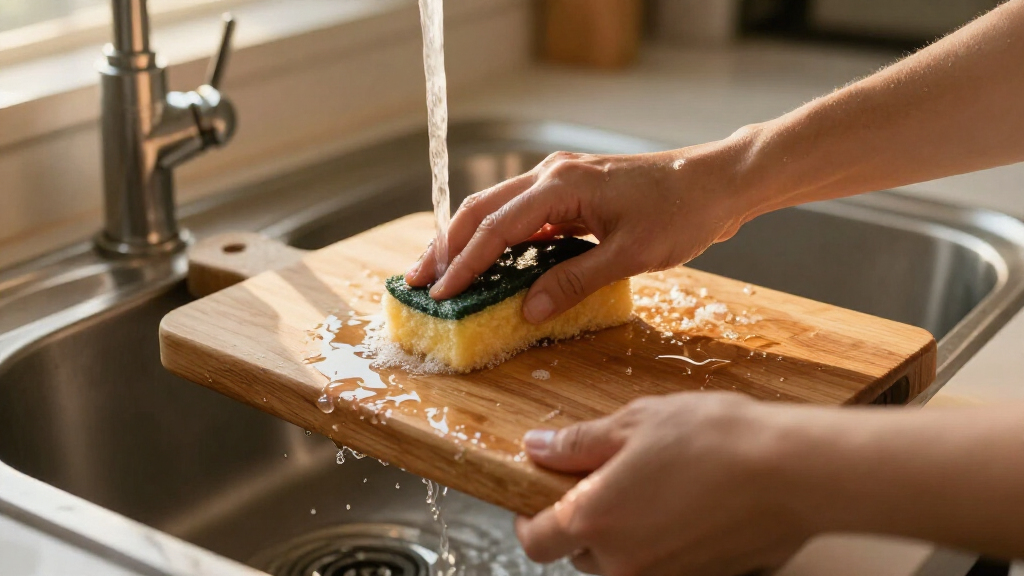
The recommended routine is brief: wash the board in the sink with warm water and dish soap, using a sponge or brush, and avoid leaving it to soak. After washing, dry it promptly. Pinsonnault recommends standing the board upright so air can circulate around both sides while it dries.
For a board used with raw meat, the report says to wash it thoroughly and then sanitize it with a food-contact-safe sanitizer, following that product’s directions. It also cites USDA guidance for a homemade solution: mix one tablespoon of unscented liquid chlorine bleach per gallon of water. Rinse the board thoroughly after sanitizing and let it dry completely.
Protecting Boards and Food Safety
The advice addresses two everyday concerns: keeping a wooden board in usable condition and cleaning it safely after contact with raw meat. Avoiding the dishwasher may reduce the risk of warping, cracking or weakened glue joints, while washing and sanitizing after raw meat helps make the board suitable for later food preparation.
The steps distinguish ordinary cleaning from sanitizing. Soap and water are the routine wash; after raw meat, the report recommends an additional sanitizing step and a thorough rinse. Following the sanitizer label matters because products can have different directions. The source does not provide a substitute for those instructions or claim that the same treatment is appropriate for every board material.
Products Worth Considering

Breville Barista Express Espresso Machine with Built-In Grinder, Brushed Stainless Steel

Cuisinart Core Custom 10-Cup Food Processor, Anchor Gray

Cuisinart Pro Custom 11-Cup Food Processor (DLC-8SBCYP1)
As an affiliate, we earn on qualifying purchases.
Why Dishwashers Can Damage Wood
Wood reacts to moisture and heat. The source report says that exposure during repeated dishwasher cycles can cause boards to swell, warp or crack. Where a board consists of glued pieces, the cycles may also weaken the connections. The concern is not limited to a particular wood-board construction: the report applies the hand-washing advice to edge-grain and end-grain boards, and includes bamboo.
There is an exception for some products made from wood-fiber composite. Pinsonnault says some of these boards are designed to be dishwasher-safe, citing Epicurean as an example. That does not mean every composite board can go in the dishwasher: consumers should check the specific manufacturer’s care instructions before washing one that way.
Care Depends on Board Material
The source does not identify every wood-fiber composite board that can safely go in a dishwasher, nor does it provide care instructions for individual products. Manufacturer guidance is the deciding reference for a specific board. The report also does not specify a sanitizer brand, contact time or storage conditions; for commercial sanitizers, users should follow the product label. Its bleach recipe is attributed to the USDA, but the source does not give additional handling guidance.
No testing results or comparisons among cleaning methods are included in the supplied report. The guidance is presented as Pinsonnault’s recommendation and cited USDA advice, rather than as a report of a new study or a change to official rules.
Check Labels Before Washing
For a wooden board, the next step is to use the recommended hand-wash, no-soak and prompt-dry routine. After raw meat, wash it thoroughly, sanitize it according to the product label or the cited USDA dilution, rinse and allow it to dry fully.
Owners of composite boards should check the manufacturer’s care instructions before using a dishwasher. The source report does not announce further research, a policy change or a scheduled follow-up; it offers practical care guidance for current household use.
Key Questions
Can I put a wooden cutting board in the dishwasher?
The report advises against it. Pinsonnault says dishwasher heat, prolonged water exposure and detergent can make wood swell, warp or crack, and may weaken glued joints.
What is the recommended way to wash a wooden board?
Wash it by hand with warm water and dish soap, using a sponge or brush. Do not soak it; dry it promptly, preferably standing upright so air can reach both sides.
How should I sanitize a board after cutting raw meat?
Wash the board thoroughly, then use a food-contact-safe sanitizer according to its label. The report also cites USDA guidance to mix one tablespoon of unscented liquid chlorine bleach per gallon of water. Rinse thoroughly and let the board dry completely.
Are any wood-based cutting boards dishwasher-safe?
Some wood-fiber composite boards are designed for dishwasher use, according to Pinsonnault. Check the manufacturer’s instructions for the specific product; the report does not say that all composite boards are dishwasher-safe.
Source: goodhousekeeping.com