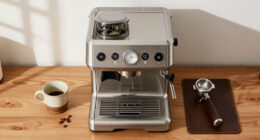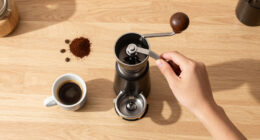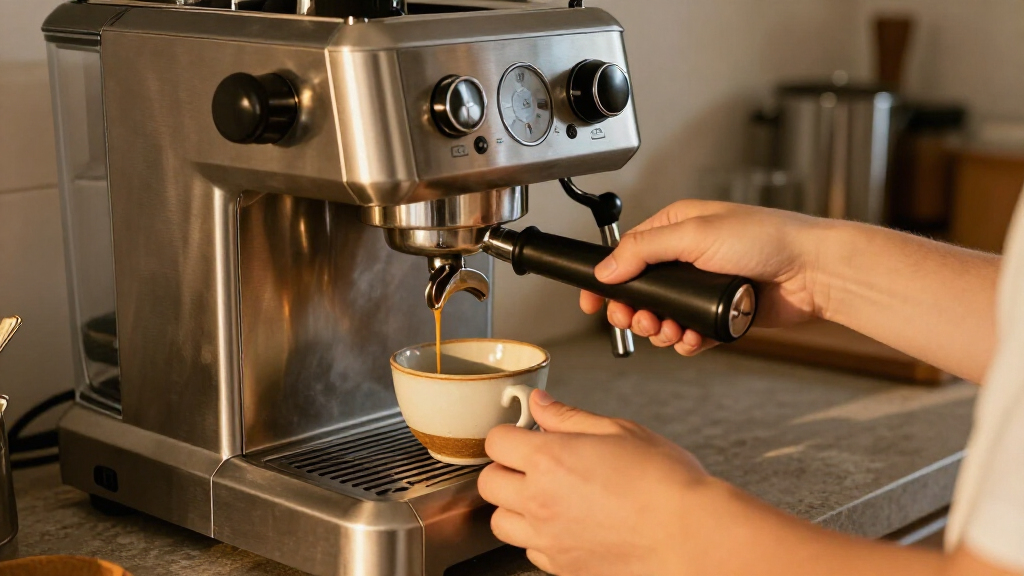

The best espresso machines with insulated boilers combine steady brewing temperatures with the ability to prepare espresso and steam milk with less waiting. My best overall pick is the Breville BES920XL Dual Boiler for its dedicated brew and steam boilers, adjustable temperature control, and shot timer. The Diletta Alto stands out for a more hands-on setup with PID control, while the Gevi Dual Boiler with Built-In Grinder is a compelling all-in-one option for buyers who want fewer separate appliances. The main tradeoffs are price and counter space versus convenience, control, and simultaneous brewing and steaming. Read on for how the eight options differ and which type of setup suits your routine.

Get coffee and tea gear delivered free with Prime
- Fast, free delivery on millions of items
- Prime Video, Amazon Music and more included
- Member-only deals all year
Complete the kit


Key Takeaways
- The Breville BES920XL ranks first for control: its separate brew and steam boilers, adjustable temperature, and shot timer make it the strongest fit for buyers who want to refine their espresso workflow.
- Built-in grinders simplify a setup but narrow the choice: the Gevi and Chefman combine grinding and brewing, while the Breville Dynamic Duo pairs its machine with a separate Smart Grinder Pro.
- The Diletta Alto favors hands-on brewing: PID temperature control and a shot timer suit buyers who want feedback and control without choosing an all-in-one grinder machine.
- Dual-boiler labels do not tell the whole story: differences in temperature adjustment, milk automation, grinder inclusion, and controls shape how each machine fits daily use.
- Counter space and workflow are real tradeoffs: the Breville bundle and dual-boiler machines need room for a more involved setup, while integrated grinders and automatic milk features can reduce separate steps.
| Gevi Dual Boiler Espresso Machine With Built‑In Burr Grinder |  | Best for Built-In Grinder Convenience | Boiler system: Dual boiler | Temperature control: PID | Grinder: Built-in burr grinder; 31 grind levels | VIEW LATEST PRICE | See Our Full Breakdown |
| Chefman Crema Deluxe Espresso Machine with Double Boiler, Milk Frother, Grinder, and Steam Wand – 30 Grind Settings |  | Best for High-Volume Home Use | Boiler system: Dual boiler | Pump pressure: 15 bar | Grinder: Built-in conical burr grinder; 30 settings | VIEW LATEST PRICE | See Our Full Breakdown |
| Gevi Dual Boiler Espresso Machine with Built-In Grinder |  | Best for a More Compact Counter Setup | Boiler system: Independent dual boilers | Grinder: Built-in; 31 grind levels | Temperature control: NTC and PID | VIEW LATEST PRICE | See Our Full Breakdown |
| Tuni E2 Gen3 Dual Boiler Espresso Machine with Super+ Steam, Ivory |  | Best for Hot and Cold Brewing Options | Boiler system: Dual boiler | Temperature control: PID and NTC | Brew head size: 58 mm | VIEW LATEST PRICE | See Our Full Breakdown |
| Diletta Alto Dual Boiler Espresso Machine with PID and Shot Timer (Black) |  | Best Premium Manual Pick | Boiler system: Dual boiler; dedicated brew and steam boilers | Temperature control: PID controls for brew and steam | Portafilter: 58 mm | VIEW LATEST PRICE | See Our Full Breakdown |
| Breville Dynamic Duo Espresso Machine Bundle with Dual Boiler and Smart Grinder Pro, Stainless Steel (BEP920BSS) |  | Best Bundle for Dialing In | Model: BEP920BSS | Boiler system: Dual boiler | Grinder: Precision conical burr grinder | VIEW LATEST PRICE | See Our Full Breakdown |
| AMZCHEF 9 Bar OPV Dual Boiler Espresso Machine with Automatic Milk Frother |  | Best for Hands-Free Milk Frothing | Type: Semi-automatic espresso machine | Heating system: Dual heating systems | Regulated extraction pressure: 9–12 bar | VIEW LATEST PRICE | See Our Full Breakdown |
| Breville BES920XL Dual Boiler Espresso Machine, Brushed Stainless Steel |  | Best for Manual Espresso Control | Boiler system: Two stainless-steel boilers | Power: 1700 watts | Voltage: 110–120 volts | VIEW LATEST PRICE | See Our Full Breakdown |
| espresso machines with insulated boiler | Boiler system | Temperature control | Portafilter | Dimensions |
|---|---|---|---|---|
| Gevi Dual Boiler Espresso Mach | Dual boiler | PID | 58 mm | 18.85 × 15.66 × 18.85 inches |
| Chefman Crema Deluxe Espresso | Dual boiler | — | 58 mm; single- and double-shot baskets | — |
| Gevi Dual Boiler Espresso Mach | Independent dual boilers | NTC and PID | 58 mm stainless steel | 13.8 × 12.6 × 16.5 inches |
| Tuni E2 Gen3 Dual Boiler Espre | Dual boiler | PID and NTC | — | — |
| Diletta Alto Dual Boiler Espre | Dual boiler; dedicated brew and steam boilers | PID controls for brew and steam | 58 mm | 19.75 × 12 × 14.5 inches |
| Breville Dynamic Duo Espresso | Dual boiler | PID | — | — |
| AMZCHEF 9 Bar OPV Dual Boiler | — | — | 58 mm | 16.4 × 10 × 14.4 inches (D × W × H) |
| Breville BES920XL Dual Boiler | Two stainless-steel boilers | PID; water within ±2°F | — | 14.7 × 14.8 × 14.7 inches (D × W × H) |
More Details on Our Top Picks
Gevi Dual Boiler Espresso Machine With Built‑In Burr Grinder
This Gevi pairs independent boilers with a built-in burr grinder, so you can grind and prepare milk drinks without adding a separate grinder to your setup. Its PID temperature control and adjustable shot volume give hands-on users tools to tune their espresso, while the 58 mm portafilter suits a familiar home-barista workflow. Compared with the Chefman Crema Deluxe, it lists 31 grind levels rather than 30, but the Chefman provides a stated 3-liter reservoir and cETL approval; those details are not specified for this Gevi. The built-in grinder saves counter space, though its many controls and semi-automatic operation ask more of a new user than a simpler appliance. At 15 pounds, it is manageable to place but not especially light to move around.
Pros:- Dual boilers support brewing and steaming without waiting for one task to finish.
- Built-in burr grinder offers 31 grind levels and accepts whole beans.
- PID temperature control and adjustable shot volume give users control over extraction.
- 58 mm portafilter and professional steam wand suit espresso and milk-drink preparation.
Cons:- Semi-automatic controls and grinder adjustments can take time for beginners to learn.
- At 15 pounds, it is less convenient to move than a lightweight countertop appliance.
- The supplied product details do not state water-tank capacity or pump pressure.
Best for: Home baristas who want a dual-boiler workflow and an integrated grinder with multiple grind adjustments, without buying a separate grinder.
Not ideal for: Beginners seeking a low-learning-curve machine, or buyers who need a clearly stated large water reservoir and want minimal setup decisions.
- Boiler system:Dual boiler
- Temperature control:PID
- Grinder:Built-in burr grinder; 31 grind levels
- Portafilter:58 mm
- Operation:Semi-automatic
- Coffee input:Whole bean and ground coffee
- Dimensions:18.85 × 15.66 × 18.85 inches
- Weight:15 pounds
- Warranty:12 months
Our verdict“Choose this Gevi if an integrated 31-level grinder and dual-boiler workflow matter more than beginner-friendly simplicity.”
Chefman Crema Deluxe Espresso Machine with Double Boiler, Milk Frother, Grinder, and Steam Wand – 30 Grind Settings
The Chefman Crema Deluxe is the lineup’s clearest fit for households that make several drinks between refills: its 3-liter removable reservoir is larger than the 2.8-liter tank listed for the Gevi B0D7M71Y2Z. The dual boiler lets you brew and steam at the same time, while the built-in conical burr grinder and 58 mm portafilter create a capable all-in-one station. Its 30 grind settings are one fewer than the 31 offered by the Gevi models, a small difference for most buyers, but both machines require some grinder and shot adjustment. The tradeoff is its larger footprint, which makes it less appealing for a crowded counter. Grinder and steam-wand upkeep also adds routine cleaning, though included tools and accessories support that work.
Pros:- Dual boilers allow espresso brewing and milk steaming at the same time.
- Removable 3-liter reservoir reduces refill interruptions.
- Built-in 30-setting conical burr grinder and 58 mm portafilter provide an integrated workflow.
- Includes a milk pitcher, tamper, and cleaning tools.
Cons:- Its relatively large footprint needs more counter space than the compactly described Gevi B0FW4LYNJY.
- The grinder and steam wand need regular cleaning to maintain performance.
- Semi-automatic operation still requires the user to manage preparation and extraction.
Best for: Households making multiple espresso and milk drinks who value fewer reservoir refills and an integrated grinder.
Not ideal for: Apartment dwellers with limited counter space, or buyers who prefer a low-maintenance machine without an integrated grinder to clean.
- Boiler system:Dual boiler
- Pump pressure:15 bar
- Grinder:Built-in conical burr grinder; 30 settings
- Portafilter:58 mm; single- and double-shot baskets
- Water reservoir:3 liters; removable
- Power and voltage:1500 watts / 120 volts
- Operation:Semi-automatic
- Safety certification:cETL approved
- Warranty:1 year
Our verdict“Pick the Chefman if a large reservoir and simultaneous brewing and steaming are more useful to you than a compact footprint.”
Gevi Dual Boiler Espresso Machine with Built-In Grinder
This Gevi stands out for its clearly stated 13.8 × 12.6 × 16.5-inch dimensions, making it the most space-conscious choice here on the available measurements. It still combines independent boilers, a built-in grinder with 31 settings, and PID plus NTC temperature regulation, so a smaller footprint does not mean giving up the core dual-boiler workflow. Compared with the Chefman Crema Deluxe, its listed 2.8-liter tank is slightly smaller, but its dimensions are provided and its removable tank and drip tray simplify cleanup. The 20-bar pump is specified, though pump pressure alone does not tell a buyer how easy it will be to dial in a shot. At 15 pounds, it is not featherweight, and its semi-automatic controls still suit a willing learner better than someone seeking push-button simplicity.
Pros:- Listed dimensions are more compact than the dimensions supplied for the other machines in this group.
- Independent boilers support brewing while steaming milk.
- Built-in grinder has 31 levels, with PID and NTC temperature regulation.
- Removable water tank and drip tray make routine cleaning easier.
Cons:- The 2.8-liter tank is smaller than the Chefman Crema Deluxe’s stated 3-liter reservoir.
- Its 15-pound weight makes frequent repositioning less convenient.
- Semi-automatic preparation and grinder tuning may challenge first-time espresso makers.
Best for: Home baristas with a measured, moderately sized counter who want an integrated grinder, removable cleaning parts, and dual boilers.
Not ideal for: Buyers who want automatic drink preparation, or anyone who prioritizes a larger stated water capacity over the more compact listed dimensions.
- Boiler system:Independent dual boilers
- Grinder:Built-in; 31 grind levels
- Temperature control:NTC and PID
- Pump pressure:20 bar
- Portafilter:58 mm stainless steel
- Water tank:2.8 liters; removable
- Dimensions:13.8 × 12.6 × 16.5 inches
- Weight:15 pounds
- Warranty:12 months
Our verdict“Choose this Gevi when a defined compact footprint and built-in grinder matter more than the Chefman’s larger reservoir.”
Tuni E2 Gen3 Dual Boiler Espresso Machine with Super+ Steam, Ivory
The Tuni E2 Gen3 brings a different kind of flexibility to this lineup: it supports hot and cold brewing, alongside dual boilers and adjustable steam. That makes it a more varied choice than the Diletta Alto, which is built around manual espresso preparation and dedicated brew and steam boilers rather than cold brewing. For espresso, the Tuni’s PID and NTC controls, 58 mm brew system, and pressure gauge give users useful feedback and temperature management. Its cold-brew mode has a caveat: the instructions call for adding ice water to the tank, so it is not simply a separate chilled extraction system. Like the Gevi models, this is a semi-automatic machine, not a shortcut around tamping and shot preparation. Ivory stainless-steel styling and included baskets add appeal, but buyers wanting a stated grinder should look to the Gevi or Chefman instead.
Pros:- Dual boilers allow milk steaming while espresso is extracting.
- PID and NTC temperature controls support consistent brew-temperature management.
- Hot and cold brewing options provide more drink variety than the espresso-focused Diletta Alto.
- Includes pressurized and non-pressurized filter baskets, plus milk-preparation and cleaning accessories.
Cons:- Cold brewing requires adding ice water to the tank.
- No built-in grinder is listed, so whole-bean users need a separate grinder.
- Semi-automatic operation calls for manual preparation and shot control.
Best for: Espresso drinkers who want a dual-boiler machine with adjustable milk steaming and an occasional cold-brew option.
Not ideal for: Buyers who need an integrated grinder, prefer automatic shot preparation, or expect cold brewing without adapting the water in the tank.
- Boiler system:Dual boiler
- Temperature control:PID and NTC
- Brew head size:58 mm
- Pump pressure:20 bar
- Brewing options:Hot and cold brewing
- Operation:Semi-automatic
- Power and voltage:1500 watts / 120 volts
- Material and color:Stainless steel; ivory
- Special features:Adjustable steam; auto shut-off
Our verdict“Pick the Tuni if cold-drink flexibility and adjustable steaming matter more than having a built-in grinder.”
Diletta Alto Dual Boiler Espresso Machine with PID and Shot Timer (Black)
The Diletta Alto is the most substantial, manual-focused option in this group. Its dedicated brew and steam boilers, PID controls for both, and shot timer give experienced users direct control over extraction and milk preparation, while the adjustable OPV adds another way to tune brew pressure. Compared with the Gevi machines and Chefman, it does not list an integrated grinder, so buyers will need a separate one; in return, the package includes both double and bottomless portafilters and a useful set of baskets. The tradeoffs are practical: it weighs 40 pounds, takes 22 minutes to warm up, and its manual operation assumes the user wants to handle the workflow. Its insulated-boiler appeal is the dual-boiler setup, but the supplied details do not specify boiler insulation material.
Pros:- Separate brew and steam boilers support simultaneous espresso and milk preparation.
- PID controls and a shot timer help users manage temperature and extraction timing.
- Adjustable OPV allows brew-pressure adjustment.
- Includes double and bottomless portafilters with double and triple baskets.
Cons:- The stated 22-minute warm-up is slower than a quick-start appliance.
- At 40 pounds, it is difficult to move once positioned.
- No grinder is included, unlike the Gevi and Chefman all-in-one machines.
Best for: Experienced home baristas who already own a grinder and want manual control, a shot timer, and dedicated brew and steam boilers.
Not ideal for: Beginners wanting an integrated grinder or quick start, and households that need a light machine they can move between uses.
- Boiler system:Dual boiler; dedicated brew and steam boilers
- Temperature control:PID controls for brew and steam
- Portafilter:58 mm
- Capacity:3 liters
- Warm-up time:22 minutes
- Dimensions:19.75 × 12 × 14.5 inches
- Weight:40 pounds
- Power and voltage:1400 watts / 120 volts
- Operation and origin:Manual; handcrafted in Milan, Italy
Our verdict“Choose the Diletta Alto if manual control and dedicated boiler adjustments outweigh its long warm-up, heavy build, and need for a separate grinder.”
Breville Dynamic Duo Espresso Machine Bundle with Dual Boiler and Smart Grinder Pro, Stainless Steel (BEP920BSS)
The Dynamic Duo is my pick for buyers who want a coordinated machine-and-grinder setup, rather than choosing those pieces separately. Its dual boilers let you brew and steam at the same time, while PID control and low-pressure pre-infusion give you tools to adjust extraction with more consistency. The included grinder’s 60 grind settings and programmable dosing make it easier to tune beans without adding another purchase to the setup. Compared with the Breville BES920XL, this bundle adds the grinder but gives less detail about the machine’s display, tank capacity, and footprint. The tradeoff is a hands-on workflow: it has no stated automatic milk frother, and buyers should check counter fit because dimensions are not provided. It suits espresso drinkers who want control and convenience in one package.
Pros:- Dual boilers support brewing and steaming at the same time.
- Included conical burr grinder provides 60 grind settings and programmable dosing.
- PID temperature control and low-pressure pre-infusion support repeatable extraction adjustments.
- Volumetric or timed shot control offers two ways to manage shot volume.
Cons:- No automatic milk-frothing feature is specified, so milk drinks require manual steaming.
- Dimensions and weight are not provided, making counter-space planning harder.
- Bundled grinder and machine still require hands-on dialing in and workflow practice.
Best for: Home espresso drinkers who want a dual-boiler machine and adjustable grinder in one matched bundle, and who are willing to learn manual dosing and milk steaming.
Not ideal for: Buyers seeking automatic milk frothing, a compact setup with confirmed dimensions, or a machine with a clearly documented display and water-tank capacity.
- Model:BEP920BSS
- Boiler system:Dual boiler
- Grinder:Precision conical burr grinder
- Grind settings:60
- Portafilter size:58 mm
- Portafilter dose:22 g
- Extraction pressure:9 bar
- Temperature control:PID
- Shot control:Volumetric or timed
Our verdict“Choose the Dynamic Duo if you want an adjustable grinder included with a capable dual-boiler machine and do not need automatic frothing.”
AMZCHEF 9 Bar OPV Dual Boiler Espresso Machine with Automatic Milk Frother
The AMZCHEF dual-boiler stands apart by pairing independent brewing and steaming systems with an angled hands-free frothing station. That feature makes it a stronger fit for buyers who want help producing consistent microfoam without managing a wand throughout the process. Dual PID controls, adjustable brew and milk temperatures, and a display for pressure, temperature, and extraction time offer useful feedback while dialing in drinks. The Breville BES920XL is the more clearly manual choice for shaping microfoam and latte art; AMZCHEF trades some of that direct control for a more assisted milk workflow. Its semi-automatic operation still calls for user involvement, and the 24.4-pound body is not especially easy to move. With a stated footprint and included pitcher and baskets, it is easier to plan as a complete setup than the Dynamic Duo, whose dimensions are unspecified.
Pros:- Independent brewing and steaming systems support a smoother drink-making workflow.
- Hands-free frothing station is designed to help produce consistent microfoam.
- Dual PID controls allow adjustment of brew and milk temperatures.
- Includes a 58 mm portafilter, single- and double-shot baskets, and a milk pitcher.
Cons:- At 24.4 pounds, it may be awkward to move or store.
- Semi-automatic brewing still requires user input and workflow practice.
- Assisted frothing offers less direct wand control for buyers focused on latte-art technique.
Best for: Home users who make milk drinks often and prefer an assisted, hands-free frothing process alongside adjustable brew and milk temperatures.
Not ideal for: Latte-art enthusiasts who want full manual control over a steam wand, or buyers who need a lightweight machine that is easy to store between uses.
- Type:Semi-automatic espresso machine
- Heating system:Dual heating systems
- Regulated extraction pressure:9–12 bar
- Wattage:1650 watts
- Portafilter:58 mm
- Brew temperature:190–205°F
- Milk temperature:113–194°F
- Dimensions:16.4 × 10 × 14.4 inches (D × W × H)
- Weight:24.4 pounds
Our verdict“Pick the AMZCHEF if assisted milk frothing matters more to you than full manual control of steaming.”
Breville BES920XL Dual Boiler Espresso Machine, Brushed Stainless Steel
The Breville BES920XL is the better fit for buyers who want a standalone dual-boiler machine with a manual steam wand and clear shot feedback. Its stainless-steel boilers allow simultaneous brewing and steaming, while PID control within ±2°F supports consistent brew temperatures. The LCD display and shot clock make programming easier to follow than on a setup whose controls are less fully described, such as the Dynamic Duo. In return, this machine does not include a grinder, so the buyer must supply one; the Dynamic Duo is the more convenient package for someone starting from scratch. The manual wand gives latte-art-focused users more direct control than AMZCHEF’s hands-free frother, but it also takes practice. At 28.4 pounds and nearly 15 inches in each listed dimension, this is a substantial countertop commitment.
Pros:- Dual stainless-steel boilers allow brewing and steaming at the same time.
- PID temperature control is specified to keep water within ±2°F.
- Manual steam wand offers direct control for microfoam and latte art.
- LCD display, shot clock, and included dosing and cleaning accessories support a more guided workflow.
Cons:- Grinder is not included, unlike the Breville Dynamic Duo bundle.
- Its 28.4-pound weight and roughly 14.7-inch dimensions require substantial counter space.
- The extensive controls and manual steaming can take time to learn.
Best for: Espresso enthusiasts who already own a grinder and want precise temperature control, simultaneous brewing and steaming, and hands-on milk-texturing control.
Not ideal for: First-time buyers seeking an all-in-one machine-and-grinder package, a lightweight setup, or a low-learning-curve milk-drink workflow.
- Boiler system:Two stainless-steel boilers
- Power:1700 watts
- Voltage:110–120 volts
- Water tank capacity:84 oz
- Portafilter size:58 mm
- Temperature control:PID; water within ±2°F
- Weight:28.4 pounds
- Dimensions:14.7 × 14.8 × 14.7 inches (D × W × H)
- Included accessories:Razor dosing tool, stainless steel portafilter, filter baskets, integrated tamper, milk jug, cleaning kit, water hardness test strip, filter holder and filter
Our verdict“Choose the BES920XL if you have room for a substantial machine and want manual steaming and precise control without needing a bundled grinder.”
How We Picked
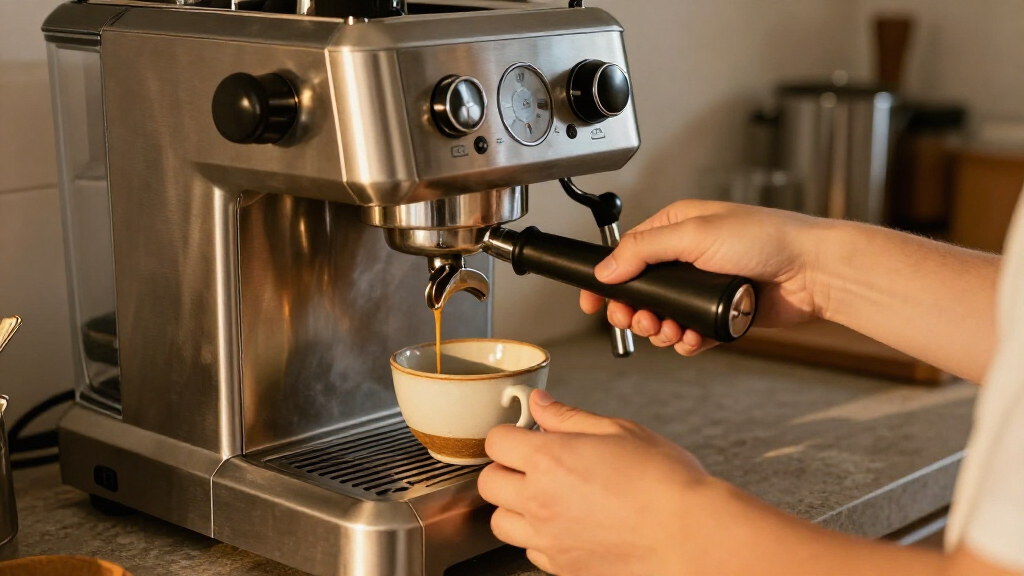
I compared these machines around the parts of an insulated or dual-boiler setup that affect everyday espresso making: temperature control, brew-and-steam workflow, usability, included equipment, and maintenance demands. A dual-boiler design can support brewing and steaming at the same time, but that alone does not make two models equivalent. I also looked at whether a machine includes a grinder, offers a shot timer or PID control, or adds automatic milk handling, since those choices change how much control and setup work buyers take on.
The ranking gives the most weight to useful control and a clear brewing workflow, then considers how well each machine suits its intended buyer. The Breville BES920XL leads as a capable standalone machine with temperature adjustment and a shot timer; the Diletta Alto follows for buyers drawn to a more hands-on configuration. Grinder bundles and integrated machines rank for convenience rather than broad superiority, while machines with fewer details available here are placed by the specific needs they serve. I treat the listed dual-boiler features as the basis for comparison and do not assume every machine has the same insulation material, temperature behavior, or maintenance requirements.
| espresso machines with insulated boiler | Boiler system | Temperature control | Grinder |
|---|---|---|---|
| Gevi Dual Boiler Espresso Mach | Dual boiler | PID | Built-in burr grinder; 31 grind levels |
| Chefman Crema Deluxe Espresso | Dual boiler | — | Built-in conical burr grinder; 30 settings |
| Gevi Dual Boiler Espresso Mach | Independent dual boilers | NTC and PID | Built-in; 31 grind levels |
| Tuni E2 Gen3 Dual Boiler Espre | Dual boiler | PID and NTC | — |
| Diletta Alto Dual Boiler Espre | Dual boiler; dedicated brew and steam boilers | PID controls for brew and steam | — |
| Breville Dynamic Duo Espresso | Dual boiler | PID | Precision conical burr grinder |
| AMZCHEF 9 Bar OPV Dual Boiler | — | — | — |
| Breville BES920XL Dual Boiler | Two stainless-steel boilers | PID; water within ±2°F | — |
Factors to Consider When Choosing Best Espresso Machines With Insulated Boilers
Boiler count is only one part of choosing an espresso machine. I would match the machine to the drinks you make, how much control you want, and whether your grinder and milk workflow are already sorted.
Decide Whether You Need to Brew and Steam at Once
A dual-boiler setup is most useful when you regularly make milk drinks and want to pull a shot while steaming milk. If you mainly drink espresso, a second boiler may add cost, space, and upkeep without changing your routine much. Think about how many drinks you prepare back to back, not just the number of people in your household. A machine that supports simultaneous tasks can make a busy morning smoother, but it does not remove the need to learn puck preparation and milk texture. Avoid choosing by boiler count alone; check how the controls and steam workflow fit the drinks you actually make.
Treat Insulation and Temperature Control as Separate Questions
“Insulated boiler” can refer to heat retention, while PID control refers to regulating temperature; one does not automatically prove the other. Stable temperature matters because changes between shots can affect repeatability, especially when you are dialing in a new coffee. Ask what temperature adjustments the machine offers and whether the manufacturer describes the boiler construction clearly. Do not infer insulation material or energy savings from a dual-boiler label alone. When specifications are limited, prioritize documented controls and service information over assumptions about efficiency.
Choose Between an Integrated Grinder and a Separate One
An integrated grinder can reduce counter clutter and make a single purchase feel straightforward, which suits buyers building their first home setup. A separate grinder offers more flexibility: you can replace or upgrade it without changing the espresso machine. Bundles sit between those approaches, adding convenience while still keeping the grinder as a distinct component. Check how easily you can adjust grind settings and clean the grinder, since coffee oils and retained grounds affect routine maintenance. A built-in grinder is not automatically the better value if you already own a suitable grinder or want more freedom to change equipment.
Match Automation to the Control You Want
Automatic milk features can lower the skill needed to prepare milk drinks, but they may limit how much you shape texture and pouring style. A manual steam wand offers more practice and control, though it adds steps to each drink. Buyers who make mostly straight espresso may get little benefit from automated milk handling. Those making several milk drinks a day may value a faster, more repeatable routine. Before choosing, decide whether convenience or hands-on technique matters more to you; paying for both can mean carrying features you rarely use.
Budget Counter Space for the Whole Workflow
Measure the machine’s footprint and leave room for the portafilter, cups, grinder access, and milk pitcher—not just the chassis. A separate grinder bundle can occupy more usable counter area than an all-in-one unit, even when it offers greater flexibility. Also check clearance above the machine if you use cabinets, since filling a water tank can be awkward in a tight space. Think through where beans, tools, and cleaning supplies will live before deciding that a larger setup fits. A machine that is inconvenient to access can turn a capable workflow into a daily hassle.
Plan for Cleaning and Long-Term Service
More components can mean more cleaning tasks, and milk systems need attention whenever they are used. Before buying, look for clear instructions on backflushing, descaling, water-filter use, and access to replacement parts. Hard water can increase scale buildup, so local water conditions matter as much as a machine’s boiler design. Do not assume insulation eliminates descaling or reduces all maintenance. A machine with a workflow you can maintain consistently is a better long-term fit than one whose extra features make routine care easy to postpone.
Frequently Asked Questions
Does a dual boiler automatically mean the machine has insulated boilers?
No. “Dual boiler” describes having separate boilers, often one for brewing and one for steam, while “insulated” refers to how a boiler is constructed to limit heat loss. Product listings may use these terms loosely, so check the manufacturer’s specifications for explicit insulation details. If the listing does not identify the insulation, do not assume a material, energy saving, or warm-up benefit. Temperature control and boiler layout are useful comparisons, but they do not confirm insulation on their own.
Should I choose a built-in grinder or buy a separate grinder?
Choose a built-in grinder if saving counter space and keeping your setup simple matter more than changing components independently. A separate grinder makes more sense if you already have one you like or want the option to upgrade it without replacing the machine. The Gevi and Chefman models combine grinder and espresso functions, while the Breville Dynamic Duo keeps the grinder separate in a bundle. Compare adjustment range, cleaning access, and whether the workflow suits your habits rather than judging by grinder inclusion alone. The right choice depends on how much flexibility you value against fewer separate appliances.
Is a dual-boiler machine worthwhile if I mostly drink espresso without milk?
It can be, but the main workflow advantage of separate brew and steam boilers matters less if you rarely steam milk. For straight espresso, temperature control, repeatable shot preparation, and grinder quality may matter more than simultaneous brewing and steaming. A simpler machine could meet your needs with less counter space and fewer components to maintain. The Breville BES920XL’s temperature adjustment and shot timer may appeal if you want control, but buyers should weigh those features against their actual routine. Pick a dual-boiler model when its control or future milk-drink use justifies the added footprint.
Can I make espresso and steam milk at the same time on every machine here?
These products are presented as dual-boiler machines, a design intended to allow brewing and steaming at once, but the exact workflow and controls can vary by model. Check each manufacturer’s instructions for how brew and steam functions operate and whether any settings affect simultaneous use. Automatic milk handling, where included, also changes the steps even if the machine has separate boilers. Do not assume that every model feels equally quick or straightforward just because the boiler count matches. If making several milk drinks in succession is central to your routine, prioritize clear documentation of steam performance and operation.
What should I prioritize if I am new to making espresso at home?
Start with a setup that makes grinding, dosing, and cleaning manageable, rather than choosing the most configurable machine by default. An integrated grinder can reduce the number of separate decisions, while a machine with a shot timer can give useful feedback as you learn. The Gevi and Chefman combine multiple steps in one unit; the Breville BES920XL and Diletta Alto lean more toward control and a separate grinder setup. Milk automation may help if you mainly make milk drinks, but it is not a substitute for learning basic espresso preparation. Read the cleaning and setup instructions before buying so the routine feels realistic for your kitchen.
Conclusion
For the strongest all-around balance of control and dual-boiler workflow, I recommend the Breville BES920XL as best overall. The Gevi Dual Boiler with Built-In Grinder is my best value-style pick for buyers who want an integrated setup, while the Diletta Alto is the best premium-leaning choice for hands-on users who value PID control and a shot timer. For beginners who want fewer separate appliances, the Chefman Crema Deluxe or Gevi integrated models are easier to approach than a standalone machine-and-grinder setup; buyers should compare their preferred milk workflow and grinder controls. If you want a separate grinder bundled with the machine, consider the Breville Dynamic Duo; if automated milk handling is your priority, look at the AMZCHEF. Choose by the workflow you will use every day, not by boiler count alone.
Columbus Day / Indigenous Peoples' Day Picks
long weekend sales
As an affiliate, we earn on qualifying purchases.