
TL;DR
Electric coffee grinders use a motor to break whole beans into smaller particles for brewing, and grinding just before brewing helps preserve aroma. For more repeatable coffee, prioritize a suitable grind range, consistent burrs, easy adjustment, and simple cleaning over a high setting count or extra features. Change one brewing variable at a time when you adjust grind size.
The difference between a flat, forgettable cup and a fragrant one can start before the water touches the coffee: the grind. Whole beans hold their aroma longer than ground coffee, so grinding just before brewing helps bring more of that fresh, warm smell into your kitchen.

Get coffee and tea gear delivered free with Prime
- Fast, free delivery on millions of items
- Prime Video, Amazon Music and more included
- Member-only deals all year
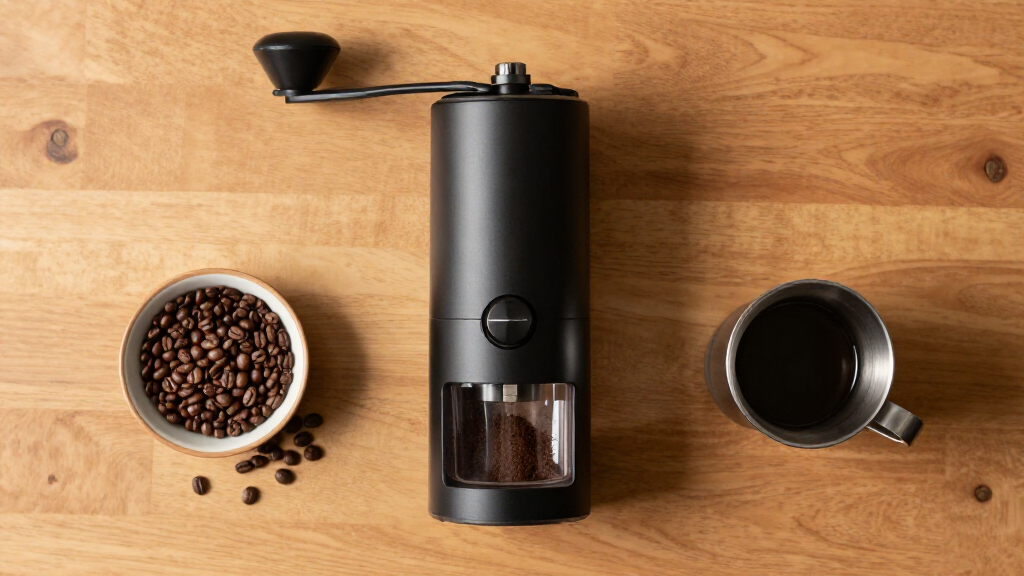
An electric coffee grinder uses a motor to break whole beans into smaller particles for brewing. But the motor is only one piece of the story. The grinder’s burrs or blade, the range of its settings, and how easy it is to clean all affect the cup you make—and the routine you live with each morning.
This guide explains what to look for, how to match a grinder to your brewer, and how to adjust the grind when your coffee tastes sour or bitter. You’ll also see why a dial marked with dozens of settings can tell you less than a few careful test brews.
Grinding just before brewing helps preserve the aroma that ground coffee loses faster than whole beans.
Burr grinders generally offer more consistent grounds than blade grinders, but either may suit your needs depending on budget and brewing method.
Choose a useful grind range and repeatable adjustment over a dial with a high printed setting count.
When coffee tastes sour or weak, try a slightly finer grind; when it tastes harsh or bitter, try a little coarser, changing one variable at a time.
Clean the grinder according to its manual, and consider single dosing if you switch beans often or want less coffee sitting in the hopper.
Understand what your grinder changes in the cup
Electric coffee grinders turn whole beans into grounds, and the size and consistency of those grounds help shape how evenly water extracts flavor. A coarse grind exposes less surface area than a fine one, much like big chunks of ice melt more slowly than crushed ice. That difference affects how your brew develops.
Imagine making French press coffee with a mix of boulders and dust. The large pieces may taste weak while the dust can taste harsh; your cup combines both problems. More consistent particles give you a more predictable starting point, though grind size is only one factor alongside dose, water temperature, and brew time.
Freshness is another reason to grind at home. Ground coffee loses aroma faster than whole beans, so a quick grind before brewing can leave your cup smelling sweeter and more vivid. If you grind beans on Sunday for the whole week, Monday’s coffee may still smell lively, while Friday’s can seem flatter.
Think of grinding like chopping vegetables before cooking: the cut changes how quickly each piece takes on heat. The grinder does not guarantee a delicious cup, but it gives you control over one of the most noticeable parts of brewing.
Products Worth Considering

Vitamix 5200 Professional-Grade Blender, 64 oz. Container, Black

Le Creuset Heritage Stoneware Rectangular Baking Dish Set, 3-Piece, Marseille

Cuisinart 14-Cup Food Processor, 720-Watt, Stainless Steel (DFP-14BCNY)
As an affiliate, we earn on qualifying purchases.
Choose burrs when repeatable coffee matters
Burr grinders crush beans between two grinding surfaces and generally make more consistent grounds than blade grinders. Blade models chop with a spinning blade, which can leave a wider mix of particle sizes. If you brew the same coffee every morning and want repeatable results, a burr grinder is usually the more helpful tool.
That does not mean a blade grinder is useless. If your budget is tight or you make a simple drip brew, a blade model may get you started. Picture grinding beans for a travel mug at a shared office: an inexpensive grinder can be good enough when convenience matters more than dialing in every detail.
Flat and conical burrs describe different shapes and ways grounds move through the grinder. Both designs can make good coffee; neither automatically wins for every brewer or drinker. Pay attention to the grinder’s performance and adjustment system rather than buying on burr shape alone.
When you compare models, look beyond the number of settings on the dial. A grinder with 40 printed marks is not necessarily more consistent than one with fewer. Check whether its adjustment range fits your brewer, whether small changes are repeatable, and whether independent testing supports the maker’s claims.
Match the grind range to your brewer before you buy
Match the grinder’s range and adjustment precision to your brewing method: French press generally calls for coarse grounds, while espresso needs a much finer grind. A grinder that cannot reach the useful range for your brewer will make morning experiments frustrating, even if it looks sleek on the counter.
| Brewing method | Starting grind | What to check |
|---|---|---|
| French press | Coarse | Can it produce a reasonably even coarse grind? |
| Drip coffee | Medium starting point | Can you make small, repeatable adjustments? |
| Espresso | Fine | Does it offer a fine range with precise adjustment? |
These are starting points, not rigid rules. A new bag of beans or a different brewer may call for a small adjustment. If your pour-over tastes thin and sour, try a slightly finer grind while keeping your dose and water approach the same. If your French press tastes unpleasantly harsh, a coarser setting may help.
Some grinders can work across espresso and drip coffee, but the label alone does not prove that they can. Check the model’s actual range and how precisely it adjusts. For example, espresso shots can flow very differently after a small grind change, so a coarse stepped dial may not give you the control you want.
Dial in a better cup with one change at a time
To adjust your grind, keep your recipe steady and change one variable at a time. This simple routine helps you tell whether a finer or coarser setting actually improved the coffee. If you change the grind, dose, and brew time all at once, you may get a better cup without knowing why.
- Start with the brewer’s guidance. Use its suggested grind as your first setting; for French press, start coarse, and for espresso, start fine.
- Keep the dose and method steady. Weigh the same amount of coffee and use the same brewing routine for each test.
- Taste and adjust in small steps. If the coffee tastes sour or weak, try a little finer; if it tastes harsh or bitter, try a little coarser.
- Record what worked. A note such as “one step finer for this bag” can save guesswork the next morning.
These taste cues are useful clues, not a universal diagnosis. A sour cup can also come from water temperature, brew time, or coffee freshness; bitterness can have several causes too. If you are making espresso at home, even a small grind change can affect shot flow, so adjust gradually and watch what happens.
Picture a Saturday morning with a new bag of beans. You brew your usual pour-over, keep everything else the same, then move the dial one small step finer because the cup tastes sharp. That test tells you more than turning three knobs at once.
Check retention, noise, and cleaning for a smoother routine
Retention means ground coffee left inside the grinder after use. A low-retention design tends to leave less behind, which can support dose consistency and make it easier to switch from one coffee to another. But brands do not always measure the term the same way, so treat it as a feature to investigate rather than a guaranteed number.
Single dosing offers one practical option: weigh only the beans you need for that brew instead of keeping a full hopper loaded. If you make one cup before work and another with decaf after dinner, adding beans per brew makes it easy to change coffees. It does add a small step, and a hopper may feel more convenient if several people in your home brew the same coffee.
Noise, size, and mess matter once the grinder moves from a product page to your kitchen. A loud motor at 6 a.m. can wake someone in the next room, while a compact grinder may fit neatly beside a kettle but leave a mess around the grounds container. If quiet operation matters, look for independent noise comparisons rather than relying on vague claims.
Clean the grinder regularly according to the manufacturer’s directions. Old grounds and coffee oils can build up and affect flavor. For example, if your grinder smells stale or you switch from a dark, oily coffee to a lighter roast, check its manual for instructions on safely cleaning the burrs and grounds path.
Spend on the features you will use every day
Buy for your brewing method and routine, not the longest feature list. A basic grinder may suit drip coffee or French press, while espresso often benefits from a fine range and more precise adjustment. A higher price does not guarantee a better fit for your kitchen or your cup.
Suppose you brew one French press every morning and take it to work. You may value coarse-grind consistency, easy cleanup, and a stable grounds container more than app controls or timed dosing. Someone who changes beans often might value single dosing and low retention because they make those switches less messy.
Recent designs offer compact bodies, quieter motors, timed or weight-based dosing, and connected controls. These features can save time or add convenience, but they do not replace suitable burrs and a useful adjustment range. Ask yourself whether a feature solves a real daily annoyance: if you never measure by time, a timer may not change your routine.
Before buying, check current specifications and independent testing for the exact model. Product availability and features change, and broad labels like “all-purpose” do not prove a grinder can handle every brew style. A small, dependable grinder that suits your usual cup can be a better purchase than a feature-packed model you rarely use.
Frequently Asked Questions
Is a burr grinder really better than a blade grinder?
Burr grinders generally make more consistent grounds, which helps you brew repeatable coffee. Blade grinders cost less and may be adequate for basic brewing, but their grounds can vary more in size.
Can one grinder work for espresso and drip coffee?
Some grinders can cover both, but they need a suitable range and precise enough adjustment for the methods you use. Check the specifications and independent testing for the model, especially if you plan to pull espresso shots.
How much should I spend on an electric coffee grinder?
Spend according to your brewing method, desired consistency, and budget. Prioritize a useful grind range, repeatable adjustment, and reliable construction over features you are unlikely to use.
How often should I clean my grinder?
Clean it regularly and follow the manufacturer’s instructions. The right frequency depends on how often you grind, your grinder’s design, and the beans you use; dark, oily beans may leave more residue.
Why does my coffee taste bitter or sour?
Grind size can contribute: a finer grind may help a sour or weak cup, while a coarser grind may help a harsh or bitter one. Dose, water temperature, brew time, and freshness also affect flavor, so change one variable at a time.
What does low retention mean on a grinder?
Low retention means less ground coffee tends to remain inside the grinder after use. That can help with dose consistency and changing beans, but brands may measure retention differently.
Conclusion
Choose an electric grinder that can make the grind your brewer needs, adjust repeatably, and fit the way you actually make coffee. Then keep your dose and brew routine steady while you test small changes.
Tomorrow morning, let the first curl of fresh coffee aroma remind you: a better cup often starts with one small turn of the dial.