
TL;DR

Get coffee and tea gear delivered free with Prime
- Fast, free delivery on millions of items
- Prime Video, Amazon Music and more included
- Member-only deals all year
A commercial espresso machine can recover quickly between shots and steam milk powerfully, but its label does not guarantee better coffee at home. Before buying, match its capacity to your drink volume and account for the grinder, electrical supply, water, counter space, warm-up, energy, and maintenance costs.
A commercial espresso machine can turn your kitchen into a café—and turn a quiet morning into a loud, steamy, power-hungry production. The machine may have impressive capacity, but that alone does not mean it suits your home or makes better coffee.
This guide helps you look past the group heads and steel panels. You’ll weigh your drink routine against the grinder, wiring, water, counter space, warm-up time, and ongoing care, so you can tell whether commercial capacity solves a real problem for you.
Commercial describes a machine’s duty level; it does not guarantee better home espresso.
Match capacity to your usual drinks per sitting, and budget for an espresso-capable grinder.
Check the exact model’s voltage, amperage, plug, water, drainage, and clearance requirements before purchase.
Count electricity, installation, water treatment, cleaning, repairs, and service in your ownership budget.
Allow for full group and portafilter warm-up, follow the maker’s maintenance guidance, and verify service support, especially for a used machine.
Buyer’s Guide · Home Espresso
Commercial Espresso Machines at Home: What Buyers Usually Overlook
A commercial espresso machine can turn your kitchen into a café—and turn a quiet morning into a loud, steamy, power-hungry production. This guide looks past the group heads and steel panels to the wiring, water, counter space, warm-up, and upkeep that decide whether commercial capacity solves a real problem for you.
A machine may report “ready” before its group and portafilter have fully warmed through—so the maker’s heat-up estimate may not match the time needed for consistent home espresso.
01 · The Promise vs. The Cup
What “Commercial” Promises—and What It Doesn’t
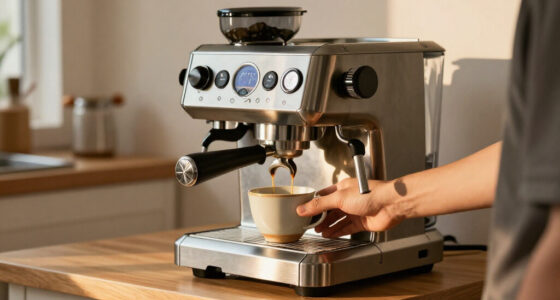
“Commercial” describes a machine’s duty level: it is built to handle more frequent use and higher drink volume. That matters most through a rush—reliable recovery and strong steam across many orders. It does not guarantee better-tasting espresso. The grinder, coffee, water, recipe, and your technique still shape the cup.
Saturday Brunch Rush
Six shots and milk steaming while guests wait? Stronger steam and faster recovery keep the queue moving and shorten the pause between drinks as boiler and group recharge.
One Cappuccino Before Work
If that’s your routine, the commercial advantage may never show up in your cup. The same capacity instead means more heat, noise, energy use, and upkeep in a kitchen where it sits idle all day.
The Prosumer Upside
A well-matched prosumer machine can outperform a bigger commercial model at home because its features and operating demands fit the way you actually brew. Judge fit, not looks.
02 · The Overlooked Foundations
Grinder, Wiring, Water & Counter
The machine is only one part of the setup. Two foundations buyers routinely underestimate: the grinder that feeds it, and the kitchen that hosts it.
Why the Grinder Matters as Much
Espresso grounds must be fine and consistent enough to create the resistance your recipe requires. If grind size varies, water flows differently shot to shot—and a powerful machine cannot correct that variation; its pressure simply exposes it more clearly. Budget for a grinder with small, repeatable adjustments so you can respond to new beans or humidity shifts.
Check Wiring, Water & Counter First
Read the exact model’s specs: voltage, amperage, plug type, water connection, filtration, and drain. If the electrical setup is unclear, have a qualified electrician assess it before installation. Measure full height, width, and depth—plus grinder space, ventilation, and clearance to open panels. A machine that fits under cabinets but can’t be filled or serviced will gather excuses, not espresso.
03 · Installation Trade-Offs
Plumbed-In vs. Reservoir
In practice, plumbing trades the convenience of a steady water supply for installation expense and a fixed location. A reservoir preserves flexibility, but its capacity becomes part of your serving routine.
| Requirement | Plumbed-In | Reservoir Model | What to Verify |
|---|---|---|---|
| Water supply | ✓ Steady, auto-fed | ✗ Manual refilling | Shutoff valve + filtration for plumbed |
| Drainage | ✓ May require a drain | ~ Drip tray only | Drain access near install point |
| Placement | ✗ Fixed location | ✓ Flexible | Clearance to fill and clean |
| Install cost | ✗ Higher (plumber, valve) | ✓ Minimal | Total setup price, not sticker price |
| Water quality | ~ Depends on treatment | ~ You control the water | Maker’s water specs; avoid scale-causing hardness |
04 · The Hidden Ledger
Compare Hidden Daily Costs Before Committing
The purchase price leaves out installation, electricity, water treatment, cleaning supplies, servicing, and replacement parts. Relative weight of what buyers tend to overlook when budgeting—price the whole setup, not the sticker:
05 · Pre-Purchase Checklist
The Verification Flow
Work through this chain before money changes hands—especially for a used machine, where a low price can be offset by repairs or installation.
Count Your Drinks
Match capacity to drinks per sitting, not café envy.
Budget the Grinder
Reserve a realistic share for espresso-capable grinding.
Read Exact Specs
Voltage, amperage, plug, water, drainage, clearance.
Verify Service Support
Parts availability, records, boiler & pump condition.
06 · The Ownership Chain
Everything Connected to That Steel Box
Every link below is part of owning a commercial espresso machine at home. Weakness in any one shows up in the cup—or the invoice.
What “commercial” promises—and what it doesn’t
Commercial espresso machines are built to handle more frequent use and higher drink volume than many household machines. That duty level matters most when you need the machine to keep working through a rush: a café relies on reliable recovery and steam output across many orders, while a home user may make only a few drinks before switching it off. The design can make repeated service easier, but it does not guarantee better-tasting espresso. The grinder, coffee, water, recipe, and your technique still shape the cup.
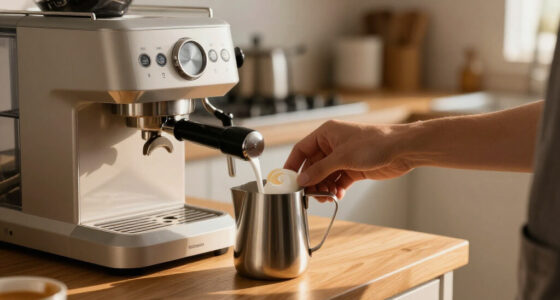
Think about a Saturday brunch: you’re pulling six shots and steaming milk while guests wait. A commercial machine’s stronger steam and recovery may keep the queue moving, and reduce the pause between drinks as the boiler and group recover. If you mostly make one cappuccino before work, that advantage may not show up in your cup. The same capacity can instead mean more heat, noise, energy use, and upkeep in a kitchen where it sits idle much of the day.
A well-matched prosumer machine can outperform a bigger commercial model in a home setup because its features and operating demands may better fit the way you brew. The right comparison is not just capacity or appearance; it is whether the machine improves a routine you actually have enough to justify its footprint and costs. The better choice depends on your routine and what you value—not on which machine looks more like the one behind a café counter.
Why your grinder can matter as much as the machine
For commercial espresso machines at home, budget for a capable grinder as well as the machine itself. Espresso grounds need to be fine and consistent enough to create the resistance your recipe requires. If grind size varies, water flows through the coffee differently from shot to shot, making extraction harder to control. A powerful machine cannot correct that variation; its pressure may simply expose it more clearly.
Imagine setting up a new machine with polished steel, a wide drip tray, and a grinder that only makes coarse, uneven grounds. Water may rush through the coffee, leaving a thin, sour-tasting shot. You can adjust dose or tamping, but those changes cannot reliably compensate for a grinder that cannot make repeatable adjustments. An espresso grinder lets you change grind size in small increments, which helps you respond when a new bag of beans or a change in humidity alters how quickly a shot flows.
Decide how many drinks you make at once, how quickly you need to switch between coffees, and whether you want to grind on demand. Then reserve a realistic part of your budget for a grinder that can support your workflow. Precise adjustment is useful when you regularly dial in different beans; if you pull an occasional shot, a simpler grinder may be enough, but choosing one that cannot grind consistently can limit the benefits of the machine you bought.
The grinder is only one part of the setup. The machine also has to fit the room it will live in.
Check the wiring, water, and counter before you buy
A commercial espresso machine can be a poor fit if your kitchen can’t safely supply its power or water needs. Depending on the exact model, you may need a dedicated circuit, higher voltage, more amperage, a water connection, filtration, or a drain. These requirements affect more than installation cost: if the machine cannot be connected as specified, it may be unsafe or unable to perform as intended.
Read the manufacturer’s specifications for the exact model, including voltage, amperage, plug type, and connection requirements. If the electrical setup is unclear, ask a qualified electrician to assess it before installation. A model that needs plumbing may also call for a shutoff valve, an appropriate water treatment plan, and drainage; a reservoir model avoids some installation work but needs regular refilling. In practice, plumbing trades the convenience of a steady water supply for installation expense and a fixed location. A reservoir preserves flexibility, but its capacity becomes part of your serving routine.
For example, a machine might fit neatly under your cabinets but leave no clearance to fill its reservoir. Measure its full height, width, and depth, then account for the grinder, room to work, ventilation, plumbing access, and any clearance needed to open panels. That extra room matters when filling, cleaning, or servicing the machine; if those tasks are awkward, routine maintenance is easier to postpone. Commercial equipment can be heavy, and its pump may be noisy enough to carry through an open-plan home, so placement affects both installation and daily comfort.
Water deserves attention too. Hard water can cause scale, which can narrow internal passages and reduce heating performance; poorly chosen softening or filtration can create other problems. Follow the machine maker’s water specifications and care instructions rather than guessing at a treatment plan. The aim is water that suits the machine and tastes good in the cup, without creating a recurring scale or service problem.
Compare the hidden daily costs before committing
What buyers usually overlook is how the purchase price leaves out installation, electricity, water treatment, cleaning supplies, servicing, and replacement parts. Those costs vary with the model and how often you use it, so price the whole setup rather than comparing machines by sticker price alone. The practical question is whether the extra capacity saves time or improves a frequent part of your routine enough to balance those continuing costs.
A large boiler can take longer to warm than you expect and may use more energy if you leave it on for long stretches. Your routine matters: a machine running for a short morning coffee session has a different daily footprint from one kept hot all day for frequent drinks. Ask how the model heats, what its energy-saving modes do, and how its standby behavior fits your schedule. Faster availability may be valuable when you serve drinks throughout the day; if you make one coffee before work, waiting for a large system to heat can outweigh its recovery advantage.
Use this checklist to build a realistic ownership estimate. Get current figures from the manufacturer or dealer where specifications vary.
- Installation: Add electrical work, plumbing, filtration, or drainage if your chosen setup needs them. These are often upfront costs, but they can also limit where the machine can go.
- Daily operation: Account for warm-up time, time left switched on, and expected electricity and water use. Estimate against your actual schedule, not an all-day café workload.
- Routine care: Budget for cleaning products, backflushing where the manufacturer recommends it, and water treatment. Skipping care can turn small daily tasks into avoidable repairs.
- Repairs and service: Ask about local technicians, parts availability, warranty terms, and typical service arrangements. A machine with limited support can cost you time as well as money when something fails.
A plumbed machine might spare you repeated reservoir refills, yet cost more to install and keep tied to one spot. A reservoir may be easier to set up, but if you serve several guests, filling it again and again can become the morning’s least charming ritual. Compare the whole tradeoff against how often you serve a crowd, rather than treating either setup as universally cheaper or more convenient.
Choose capacity for the number of drinks you actually make
Choose a machine around the number of drinks you make in a normal sitting, not the busiest café rush you can imagine. Multiple groups and very large boilers support sustained, high-volume service, but for a household pulling a few drinks at a time they can add cost, space needs, heat, and maintenance without solving a daily problem. Capacity has value when it reduces a bottleneck you encounter often; otherwise you are paying to keep unused capacity available.
| Your routine | What to weigh | Likely tradeoff |
|---|---|---|
| One or two drinks, mostly in the morning | Warm-up, footprint, and ease of care | Extra commercial capacity may go unused |
| Several milk drinks for guests | Steam power and recovery between drinks | More capacity can help, with added space and operating costs |
| Frequent, sustained drink making | Group count, boiler capacity, and service access | Commercial-level capacity may suit the workload if the kitchen can support it |
The table is a starting point, not a rule. If your home regularly hosts a crowd, serving ten milk drinks back-to-back can put a premium on steam and recovery: faster steaming and less waiting can improve the experience for both the person making drinks and the guests. If the big brunch happens twice a year, ask whether avoiding a short occasional queue is worth paying for the added space, heat, and operating costs every day.
Newer home-oriented machines may offer dual boilers, PID temperature control, programmable pre-infusion, pressure profiling, or energy-saving modes. These features can give you more control or convenience, but they add complexity and do not replace fresh coffee, good grinding, and consistent care. Consider what each feature changes in your own routine: separate boilers may help when you brew and steam at once, while programmable controls matter only if you will use them to repeat or adjust your recipes.
Plan for warm-up, cleaning, and service before the first shot
A realistic ownership plan includes time for the machine to heat thoroughly, regular cleaning, and access to service. A display or indicator may say a machine is ready to brew before its group and portafilter have warmed through, so ask the manufacturer for guidance and allow for real-world heat-up time. If these parts are still cool, they can draw heat from the brewing water and make shots less consistent; the advertised boiler-ready time may therefore be shorter than the time needed for repeatable espresso.
Try the routine on paper: switch the machine on when you get up, grind the coffee, prepare the shot, steam milk, then clean up before work. If your schedule is tight, a long warm-up or involved cleaning routine may matter more than an extra feature. For a leisurely weekend, the same sequence might feel like half the pleasure. The distinction is practical: a machine that fits a relaxed ritual can become frustrating if it repeatedly makes you late on weekdays.
Daily care varies by machine, but it often includes wiping the steam wand promptly, cleaning coffee residue, and following the maker’s backflushing instructions. These small tasks remove milk and coffee deposits before they build up and affect hygiene or performance. Descaling has no universal schedule; your water quality, usage, and the machine’s guidance determine what makes sense. Preventing scale with a suitable water plan is generally preferable to ignoring it until it affects performance.
Before buying, find out who can service the machine locally and whether replacement seals, pumps, or other parts are available. Regular service access affects how long a machine can remain useful, especially when proprietary parts or specialist repair are involved. An elegant machine is a less appealing choice when a small repair means a long wait or an improvised workaround.
Treat a used machine as an inspection, not a bargain
A used commercial machine can be a good buy only if its condition, service history, installation needs, and parts support check out. A low asking price can quickly rise once you add repairs, wiring or plumbing work, and a replacement part that is hard to find. A cheap machine with uncertain history also shifts risk to you: hidden wear may only become clear after installation, when returning it is difficult.
Ask for service records, then inspect for leaks, boiler condition, pump performance, and wiring concerns. If you cannot assess the machine yourself, budget for an experienced technician to inspect it before purchase. Check that the exact model can work with your electrical and water setup, and confirm parts and service are still available. These checks help distinguish a machine that needs ordinary upkeep from one whose price reflects a repair problem.
For instance, a café closing down may sell a machine that looks clean but has spent years running long shifts. A spotless stainless case doesn’t tell you what’s happening inside the boiler. A documented service history and a successful inspection make a stronger case than a tempting price tag alone, because they give you evidence about both its past use and likely near-term costs.
Model names, prices, stock, and feature sets change, so verify current specifications with manufacturers and dealers. If you want a starting point for comparing home-focused options, read this guide to best commercial espresso machines for home, then check each candidate against your own setup.
Use this eight-point checklist to decide if it fits
A commercial machine is a sensible home purchase when its capacity solves a regular need and your kitchen can support its installation and care. Run through these eight questions before you commit; if several answers depend on wishful thinking, pause and get the exact details. Each answer tests a different part of ownership, because a machine that suits your drink volume can still be a poor fit if its installation or upkeep is impractical.
- Volume: How many espresso and milk drinks do you make in one sitting on an ordinary day? This shows whether faster recovery will help often enough to matter.
- Grinder: Can your grinder make consistent espresso grounds and fine adjustments? Without that control, machine capacity alone won’t make shots repeatable.
- Power: Do the model’s voltage, amperage, and plug match your home setup? Resolving a mismatch can add installation cost or make the model unsuitable for the location.
- Water: Will you use a reservoir or direct connection, and how will you meet the maker’s water requirements? The choice trades refill work and flexibility against plumbing cost and a fixed setup.
- Space: Have you measured the counter, clearance, grinder area, and access for filling or repairs? Measurements need to include the work around the machine, not only the cabinet footprint.
- Warm-up: Does the time to reach a useful brewing temperature suit your daily schedule? A machine that heats quickly at the boiler may still need more time for consistent shots.
- Upkeep: Can you manage its cleaning, water treatment, and service needs? Routine care protects performance, while skipped tasks can lead to avoidable service costs.
- Support: Do you have warranty coverage, local service, and a realistic plan for parts? Support determines how manageable a fault will be after the purchase.
Write down your answers before visiting a dealer. If you make two drinks each morning, an impressive machine with multiple groups may be harder to justify: its speed may not save meaningful time, while its space and care needs remain. If you host often, already own a strong grinder, and have suitable power and plumbing, the extra capacity may earn its footprint by keeping service smooth when several people are waiting.
Frequently Asked Questions
Is a commercial espresso machine worth it for home use?
It can be worthwhile if you often make many drinks, entertain regularly, or value strong steam and quick recovery. For occasional espresso, a prosumer machine may be simpler and cost less to install and run.
Will a commercial machine make better espresso than a home machine?
Not by itself. Stability and steam capacity can help your workflow, but the grinder, coffee freshness, water, recipe, and technique still shape the cup. A well-matched prosumer setup may suit home use better than a larger commercial model.
Does a commercial espresso machine need special wiring or plumbing?
Some models need a dedicated circuit, higher voltage, more amperage, or a direct water connection with filtration and drainage. Check the exact model’s specifications and get the electrical setup assessed by a qualified professional when needed.
Can I use a commercial espresso machine without plumbing it in?
Some machines have reservoirs, while others are designed for a direct water connection. Confirm the setup options for the exact model; a reservoir avoids some installation work but needs refilling, especially during busy mornings.
How often does a commercial espresso machine need descaling or servicing?
There is no schedule that suits every machine. Water quality, how often you use it, and the manufacturer’s maintenance guidance determine the right approach. Follow the maker’s water specifications and care instructions, and check that local service and parts are available.
Conclusion
Buy commercial capacity when your everyday routine will use it and your kitchen can support it. Check the grinder, power, water, space, warm-up, and service plan before the machine arrives.
The best morning shot doesn’t care how imposing the machine looks. It cares whether the whole setup is ready when the cup is.
Halloween Picks
halloween
As an affiliate, we earn on qualifying purchases.