TL;DR
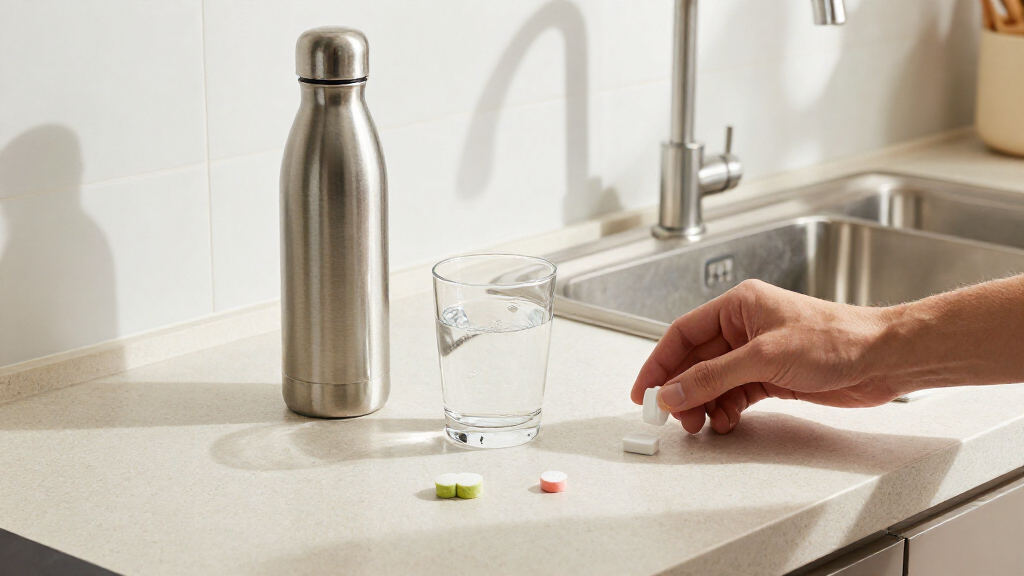
Cleaning tablets differ in ingredients, strength, intended surfaces, and directions, so one tablet cannot safely or effectively handle every job. Check the label and your appliance maker’s instructions, use the specified amount of water and contact time, and rinse when directed.
Choose a tablet whose label names the task and surface you need to clean.
Use the stated water volume, temperature, dissolution time, and contact time; don’t add extra tablets by guesswork.
Check the appliance maker’s care instructions before cleaning internal machine parts.
Rinse food-contact items when the label directs, and store tablets in their original packaging away from children and pets.
Treat “natural,” “eco,” and compact packaging as claims to inspect, not proof of safety or environmental benefit.
Why Cleaning Tablets Are Not All the Same Match the formula to the job
Similar-looking tablets can target different soils and surfaces. The label and appliance maker’s instructions help you clean effectively while avoiding residue or damage.
Different ingredients, different jobs
A tablet’s formula determines which kinds of dirt it can tackle and which surfaces it suits.
Loosen deposits
Acids can dissolve mineral buildup such as limescale.
Target oily soil
Alkaline ingredients can help tackle grease.
Lift some marks
Oxygen-based agents can help lift certain stains.
Break down soil
Surfactants and enzymes help with particular soils and residues.
Match the product to the surface
A tablet made for one item may be ineffective or too harsh for another.
- A toilet tablet may be too harsh for a coffee machine.
- A bottle tablet may not remove baked-on oven grease.
- Find your task and surface on the tablet label.
- For internal appliance cleaning, check the maker’s care instructions too.
Use the specified dilution
Water volume, temperature, dissolution, and contact time can all affect the result.
Use the volume and temperature stated on the label.
Let the tablet dissolve and observe the stated contact time.
Rinse food-contact items when the label says to.
What the format and claims tell you
Compact packaging can make storage and portioning convenient, but it does not prove strength or environmental benefit.
| What you see | What it tells you | What to check |
|---|---|---|
| Compact tablet | Convenient format | Directions and amount needed |
| “Natural” or “eco” | A product claim | Specific supporting details |
| Food-contact item | Needs care | Label instructions and rinsing directions |

Get coffee and tea gear delivered free with Prime
- Fast, free delivery on millions of items
- Prime Video, Amazon Music and more included
- Member-only deals all year
Why cleaning tablets need to match the job
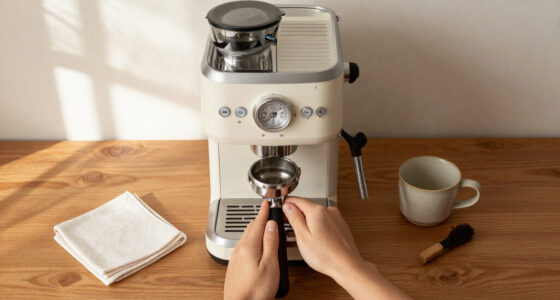
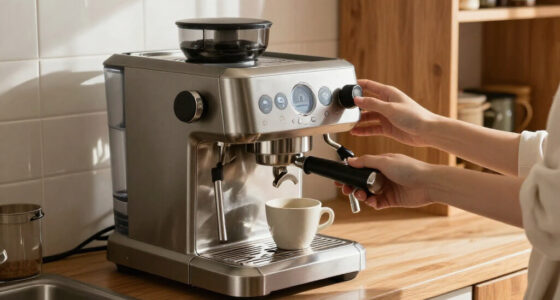
Cleaning tablets are task-specific products: their formula is designed for particular soils, surfaces, and use conditions. A toilet tablet may tackle stains and odors with ingredients that are too aggressive for the narrow water paths and seals in a coffee machine. A bottle-cleaning tablet may freshen a reusable bottle but do little against baked-on grease in an oven. Think of tablets as keys: two may share a shape, yet only one fits the lock you need to open. The word “cleaner” on the package doesn’t tell you which lock it fits. Check the label for intended use, compatible materials, dilution, contact time, and whether you must rinse afterward. For example, if your espresso machine’s manual calls for a cleaning product designed for its brew group, don’t substitute a general bathroom tablet because it fizzes in water. The machine’s maker knows which surfaces and parts the cleaning cycle exposes. Use that guidance alongside the tablet label, especially for internal appliance cleaning. Match the product to the job before you drop it into water. If the label doesn’t name your surface or task, don’t assume that a similar-looking tablet will work. When in doubt, check with the appliance maker or choose a product whose instructions clearly cover the item.Products Worth Considering

Ninja Luxe Café Mini Plus Espresso and Coffee Maker with AutoFroth, Bone & Champagne

Vitamix 64 oz Low-Profile Blender Container with SELF-DETECT, BPA-Free

Weber Searwood 600 Wood Pellet Smoker Grill, Black
As an affiliate, we earn on qualifying purchases.
How ingredients change what a tablet can clean
Cleaning tablets differ because ingredients act on different kinds of dirt: acids can loosen mineral deposits, alkaline ingredients can help tackle grease, oxygen-based agents can lift some stains, surfactants help water loosen and carry away soil, and enzymes can break down certain residues. A formula may combine several approaches, but its label tells you what the product is meant to do. Imagine a ring of white limescale around a kettle opening. A formula designed for mineral deposits may suit that problem, while a grease-focused tablet may leave the chalky ring untouched. In the kitchen, the reverse can happen: a grease-cutting formula may help with oily residue but won’t necessarily be the right way to descale an appliance. Similar fizz doesn’t mean similar chemistry. The terms “natural,” “eco,” and “chemical-free” don’t tell you how well a tablet cleans or whether it suits your surface. Every cleaning product contains chemicals. Look for specific claims, instructions, and warnings rather than treating a marketing phrase as proof of safety or performance. Read the product’s stated purpose and check any material restrictions. If you’re cleaning a coated surface, rubber seal, stainless steel part, or stone countertop, confirm that the label allows it. A quick label check can prevent a small cleaning job from becoming a scratched finish or damaged gasket.Why the right dose and water matter
A tablet is formulated to work at a particular concentration, in a specified volume of water, and sometimes at a stated temperature or contact time. Too little water can leave a solution too strong; too much can dilute it until cleaning performance drops. Using extra tablets doesn’t automatically mean a better clean and can leave residue or increase your exposure to the product. This is why the words “dissolve in water” don’t give you the whole method. The label may say to use warm water, wait until the tablet dissolves, agitate the solution, or leave it on a surface for a set time. Cold water, hard water, or a rushed soak can change the result. If you’re cleaning a travel mug after a day of coffee, follow the amount and soak time on the tablet pack instead of guessing based on how stained the cup looks. Dilution is part of the formula. Treat the specified water volume like an ingredient, not a loose suggestion. If the instructions call for one tablet in a stated volume, measure that volume and use one tablet. Don’t scale the recipe by eye or use a second tablet just because the solution looks weak. After the stated contact time, follow the rinsing directions. This matters most for bottles, dishes, and other food-contact surfaces. Rinse thoroughly if the label says to, and don’t return the item to use until you’ve completed the directions.Use this label check before choosing a tablet
To choose a cleaning tablet, check its intended task, compatible surfaces, dilution, water conditions, contact time, and safety directions before use. Those details tell you whether the product suits the item and how to prepare it. This quick check is more reliable than judging by the tablet’s size, color, or fizz.- Match the task. Find the job named on the label, such as removing mineral deposits, cleaning a bottle, or treating a particular appliance.
- Check the surface. Look for compatible materials and any exclusions. Compare them with the item’s manual when you’re cleaning an appliance.
- Measure the water. Use the stated volume and temperature, and let the tablet dissolve as directed.
- Follow the contact time. Don’t shorten a soak or leave a solution sitting longer than instructed.
- Finish safely. Rinse food-contact items when directed, store the product in its original packaging, and keep it away from children and pets.
What tablet formats and environmental claims really tell you
A tablet’s compact format can make storage and portioning convenient, but the format alone doesn’t prove strength, performance, or environmental benefit. Ready-to-use liquids, concentrated tablets, and refill systems each involve different packaging and use patterns. The right comparison looks at the full product and the amount needed for the job.| What you’re comparing | What it may offer | What to check |
|---|---|---|
| Cleaning tablet | Compact storage and a measured portion | Water volume, dissolution, ingredients, and packaging |
| Ready-to-use liquid | No mixing step before use | Amount used, bottle packaging, and surface directions |
| Concentrate or refill | Less ready-to-use product to store | Refill instructions, dilution accuracy, and container reuse |
How to avoid residue, damage, and accidental exposure
Cleaning tablets can irritate or harm skin and eyes, leave unwanted residue, or damage a surface when you ignore their safety and compatibility instructions. Keep the product in its original package, follow its storage directions, and never mix it with another cleaner unless the label explicitly says to. These habits matter even when a tablet looks mild or is marketed as “natural.” A common kitchen scenario: you dissolve a tablet in a mug, then plan to use that same mug for coffee. First confirm the tablet is intended for that item, follow the stated soak time, and rinse as directed before using the mug again. Some products require rinsing on food-contact surfaces; don’t assume a clear solution leaves nothing behind. Keep tablets and prepared solutions out of reach of children and pets. Don’t transfer tablets into an unmarked jar, where someone could mistake them for sweets or another household product. If a product contacts your skin or eyes, follow the first-aid instructions on its label and seek medical or poison-control advice when those instructions recommend it.Use the label as your safety guide for protective gear, rinsing, first aid, and storage. If you can’t find those instructions or they don’t cover your planned use, don’t improvise; contact the product maker.Never mix cleaning products unless the label explicitly permits it. A tablet solution can react with another cleaner, and guessing from ingredients or smell is not a safe way to test compatibility.