TL;DR

Get coffee and tea gear delivered free with Prime
- Fast, free delivery on millions of items
- Prime Video, Amazon Music and more included
- Member-only deals all year
The water recipe mistake that can damage espresso machines is assuming that filtered, bottled, or good-tasting water is automatically safe. Excess hardness can form scale, while very low-mineral or unsuitable water can create other problems; check your machine’s specifications and test the water you actually use rather than relying on TDS alone.
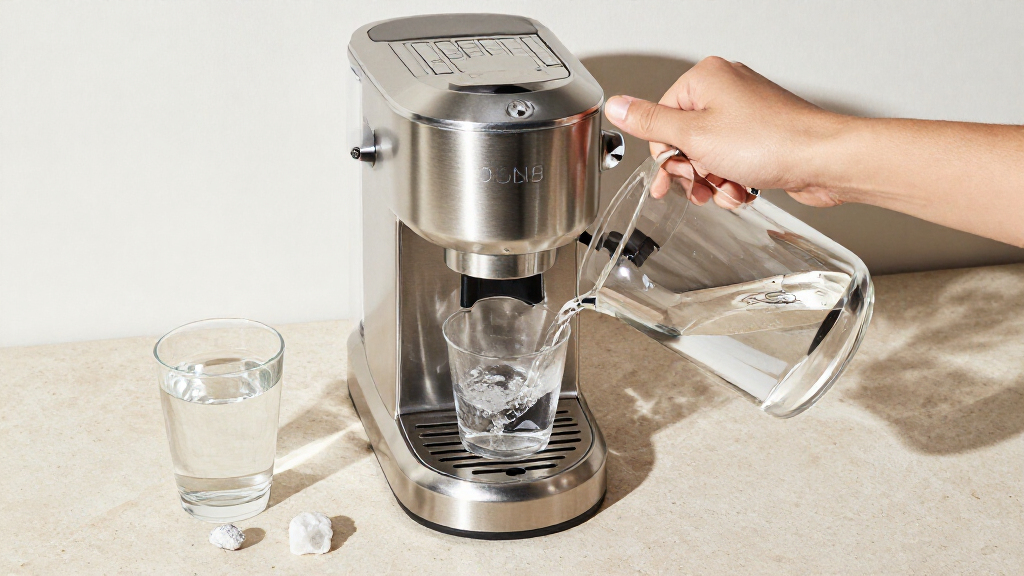
A glass of clear, pleasant-tasting water can still leave a crusty mineral trail inside your espresso machine. The water recipe mistake that can damage espresso machines is treating “filtered,” “bottled,” or “good-tasting” as proof that the water is machine-safe.
Water carries minerals into the boiler, thermoblock, valves, and narrow passages where your espresso flows. Too much hardness can leave scale; very low-mineral water may be unsuitable for some machines and can make coffee taste flat. The right choice depends on your machine, not on a universal recipe.
This guide shows you what to check, why a TDS reading is not the whole story, and how to use tap, filtered, bottled, reverse-osmosis, or distilled water more thoughtfully. You’ll also get a practical checking process and a safer plan if you suspect your machine has been using the wrong water.
“Filtered,” bottled, clear, or good-tasting water is not automatically suitable for an espresso machine.
Hardness can leave scale in boilers and narrow passages; very low-mineral water can also be unsuitable for some machines.
A TDS reading measures total dissolved material, not the specific minerals, hardness, or alkalinity on its own.
Test the water you actually pour into the reservoir and compare the result with your machine’s manual.
Follow manufacturer instructions for reverse-osmosis or distilled water, filter replacement, and descaling.
Why “filtered” water can still put your machine at risk
The water recipe mistake that can damage espresso machines is trusting the treatment label instead of checking the final water. “Filtered” tells you that water passed through a treatment method; it does not tell you how much calcium, magnesium, or alkalinity remains. Your machine responds to that chemistry, not the label on the jug.
Filters do different jobs. A simple carbon filter may improve chlorine taste and smell while leaving much of the hardness in place. A softening or reverse-osmosis system can change mineral levels much more, but the result depends on the system and the water going into it.
Imagine filling your machine from a countertop filter because the water tastes sweeter than the tap. If your local water is hard, that filter may improve your morning cup without removing enough scale-forming minerals to protect the boiler. A clean taste is not a maintenance test.
Water chemistry is a little like the ingredients in bread dough: changing one part can change the result, even when the mixture still looks familiar. Read your manual’s water requirements, then check the water coming out of your filter. The filter’s marketing claims and its replacement schedule cannot replace those two checks.
Filtered water is not automatically machine-safe. Find out what the filter removes, what it leaves behind, and whether that final composition fits your espresso machine’s guidance.
Products Worth Considering

De'Longhi Dinamica Plus Fully Automatic Espresso Machine

Philips Café Aromis Automatic Espresso Machine with LatteGo Pro Milk System

Le Creuset Signature 6.5-Quart Deep Round Dutch Oven with Light Gold Crucible Knob, Enameled Cast Iron, Bleu Riviera
As an affiliate, we earn on qualifying purchases.
How hard water builds scale inside boilers and narrow passages
Hard water can leave scale when calcium and magnesium come out of solution during heating. Deposits may accumulate in boilers, thermoblocks, valves, and small water channels, where they can restrict flow and make heating less efficient. The first clue may be a slower shot or an unexpected change in the machine’s performance.
Think of scale as grit slowly narrowing a garden hose. A thin layer might go unnoticed, but deposits in a narrow passage can disrupt water flow long before the outside of the machine looks dirty. Scale can also interfere with heating, leaving the machine working harder to bring water up to temperature.
For example, a home barista who fills a reservoir with hard tap water every day may see pale, chalky residue around a kettle spout. That residue is a useful warning sign, but its absence is not proof that espresso equipment is protected; internal buildup is harder to inspect.
Local water varies, and the same water can affect two machines differently because their materials and designs differ. Follow the manufacturer’s guidance for hardness and maintenance rather than copying a neighbor’s schedule. If you already see flow or heating problems, do not assume a forceful descaling treatment is the right fix.
Scale is a slow buildup with real consequences. Suitable water can reduce the burden, but it does not remove the need for the maintenance described in your manual.
Why water with almost no minerals is not a universal fix
Very low-mineral water is not automatically the safest choice for an espresso machine. Depending on its chemistry and the machine’s materials, water with very little mineral content or unsuitable alkalinity may be aggressive toward some components. It can also produce coffee that tastes flat or unbalanced.
This is where the idea that “less mineral means less scale, so less mineral must be better” breaks down. Cutting hardness may reduce one risk, but water is not a single-number problem: different minerals and alkalinity affect how it behaves. The best target depends on the machine’s design and stated requirements.
Reverse-osmosis and distilled water make this tradeoff easy to see. Some machines or treatment setups call for remineralization; other manufacturers give different compatibility advice. Water is not automatically suitable just because a treatment system has removed most dissolved material.
Picture a new owner filling a machine with distilled water after reading that it prevents mineral deposits. The machine may run, but that does not establish that the water meets its requirements. Check the manual before using it, and follow the maker’s instructions if it calls for specific conditioning.
Low scale risk does not equal zero machine risk. Do not use distilled or reverse-osmosis water without checking the manufacturer’s directions for your model.
Why a TDS reading cannot tell you the whole water story
A TDS meter estimates the total dissolved material in water, but it does not identify which substances make up that total. It also does not, by itself, tell you hardness or alkalinity. So a single TDS number cannot prove that water is safe for your espresso machine.
Two samples can show similar readings while containing different mineral mixtures. One may have more scale-forming hardness than the other; the meter’s total alone does not tell you which is which. That’s why a number on a meter can look reassuring while leaving the key question unanswered.
For a practical example, you might test water after a filter and see a lower TDS reading than your tap. That shows a change in total dissolved material, not whether the water now matches your machine’s hardness and alkalinity limits. Use the measurements your manufacturer requests, which may include separate tests.
Testing the actual water from your reservoir matters, too. A municipal report describes the supply, while a filter, softener, or remineralization step can change the water you pour into the machine. Testing at the point of use gives you a more relevant snapshot.
TDS is one useful clue, not a complete water diagnosis. Pair it with the machine’s specifications and appropriate hardness or alkalinity checks.
Use this five-step check before changing your water
To choose safer espresso-machine water, check your model’s limits, measure the water you will use, and compare the results with the manual before changing recipes. A filter label or internet formula cannot take the place of that match. Work through these steps in order:
- Read the manual. Look for water guidance covering hardness, alkalinity, or TDS. If the manual is unclear, ask the manufacturer about your exact model.
- Test the water at the point of use. Check what comes out of your tap, filter, or treatment system—not only a general water report.
- Use more than one relevant measurement. TDS does not reveal the specific minerals or water hardness by itself. Use appropriate tests for the values the manufacturer specifies.
- Check filter and treatment instructions. Confirm what the filter removes, when it needs replacement, and whether reverse-osmosis or distilled water needs conditioning for your machine.
- Keep a simple record. Note your water source, test results, and filter changes, then follow the manual’s maintenance schedule.
For instance, if you switch from tap water to a new pitcher filter, test the filtered water before assuming the change solved a scale problem. If you move house, test again: a coffee setup that worked in one city may face different water at your new kitchen tap.
Keep your water within the maker’s specifications, and replace filters on schedule. A filter can help manage some risks without making every source suitable. Test the water you actually use, then compare the result with your machine’s guidance.
Choose tap, bottled, or treated water by checking the details
No water source is a guaranteed winner for every espresso machine. Tap water may work if its chemistry fits the manufacturer’s range; bottled water may still be mineral-rich; and treated water can vary depending on the system. Compare the source and treatment with your machine’s instructions before you fill the reservoir.
| Water source | What to check | Common trap |
|---|---|---|
| Tap water | Local hardness and the machine’s water limits | Assuming clear water or good taste means low scale risk |
| Filtered water | What the filter removes and its replacement schedule | Believing every filter removes hardness |
| Bottled water | The label’s mineral information, compared with the manual | Assuming bottled means low-mineral or machine-safe |
| Reverse-osmosis or distilled water | Whether the manufacturer permits it and specifies conditioning | Using it without checking whether remineralization is needed |
Suppose the water at your new apartment leaves a chalky ring around the kettle. That’s a reason to investigate hardness, not a reason to buy any bottle marked “spring.” Bottled waters can have widely different mineral content, so read the analysis and compare it with the machine’s requirements.
Likewise, a filter designed for espresso-machine water can reduce particular problems without fixing every source. Replace it as directed and verify the resulting water if your machine’s requirements call for testing. Choose water by its measured properties and your model’s limits, not by its source alone.
Treat online water recipes as starting points, not guarantees
An online water recipe is not universally safe for espresso machines. Recipes that add measured mineral concentrates or salts to distilled or reverse-osmosis water can be useful, but they depend on accurate measurements and a suitable target for the machine. One setup’s successful recipe may be the wrong match for another setup.
That difference matters because machines can use different materials, boilers, sensors, and water recommendations. A recipe copied from a coffee forum might be designed to improve extraction in one brewing setup, not to satisfy the limits for your specific espresso machine. A small measuring error can also change the final concentration.
Consider a barista who prepares a concentrate, misreads the dilution instructions, and fills the reservoir with water much stronger than intended. The cup may still taste enjoyable, but taste cannot show whether the water matches the manufacturer’s requirements. Measure carefully and verify the prepared water rather than relying on someone else’s result.
Coffee professionals and home baristas have increasingly discussed matching water to the machine and measuring beyond TDS alone. More home-testing kits and remineralization products are available, but product claims and recipes still need checking. Verify current model-specific limits, warranty wording, and product directions with the manufacturer; these details can vary by model or region.
A recipe is a method, not a guarantee. Start with your machine maker’s water guidance, then measure any water you prepare for use.
Descale only when your machine’s instructions call for it
Descaling is not a substitute for suitable water, and the wrong descaling process can harm some machines. Follow the manual’s instructions for whether to descale, which products or methods to use, and how often to do it. A fixed schedule borrowed from someone else may not fit your water or usage.
Scale buildup depends partly on the water and how often you use the machine. Someone pulling several shots each day with hard water faces a different maintenance pattern from someone making two coffees a week with water within the machine’s recommendations. That’s why the manufacturer’s guidance matters more than a universal calendar reminder.
For example, if a machine suddenly heats slowly or water flow drops, aggressive descaling might seem like the fastest answer. But if the manual limits descaling or the machine has a fault, using the wrong process could make matters worse. Contact the manufacturer or a qualified technician if symptoms persist or you are unsure what to do.
If you have been using water that may fall outside the machine’s guidance, stop relying on it and check the manual before trying a strong treatment. Keep notes about the water and filter you used. Those details can help a technician or support team diagnose the issue.
Preventive water choice and proper maintenance work together. Descaling can address deposits as directed, but it cannot turn an unsuitable water source into a safe long-term choice.
Frequently Asked Questions
Can I use tap water in my espresso machine?
Possibly, if its hardness and other relevant properties fit your machine’s requirements. Test your local water and check the manual rather than relying on its taste or appearance.
Is filtered water safe for an espresso machine?
Not automatically. Filters remove different substances, and some leave enough hardness to contribute to scale. Check what your filter removes and test the water it produces if your machine’s guidance calls for it.
Can I use distilled or reverse-osmosis water?
Only if the manufacturer permits it or explains how to condition it. Very low-mineral water is unsuitable for some machines, and some systems call for remineralization.
Is a TDS meter enough to check espresso water?
No. TDS shows an estimate of total dissolved material, but it does not identify the minerals or measure hardness and alkalinity by itself. Use the other tests your machine’s specifications require.
Does bottled water prevent scale?
Not necessarily. Bottled water varies in mineral content, and some types are rich in minerals that may contribute to scale. Compare the label’s information with your machine’s water guidance.
How often should I descale my espresso machine?
Follow the machine’s manual and account for your water and usage. A schedule that suits one person’s hard water and daily shots may not suit another setup.
What should I do if I already used the wrong water?
Stop using water that clearly falls outside your machine’s stated limits and check the manual or contact the manufacturer. If the machine has flow, heating, or other faults, ask a qualified technician before attempting aggressive descaling.
Conclusion
Remember one rule: match your water to your espresso machine, not to a filter label or a recipe from the internet. Check the manual, test the water at the reservoir, and use the measurements your manufacturer requests. That small check can help you avoid scale, unsuitable water, and guesswork.
Your espresso may begin with a few quiet seconds of water moving through a hot machine. Give that water the same care as your beans, and your morning routine is less likely to end with a blocked passage or a costly repair.