
TL;DR

Get coffee and tea gear delivered free with Prime
- Fast, free delivery on millions of items
- Prime Video, Amazon Music and more included
- Member-only deals all year
Café drink sizes have no universal standard: a small or large can hold different volumes at different cafés, and a cup label does not reveal the recipe or caffeine. Ask for the drink’s volume and espresso shot count separately; a larger latte may simply contain more milk, while a bigger brewed coffee may contain more caffeine.
Two drinks can arrive in cups that look the same size and still deliver very different amounts of coffee. And a “large” latte can be bigger without tasting stronger. That’s the café drink size problem: menu labels hint at a drink’s scale, but they rarely tell the whole story.
To order with confidence, separate cup volume, drink recipe, and caffeine. You’ll learn why size names vary, how espresso shots and milk change what’s in the cup, and why an iced drink may seem less full than a hot one. By the end, you’ll have two simple questions that make almost any menu easier to read.
There is no universal meaning for small, medium, large, tall, or venti; ask for the café’s stated volume.
Cup capacity, drink recipe, and caffeine are separate details, so a larger latte may contain more milk but the same espresso.
Ask how many shots are in your exact size if you want to compare strength or caffeine.
An iced drink’s cup size often includes ice, which takes up room that could otherwise hold liquid.
Check how extra shots, milk substitutions, syrup, foam, and ice affect the recipe and price.
A practical guide to ordering with confidence
The Café Drink Size Problem Nobody Explains Clearly
A cup label hints at scale, but it rarely tells you the recipe or caffeine. Separate volume, ingredients, and espresso shots to understand what you’re actually ordering.
01 / At a glance
Three details. One cup.
“Small,” “large,” “tall,” and “venti” are menu labels, not shared measurements. To know what’s in your drink, look at three separate details.
01 — How much it holds
Cup volume
The cup’s capacity, often listed in fluid ounces in the United States or millilitres elsewhere. Foam, ice, and headspace affect the finished drink.
02 — What goes in
Drink recipe
The balance of espresso, milk, water, foam, and ice. Recipes and serving sizes can vary by café.
03 — The coffee dose
Caffeine amount
Depends mostly on coffee dose and shot count. Total caffeine also varies with serving size, brewing, and the café’s recipe.
02 / What “large” leaves out
Volume is not strength.
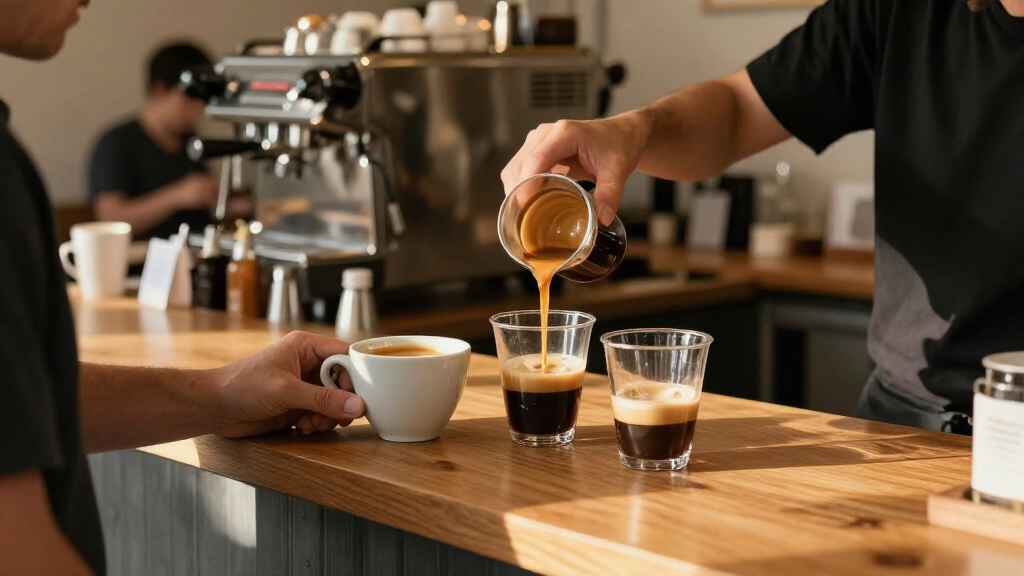
Two same-size cups can contain different recipes. Two sizes of the same latte can also contain the same espresso, with the larger size adding milk instead.
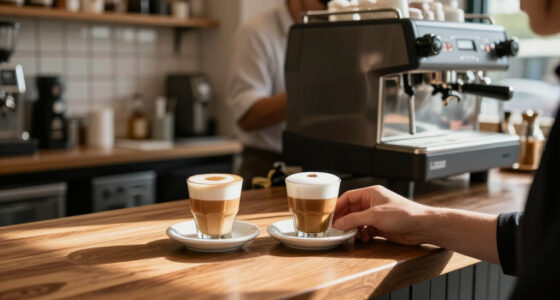
One label, different cups
A “medium” is defined by each café. The name may match while the actual capacity differs.
Illustration only: there is no universal café size chart. Ask for the stated volume.
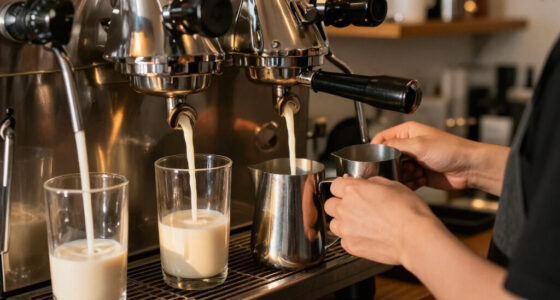
More milk, same shots
Example recipe comparison—not a universal café standard. A larger latte may grow without adding espresso.
A larger brewed coffee may contain more caffeine because it holds more coffee. The recipe matters.
03 / Espresso drinks
Compare recipes, not names.
A latte, cappuccino, and flat white can use similar amounts of espresso yet feel different because milk and foam change texture and volume. Café recipes vary.
| Drink | What shapes the experience | What to ask |
|---|---|---|
| Latte | More steamed milk can soften espresso and fill a larger cup. | “How many shots are in this size?” |
| Cappuccino | Milk and foam proportions shape its texture and apparent volume. | “What size cup do you serve it in?” |
| Flat white | Textured milk and the café’s espresso recipe affect the balance. | “How does yours differ from a latte?” |
A “double” usually means two espresso shots; “large” refers to cup volume. They are not interchangeable—check how the café defines its drinks.
04 / The order check
Get the drink you expect.
When strength matters, ask about the exact size you plan to order. Cafés may add shots as drinks get bigger, or keep the same shot count across multiple sizes.
Choose the recipe you want.
Get ounces or millilitres.
Check your exact size.
Add a shot for more espresso; check any extra cost.
Ask for the café’s stated fluid ounces or millilitres. A menu size may refer to cup capacity, not the exact finished drink.
Then ask whether the next size adds a shot or only adds milk, water, or foam.
05 / Hot, iced, customized
The cup has more variables.
Ice and customization can change how full a drink looks, what it tastes like, and what reaches the rim—even when the cup label stays the same.
Hot drink
Ice takes space
Iced cup size includes the ice.
A cup marked 16 fluid ounces may hold ice plus espresso and milk—not 16 ounces of liquid alone. Fill lines and ice scoops vary. Less ice, extra shots, alternative milk, syrups, and foam may change the recipe, final volume, or price; ask how your café handles them.
Your order, made clearer
Follow the details to the cup.
Why “small” and “large” don’t tell you the drink’s actual size
Café drink sizes are labels chosen by individual cafés, not universal measurements, so “small,” “medium,” “large,” “tall,” or “venti” can describe different volumes from one menu to another. The most reliable clue is the café’s stated volume in fluid ounces or millilitres, if it provides one. Without that number, the label is only a rough guide to the cup capacity.
For example, a traveler who orders a medium latte at two cafés may receive cups that hold noticeably different amounts. The names match, but the cafés have set their own portions. That gap can be confusing because there is no universal café size chart, and one brand’s naming system does not establish a standard for another.
In the United States, an ounce on a drink menu usually means a fluid ounce, a measure of volume; many other menus use millilitres. Even then, a listed number may describe the cup’s capacity rather than the precise amount of finished drink inside it. Foam, headspace, and ice can all affect what reaches the rim.
Think of the menu label like a clothing size: helpful within one shop, but less useful across different shops. If you want to compare two orders, ask, “How many millilitres is that?” The answer gives you a number you can use; the word “large” alone does not.
Products Worth Considering

KitchenAid 8-Cup Grain and Rice Cooker with Integrated Scale, Porcelain White

De'Longhi Dinamica Plus Fully Automatic Espresso Machine

Philips Café Aromis Automatic Espresso Machine with LatteGo Pro Milk System
As an affiliate, we earn on qualifying purchases.
Separate cup volume, recipe, and caffeine before you order
The café drink size problem becomes much easier when you separate three questions: how much the cup holds, what the café puts in it, and how much caffeine the coffee contributes. Cup volume describes capacity; the recipe describes espresso, milk, water, foam, or ice; caffeine depends mostly on the coffee dose and number of shots. One cup label cannot answer all three.
Imagine two lattes on the same menu. A larger one might contain extra milk and the same number of espresso shots, while the smaller one has less milk around that espresso. The larger cup is not automatically the stronger drink. If you want more coffee flavor, an extra shot may do more than ordering a bigger size.
Brewed coffee works differently. A larger serving often contains more brewed coffee, which can mean more caffeine overall, though the result depends on the brew and serving. Espresso is concentrated, but concentration per sip is not the same thing as total caffeine in the whole drink.
Here’s a useful order check: “How many shots are in this size, and what volume is the cup?” Those answers tell you more than asking whether it is strong or large. As a concrete example, if you want a generous drink that still tastes coffee-forward, you could ask for the large latte’s volume and shot count, then decide whether to add a shot.
Compare espresso drinks by recipe, not by their names
A latte, cappuccino, and flat white are defined more by their milk-and-foam recipes than by a universal cup size. They may use similar amounts of espresso at a particular café, yet feel quite different because the milk volume and texture change. Ask how that café makes each drink, since recipes and serving sizes vary between shops.
A latte often gives you more steamed milk around the espresso, so it tastes softer and fills a larger cup. A cappuccino commonly has a more pronounced layer of foam and may arrive in a smaller cup. A flat white is often made with finely textured milk, but its exact proportions also depend on the café. The names offer a clue, not a guaranteed measurement.
| Drink | What changes the experience | What to ask |
|---|---|---|
| Latte | Milk can soften the espresso and increase drink volume. | “How many shots are in this size?” |
| Cappuccino | Foam and milk proportions shape texture and apparent volume. | “What size cup do you serve it in?” |
| Flat white | Textured milk and the café’s espresso recipe affect the balance. | “How does your flat white differ from your latte?” |
For instance, if you prefer a small, intense milk drink, a cappuccino may suit you at one café. At another, its recipe or cup may not match what you expected. Menu names can mean different things from shop to shop, so learn the café’s version before treating a drink name as a precise recipe.
Find out whether a bigger drink actually has more caffeine
A larger espresso drink has more caffeine only if its recipe includes more coffee, such as additional espresso shots. Some cafés add shots as drinks get bigger; others keep the same shot count across several sizes. The cup’s volume alone cannot tell you which policy the café uses.
Use this quick order routine when strength matters:
- Ask the shot count for the exact size you plan to order.
- Ask whether the next size adds a shot or only adds milk, water, or foam.
- Choose your volume based on how much drink you want, then add a shot if you want more espresso and the café offers it.
Picture a morning when you want a large latte to sip on your commute, but you don’t want it to taste milky. If the café uses the same number of shots in its small and large versions, ordering large alone may not give you a stronger coffee taste. An extra shot can address that more directly, though it may cost more and change the balance of the drink.
A “double” usually means two espresso shots, while “large” refers to cup volume. The terms are not interchangeable. If you’re comparing caffeine between a latte and brewed coffee, ask for published caffeine information when available; brew method, serving size, and recipe all matter.
Understand why iced drinks can look smaller and taste different
An iced drink’s stated cup size usually includes the space taken up by ice, so the amount of liquid can be smaller than you expect from the cup’s label. The ice also cools the drink and can affect its taste as it melts. A same-size hot drink may appear fuller because it does not reserve space for ice.
For example, order an iced latte in a cup marked 16 fluid ounces and the cup might hold ice plus espresso and milk, rather than 16 ounces of liquid alone. The café’s ice scoop or fill line changes how much liquid goes in, and those practices can vary. That’s why an iced drink can seem less full or disappear faster than a hot one of the same nominal size.
If you want more liquid and less ice, you can ask for “light ice” or “no ice,” but the café may not fill the remaining space with extra milk or coffee automatically. The final volume and price depend on its policy. That detail matters if you expect an iced coffee to deliver the same amount of coffee as a larger hot brew.
When ordering, ask whether the listed volume includes ice and whether changing the ice changes the liquid amount. This is especially useful for cold brew and iced espresso drinks, where a generous cup can still contain a relatively small pour. The cup tells you how much it can hold, not how much liquid you will drink.
Use two questions to get the drink you expect
You can avoid most size surprises by asking for the drink’s volume and espresso shot count separately. Those two details cover the main questions: how much you’ll receive and how much espresso is in it. If the drink is iced, add one more question about the ice.
Try this short script at the counter: “How many millilitres is your medium latte, and how many shots does it have?” If you’re ordering iced, follow with, “Does that volume include ice?” A barista can usually explain the café’s recipe more clearly than a size name can.
- Choose the drink: latte, cappuccino, brewed coffee, or another menu item.
- Get the volume: ask for millilitres or fluid ounces rather than relying only on “small” or “large.”
- Get the recipe detail: ask for the espresso shot count, or how much brewed coffee the serving contains if the café publishes that.
- Check customizations: ask how extra shots, milk substitutions, syrup, foam, or ice affect the finished drink and price.
Say you’re deciding between a medium iced latte and a large hot latte. Once you know the volume, shot count, and whether ice takes up part of the iced cup, you can compare what matters to you. That is a much fairer comparison than judging two cups by their labels alone.
Check customizations before the drink reaches the counter
Customizations can change the drink’s taste, ingredients, and volume without changing the cup label in a predictable way. An extra shot adds espresso, less ice leaves more room, and alternative milk or syrup changes the recipe. Ask what each change does at that café instead of assuming the cup size or price will adjust automatically.
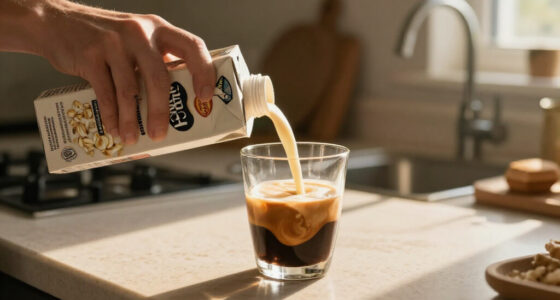
For a practical example, a customer orders a large iced latte with light ice and oat milk. That order may taste less diluted and use a different milk than the standard recipe, but it does not guarantee extra espresso or a fuller cup. The café may charge separately for an extra shot or a milk substitution, and its pricing can vary by location.
If you have a food allergy or sensitivity, ask staff about ingredients and preparation, especially for alternative milks, flavored syrups, and toppings. Recipes and handling practices differ, and menu descriptions may not cover every ingredient or contact risk. Use the café’s allergen information and make your needs clear when ordering.
Before you customize, ask two direct questions: “Will this change the amount of liquid?” and “Does this add a charge?” For example, ordering an extra shot may increase coffee and caffeine without making the cup much larger. A syrup pump can add sweetness without adding much volume. Small details make a noticeable difference in the final drink.
Frequently Asked Questions
How many ounces or millilitres are in a small, medium, or large café drink?
There is no universal volume for those labels. Ask the café for its stated amount in fluid ounces or millilitres; the number may describe the cup’s capacity rather than the exact finished drink.
Does a larger latte have more caffeine?
Not necessarily. A larger latte may contain more milk with the same espresso shot count as a smaller one. Ask how many shots come in each size, or ask whether adding a shot is available.
Why does my iced drink look less full than a hot drink of the same size?
The iced drink’s cup size usually includes space taken up by ice, leaving less room for liquid. Ice amounts vary, so ask whether the café can make it with light ice and what happens to the remaining space.
Is a cappuccino smaller than a latte?
Often cafés serve cappuccinos in smaller cups, but that is not a universal rule. Milk and foam proportions, recipes, and serving sizes all vary, so check the café’s menu or ask how its version is made.
What does “double” mean, and can I get more coffee without a bigger drink?
“Double” usually means two espresso shots, while “large” describes cup volume. If you want more espresso without ordering a larger cup, ask for an extra shot and check whether it costs more.
Conclusion
Remember the two details that answer most café size questions: volume tells you how much the cup holds, and shot count tells you how much espresso is in the drink. Ask for both, and check whether ice takes up part of the listed size.
Then you can order the drink you actually want: a milky latte to linger over, a smaller cappuccino with a foamy top, or an extra-shot coffee that wakes up your commute. The next time a menu says “large,” ask what that means in the cup.