
TL;DR

Get coffee and tea gear delivered free with Prime
- Fast, free delivery on millions of items
- Prime Video, Amazon Music and more included
- Member-only deals all year
Espresso aroma changes after ice is added because cooling makes many aroma compounds less likely to enter the air, while melting ice dilutes the drink and mixing briefly releases aromas. The shift depends on the coffee, ice, glass, and preparation, so chill quickly, use a balanced amount of ice, and drink before prolonged melting waters down the shot.
Cooling often makes fewer espresso aroma compounds enter the air, so the drink can smell quieter after ice is added.
Melting ice dilutes espresso continuously; smaller ice pieces usually expose more surface area and can melt faster than large cubes.
Pouring, stirring, and shaking mix espresso with air and can create a brief aroma burst that fades as the drink settles.
Espresso over ice starts with hot extraction; cold brew starts with cold or room-temperature extraction, so they produce different drinks.
For a more aromatic glass, chill the espresso promptly, choose ice that suits your sipping pace, and drink before prolonged melting waters it down.
Coffee / Aroma / The First Minutes
Why Ice Changes Espresso Aroma So Quickly
The first sip can smell bright and roasty; a few minutes later, the same glass may seem quieter and thinner. Cooling, melting ice, and mixing shift how aroma reaches your nose—and how concentrated the coffee tastes.
01 / What changes
Why the aroma shifts
Espresso aroma is a mixture of volatile compounds created during roasting and brewing. Fruity, floral, nutty, chocolatey, and roasted are sensory descriptions—not ingredients. Temperature, concentration, and your own sensitivity shape what you notice.
Cooling quiets the air
Many aroma compounds evaporate less readily at lower temperatures, so fewer may reach your nose at once.
Notes change places
Different compounds respond differently. As the balance shifts, some notes soften while others stand out.
Melt lowers concentration
As ice turns to water, coffee compounds spread through more liquid. The pace depends on the ice and the glass.
Movement lifts aroma
Pouring, stirring, or swirling brings liquid into contact with air and can create a short-lived scent burst.
Temperature changes taste
Cooling can make sweetness, bitterness, acidity, and intensity seem different, even without dramatic chemical change.
Every setup differs
Coffee, preparation, ice shape, glass size, serving conditions, and the drinker all affect the result.
02 / First few minutes
From pour to settled sip
There is no universal countdown for aroma change. The drink moves through overlapping stages, and your recipe determines how quickly you notice them.
Fresh contact
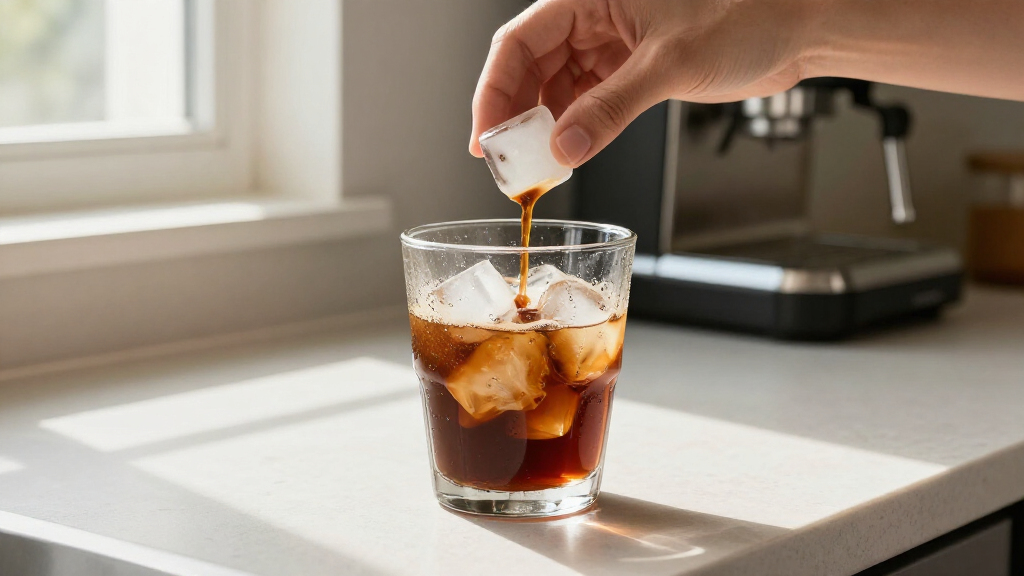
Hot espresso hits a cold surface and spreads. The mixing can bring a bright, roasty, fruity, or chocolatey aroma forward.
A brief lift
More movement brings fresh liquid into contact with air. Smell again close to the glass and notice what rises.
Cooling and melting
The drink settles, many aromas enter the air less readily, and melting ice gradually dilutes the coffee.
Relative influences on the changing experience · illustrative, not measured
The bars show the kinds of effects to watch for, not a universal ranking or a change measured in seconds.
03 / Smell and taste
Weaker aroma, different flavor
A cooler drink can smell less concentrated while tasting sweeter, softer, or simply different. Smell and taste work together, and dilution adds another influence to the balance.
Less reaches you
Lower temperature often means fewer aroma compounds enter the air above the drink at once.
Intensity softens
Cooling and dilution may round off a sharp, intense shot. Too much melt can leave it thin.
Preference matters
One drinker may miss a crisp bitter edge; another may enjoy a softer chocolate note. There is no single correct description.
Espresso over ice is not cold brew
Iced espresso begins with hot extraction, then cools and dilutes. Cold brew is extracted cold or at room temperature from the start, so its temperature, extraction, and aroma experience differ.
04 / Choose your ice
Cool promptly, control the melt
Ice size changes the tradeoff between fast chilling and dilution. Smaller pieces expose more surface area; larger cubes tend to melt more slowly. Shape, freezer temperature, glass size, and starting temperature matter too.
Large cubes
Generally melt more slowly, helping the drink stay steadier over several minutes.
Small cubes
Cool quickly, with more surface contact and often faster dilution than large cubes.
Crushed ice
Offers very rapid cooling and lots of surface contact. Plan to drink before the melt thins the shot.
| Ice choice | What you may notice | Useful when |
|---|---|---|
| Large cubes | Slower melting and a steadier drink | You want to sip over several minutes |
| Small cubes | Fast cooling with quicker dilution | You want a chilled drink promptly |
| Crushed ice | Very rapid cooling and more surface contact | You want a frosty texture and plan to drink soon |
05 / A simple routine
Keep the glass lively
A concentrated shot and measured ice help the drink stay flavorful as dilution happens. Use this simple sequence, then adjust it to your coffee and sipping pace.
Choose the ice
Use larger cubes for slower melting, or smaller pieces when rapid chilling matters more.
Pour promptly
Cool the espresso promptly over a balanced amount of ice. Stir or swirl briefly to mix.
Taste before it thins
Smell after pouring and once more after it rests. Drink before prolonged melting waters down the shot.
Trace the change
One shot, shifting experience
The coffee does not instantly lose or lock away its aroma. Temperature, air contact, and concentration keep changing what you smell and taste.
Why Ice Changes Espresso Aroma Before Your First Sip
Ice changes espresso aroma quickly because it cools the liquid, starts dilution, and changes how readily aroma compounds enter the air. Those effects begin as soon as the hot shot meets the ice, so the scent you notice over the glass can shift before you take a sip. Espresso aroma comes from volatile compounds released during roasting and brewing. You might describe them as fruity, floral, nutty, chocolatey, or roasted; those words are useful shorthand, not ingredients in the cup. The compounds and their concentrations, the drink’s temperature, and your sensitivity all shape what you smell. Think of the aroma above your espresso as a small crowd moving between the liquid and the air. Cooling changes the pace of that movement. Many aroma compounds evaporate less readily at lower temperatures, so fewer may reach your nose at once; at the same time, some notes can become more noticeable as the balance shifts. For example, pull a shot into a warm cup and smell its roasted, sweet edge. Pour it over ice, then smell again: the aroma may feel softer, even though the ice hasn’t instantly erased or locked away the coffee’s aroma. The shift describes a changing sensory experience, not a fixed chemical countdown measured in seconds.Products Worth Considering

Ninja Luxe Café Mini Plus Espresso and Drip Coffee Machine with AutoFroth, Stainless Steel (ES351)

De'Longhi Magnifica Duo Fully Automatic Espresso Machine with Milk Frother, Silver

Breville Barista Express Espresso Machine, Black Sesame
As an affiliate, we earn on qualifying purchases.
What Happens During the First Few Minutes Over Ice
Espresso aroma shifts quickly when ice is added because the drink changes in stages: pouring releases aroma, cooling quiets some volatile notes, and melting ice gradually lowers concentration. There is no universal number of seconds for the change; the pace depends on the drink and how you make it. At the pour, hot espresso hits a much colder surface and spreads across it. That mixing brings fresh liquid into contact with air, which can create a brief aromatic lift. If you stir or swirl, you add more movement, so a chocolatey or fruity note may jump out when you bring the glass close to your nose. Then the drink settles. As it cools, many aroma compounds enter the air less readily; meanwhile, ice keeps melting and diluting the coffee. A small glass packed with little cubes may change faster than a larger glass holding a few big cubes, since small pieces expose more surface area to the liquid. Try a simple kitchen comparison: smell the shot just after pouring, again after stirring, and once more after it sits for a minute. You may notice a short burst followed by a milder scent. Treat that as an observation about your recipe, not a promise that every espresso follows the same timetable.Why Your Iced Espresso Can Smell Weaker but Taste Different
Iced espresso can smell weaker because lower temperatures often reduce the aroma compounds entering the air above the drink, and melting ice spreads those compounds through more liquid. The result can seem less concentrated at your nose, even as the flavor balance changes in ways that make the coffee taste sweeter, softer, or simply different. Smell and taste work together. When fewer aromas reach your nose, a familiar flavor can seem less vivid; cooling also changes how you perceive sweetness, bitterness, and acidity. Dilution adds another influence: a sharp, intense shot can become gentler as ice melts, though too much water may leave it tasting thin. Imagine tasting two versions of the same shot after lunch: one goes straight over ice, while the other is already cooled before it meets fresh ice. The second may hold a more concentrated aroma because the espresso has spent less time melting ice, but the difference depends on the coffee, pour, and amount of water in both glasses. A darker shot and a bright, fruity shot need not respond alike. Your own senses matter, too. Someone who loves a crisp, bitter edge may read cooling as a loss of character; another drinker may enjoy how the softened intensity brings out a chocolate note. There isn’t one correct description. Notice whether the drink smells muted, tastes rounder, or feels watery, then adjust the recipe to suit the effect you want.Choose Ice That Cools Fast Without Watering Down the Shot
Ice changes espresso aroma more gradually when it melts slowly, so the size and amount of ice affect both cooling and dilution. Larger cubes tend to melt more slowly than small pieces because less surface area touches the drink, while a very small amount of ice may cool the espresso less effectively. That tradeoff matters in a real glass at home. Fill a short tumbler with crushed ice and the espresso will cool quickly, but the extra surface area can also speed melting. Use a few large cubes and dilution may proceed more slowly, though the hot shot still needs time to cool through the drink.| Ice choice | What you may notice | Useful when |
|---|---|---|
| Large cubes | Slower melting and a steadier drink | You want to sip over several minutes |
| Small cubes | Fast cooling with quicker dilution | You want a drink chilled promptly |
| Crushed ice | Very rapid cooling and more surface contact | You want a frosty texture and plan to drink soon |
Keep More Aroma with a Simple Iced Espresso Routine
To keep an iced espresso aromatic, cool it promptly, control how much ice melts into it, and drink it before it sits for a long time. A concentrated shot and a measured glass of ice can help the finished drink stay flavorful as dilution occurs. Here’s a straightforward routine for a home espresso maker. It gives you a repeatable starting point; adjust the ice and espresso ratio after tasting, since a double shot and a smaller single shot won’t behave identically.- Chill a clean glass ahead of time if convenient; a cold glass helps avoid warming the drink at the start.
- Pull your espresso and pour it over a measured portion of ice, rather than leaving a hot shot to cool slowly on the counter.
- Stir briefly so the drink cools evenly, then smell it before taking your first sip.
- Taste after a minute or two and check whether the coffee still feels balanced or has become thin.
- Adjust the next glass: use larger cubes for slower melting, or a slightly more concentrated espresso if the finished drink loses intensity.
Espresso Over Ice Is Not Cold Brew
Espresso over ice is brewed hot under pressure and then chilled; cold brew is extracted with cold or room-temperature water over a much longer period. The two drinks start differently, so their aromas, strengths, and textures don’t match simply because both are served cold. A hot espresso shot begins with the aromas and flavors produced by roasting and pressure brewing. Adding ice then changes its temperature and concentration. Cold brew begins with a different extraction process, so pouring it over ice doesn’t reproduce the same path from hot shot to chilled drink. Shaken espresso adds its own change: shaking mixes the drink rapidly and incorporates air. That can cool it and alter its texture while briefly affecting aroma release. A shaken drink served with milk or sweetener will also smell and taste different from a straight shot over a few cubes. Say you like the clean intensity of a short espresso but want a cold drink on a warm afternoon. Espresso over ice gives you that hot-brewed base chilled for serving; cold brew offers a separately brewed style. Neither is a shortcut for the other. Pick based on the cup you want, and compare them at the same serving temperature if you’re trying to spot differences in their aroma.A Few Small Changes Can Fix a Flat-Tasting Glass
A flat-tasting iced espresso usually points to one of three things: the aroma has softened as the coffee cooled, melting ice has diluted the shot, or the recipe began too weak for the amount of ice. Change one part at a time so you can tell which adjustment helps. Start with the simplest clue: does the drink smell muted but still taste full? That suggests the cooler temperature may be reducing what reaches your nose. If the aroma and flavor both seem faint after several minutes, dilution may be the bigger issue. If the coffee tastes weak from the first sip, try a more concentrated starting shot. Use a small test at home. Make two identical shots, pour one over a few large cubes and one over crushed ice, then taste both right away and after a short rest. The crushed-ice glass should chill quickly, while its greater contact area can make it dilute sooner; the exact result will depend on the glass and ice. Keep the version you prefer. You might choose large cubes for a slow afternoon sip, crushed ice for a quick frosty drink, or a stronger shot when you want the coffee to hold its flavor as ice melts. The point is to tune the cup around your habits, not chase a single perfect recipe.Frequently Asked Questions
Why does iced espresso smell weaker?
Lower temperatures often make many volatile aroma compounds less likely to enter the air above the drink, and melting ice dilutes the coffee. Together, those changes can make the aroma seem less concentrated than it did when the shot was hot.
Does ice destroy espresso aroma?
No. Ice changes the temperature and, as it melts, the concentration of the drink; it doesn’t instantly erase or lock away the aroma. Some compounds may escape into the surrounding air, while others become less noticeable as the coffee cools.
Why can iced espresso taste sweeter or less bitter?
Cooling changes how you perceive the balance of flavors, and dilution can soften the intensity of a shot. Whether it seems sweeter or less bitter depends on the coffee, the amount of ice, and your own taste.
Is espresso over ice the same as cold brew?
No. Espresso is extracted with hot water under pressure and then chilled or served over ice. Cold brew is extracted with cold or room-temperature water over a much longer period, so the drinks start with different aromas and flavors.
How can I keep an iced espresso aromatic?
Cool the espresso promptly, use a balanced amount of ice, and drink it before extended melting waters it down. Larger cubes tend to melt more slowly than small pieces, while a concentrated shot can help the drink retain flavor as dilution occurs.
Does shaking espresso change its aroma?
Shaking mixes and cools the drink quickly while incorporating air, which can affect aroma release and texture. You may notice a brief aromatic lift after shaking, but the effect depends on the recipe and can fade as the drink settles.