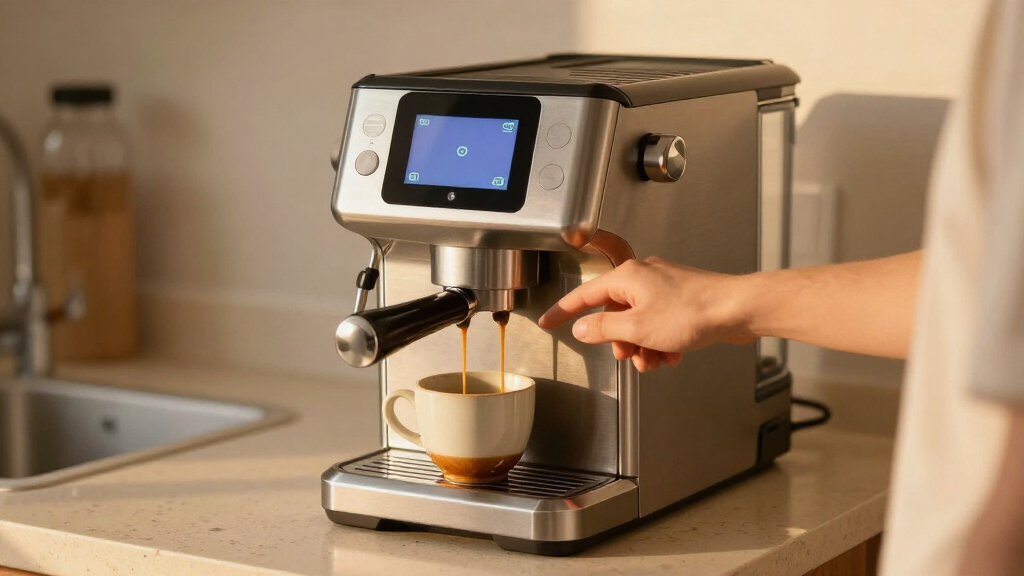
The best touchscreen espresso machines pair clear on-screen controls with the level of brewing involvement you actually want. My best overall pick is the Breville Barista Touch for its guided workflow and hands-on espresso tools, while the Bosch VeroCafe 800 stands out for bean-to-cup convenience and the De’Longhi La Specialista Touch for a more integrated grinder-and-barista setup. The main tradeoff is between automatic drinks and control over grinding, tamping, and milk; touchscreen features can simplify the steps, but they do not make every machine equally easy to maintain. Compact manual-style machines can suit smaller kitchens, while larger automatic models offer more convenience at the cost of counter space and user control. Read on for how the eight options compare and which one best fits your routine.

Get coffee and tea gear delivered free — and shop member deals
- Fast, free delivery on millions of items
- Access to Prime Big Deal Days deals on October 6–7
- Prime Video, Amazon Music and more included
Complete the kit


Key Takeaways
- Breville Barista Touch leads for guided, hands-on brewing: its appeal is the combination of touchscreen assistance and manual espresso-making tasks, rather than full automation.
- Bosch VeroCafe 800 prioritizes convenience: its fully automatic format suits buyers who want drinks made with fewer separate steps, but it is a different kind of choice from a portafilter machine.
- De’Longhi La Specialista Touch bridges the two approaches: its included grinder makes it a fit for buyers who want an integrated workflow while retaining more involvement than a bean-to-cup machine.
- The compact touchscreen models compete on accessible controls and drink variety: the Mecity and the two 20-bar-style options may fit buyers seeking a simpler countertop setup, but listed pressure alone does not establish espresso quality.
- Tank capacity and added modes matter only when they match your routine: a larger reservoir or cold-drink setting can reduce refills or broaden menus, yet neither replaces a good fit for your daily drinks and cleaning habits.
| Mecity 20 Bar Espresso Machine with Milk Frother, Touchscreen Coffee Maker for Espresso, Americano & Over Ice Coffee, Compact Stainless Steel Latte & Cappuccino Maker |  | Best for One-Touch Drink Variety | Brew options: Espresso, double espresso, Americano, over-ice coffee, hot water, steam | Pressure: 20 bar | Power: 1400 watts | VIEW LATEST PRICE | See Our Full Breakdown |
| Arecovas Espresso Machine with 20-Bar Pressure, Touch Screen, and Milk Frother |  | Best for Compact, More-Adjustable Brewing | Pressure: 20 bar | Power: 1300 watts | Voltage: 120 volts | VIEW LATEST PRICE | See Our Full Breakdown |
| Touchscreen Espresso Machine with Steam Wand, 40.6 oz Water Tank |  | Best for Customizing Shot Size and Temperature | Pressure: 20 bar | Water tank: 40.6 ounces (1.2 liters) | Power: 1350 watts | VIEW LATEST PRICE | See Our Full Breakdown |
| Bosch VeroCafe 800 Series Fully Automatic Espresso & Coffee Machine (Black) |  | Best Premium Fully Automatic Touchscreen Pick | Model: TPU60309 | Dimensions: 12 1/6 in wide x 15 in high x 18 2/5 in deep | Beverage programs: Up to 35 | VIEW LATEST PRICE | See Our Full Breakdown |
| Touchscreen Espresso Machine with Timer, 51 oz Water Tank, 20 Bar |  | Best for High-Volume Home or Office Brewing | Pressure: 20 bar | Water tank: 51 ounces, detachable | Power: 1350 watts | VIEW LATEST PRICE | See Our Full Breakdown |
| Breville Barista Touch Espresso Machine, Brushed Stainless Steel |  | Best for Fast, Guided Customization | Power: 1680 W | Voltage: 110–120 V | Bean hopper capacity: 1/2 lb | VIEW LATEST PRICE | See Our Full Breakdown |
| 20 Bar Espresso Machine with Milk Frother, Cold Brew, Touch Screen |  | Best Compact Pick for Hot and Cold Drinks | Pump pressure: 20 bar | Power: 1350 W | Water tank capacity: 45 oz | VIEW LATEST PRICE | See Our Full Breakdown |
| De’Longhi La Specialista Touch Espresso Machine with Coffee Grinder |  | Best for Guided Barista-Style Control | Machine type: Semi-automatic espresso machine | Display: 3.5-inch high-resolution touch display | Grinder: Italian-made conical burr grinder | VIEW LATEST PRICE | See Our Full Breakdown |
| touchscreen espresso machine | Power | Pressure |
|---|---|---|
| Mecity 20 Bar Espresso Machine | 1400 watts | 20 bar |
| Arecovas Espresso Machine with | 1300 watts | 20 bar |
| Touchscreen Espresso Machine w | 1350 watts | 20 bar |
| Bosch VeroCafe 800 Series Full | — | — |
| Touchscreen Espresso Machine w | 1350 watts | 20 bar |
| Breville Barista Touch Espress | 1680 W | — |
| 20 Bar Espresso Machine with M | 1350 W | — |
| De’Longhi La Specialista Touch | — | 9 bar |
More Details on Our Top Picks
Mecity 20 Bar Espresso Machine with Milk Frother, Touchscreen Coffee Maker for Espresso, Americano & Over Ice Coffee, Compact Stainless Steel Latte & Cappuccino Maker
The Mecity suits buyers who want a touchscreen to handle more than basic espresso: its presets cover espresso, double espresso, Americano, and over-ice coffee, alongside hot water and steam. That breadth makes it more flexible at the drink-selection stage than the Arecovas, whose standout options are espresso and a dedicated Americano mode. The adjustable steam wand also gives milk-drink fans a hands-on route to foam, while the slim stainless-steel design is described as countertop-friendly. The tradeoff is that convenience stops at the controls: Mecity takes ground coffee only, so you need to grind and dose separately. The Arecovas adds PID temperature control and pre-infusion for more extraction-focused brewing; choose Mecity instead if varied one-touch drinks matter more than those adjustments.
Pros:- Touchscreen offers several drink selections, including over-ice coffee and hot water.
- Adjustable steam wand supports milk drinks such as lattes and cappuccinos.
- Slim stainless-steel design is intended to fit typical kitchen counters.
- 20-bar pump and 1400-watt power are specified for espresso brewing.
Cons:- No built-in grinder, so fresh-bean preparation requires separate equipment.
- Exact dimensions and water-tank capacity are not provided, making fit and refill planning less certain.
Best for: Households that want several touchscreen drink presets, including iced coffee and Americano, and already have a grinder or use pre-ground coffee.
Not ideal for: Buyers seeking an all-in-one bean-to-cup setup or more control over extraction temperature and pre-infusion.
- Brew options:Espresso, double espresso, Americano, over-ice coffee, hot water, steam
- Pressure:20 bar
- Power:1400 watts
- Voltage:120V AC
- Controls:Touchscreen
- Coffee input:Ground coffee
- Milk system:Adjustable steam wand
- Materials:Stainless steel and BPA-free polypropylene
Our verdict“Choose Mecity if touchscreen drink variety and an included steam wand matter more to you than built-in grinding or detailed extraction controls.”
Arecovas Espresso Machine with 20-Bar Pressure, Touch Screen, and Milk Frother
The Arecovas stands out for pairing a narrow 5.2-inch footprint with brewing features that give hands-on users more influence over extraction. Its PID temperature control and pre-infusion distinguish it from the Mecity, which offers a wider menu of one-touch drinks but does not list either feature. A dedicated Americano button adds a convenient shortcut, and the touchscreen keeps the main controls accessible. This is still a semi-automatic machine, not a bean-to-cup appliance: you must supply ground coffee and handle grinding and tamping yourself. Its 1.2-liter tank is also smaller than the GeniCup’s 51-ounce reservoir, so multi-person households may refill it more often. The listed weight is unusually low for a stainless-steel espresso machine, so I would verify the product details if portability or sturdiness is a deciding factor.
Pros:- Narrow 5.2-inch width can suit counters where wider machines are difficult to place.
- PID temperature control and pre-infusion offer more brewing control than the Mecity’s listed feature set.
- Dedicated Americano mode provides a direct option beyond espresso.
- Includes a portafilter, tamper, filter baskets, and water tank.
Cons:- Semi-automatic workflow requires separate grinding and manual tamping.
- The 1.2-liter tank may need frequent refills in a busy household.
- At 2.6 pounds as listed, the weight specification merits confirmation before purchase.
Best for: Espresso drinkers with a separate grinder who have limited counter width and want temperature control and pre-infusion.
Not ideal for: Beginners looking for minimal preparation, or households that make many drinks between water refills.
- Pressure:20 bar
- Power:1300 watts
- Voltage:120 volts
- Water tank:1.2 liters (41 ounces)
- Dimensions:12 in deep x 5.2 in wide x 11.9 in high
- Weight:2.6 pounds (as listed)
- Controls and operation:Touchscreen; semi-automatic
- Included accessories:Portafilter, tamper, filter baskets, water tank
Our verdict“Pick the Arecovas if counter width and extraction adjustments matter more than a beginner-friendly, low-effort workflow.”
Touchscreen Espresso Machine with Steam Wand, 40.6 oz Water Tank
This model is a stronger fit than the Mecity for drinkers who want to tune the shot itself: the color touchscreen supports adjustable shot volume and selectable temperature, as well as one-touch single or double shots. Those controls can help match a brew to different beans or cup sizes, while the Mecity’s listed advantage is a broader set of named drink presets, including Americano and over-ice coffee. A 40.6-ounce removable tank gives this machine useful capacity without moving up to the GeniCup’s larger 51-ounce reservoir. Its 1350-watt system and 360-degree rotating stainless-steel steam wand add flexibility for milk drinks. Like the other semi-automatic-style options here, it does not include a grinder, and the supplied details do not list a PID system or pre-infusion. Buyers who want those named extraction features may prefer Arecovas.
Pros:- Adjustable shot volume helps tailor espresso output to different drinks.
- Selectable temperature offers more shot customization than the Mecity’s listed controls.
- Removable 40.6-ounce water tank reduces the need for very frequent refills.
- Rotating stainless-steel steam wand supports milk frothing from different angles.
Cons:- No built-in grinder, so bean preparation requires separate equipment.
- The supplied specifications do not list pre-infusion or PID temperature control.
- A wider named drink menu is not specified, unlike the Mecity’s listed presets.
Best for: Home espresso drinkers who use different cup sizes or want to adjust shot volume and brewing temperature from a touchscreen.
Not ideal for: Buyers who want built-in grinding, a broad set of one-touch specialty drink presets, or specified PID and pre-infusion controls.
- Pressure:20 bar
- Water tank:40.6 ounces (1.2 liters)
- Power:1350 watts
- Touchscreen:High-definition color touchscreen
- Shot settings:Adjustable shot volume; one-touch single or double shots
- Temperature control:Selectable NTC temperature control
- Steam wand:360-degree rotating stainless-steel head
- Removable parts:Water tank and drip tray
Our verdict“Choose this model if adjustable shot volume and temperature are more valuable to you than preset drink variety or built-in grinding.”
Bosch VeroCafe 800 Series Fully Automatic Espresso & Coffee Machine (Black)
The Bosch VeroCafe 800 is the clearest choice here for buyers who want the touchscreen to manage an entire drink routine, not just start a shot. Its fully automatic design, personalization for strength, size, milk ratio, and aroma, and up to 35 beverage programs put it in a different category from the Mecity, Arecovas, and other manual-preparation machines in this group. Home Connect remote controls add convenience for people who want to select drinks from an app, while the Calc’n Clean program combines cleaning and descaling tasks. The tradeoff is its substantial 18.4-inch depth and 15-inch height, making it less suited to tight counters than the narrow Arecovas. Its many options and app setup also add complexity, so I would skip it if a simple touchscreen and hands-on espresso workflow are the priority.
Pros:- Fully automatic operation reduces the manual preparation required by the Arecovas and Mecity.
- Up to 35 beverage programs offer a wider menu than the other machines in this batch.
- Touchscreen personalization covers strength, size, milk ratio, and aroma.
- Combined cleaning and descaling program simplifies routine maintenance.
Cons:- Its 18.4-inch depth and 15-inch height take more counter space than the compact Arecovas.
- Home Connect app setup adds a layer of configuration some buyers may not want.
- The supplied product details do not specify water-tank capacity or power.
Best for: Households that want a broad range of automated coffee and espresso drinks, personal settings, and app-based brewing controls.
Not ideal for: Small-kitchen owners, buyers who prefer manual espresso preparation, or anyone who wants to avoid app setup and a larger appliance.
- Model:TPU60309
- Dimensions:12 1/6 in wide x 15 in high x 18 2/5 in deep
- Beverage programs:Up to 35
- Aroma options:3
- Coffee strength options:4
- Personalization:Strength, size, milk ratio, and aroma
- Connectivity:Home Connect app
- Maintenance program:Calc’n Clean combined cleaning and descaling
- Included accessories:Mavea water filter, filter insertion aid, milk frother hose, microfiber cloth, welcome kit, user manual, water hardness test strip
Our verdict“Choose the Bosch if you want extensive automated drink choices and customization, and have room for a larger machine.”
Touchscreen Espresso Machine with Timer, 51 oz Water Tank, 20 Bar
The GeniCup is aimed at kitchens or small offices that make several drinks before anyone wants to refill the tank. Its 51-ounce detachable reservoir is larger than the 40.6-ounce tank on the touchscreen model focused on adjustable shots and the 1.2-liter tank listed for Arecovas. The manufacturer also lists a 13-second brew time, pre-infusion, and a 194–204°F brewing range, giving buyers a useful mix of speed and stated process controls. The touchscreen timer and hot-water function add everyday flexibility. In exchange for that capacity, the unit is described as bulky, while the Bosch offers far more programmed beverages and automatic drink preparation. Like the Mecity, GeniCup has no built-in grinder, so its quick brewing claim does not remove the separate work of preparing ground coffee.
Pros:- 51-ounce detachable tank holds more water than the 40.6-ounce tank on the shot-customization model.
- Listed 13-second brew time may suit quick drink routines.
- Pre-infusion and a stated brewing-temperature range provide more process detail than the Mecity specifications.
- Hot-water function adds utility beyond espresso and milk drinks.
Cons:- Bulky footprint may be difficult to accommodate in a small kitchen.
- No built-in grinder, so users must prepare or purchase ground coffee separately.
- Unlike the Bosch, it does not offer a listed library of up to 35 automatic beverage programs.
Best for: Shared households or small offices that make multiple drinks in a session and value a larger removable water tank.
Not ideal for: Buyers with limited counter space, people seeking bean-to-cup automation, or espresso drinkers who need an integrated grinder.
- Pressure:20 bar
- Water tank:51 ounces, detachable
- Power:1350 watts
- Listed brew time:13 seconds
- Brewing temperature:194–204°F
- Pre-infusion:Yes
- Milk system:Steam wand
- Sleep mode:Activates after 20 minutes of inactivity
Our verdict“Pick GeniCup for a larger tank and fast, repeated drink making if you have counter space and do not need an integrated grinder.”
Breville Barista Touch Espresso Machine, Brushed Stainless Steel
The Breville Barista Touch suits buyers who want touchscreen convenience without giving up control over their espresso and milk. Its integrated grinder handles fresh beans, while the screen lets you adjust drinks and save up to eight recipes—useful when household preferences differ. The ThermoJet heats in three seconds, so it can get to brewing quickly compared with the more hands-on De’Longhi La Specialista Touch. Automatic microfoam also takes some of the guesswork out of milk drinks. The tradeoff is counter space: this is a substantial bean-to-cup setup, not a compact choice like the 20 Bar Espresso Machine with Milk Frother, Cold Brew, Touch Screen. Its many controls may also feel like more machine than a beginner wants to manage.
Pros:- Integrated conical burr grinder provides fresh grounds without separate equipment
- Three-second ThermoJet heat-up shortens the wait before brewing
- Touchscreen customization saves up to eight personalized drink recipes
- Automatic microfoam wand reduces manual work when making milk drinks
Cons:- Large footprint can be difficult to fit on a crowded counter
- Numerous features and adjustments may overwhelm first-time espresso makers
- The 54 mm portafilter and milk system still require routine cleaning
Best for: Espresso drinkers who want fresh grinding, automatic milk texturing, and saved personalized drinks for different people at home
Not ideal for: People with limited counter space or beginners who prefer a simpler interface with fewer settings
- Power:1680 W
- Voltage:110–120 V
- Bean hopper capacity:1/2 lb
- Water tank capacity:67 oz
- Portafilter size:54 mm
- Heating system:ThermoJet; reaches extraction temperature in 3 seconds
- Grinder:Integrated precision conical burr grinder
- Saved drink settings:Up to 8
Our verdict“Choose the Barista Touch if you want fast, customizable touchscreen drinks with built-in grinding and automatic milk texturing, and have room for its larger footprint.”
20 Bar Espresso Machine with Milk Frother, Cold Brew, Touch Screen
This machine is a practical fit for people who want a touchscreen, steam wand, and cold brew option without adding an integrated grinder to the counter. Its PID temperature control is intended to keep brewing temperature consistent, while the 45 oz removable tank offers a useful balance between capacity and a more compact stainless-steel design. The built-in cold brew function gives it a menu option the Breville Barista Touch does not list, and the Breville counters with a grinder and automatic microfoam for a more complete bean-to-cup routine. Here, fresh-bean users need a separate grinder, and the steam wand asks for more manual effort than automatic milk systems. The listed 20-bar pump is a specification, not a guarantee of better espresso than lower-pressure machines.
Pros:- Compact stainless-steel design takes less counter space than the grinder-equipped Breville Barista Touch
- PID temperature control supports consistent brewing temperature
- Built-in cold brew function adds a cold-drink option
- Removable 45 oz water tank simplifies refilling and cleaning
Cons:- No built-in grinder, so fresh-bean brewing requires separate equipment
- Manual steam wand requires practice to produce consistent microfoam
- The product information does not specify saved drink profiles or recipe customization
Best for: Small-kitchen owners who want touchscreen espresso, manual milk steaming, and a built-in cold brew option, and already own or plan to buy a grinder
Not ideal for: Buyers who want one appliance to grind beans and automatically texture milk, or who do not want to manage a separate grinder
- Pump pressure:20 bar
- Power:1350 W
- Water tank capacity:45 oz
- Temperature control:PID
- Milk frother:Steam wand
- Touchscreen:Yes
- Cold brew function:Yes
- Design:Compact stainless steel with removable water tank
Our verdict“Pick this model if you want a compact touchscreen machine with cold brew and already have a grinder, but choose the Breville Barista Touch for an integrated grinding-and-milk workflow.”
De’Longhi La Specialista Touch Espresso Machine with Coffee Grinder
The De’Longhi La Specialista Touch is the choice for buyers who want the screen to guide a more involved espresso routine, rather than automate every step. Its Bean Adapt technology provides real-time guidance for grinding and extraction, and the built-in grinder offers 15 settings. Compared with the Breville Barista Touch, this model spells out more guided control over beans, pre-infusion temperatures, and milk texture; the Breville instead emphasizes quick heating and saved personalized recipes. De’Longhi also brings automatic milk settings and cold extraction, including cold brew in under five minutes. The tradeoff is a steeper learning curve: it remains semi-automatic, so buyers still take a more active role than they would with a fully automatic machine. Its extensive options may be excessive for someone seeking a simple touch-and-go drink.
Pros:- Bean Adapt technology guides grind and extraction adjustments for different beans
- Integrated Italian-made conical burr grinder offers 15 grind settings
- Automatic milk frothing provides five texture levels and four temperature settings
- Cold Extraction Technology makes cold brew in under five minutes
Cons:- Semi-automatic operation requires more hands-on preparation than a fully automatic machine
- The extensive settings and guidance can take time for beginners to learn
- Compared with the Breville Barista Touch, the product details do not specify a three-second heat-up or saved personal drink profiles
Best for: Espresso enthusiasts who want an integrated grinder, touchscreen guidance for dialing in beans, and adjustable milk settings while staying involved in preparation
Not ideal for: Beginners seeking a low-effort, fully automatic routine or buyers who want fewer settings to learn and manage
- Machine type:Semi-automatic espresso machine
- Display:3.5-inch high-resolution touch display
- Grinder:Italian-made conical burr grinder
- Grind settings:15
- Preset recipes:10
- Bean profiles:6
- Milk settings:5 froth levels and 4 temperature settings
- Pressure:9 bar
- Cold brew:Cold Extraction Technology; brews in under 5 minutes
Our verdict“Choose the La Specialista Touch if guided control over grinding, extraction, and milk matters more to you than a simpler, more automated routine.”
How We Picked
I compared the eight machines by the parts of touchscreen ownership that affect daily decisions: how much of the brewing process the machine automates, whether the screen meaningfully guides drink selection, what control remains over espresso and milk, and how the design fits a home counter. I also weighed practical details named for these products, including grinder integration, water-tank capacity, drink modes, and the difference between a steam-wand workflow and fully automatic preparation. A touchscreen was treated as a usability feature, not proof of better coffee.
The ranking favors machines with a clear role and a coherent balance of screen guidance, brewing involvement, and convenience. The Breville ranks first as a strong middle ground for buyers who want guided operation without giving up hands-on espresso making. Bosch ranks higher for users prioritizing automation, while De’Longhi is a compelling integrated option; the remaining models are better viewed as simpler or more specialized alternatives. Where the product names do not establish details such as grinder design, drink customization, or cleaning programs, I avoid treating those as confirmed advantages.
Factors to Consider When Choosing Best Touchscreen Espresso Machines
Touchscreen labels can make very different machines appear interchangeable. I would start by choosing the kind of coffee routine you want, then check whether the screen, machine format, and upkeep fit that routine.
Choose Your Level of Automation
Decide whether you want the machine to guide a manual process or make most of the drink for you. A portafilter setup asks you to handle more steps, even when the screen simplifies selection and timing. A fully automatic machine shifts more preparation into the appliance, which can help in a busy morning routine. Neither approach is automatically better: hands-on control can be rewarding, while automation can reduce effort and repetition. A common mistake is buying for a long drink menu when the household mainly wants one or two familiar drinks. Match the machine format to how much attention you want to give each cup.
Check What the Touchscreen Actually Controls
A screen may offer drink selection, prompts, or settings, but those functions vary by model. Before choosing, look for clear information about whether it changes brew parameters, guides preparation, or mainly replaces physical buttons. This distinction matters because a screen that makes navigation easier may not offer much control over extraction. Do not assume a larger display means more customization or better espresso. Think about who will use the machine: simple menus can help a shared household, while experienced users may prefer adjustable settings. Choose based on the tasks the interface handles, not its appearance.
Decide Whether You Need an Integrated Grinder
Fresh grinding adds a step but gives you more say over the beans and grind setting; an included grinder can make that workflow more compact. If a machine lacks a grinder, plan for a separate one and the counter space it needs. If a grinder is built in, check how the machine handles grind adjustment and routine cleaning rather than assuming the integration will suit every bean. Buyers often underestimate how much grinder choice affects both convenience and the daily workflow. A dedicated grinder can also be useful if you want to change coffee styles without changing the espresso machine. The right choice depends on space, willingness to manage another appliance, and how much control you want.
Think Through Milk Preparation and Cleanup
A steam wand usually means more direct control over milk texture, but it also asks you to steam and clean the wand after use. Automatic milk preparation, when available, can reduce hands-on work, though it may add components that need regular washing. Check what the product information says about milk handling instead of inferring it from the touchscreen or drink names. If several people make milk drinks, a faster repeatable workflow may matter more than fine foam control. For occasional cappuccinos, a manual wand may be a reasonable tradeoff. Consider the cleanup you will accept on an ordinary weekday, not only the drinks you might make on a weekend.
Size the Water Tank for Your Household
A larger reservoir can mean fewer refill interruptions, especially when several people make coffee or when the machine is used for longer drinks. It also takes up space, so tank capacity should be weighed against the available counter area and access for refilling. A stated capacity, such as 40.6 or 51 ounces, is useful for comparing listed models, but it does not by itself tell you how often you will refill; drink size and daily volume matter. Check whether the tank is easy to reach in the position where the machine will sit. Buyers with limited space may prefer a smaller machine even if it needs more frequent attention. Prioritize convenient placement and access over capacity alone.
Treat Extra Drink Modes as a Tie-Breaker
Cold-drink or over-ice settings can widen the menu, but a mode name does not tell you exactly how the drink is brewed or whether its result will suit your taste. First choose a machine that fits your regular espresso and milk routine, then use specialty modes to separate otherwise suitable options. If you rarely make iced drinks, paying for a feature centered on that use may not improve your everyday experience. Likewise, a long menu is less useful if the controls make your preferred drink awkward to prepare. Look for specific instructions or settings that explain what each mode changes. Buy for drinks you will make often, not simply for the number of choices on the screen.
Frequently Asked Questions
Is a touchscreen espresso machine easier for a first-time owner?
It can make drink selection and basic prompts easier to follow, but it does not remove every brewing task. Manual-style machines may still require you to prepare coffee, manage the portafilter, and steam milk. A fully automatic model may reduce those steps, though it can have its own cleaning routine and settings to learn. I would compare the machine’s preparation process, not just its interface. Beginners should choose the format they are comfortable repeating every day.
Should I choose a fully automatic machine or one with a steam wand?
Choose fully automatic if reducing hands-on preparation is your main goal. A steam-wand machine makes more sense if you want to control milk texture and do not mind preparing and cleaning the wand yourself. The Bosch VeroCafe 800 represents the automatic direction in this roundup, while the Breville Barista Touch offers a more hands-on route. Consider how much time you want to spend per drink and whether different household members have different skill levels. Convenience and control are separate priorities, so decide which one matters more before comparing screens.
Do I need a built-in grinder to get good results?
No, a built-in grinder is not a requirement, but you will need another way to grind beans if the machine does not include one. An integrated grinder can simplify setup and save counter space compared with a separate appliance. A standalone grinder may suit buyers who want more flexibility or already own one. Check the machine’s grinder controls and cleaning instructions before treating integration as an advantage. The De’Longhi La Specialista Touch is the named option here with a grinder, while the product names alone do not establish grinder details for every other model.
Are 20-bar or 40-bar pressure claims a reliable way to choose?
Pressure figures by themselves are not a dependable way to rank espresso machines. A listed maximum does not explain how the machine manages brewing, how consistently it works, or whether the controls suit your routine. I would compare the brewing format, grinder arrangement, usability, and maintenance information before choosing based on a bar number. The roundup includes models whose names highlight 20-bar or 40-bar claims, but those labels do not establish which cup will taste best. Treat pressure as one specification among several, not a shortcut to quality.
How much should I value a larger water tank?
A larger tank can reduce refill frequency, but its benefit depends on how many drinks your household makes and how much counter space you have. For one or two short drinks a day, a smaller reservoir may be easy to manage. Frequent use or larger beverages can make extra capacity more convenient. Also check whether the tank is simple to remove or refill in your planned setup. Capacity is a practical fit question, not a direct measure of espresso performance.
Conclusion
For the best overall balance of screen guidance and hands-on espresso preparation, I would start with the Breville Barista Touch. Buyers who value bean-to-cup convenience should compare it with the Bosch VeroCafe 800, while the De’Longhi La Specialista Touch is the strongest fit for someone seeking an integrated grinder workflow. For a potential best value or compact choice, compare the listed Mecity, Arecovas, and other touchscreen models by their verified dimensions, included accessories, and cleaning details; the available product names do not establish enough to crown one on value alone. Beginners should favor the machine whose preparation steps they are most willing to repeat, rather than assuming any touchscreen makes espresso automatic. If cold drinks are a regular part of your routine, look closely at the 20-bar model specifically labeled for cold brew; for larger refill intervals, compare the stated 40.6-ounce and 51-ounce tanks against your counter space and household use. My final choice would come down to automation versus control, then the day-to-day fit of cleaning, capacity, and footprint.
Halloween Picks
halloween
As an affiliate, we earn on qualifying purchases.