
TL;DR
A steam wand needs a steady supply of hot steam from the boiler, so weak output often points to incomplete heating, a clogged tip, scale, low water supply, or a valve or boiler problem. Let the machine reach steam mode, purge and clean the wand as the manual directs, then check the water supply; get service if weak steam persists or the machine leaks, makes unusual noises, or fails to heat.
You open the steam valve expecting a sharp hiss, but get a thin whisper and a pitcher of milk that barely warms. Weak steam is often a steam-path or heating problem, and the pressure gauge may send you toward the wrong fix if you mistake pump pressure for boiler pressure.

Get coffee and tea gear delivered free with Prime
- Fast, free delivery on millions of items
- Prime Video, Amazon Music and more included
- Member-only deals all year
This guide walks you through the common causes, from a machine that needs another minute to a steam tip narrowed by dried milk. You’ll get a safe order for checking readiness, cleaning the wand, and verifying water supply, plus clues that point to a problem best handled by a technician.
Machines differ: a compact single-boiler model may need recovery time after brewing, while another design may use a dedicated steam boiler or thermoblock. Follow your model’s instructions, and use the checks here to narrow the problem without forcing a repair your machine doesn’t support.
Give the machine time to reach steam mode, especially after brewing on a single-boiler model.
Purge the wand briefly into the drip tray and clean its tip only as the manual directs.
Check that the reservoir is filled and seated before investigating internal parts.
Descale only with the manufacturer’s approved procedure; some machines require professional maintenance.
Seek service for persistent weak steam, leaks, unusual noises, repeated boiler warnings, or failure to heat.
Why Your Steam Wand Has Weak Pressure Find the cause safely
Weak steam can come from heating, water supply, or a restricted steam path. Check readiness first, then clean and inspect as your machine’s manual directs.
Start with the machine’s readiness
Steam needs time to reach the machine’s operating condition, especially after brewing on a single-boiler model.
Use the ready indicator and recovery time specified in your manual.
Point the wand into the drip tray to clear condensation or loose debris.
Confirm the reservoir is filled and seated; clean the cooled tip only as directed.
Match the symptom to a likely cause
The pattern can help distinguish normal recovery from a restriction or machine fault.
Recovery may be needed
A single-boiler machine may need time between brewing and steaming.
Inspect the tip
Blocked holes can make steam hiss unevenly. Follow the manual’s cleaning instructions.
Check supply and upkeep
Low water or scale may affect operation. Descale only by the manufacturer’s procedure.
Read the pressure gauge carefully
A low pump reading alone does not explain weak steam.
- Pushes brewing water through the coffee.
- A gauge may show pump pressure.
- Supplies steam to the wand.
- Check the manual to identify what the gauge measures.
Check whether the machine is ready before blaming the wand
Why your steam wand has weak pressure may be as simple as an espresso machine that hasn’t reached steam temperature yet. Brewing and steaming call for different operating conditions, and a machine that just finished a shot may need time to recover before it can deliver a strong, steady flow. Steam depends on the boiler reaching an adequate temperature and pressure; opening the valve before then releases what little steam is available and can make the flow seem weaker than it will be once the machine is ready.
Give the machine the time its manual recommends and look for its steam-ready light, display, or other indicator. For instance, if the hiss is feeble right after brewing but strong after another minute, that pattern suggests the machine needed time to heat. It doesn’t point to a clogged wand by itself. The timing matters: if output improves after recovery, repeated cleaning or descaling may add wear and effort without addressing the cause.
Design matters, too. A small single-boiler machine typically switches between brewing and steaming, so it may need a pause; a dual-boiler machine can heat brewing water and steam separately. Neither design guarantees the same steam output. A small boiler is like a short pour from a small kettle: it can be hot, but it has less reserve when you ask for more. A long steaming session can draw down that reserve, so the output may weaken until the boiler recovers. That is a capacity limit, rather than evidence of a fault, if it matches the machine’s usual behavior.
Check the manual before relying on a gauge. Some gauges display boiler pressure, some display pump pressure, and some machines show both. The brew pump pushes water through the coffee puck; the steam wand draws steam from the boiler. A low reading on the brew pump gauge does not, by itself, explain weak steam. Confusing the two can lead you to adjust or service the wrong system, while the useful clue is whether the machine reaches its stated steam-ready condition.
- Weak only when cold: wait for the ready indicator.
- Weak just after brewing: allow recovery time, especially on a single-boiler machine.
- Weak every time: check the tip, water supply, and maintenance history next.
Products Worth Considering

Le Creuset Alpine Enameled Cast Iron Fondue Set, 2.5 qt., Nuit

Cuisinart Chef's Classic 17-Piece Stainless Steel Cookware Set

Instant Pot Pro Plus 6-Quart 10-in-1 Electric Pressure Cooker
As an affiliate, we earn on qualifying purchases.
Clear a clogged tip without damaging the steam wand
A clogged steam tip can reduce steam flow because its small holes give dried milk and mineral deposits little room to pass. The wand may hiss unevenly or send steam out of only one or two holes, even though the boiler is heating normally. Restricted holes matter because steam can no longer spread evenly into the milk; the wand may take longer to heat it or produce inconsistent texture. A one-hole blockage is a clue to inspect the tip, not proof that the rest of the steam path is clear.
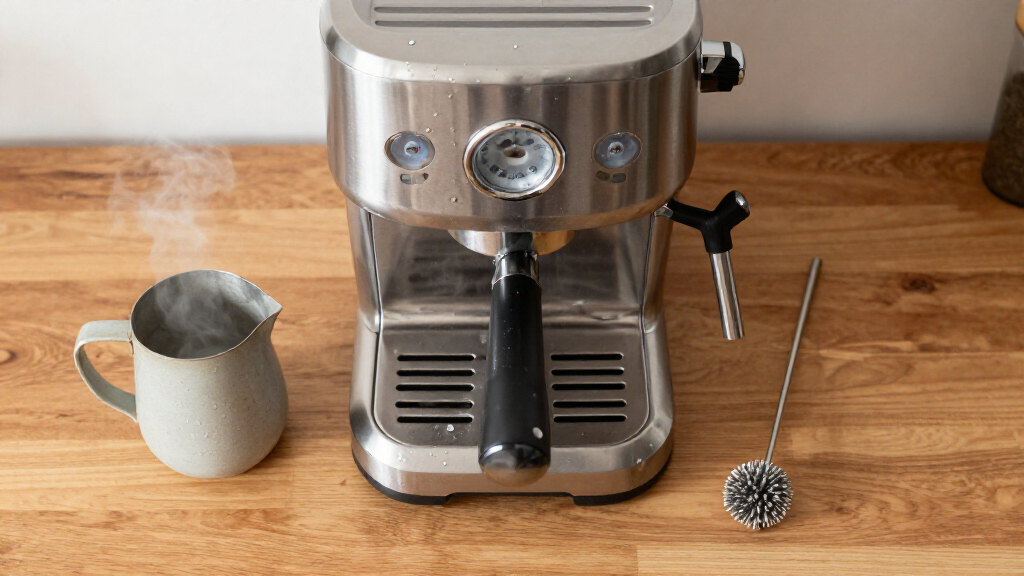
After steaming, wipe the wand with a clean damp cloth and briefly purge it into the drip tray, keeping the tip pointed away from your hands and face. This helps push milk residue out before it dries. If you notice a few sputters at first, that can be condensation clearing; persistent sputtering or a weak flow deserves a closer check. Regular wiping and a short purge take little time and reduce the chance that milk hardens in the tip, but they cannot clear deposits that have already collected deeper inside.
For a blocked tip, follow the machine’s instructions for cooling and removing it. Clean the holes only with the recommended tool. Don’t push a needle or other sharp object into the wand: you could widen or damage an opening, or push debris farther inside. Changing the shape of a hole can alter how steam exits and may affect steaming performance. For example, if one hole stops steaming after a cappuccino but the others still hiss, inspect and clean the tip as the manual describes before assuming the boiler needs repair.
A quick purge is useful for loose condensation, but it cannot remove heavy scale throughout the machine. If the tip looks clean and output remains weak, move on to the reservoir, machine maintenance guidance, and possible service rather than repeating a forceful cleaning. Repeated probing risks damage without telling you whether a valve or internal passage is restricted.
Hot steam can burn. Point the wand into the drip tray when purging, keep your hands clear of the tip, and let parts cool before handling them.
Check the water supply and the machine’s scale guidance
A low reservoir or restricted water supply can interfere with boiler operation, while mineral scale can narrow internal passages or affect heating and valves. Both may make a steam wand feel weak, but the right fix depends on the machine and the water it uses. Checking supply first is useful because it is simple and reversible; assuming scale too soon can lead to an unnecessary descaling cycle that some machines do not support.
Start with the simple check: fill the reservoir to the marked level and seat it firmly. If the machine connects to plumbing, check its stated supply requirements and any indicator it provides. For example, a reservoir that looks full but sits slightly out of position may not feed the machine as intended, so reseating it can be a useful first check. If the level is low, the machine may not have enough water to maintain normal operation; correcting that is a better first step than trying to make steam by opening the valve longer.
Scale builds as minerals in water collect inside heated parts. In a hard-water area, maintenance intervals may differ from those in a soft-water area, but there is no safe universal schedule for every model. Use the manufacturer’s directions for water and descaling, and check whether your machine permits owner descaling at all. Deposits may restrict water or steam passages and interfere with heat transfer, so scale is plausible when maintenance is overdue, but weak steam alone cannot identify it.
Use only a recommended descaling solution and procedure. Some machines need a specific sequence; others should be serviced rather than descaled at home. A warning light or a history of skipped maintenance can make scale more plausible, but neither proves that scale is the cause. An incorrect cycle can leave solution in parts of the machine or create problems the procedure is meant to prevent. If the machine’s instructions are unclear, ask the manufacturer or a qualified service provider before running a descaling cycle.
- Confirm the reservoir is filled and seated, or inspect the connected supply as directed.
- Check the manual for water and descaling recommendations.
- Record any warning lights and when the weak steam started.
Use this simple order to narrow down the cause
A few safe checks, done in order, can help you tell an ordinary recovery delay from a likely blockage or a machine fault. Start with what you can observe from outside the machine, and stop if you find signs of a leak, overheating, or another problem the manual says needs service. This order moves from low-risk checks that can explain temporary weakness toward issues that may need internal diagnosis, so you can avoid unnecessary disassembly or repeating a maintenance cycle without evidence.
- Wait for steam readiness. Follow the warm-up guidance for your model. Note whether the wand is weak only before the ready indicator appears. If it improves once ready, that points toward warm-up or recovery time.
- Purge briefly and safely. Point the wand into the drip tray and release a short burst to clear condensation or loose debris. A short purge may clear water left in the wand; prolonged purging wastes water and does not repair a blockage.
- Clean the tip as directed. Cool the machine first if the manual requires it, and use the recommended tool if the tip can be removed. Uneven flow from the holes makes a tip obstruction more likely.
- Check water supply. Fill and reseat the reservoir or check the machine’s plumbing supply instructions. A correct supply removes one basic cause from consideration.
- Review maintenance instructions. Descale only if the manufacturer permits it, using the specified method and solution. This protects the machine while addressing scale only where owner maintenance is appropriate.
- Compare when it happens. Note whether steam is weak only after brewing, when the machine is cold, or during every use. A repeatable pattern helps distinguish limited recovery from a persistent fault.
That last comparison can save time. If the wand works normally after a longer warm-up, you have useful evidence of a recovery delay. If it stays weak with a clean tip and a full reservoir, you can tell a service technician exactly what you checked rather than simply reporting, “It has no pressure.” This makes it easier to focus the service conversation on the remaining possibilities instead of starting again with basic checks.
Keep notes for two or three uses if the issue comes and goes. Write down the warm-up time, whether you brewed first, and any sputtering or warning lights. A clear pattern gives the technician more to work with and helps you avoid repeating maintenance steps that the machine may not need. It also lets you compare like with like: a small pitcher after a full warm-up is a fairer measure than a large pitcher immediately after brewing.
Know when weak steam points to a valve or boiler fault
Persistent weak steam after basic checks can point to an internal restriction, a faulty steam valve, or a boiler and heating problem. A worn seal or damaged valve may limit flow; a water-level, sensor, heating element, or control issue may stop the machine from producing enough steam. These parts work together to supply and regulate steam, so similar symptoms can come from different faults and usually cannot be distinguished safely by feel alone.
Patterns can offer clues, though they don’t confirm a specific failed part. A valve that feels unusually loose, leaks around its handle, or delivers an inconsistent flow may need service. A machine that fails to reach steam mode, shows repeated boiler warnings, or makes unfamiliar noises also deserves professional attention. The difference between a temporary delay and a fault is often whether the machine reaches readiness and then performs normally; repeated failure to do so suggests a heating or control issue that needs diagnosis.
For instance, if the wand stays weak after the machine reaches its ready state, the tip is clean, and the reservoir is correctly seated, further home troubleshooting may not be useful. The same goes for visible leaks or a machine that repeatedly loses heat. Describe those symptoms and the checks you already made when contacting the manufacturer or a qualified technician. This gives them a starting point for deciding whether to inspect the valve, boiler, or another component, without treating a single symptom as a definitive diagnosis.
Don’t open the machine to inspect a boiler, valve, or electrical connection unless you are qualified and the manufacturer’s service procedure allows it. Internal parts can hold hot water and steam, and the machine also contains electrical components. A screwdriver can turn a small steam problem into a burn or electrical injury. Stop, unplug only as the manual directs, and arrange service for persistent or hazardous symptoms.
Get service for persistent weak steam, leaks, repeated boiler warnings, unusual noises, or a machine that fails to heat. Those symptoms can point to internal parts that need model-specific repair.
Set expectations for steam capacity on your machine
Steam capacity varies by machine design, so a small home espresso machine may take longer to texture milk than a larger machine with a dedicated steam boiler. A steady hiss on a compact model can be normal even when it sounds less forceful than the steam at a café. Capacity affects how quickly the machine can supply steam and how long it can sustain that supply, so a slower session may reflect the machine’s limits rather than a defect.
How you use the wand matters, too. Open the steam valve only when the machine is ready, and position the tip according to the maker’s milk-steaming instructions. A pitcher that is too large or a tip placed poorly can make milk heat slowly and foam unevenly, which feels like weak steam even if the machine is delivering normally. Using a suitable pitcher and technique helps you judge the machine on a consistent basis instead of interpreting a difficult steaming setup as a pressure problem.
Suppose you steam a small pitcher successfully after a full warm-up, but struggle when you fill a much larger one right after pulling a shot. The machine may be working within its capacity; the second job asks for more milk and less recovery time. Try a pitcher size suited to the machine and give a single-boiler model time between brewing and steaming. The tradeoff is a slower workflow, but it helps separate expected recovery limits from a sudden drop in output.
That doesn’t mean you should dismiss a sudden change. Compare current performance with the machine’s usual output under similar conditions. If it once textured the same amount of milk reliably and now produces only a weak hiss, check for a blocked tip and review maintenance. The useful question is not whether your wand sounds like a café machine, but whether its output has changed for your setup.
Frequently Asked Questions
Can a clogged steam tip make the pressure feel weak?
Yes. Dried milk or mineral deposits can block some of the small tip holes and reduce steam flow. Cool and clean the tip according to your machine’s manual, and avoid forcing sharp objects into the holes.
Is weak steam caused by low espresso pump pressure?
Not necessarily. The brew pump pushes water through coffee, while the wand draws steam from the boiler. Check your manual to learn which pressure a gauge displays before using its reading to diagnose a steam problem.
How long should I wait before steaming milk?
Follow your machine’s steam-ready indicator and manual; warm-up and recovery times vary by design. A single-boiler machine may need time after brewing, while another model may use a separate steam boiler or thermoblock.
Does descaling improve weak steam?
It can help if scale is restricting the machine, but descaling won’t fix every cause of weak steam. Use only the method and solution approved for your model, since some machines require service instead of owner descaling.
Why does my steam wand spit water instead of producing steam?
A short burst of water or sputtering can happen as condensation clears from the wand. Purge briefly into the drip tray; if the wand keeps spitting or remains weak after the machine reaches steam mode, review the manual and seek service if the problem persists.
When should I stop troubleshooting and get service?
Arrange service if weak steam persists after model-safe checks, or if you notice leaks, unusual noises, repeated boiler warnings, or failure to heat. Internal repairs can expose you to hot water, steam, and electrical hazards.
Conclusion
Start with three checks: wait for steam readiness, clear the wand safely, and verify the water supply. Then follow the maintenance instructions for your model and note when the weak output happens.
If the wand still whispers after those checks, or the machine leaks, makes unusual noises, or won’t heat, arrange service. A healthy steam wand should finish with a steady hiss and milk that rolls in the pitcher like glossy paint.