
TL;DR

Get coffee and tea gear delivered free with Prime
- Fast, free delivery on millions of items
- Prime Video, Amazon Music and more included
- Member-only deals all year
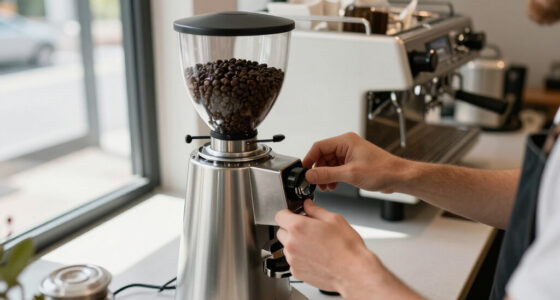
Flat burr grinders use two parallel discs to crush beans into grounds, and many models can produce a particle distribution that highlights distinct flavors in espresso. That clarity depends on the burrs, alignment, coffee, and recipe; flat burrs can also be louder and need regular cleaning, so compare the cup you want with the upkeep you will accept.
A grinder can make a strawberry note in your coffee pop—or bury it beneath a muddy, drying finish. Flat burr grinders get plenty of love from clarity fans because their two spinning discs can produce grounds that let distinct flavors stand out, especially in espresso. But a flat burr is not a flavor button: burr shape, alignment, coffee, and your recipe all affect what reaches the cup.
This guide explains what flat burrs do, why particle size matters, and how their flavor profile compares with conical burrs. You will also get a practical dial-in routine, cleaning advice, and a way to decide whether a flat burr grinder fits your counter and your brewing habits. If you are already comparing machines, the guide to flat burr espresso grinders for home brewing can help you explore the buying question.
Think of the goal as a clear window into the coffee, not a promise that every bean will taste bright. A chocolatey, heavy-bodied coffee can still taste delicious from flat burrs; the point is that you can better hear the individual notes when your grinder and recipe let them through.
Flat burrs grind coffee between parallel discs, but burr geometry and alignment shape the particle distribution.
More uniform grounds can help distinct coffee notes stand out, though beans, water, dose, and technique still shape the cup.
Use a fixed dose and change one variable at a time when dialing in espresso; record taste as well as shot time.
Brush away residue regularly, unplug before cleaning, and follow the grinder manual for deeper cleaning or tablets.
Choose a grinder by your brewing routine, noise tolerance, space, budget, and preferred cup—not by burr shape alone.
Brew science · Espresso guide
Flat Burr Grinders: Why Clarity Fans Love Them
Two parallel discs shape how coffee breaks apart. With a well matched burr set, alignment, coffee, and recipe, the cup can reveal distinct notes with a clean finish. The goal is control, not a guaranteed flavor button.
The key idea
“A clear window into the coffee—not a promise that every bean will taste bright.”
Particle distribution influences extractionClarity starts with the grind
Flat burrs crush beans between parallel discs. Their shape does not create flavor; it influences the mix of particle sizes that water extracts.
Finer particles have more exposed surface area and give up soluble compounds quickly. Larger particles extract more slowly. If a shot has a wide spread, fines may taste harsh or drying while larger pieces remain sour, hollow, or thin.
A more even distribution can make extraction easier to balance and distinct notes easier to pick out. The result depends on burr geometry, alignment, setting, coffee, water, dose, and preparation. A clean cup and an intensely fruity cup are related, but they are not the same.
Why particle size matters
Illustrative extraction pace: particle sizes release flavor at different rates. These bars explain the relationship, not measured grinder output.
What a shot can tell you
Flavor is a clue, not a diagnosis. Change one thing at a time and keep your coffee, dose, and preparation steady while you compare.
Check the extraction
Larger particles may release flavor slowly. A small grind adjustment can help, but recipe, water, and channeling can also affect the result.
Look for imbalance
Excess fines can extract quickly and contribute bitterness or astringency. Uneven water flow can create a similar mixed impression.
Keep a record
Note the setting, shot time, and taste. Repeatable adjustments tell you whether the grinder gives useful control over your preferred cup.
Example: A washed Ethiopian coffee may show lemon peel at first, then taste papery as it cools. Uneven extraction is one possibility; channeling, water, or an unsuitable recipe may also be involved.
Compare tendencies, not promises
Both burr types can make excellent coffee. Geometry, motor, alignment, and settings all shape what you notice.
| What you notice | Flat burr tendency | Conical burr tendency |
|---|---|---|
| Flavor impression | Often perceived as distinct, separated notes | Often perceived as rounded, blended notes |
| Sound and workflow | Can be louder; varies by motor and casing | Often quieter; models vary |
| Common appeal | Precise espresso adjustments and note separation | Fuller cup, quiet operation, compact home options |
| What matters most | Burr geometry, alignment, setting | Burr geometry, alignment, setting |
These are common impressions, not a quality ranking. A rounder shot can suit milk drinks; a more separated cup can make subtle notes easier to notice.
Dial in without chasing variables
Use a steady baseline, make small changes, and taste each shot before deciding what to adjust next.
Hold steady
Keep the coffee and dose fixed. Prepare the basket the same way each time.
Same starting pointAdjust grind
Move the setting in a small step. Change only one variable for the next shot.
One changeTaste first
Notice sweetness, clarity, sourness, bitterness, and finish alongside shot time.
Cup before clockLog and repeat
Record setting, dose, time, and taste. Keep the change if the cup improves.
Build repeatabilityChoose for your routine
Upkeep, sound, space, and budget are part of the cup. Burr shape alone cannot decide what belongs on your counter.
Keep the grind consistent
- Brush away coffee residue regularly.
- Unplug the grinder before cleaning.
- Follow the manual for disassembly, deeper cleaning, or cleaning tablets.
- Use a fixed dose and record settings when comparing shots.
Weigh the everyday details
- How much noise can your household tolerate?
- Will the grinder fit your counter and workflow?
- Does its grind range match your brewing methods?
- Does the cup you enjoy justify the budget and upkeep?
If precise espresso adjustment and distinct notes are priorities.
If a rounder cup, quieter operation, or compact setup suits you better.
How Flat Burrs Can Make Coffee Flavors Easier to Pick Out
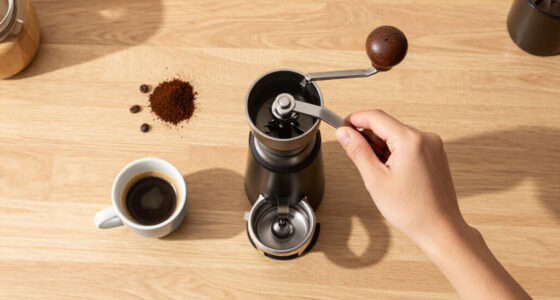
Flat burr grinders crush coffee between two parallel discs. The burrs do not create flavor; they determine how beans break apart, and that particle distribution influences how evenly water can extract the coffee. Many flat burr setups can produce a relatively narrow spread of particle sizes, which may make the cup taste more defined. The effect depends on burr geometry, alignment, and setting, so the label “flat” alone cannot predict the result.
Particle size matters because extraction happens at different speeds. Fines have more exposed surface area and give up soluble compounds quickly; larger particles release them more slowly. When a shot contains a wide spread, the fines may become over-extracted while larger pieces remain under-extracted. The resulting cup can combine harsh or drying sensations with sharp, hollow ones. A more even distribution can narrow that gap, making it easier to adjust the recipe toward a balanced extraction.
Imagine a washed Ethiopian coffee that tastes like lemon peel at first, then papery and harsh as it cools. That contrast may mean the shot is extracting unevenly, though channeling, water, or an unsuitable recipe could also be responsible. A small grind change on a well-aligned flat burr grinder may improve the balance, allowing the citrus note to remain without the rough finish. The practical benefit is greater control over the variables you can taste; it is not a guarantee that the coffee will taste brighter.
Clarity can mean that fruit and floral notes are easier to name, or simply that the finish is clean and free of muddiness. Those impressions are related but not identical: a cup can be clean without being intensely fruity. Beans, water, dose, and extraction shape both. If you prefer a dense, blended cup, the extra separation may not be an improvement. The useful question is whether you enjoy distinguishing notes and are willing to tune the recipe to bring them forward.
flat burr coffee grinder for espresso
As an affiliate, we earn on qualifying purchases.
As an affiliate, we earn on qualifying purchases.
What the Grind Looks Like Matters More Than the Burr Label
No grinder makes every particle the same size. It creates a distribution of fines, medium particles, and larger pieces, and the balance among them helps determine how water moves through the coffee. Fines extract quickly and can add intensity, but in excess may contribute bitterness or astringency. Larger particles extract more slowly and can leave sour or thin flavors if the shot ends before they have released enough. This is why two grinders set to produce similar average particle sizes can still make different cups.
Burr geometry affects how the beans are cut and what range of particle sizes results. One burr set may emphasize a tight distribution and a crisp impression; another may produce more fines and a cup with more body. Neither outcome is automatically better: extra body can make a milk drink feel richer, while a cleaner, more separated cup can help a straight espresso show subtle differences between coffees. Alignment also matters. If the discs sit unevenly, they may cut inconsistently, making settings less predictable and adjustments harder to repeat.
Imagine grinding the same 18 grams in two machines. One shot runs in 27 seconds and tastes sweet with a clear peach note; the other chokes at the same setting, then tastes both sour and dry after you adjust coarser. Burr shape could contribute, but it is not the only explanation. Retention can leave old grounds mixed into a dose, while poor distribution in the basket can create channels that let water bypass some coffee. These issues can make a capable burr set seem disappointing and can make comparisons between machines misleading.
To find out whether the grind is helping, keep the coffee, dose, and preparation steady and change one variable at a time. If the shot improves after a small grind change, record both the setting and what changed in the taste. That repeatability matters more than a grinder’s label: it tells you whether the machine gives you useful control over the cup you want.
best flat burr grinder for home brewing
As an affiliate, we earn on qualifying purchases.
As an affiliate, we earn on qualifying purchases.
How Flat and Conical Burrs Can Change Your Cup
Flat and conical burr grinders can both make excellent coffee. Their differences are tendencies shaped by burr geometry, motor, alignment, and settings, rather than reliable predictions from shape alone. Flat burrs often appeal to espresso drinkers seeking distinct notes and repeatable fine adjustments. Many conical designs are valued for a fuller, rounder cup and quiet operation. Those preferences describe common experiences, not a quality ranking.
| What you notice | Flat burr tendency | Conical burr tendency |
|---|---|---|
| Flavor impression | Often perceived as distinct, separated notes | Often perceived as rounded, with more blended notes |
| Sound and workflow | Can be louder; performance varies by motor and casing | Often quieter, though models vary |
| Common use | Popular for espresso and precise adjustment | Used across brew methods, often in compact home grinders |
| What matters most | Burr geometry, alignment, and setting | Burr geometry, alignment, and setting |
The flavor tradeoff can matter more than the shape itself. In a straight espresso, separated notes may help you notice a coffee’s fruit or florals; in a cappuccino, a rounder, heavier shot may hold its flavor against milk. If your morning routine involves making milk drinks while others are asleep, a quieter grinder and quick workflow may matter more than subtle flavor separation. If you enjoy tasting small differences between coffees, that separation may be worth the extra sound or cost.
Use the table as a starting point, then compare specific grinders. A conical grinder can make a remarkably clear cup, and a flat burr grinder can make a dense, chocolate-forward one. Your recipe can shift the balance too: dose, yield, and extraction change how much body and clarity you perceive. Decide which cup and routine you want first, then use the linked guide to home flat burr espresso grinders to explore machines that fit those priorities.
flat burr coffee grinder cleaning kit
As an affiliate, we earn on qualifying purchases.
As an affiliate, we earn on qualifying purchases.
Dial In a Flat Burr Grinder Without Chasing Every Variable
To dial in espresso, hold your dose and coffee steady, change grind size in small steps, and taste each shot before changing anything else. A numbered routine helps you learn whether a new setting improves flavor or just shifts the flow. Start with the coffee maker’s guidance and use shot time as a clue, not a universal target: the same time can taste different with another coffee, basket, or yield.
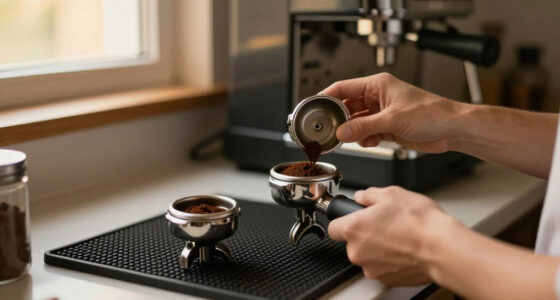
- Choose a dose and keep it fixed. For example, use 18 grams in the same basket for each test. A consistent dose keeps the amount of coffee in the basket from becoming a second explanation for changes in flow.
- Grind, distribute, and tamp the same way. Break up visible clumps and keep your tamp level. Uneven distribution can let water find a fast path through the puck, making a shot taste unbalanced even when the grind setting is suitable.
- Watch the shot and record the result. Note dose, yield, time, and taste; a phone note is enough. Time helps you spot a change in flow, while taste tells you whether that change improved the cup.
- Change grind size a little. If the shot gushes and tastes thin or sour, go finer; if it stalls and tastes harsh, go coarser. Move in small steps because a large change can overshoot the useful range and leave you unsure which direction helped.
- Taste and stop when the cup works for you. A balanced shot matters more than matching someone else’s seconds. A bright coffee may suit you with more acidity, while another drinker may prefer a rounder extraction.
For instance, your 18-gram dose may yield 36 grams in 20 seconds and taste sharp. A modestly finer setting could slow the shot, but if the next cup turns drying, the longer contact may have pushed extraction too far. Step back or adjust your yield and taste again. Keep water and distribution consistent so your grinder setting stays the main change.
Flat burr grinders can feel especially sensitive near espresso settings: a small movement may shift a shot from fast to slow. That sensitivity offers useful control, but it also means that large adjustments can make it easy to lose a good setting. Mark your usual setting for a daily coffee, then save another reference point for a second bean. A brief record helps you return to a familiar cup without preventing experimentation.
As an affiliate, we earn on qualifying purchases.
Keep Burrs Clean Without Turning Coffee Into a Chore
Regular cleaning helps a flat burr grinder keep its flavor and grind behavior steady. Old coffee oils and small fragments can cling around the burr chamber and chute, then mix into fresh grounds with a stale, rancid smell. Residue can also collect unevenly, so a grinder that has not been cleaned may dose or feed coffee less consistently. Brush away loose particles often and follow the manufacturer’s instructions before removing any parts.
A practical routine is simple: unplug the grinder, remove the hopper if your manual permits it, and brush accessible grounds from the chamber and chute. Use a dry, soft brush; do not pour water onto burrs or motor parts. Cleaning tablets can help with residue when the manufacturer approves them, but they do not replace periodic brushing or the manual’s directions. Keeping cleaning proportional to use avoids unnecessary disassembly, which can disturb burr alignment on some machines.
Picture your grinder after a month of switching between oily dark roast and a bright light roast. The chute holds crumbs from the darker beans, and the next espresso has a faint old-oil note that masks its fresh orange aroma. A quick brush between bean changes can reduce that carryover, especially if you single-dose and want each coffee to taste distinct. If you use one bean for weeks, residue is less likely to affect each cup noticeably, though it still builds up over time.
How often you need a deeper clean depends on use, roast, and grinder design. A household making one espresso a day may need less frequent disassembly than a busy kitchen grinding many doses. Cleaning more often can reduce flavor carryover, but cleaning too aggressively or forcing a burr carrier can cause damage or change alignment. Never reach into a powered grinder; use the manual, and let the machine cool before handling parts if it has been running continuously.
Decide Whether Clarity Is Worth the Counter Space
A flat burr grinder makes sense when you value fine espresso adjustment, repeatable grinding, and the chance to taste distinct coffee notes enough to accept its cost, sound, and cleaning routine. It may feel like overkill if you mostly brew large batches or use pre-ground coffee. The payoff depends on how often you will use its control: a grinder that fits your daily routine can improve many cups, while a technically capable machine that is awkward to use may sit idle.
Consider a weekend example: you buy a 250-gram bag of light roast, make two espressos each morning, and enjoy testing whether the cup tastes like peach or black tea. Fine control can make that ritual more rewarding because you can adjust a shot as the coffee changes with age. If you make a quick latte with the same medium roast every day, a quiet grinder, easy cleaning, and a small footprint may offer more value than subtle separation you rarely notice.
Before choosing, check the grinder’s espresso range, adjustment style, footprint, hopper or single-dose workflow, cleaning instructions, and noise. Stepless adjustment lets you make tiny changes, which can help when one setting is too fast and the next is too slow; stepped settings provide clear, repeatable clicks, though large steps may make dialing in a particular coffee harder. Digital timers and app controls may help with routine, but they cannot replace fresh beans or a sensible recipe.
Materials and motor design also vary. Steel or ceramic burrs, motor speed, and gear systems affect durability, heat, and sound in ways that depend on the whole machine. There is no reliable blanket claim that every flat burr grinder runs cooler than every conical grinder. Since taste preferences and household routines vary, judge the specific machine by its practical workflow and, if possible, by tasting coffee it has ground.
Frequently Asked Questions
Are flat burr grinders better for espresso?
Many flat burr grinders offer fine adjustment and consistent grinding that suit espresso, but burr shape alone does not make a grinder better. A well-made conical grinder can pull excellent shots too. Choose by adjustment range, workflow, and the cup you enjoy.
Do flat burr grinders always produce a clearer cup?
No. Some flat burr setups produce a particle distribution that many drinkers describe as clear, but burr geometry, alignment, coffee, water, and extraction all matter. Even with a capable grinder, a poor recipe can leave a shot sour, bitter, or muddled.
Can I use a flat burr grinder for French press?
Many flat burr grinders can grind coarse enough for French press, but check the model’s stated range and whether it performs well at coarser settings. For a weekend press pot, grind a small dose and look for an even bed with little powdery residue.
How often should I clean my flat burr grinder?
Brush loose grounds out regularly, with deeper cleaning frequency based on how much you grind, the roast level, and the grinder design. A daily espresso drinker may need to clean more often than someone who grinds once a week. Follow the manual and unplug the grinder before cleaning.
Are flat burr grinders louder than conical grinders?
They can be, but sound depends on the motor, speed, casing, and countertop as well as burr style. If you grind early while others are sleeping, look for a specific grinder’s noise information or listen to it in person before buying.
Conclusion
Remember this: flat burrs give you a tool for exploring coffee with more control, not a shortcut to a perfect cup. Keep your recipe steady, make small grind changes, and let the taste decide whether you are moving toward clarity or away from it.
When the grinder is clean and the shot is balanced, a quiet sip can reveal a bright berry note you missed yesterday. That is the pleasure clarity fans are chasing.
Fall Picks
fall essentials
As an affiliate, we earn on qualifying purchases.