TL;DR
A PID controller uses sensor feedback to help an espresso machine hold brew water near a chosen target temperature. It can make temperature adjustments and shot-to-shot results more consistent, but it does not guarantee that the displayed number matches the water at the coffee or fix problems with grind, puck preparation, or machine design. Judge the whole machine, not just the PID label.
A machine can display 93°C in bright digital numbers and still leave you guessing about the water that actually reaches your coffee. The display looks precise; the brewing system behind it is more complicated.
A PID controller helps an espresso machine regulate heat by responding to temperature readings, and that can make brewing more repeatable. But the feature is only one part of the machine. The sensor, boiler, group head, warm-up behavior, and your brewing habits all affect what happens in the cup.
This guide explains PID temperature control, explained for espresso buyers: what the letters mean, what you may gain, what the display can’t promise, and how to decide whether this feature is worth your money. You’ll also get practical questions to ask before buying, so you can compare machines without treating a digital screen as a guarantee of great espresso.
A PID uses sensor feedback and proportional, integral, and derivative responses to help regulate heating near a target.
A displayed temperature may be a target or a reading from inside the machine, not the water temperature at the puck.
Temperature adjustment can help you compare coffees and recipes when you keep grind, dose, and yield consistent.
Boiler and group-head design, sensor placement, warm-up behavior, and consecutive-shot performance matter alongside the PID.
Pay extra for a PID when you’ll use its adjustment or value its feedback; don’t let it outrank grinder quality or the machine’s overall performance by default.
BUYER’S FIELD GUIDE · ESPRESSO ENGINEERING
PID Temperature Control Explained for Espresso Buyers
A PID uses sensor feedback to help keep brew water near a chosen target. It can make temperature adjustments and shot-to-shot results more consistent—but a precise display is not a guarantee of precise water at the coffee.
The screen shows one point in a larger heating system. Sensor location and thermal design shape what reaches the puck.
01 / THE MECHANISM
What does a PID controller actually do?
It compares a sensor reading with a chosen target, then adjusts the heating element. The manufacturer usually sets the control behavior, so buyers do not need to tune the three components at home.
Responds to the gap
Reacts to the current difference between measured temperature and target. A larger gap calls for a stronger response.
Tracks what persists
Accounts for a temperature difference that continues over time, helping correct a stubborn offset.
Anticipates the trend
Responds to how quickly temperature changes, helping limit overshoot as the system approaches its target.
02 / IN THE CUP
How can temperature control change espresso?
A steadier starting condition can make recipe experiments easier to interpret. Temperature is one variable among many, and a hotter setting is not automatically better.
Cleaner comparisons
Water temperature affects how quickly coffee dissolves during extraction. More repeatable conditions can help you tell whether a small recipe change affected taste.
- Adjust the target more conveniently
- Reduce one source of temperature variation
- Experiment across coffees and recipes
The rest of the recipe
A PID does not make every coffee taste better or hold exact puck temperature throughout every shot.
- Grind, dose, yield, and puck preparation
- Pressure, beans, and roast style
- Machine design or inconsistent technique
If a shot tastes sharp, try a small temperature adjustment while keeping grind, dose, and yield fixed. Change several variables at once and you will not know which one helped.
03 / READ THE DISPLAY
What does that temperature really tell you?
A displayed number may be a programmed target or a sensor reading from the boiler. It is not automatically a direct measurement of water at the coffee puck.
One number, several points
Heat can shift as water moves through the machine. Sensor location, calibration, warm-up behavior, and thermal mass all affect how the displayed number relates to brewing conditions.
04 / BUY WITH CONTEXT
Is a PID worth paying extra for?
Consider how you brew and how the complete machine performs. The PID label alone does not establish accuracy or stability.
It may be worth it
You plan to adjust temperature when dialing in different coffees, or want a clear reference setting you can repeat.
Keep controls in view
More features can add complexity. Decide whether adjustable temperature and a display suit your routine.
Judge the system
Check boiler type and size, group-head design, warm-up behavior, adjustment range, and shot-to-shot consistency.
A SIMPLE BUYER’S RULE
Pay for useful feedback—not just bright digits.
Start with the machine’s recommended setting. Make small changes, taste the result, and keep the rest of your recipe steady. Prioritize grinder quality and overall machine performance for your needs.
What Does a PID Controller Actually Do?
A PID controller is an electronic system that uses temperature feedback to help an espresso machine keep its brew water near a chosen target. It compares a sensor’s reading with the target, then adjusts heating in response. In plain English, it watches the temperature, notices when it drifts, and tells the heater how to react.
The name stands for proportional, integral, and derivative, the three parts of that response. Proportional action reacts to the current gap between measured and target temperatures; integral action accounts for a gap that sticks around; derivative action responds to how quickly temperature is changing, helping limit overshoot. The manufacturer generally sets how those parts behave, so buyers don’t need to tune them at home.
Those three responses matter because heating a boiler is not instantaneous. If the controller reacts too slowly, the temperature can fall well below the target before the heater catches up. If it reacts too aggressively, stored heat may keep raising the temperature after the heater switches off. PID logic helps balance these effects, but it still depends on where the sensor is and how quickly heat moves through the machine. A boiler sensor, for example, can report a stable temperature while the group head is still warming or losing heat.
Think of the controller as a driver making small steering corrections rather than flooring the accelerator and slamming the brakes. A basic thermostat may switch a heater fully on or off as temperature crosses a threshold. A PID can make more measured corrections, which may reduce swings around the target, depending on the complete machine design. The practical benefit is a more controlled starting condition; the tradeoff is that a stable sensor reading does not necessarily mean every part of the brewing path is equally stable.
For example, if your machine’s sensor reports that the boiler is cooler than its target, the controller can ask the heating element to add heat. As the reading approaches the target, it can adjust its response. That feedback loop helps explain why a PID can support more consistent brewing conditions—but it does not mean every machine with the label behaves equally well.
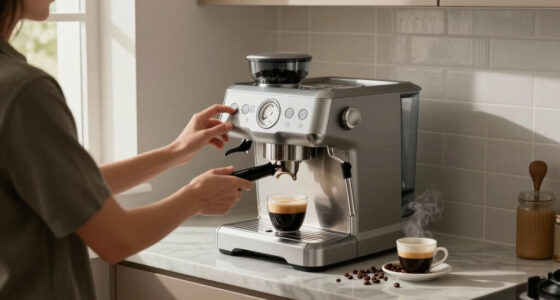
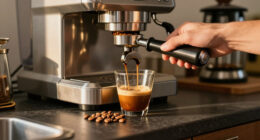
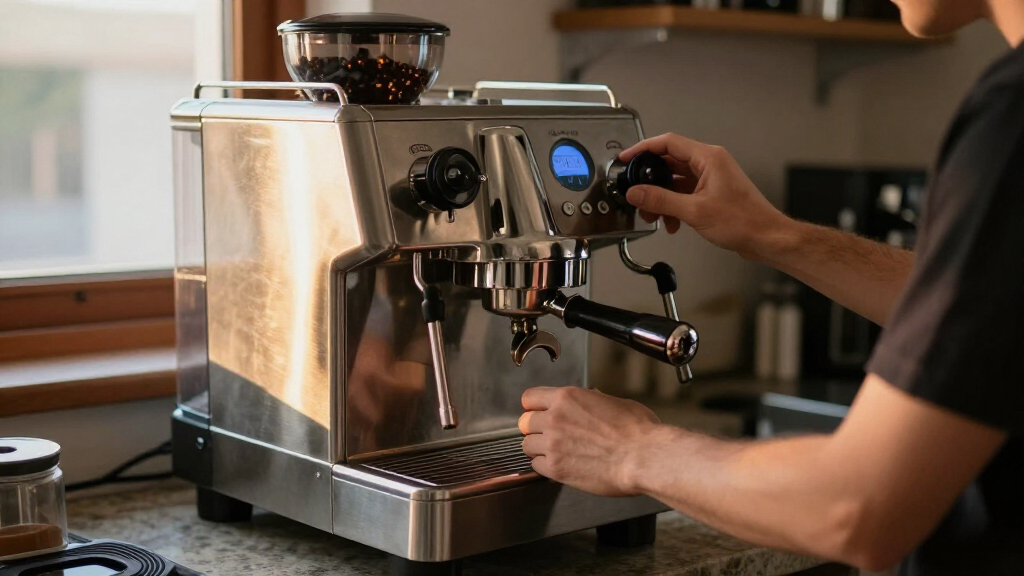
espresso machine with PID temperature control
As an affiliate, we earn on qualifying purchases.
As an affiliate, we earn on qualifying purchases.
How Can Temperature Control Change Your Espresso?
PID temperature control can help make espresso shots more repeatable by limiting temperature swings and letting you adjust the target more easily. Water temperature affects how quickly coffee dissolves during extraction, so changes can influence a shot’s balance and flavor. A steadier starting point makes it easier to tell whether a recipe adjustment—not an unnoticed heat fluctuation—changed the result.
Repeatability is especially useful because espresso is a small, concentrated drink: a modest change in extraction can be easy to taste, but hard to diagnose if several variables shift at once. When temperature is reasonably consistent, you can treat it as a controlled part of the recipe. That does not mean the machine holds the exact same temperature at the puck throughout every shot; rather, it can reduce one source of variation enough to make your experiments more informative.
That doesn’t mean a hotter setting always tastes better or that one number suits every coffee. Beans, roast style, dose, grind, yield, puck preparation, and pressure all play a part. Temperature is one variable in a crowded kitchen; it can’t rescue stale beans or a lumpy puck. Adjusting it also has a tradeoff: a change that improves one coffee may make another taste less balanced, and temperature alone can’t tell you whether the underlying issue was grind or extraction.
Imagine you’re dialing in a new coffee on Saturday. Your first shot tastes sharp, so you make a small temperature adjustment while keeping the dose, grind, and yield fixed. If the machine holds its conditions consistently, the next shot gives you a clearer comparison. If you also change the grind and pour a different yield, you’ve changed too many things to know what helped.
That’s the practical win: control and repeatability, not instant flavor magic. Temperature adjustment can be useful when experimenting with different coffees, but make small changes and keep the rest of your recipe stable. Start with the manufacturer’s recommendation, then judge the cup rather than chasing a number that looks impressive on a screen.
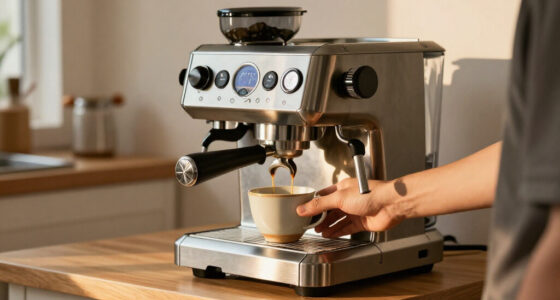
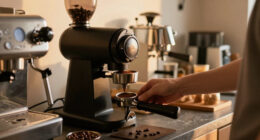
home espresso machine with digital temperature display
As an affiliate, we earn on qualifying purchases.
As an affiliate, we earn on qualifying purchases.
What Does the Temperature Display Really Tell You?
A temperature display tells you what the machine’s control system is set to show; it does not automatically tell you the exact temperature of the water at the coffee puck. The sensor may read the boiler or another point in the heating system, and water can change temperature as it travels through the machine toward the group head.
That distinction matters when you compare products. A display set to 93°C may be showing a target rather than a direct reading of the brewing water. Even when it reports a sensor measurement, that sensor’s location and calibration shape what the number means. The screen can look exact while describing only one point in a larger, moving system.
In practice, the reading is most useful as a reference for the machine’s own behavior, not as a universal guarantee of brew temperature. If a setting change reliably alters the machine’s output, it can still help you repeat a recipe even when you don’t know the exact puck temperature. But you should be cautious about comparing two brands’ displayed numbers as if they were measurements taken at the same place under the same conditions.
Machine design has a say, too. Boiler size and type, thermal mass, group-head design, sensor placement, and control software influence how heat behaves from one shot to the next. A well-designed machine without a prominently advertised display may perform differently from a machine whose PID setting sounds similar on paper. Thermal mass, for instance, affects how quickly a component heats or cools; group-head design affects whether that heat is retained as water moves toward the coffee. These details shape both stability and recovery between shots.
When you’re comparing options, look for independent temperature measurements when available, warm-up behavior, and performance across consecutive shots. Ask the maker what the display measures and whether it shows a target or sensor reading. For instance, if you often make two cappuccinos back to back, a machine’s behavior after the first shot may tell you more about your routine than a single temperature figure in a product description. Recovery matters because the first shot can draw heat from the system, and a machine that stabilizes well at rest may respond differently when asked to brew repeatedly.
As an affiliate, we earn on qualifying purchases.
How Should You Compare PID and Basic Temperature Control?
PID control and basic thermostat control are different ways to manage heat, but neither label tells you the full story of a machine’s temperature stability. A PID uses feedback to adjust heat around a target; a basic thermostat typically switches heating on or off around a set range. The practical result depends on the sensor, heater, boiler, water path, and control setup.
The difference in control can affect how the machine responds to heat loss. A thermostat’s wider on/off cycle may mean the boiler temperature moves through a broader range, while a PID can make more frequent, measured corrections. But a tightly controlled sensor reading is only useful if it represents the part of the system that matters during brewing. Poor thermal design, an inconvenient sensor location, or a group head that loses heat can limit the benefit of sophisticated control. Conversely, a well-designed machine with simpler controls may provide dependable results if its heating system and workflow suit your needs.
There is a tradeoff for buyers: PID controls often provide an easier way to adjust the target and see system feedback, but that convenience may cost more and can make a machine seem more precise than its brewing performance warrants. Basic control may offer fewer settings while still being adequate for a buyer with a stable routine. The extra control is most valuable when you’ll use it to make deliberate comparisons; if you prefer one familiar coffee and recipe, you may pay for flexibility you rarely need. Compare how the machine performs and fits your workflow, not just how advanced its control sounds.
| What you’re comparing | PID control | Basic thermostat control |
|---|---|---|
| How it responds | Uses sensor feedback to adjust heating around a target | Switches heating on or off around a set range |
| Temperature adjustment | Often allows easier changes through controls or a display | May offer fewer user adjustments |
| What the label proves | That the machine uses PID-style regulation—not exact temperature at the puck | That a thermostat manages heating—not how stable every shot will be |
| Buyer’s best evidence | Independent measurements, warm-up behavior, and repeated-shot performance | Independent measurements and the machine’s real-world temperature behavior |
Here’s a realistic choice: you make one espresso each morning and rarely change coffees. Easy operation may matter more to you than a screen that lets you adjust temperature. If you regularly switch beans and enjoy controlled recipe experiments, having an adjustable target could earn its place. Neither buyer needs to assume that a PID label alone settles the decision.
As an affiliate, we earn on qualifying purchases.
How Can You Decide If a PID Is Worth Paying Extra For?
A PID is worth paying extra for when you’ll use its temperature adjustment or value the repeatability it supports, and when the machine’s overall design backs up the feature. It may be a lower priority if you want a straightforward routine, rarely change coffee, or still need to invest in a capable grinder. Compare the real added cost with benefits you’ll notice in your kitchen.
- Start with your routine. Count how often you change coffees, recipes, or the number of shots you make in a row. Someone who experiments every weekend may use temperature adjustment more than someone who makes one familiar drink before work.
- Check what the display measures. Ask whether it shows a programmed target, a sensor reading, or something else. Find out where the sensor sits and look for independent measurements if they’re available.
- Look at the whole heating system. Consider boiler type and size, group-head design, warm-up time, and reported behavior during consecutive shots. The PID is one part of that picture.
- Compare priorities in your budget. A more capable grinder and sound puck preparation may help your espresso more than paying extra for temperature controls you rarely touch.
- Decide how much feedback you want. A display may help you understand and adjust the machine. Simpler controls may suit you better if you’d rather keep your routine easy.
These questions help distinguish useful control from attractive but unused flexibility. The value is not simply that a machine can display or change a number; it is whether that control helps you solve a problem you actually encounter. For a buyer who changes coffees and makes repeatable test shots, the ability to adjust temperature can shorten the process of finding a recipe. For someone whose main challenge is inconsistent grinding or rushed puck preparation, the same feature is unlikely to address the cause.
For example, suppose you’re choosing between spending extra on a PID or keeping that money for a grinder upgrade. If your current grinder produces uneven grounds and channeling, the controller won’t correct that. If you already have a reliable grinder and want to test different coffees at different settings, temperature adjustment could be a useful next step. Think about the opportunity cost: money spent on one feature can’t also go toward another part of the setup that may matter more to your daily results.
Modern home machines offer digital settings and PID-style control across different price ranges, but a feature name isn’t a performance test. Favor clear specifications and measured behavior over marketing language, and decide based on the cups you actually make.
What a PID Won’t Fix—and What to Ask Before You Buy
A PID won’t guarantee café-quality espresso, remove the need to warm up your machine, or replace good grinding and puck preparation. It manages heat using the machine’s control system; it can’t make every other part of the brewing process behave. Treat it as one useful tool, not a shortcut to a perfect shot.
That limit shows up quickly in real use. If your coffee runs too fast because the grind is too coarse, changing temperature won’t fix the flow. If you pull a shot while the machine is still warming, a PID display doesn’t erase the time the group head and other parts need to reach brewing conditions. A screen can indicate that one sensor is at its target while another component is still gaining heat, so follow the machine’s warm-up guidance rather than using the display as the only readiness check.
Workflow also depends on machine type. A PID may reduce the need to time shots around a simple thermostat’s heating cycle, sometimes called temperature surfing, but its presence doesn’t mean every machine is ready instantly. Some systems regulate a brew boiler, while dual-boiler or heat-exchanger designs manage brew and steam heat differently. Ask which part of the machine the controller regulates instead of assuming it controls both. The answer affects what the setting can change and whether it will matter for your usual mix of brewing and steaming.
Before buying, ask whether the machine allows user temperature changes, how it behaves across back-to-back shots, how long it takes to warm up, and what the temperature display represents. If you’re considering a PID retrofit for a machine without one, check model compatibility and talk with a qualified technician. Electrical modifications can create safety risks and may affect the warranty. The right questions turn a feature badge into useful buying evidence.
Frequently Asked Questions
Does a PID make espresso taste better?
A PID can help make brewing conditions more repeatable, and that can make recipe adjustments easier to judge. Whether the espresso tastes better depends on the coffee, machine, grinder, recipe, and your preferences. A controller won’t automatically improve a poorly prepared puck.
What temperature should I use for espresso?
There is no single temperature setting that suits every coffee and machine. Start with the manufacturer’s recommended setting, then make small changes while holding your dose, grind, and yield steady. Taste the results instead of assuming a higher number is better.
Is a PID the same as temperature stability?
No. A PID is one way to regulate heating; temperature stability also depends on sensor placement, the boiler, the water path, the group head, and the control software. The feature name alone doesn’t establish how consistent the machine is at the coffee.
Does the temperature on the display match the water at the coffee?
Not necessarily. The display may show a target or a reading from a sensor elsewhere in the heating system, and water can change temperature as it travels to the group head. Ask the manufacturer what the reading represents and look for independent measurements.
Do I need a PID for home espresso?
No. A PID can be handy if you want easier temperature adjustment or more repeatable control, especially when you change coffees and recipes. If you prefer a simple routine, it may matter less than a capable grinder and a machine that suits your brewing habits.
Can I add a PID to a machine that doesn’t have one?
Some machines can be modified, but compatibility depends on the model and the electrical design. Ask a qualified technician before attempting a retrofit; electrical work can create safety hazards and may affect your warranty.
Conclusion
Remember the useful distinction: a PID is a control method, not a guarantee of perfect brewing temperature. It can give you more convenient adjustment and help make conditions repeatable, but the sensor, boiler, group head, warm-up, and water path determine what reaches your coffee.
Before you buy, ask what the display measures and look for real-world evidence of how the machine behaves. Then choose the setup that suits your routine. The best feature is the one that helps you make a better cup on an ordinary Tuesday morning.