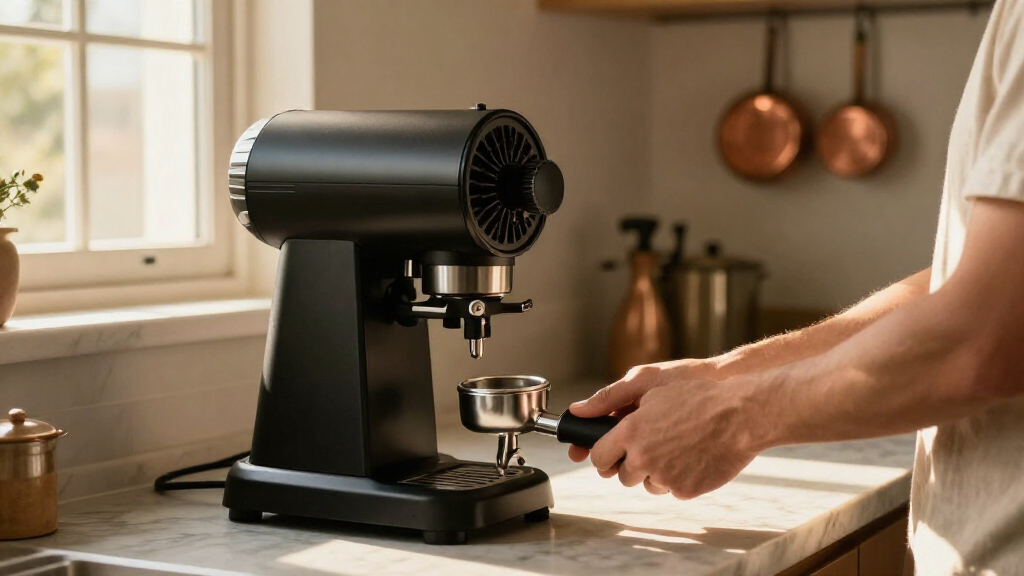

For most home baristas making decaf espresso, I’d start with the MiiCoffee DF54: its single-dose format suits switching between beans and dialing in smaller batches. The Eureka Mignon Zero is a strong alternative for a dedicated espresso setup, while the Breville Smart Grinder Pro offers a more guided path for beginners who want broad grind adjustment. The main tradeoff is between espresso-focused control and everyday convenience, with retention, workflow, and adjustment precision shaping how easily you can change decaf beans. A long list of settings alone does not guarantee fine control at espresso range. Read on for the full breakdown and a guide to choosing the right grinder for your setup.

Get coffee and tea gear delivered free with Prime
- Fast, free delivery on millions of items
- Prime Video, Amazon Music and more included
- Member-only deals all year
Complete the kit

Key Takeaways
- Single dosing leads this roundup for decaf flexibility: the MiiCoffee DF54 and Eureka Mignon Zero are the clearest fits for switching beans or grinding only what a shot needs.
- The MiiCoffee DF54 is the overall pick because its single-dose workflow makes it a practical match for espresso-focused decaf drinkers. The Eureka Mignon Zero is the more dedicated alternative for buyers who prioritize a focused espresso setup.
- The Breville Smart Grinder Pro favors guided versatility over a compact single-dose routine. Its broad adjustment approach makes it a more approachable choice for beginners also brewing coffee outside espresso.
- High setting counts do not settle the espresso question. Models such as the Tuni G1 and AMZCHEF advertise 48 settings, but buyers should value useful adjustment control at espresso range over the headline number.
- The lineup splits between espresso specialization and general convenience. The Fellow Opus, OXO Brew, and AAOBOSI offer different all-rounder approaches, while the DF54 and Eureka Mignon Zero put more emphasis on espresso-oriented dosing.


| grinders for decaf espresso | Dimensions | Brand | Model | Grind settings |
|---|---|---|---|---|
| AAOBOSI Espresso Coffee Grinde | 7.28 x 4.72 x 14.17 inches | AAOBOSI | CG223A | 45 |
| Eureka Mignon Zero Single Dose | 6.75 x 4.75 x 13.75 inches | Eureka | Mignon Zero | — |
| Fellow Opus 2 Conical Burr Cof | 7.95 x 5.12 x 10.49 inches | Fellow | 1222MB-NA | — |
| Tuni G1 Conical Burr Coffee Gr | 7.08 x 4.52 x 14.01 inches | Tuni | G1-S | 48 |
| OXO Brew Conical Burr Electric | 7.5 x 5.3 x 12.9 inches | OXO | 8722600 | — |
| MiiCoffee DF54 Single Dose Cof | 7 × 4.5 × 12 inches | — | — | — |
| Breville Smart Grinder Pro | — | — | — | 60 |
| AMZCHEF Burr Coffee Grinder | 7.4 × 5.1 × 13.4 inches | — | — | 48 |
More Details on Our Top Picks
AAOBOSI Espresso Coffee Grinder, Anti-Static, 45 Grind Settings, 40s Timer
The AAOBOSI earns its place for decaf drinkers who want espresso-capable control without dedicating much counter space. Its 45 grind settings span espresso through French press, and the 40-second timer with LED cup selector makes repeatable portions easier than manually stopping each grind. The anti-static design also helps limit the stray grounds that can make a small coffee station messy. Compared with the Eureka Mignon Zero, it offers a more straightforward timed workflow and broader everyday brew range, but not the same single-dose, low-retention setup for switching between beans. Its 200-watt motor is a drawback if you regularly grind large batches, and the listed settings do not promise the fine-grained stepless adjustment some espresso dial-in routines benefit from.
Pros:- 45 settings cover espresso and several non-espresso brew methods.
- Timer and LED cup selector support repeatable portioning.
- Anti-static design can reduce counter mess.
- Compact footprint suits small coffee stations.
Cons:- The 200-watt rating may mean slower grinding for large batches.
- Stepped settings offer less adjustment flexibility than the Eureka Mignon Zero’s stepless control.
Best for: Decaf espresso drinkers with limited counter space who also brew occasional drip or French press coffee.
Not ideal for: High-volume households or espresso enthusiasts who frequently switch beans and want a dedicated low-retention single-dose workflow.
- Brand:AAOBOSI
- Model:CG223A
- Grind settings:45
- Timer:Up to 40 seconds
- Burr type:Stainless steel conical
- Power:200 watts
- Dimensions:7.28 x 4.72 x 14.17 inches
- Voltage:120 volts
Our verdict“Choose the AAOBOSI for a compact, timed grinder that handles decaf espresso and varied brew styles, but skip it if batch speed or fine stepless tuning is a priority.”
Eureka Mignon Zero Single Dose Espresso Grinder, White
For decaf espresso, the Eureka Mignon Zero’s defining advantage is a workflow built around grinding a fresh, measured dose each time. Its 46g single-dose capacity and Blow Up hopper system are aimed at keeping leftover grounds from carrying into the next shot, a useful fit for drinkers who rotate between decaf and regular beans. The 55mm burrs and stepless micrometric adjustment also give more scope for fine espresso tuning than the AAOBOSI’s 45 stepped settings. Silent Technology is a welcome benefit for early-morning brewing, while the compact footprint keeps this capable grinder from dominating a counter. The tradeoff is hands-on dosing: unlike the OXO Brew, it does not prioritize a simple hopper-fed, one-touch routine. It also asks you to load beans for each grind.
Pros:- Low-retention Blow Up system helps limit stale grounds between doses.
- Stepless adjustment supports fine espresso dialing.
- 55mm professional burrs are larger than the 40mm burrs listed for the OXO Brew.
- Silent Technology reduces operating noise.
Cons:- Single dosing requires loading beans for each grind.
- The 46g capacity is less suited to grinding multiple large batches in one go.
Best for: Decaf espresso drinkers who alternate beans or want to grind a measured fresh dose for each shot.
Not ideal for: People who want to fill a hopper and grind several portions with minimal hands-on steps.
- Brand:Eureka
- Model:Mignon Zero
- Burr size:55mm
- Dose capacity:46g
- Adjustment:Stepless micrometric
- Voltage:120 volts
- Dimensions:6.75 x 4.75 x 13.75 inches
- Origin:Made in Milan, Italy
Our verdict“Pick the Mignon Zero if fresh, controlled single doses matter more than hopper convenience and you want stepless espresso adjustment.”
Fellow Opus 2 Conical Burr Coffee Grinder
The Fellow Opus 2 is a strong fit for decaf drinkers who want to tune espresso and still use one grinder for other brewing methods. Its stepless adjustment offers more continuous control than the AAOBOSI’s numbered settings, while near-zero retention helps reduce old grounds carrying into a fresh decaf dose. Anti-static technology and two magnetic catch cups also suit a tidy, flexible workflow. Compared with the Eureka Mignon Zero, the Opus 2 is described as a broader brew-method grinder rather than a single-dose espresso specialist; that flexibility can appeal if espresso is only part of your routine. The listed details do not include burr speed, hopper capacity, or motor power, so buyers seeking those benchmarks have less information to work with. Its 48mm burrs are smaller than Eureka’s 55mm set.
Pros:- Stepless adjustment supports continuous grind tuning.
- Near-zero retention helps reduce stale grounds between doses.
- Anti-static technology can limit cleanup.
- Two magnetic catch cups provide included options for collecting grounds.
Cons:- 48mm burrs are smaller than the Eureka Mignon Zero’s 55mm burrs.
- The supplied product data does not specify hopper capacity or motor power.
Best for: Home brewers who make decaf espresso alongside other brew styles and value stepless control with low grounds carryover.
Not ideal for: Buyers who want published capacity and motor specifications, or who prioritize the larger burr size listed for the Eureka Mignon Zero.
- Brand:Fellow
- Model:1222MB-NA
- Burr type:Conical
- Burr size:48mm
- Adjustment:Stepless
- Dimensions:7.95 x 5.12 x 10.49 inches
- Warranty:2 years
- Included catch cups:2 magnetic catch cups
Our verdict“Choose the Opus 2 if you want one low-retention, stepless grinder for decaf espresso and several other brew methods.”
Tuni G1 Conical Burr Coffee Grinder with 48 Grind Settings, Silver
The Tuni G1 is the most workflow-focused choice here for decaf espresso drinkers who want grounds delivered straight into a portafilter. Its detachable holder fits 54–58mm portafilters, avoiding an extra transfer from a catch cup, and the timer adjusts in half-second steps for more controlled portions than the AAOBOSI’s broad 40-second timer description. A 250g hopper also makes it more convenient for keeping beans ready than the Eureka Mignon Zero’s single-dose routine. The compromise is that a larger hopper is less tailored to people who alternate decaf and regular beans and want minimal carryover. Its 40mm burrs are smaller than the Fellow Opus 2’s 48mm burrs, and the 250g capacity may still call for refills in high-volume use.
Pros:- Detachable holder supports direct dosing into compatible portafilters.
- Timer adjusts in 0.5-second increments up to 40 seconds.
- 250g hopper holds more beans than the Eureka Mignon Zero’s 46g single-dose capacity.
- Compact dimensions and anti-static conical burr design suit a home coffee station.
Cons:- A hopper-fed workflow is less suited to frequent bean changes than the Eureka Mignon Zero’s single dosing.
- The 250g hopper may need frequent refills for high-volume use.
- 40mm burrs are smaller than the Fellow Opus 2’s 48mm burrs.
Best for: Decaf espresso drinkers with a 54–58mm portafilter who want timed, direct-to-basket dosing and a ready-to-use hopper.
Not ideal for: People who switch beans frequently and prefer a low-retention single-dose setup, or households grinding large volumes throughout the day.
- Brand:Tuni
- Model:G1-S
- Grind settings:48
- Burr size:40mm
- Hopper capacity:250g
- Grounds container capacity:75g
- Portafilter compatibility:54–58mm
- Dimensions:7.08 x 4.52 x 14.01 inches
Our verdict“Choose the Tuni G1 if direct portafilter dosing and a larger bean hopper fit your routine better than a single-dose grinder.”
OXO Brew Conical Burr Electric Coffee Grinder, Matte Black
The OXO Brew suits decaf drinkers who want a familiar hopper-fed routine instead of measuring beans for every shot. Its 15 settings plus 43 micro-adjustments give more tuning steps than a basic coarse-to-fine dial, and the one-touch start remembers the previous setting to make repeat brewing less fiddly. The 12-ounce UV-blocking hopper is a practical advantage for keeping beans on hand, while its DC motor is described as helping prevent overheating. Compared with the Eureka Mignon Zero, the OXO favors stored-bean convenience over single-dose freshness and low retention; buyers who frequently switch between decaf and regular coffee may prefer Eureka’s dose-by-dose approach. The product data does not identify a dedicated portafilter holder or retention system, so espresso users seeking direct dosing or minimal carryover have less specific support here.
Pros:- 15 settings and 43 micro-adjustments offer multiple grind-size steps.
- One-touch start remembers the previous setting.
- 12-ounce UV-blocking hopper holds beans ready for regular use.
- DC motor is described as helping prevent overheating.
Cons:- The hopper-fed format is less convenient than the Eureka Mignon Zero for frequent bean changes.
- The supplied details do not specify a portafilter holder or a low-retention system.
Best for: Decaf drinkers who want a hopper-fed grinder with remembered settings and enough adjustment steps to tune home espresso.
Not ideal for: Bean-switchers who want a low-retention single-dose workflow or espresso users who specifically need direct portafilter dosing.
- Brand:OXO
- Model:8722600
- Burr type:Conical
- Burr size:40mm
- Grind adjustment:15 settings plus 43 micro-adjustments
- Hopper capacity:12 ounces
- Voltage:120 volts
- Dimensions:7.5 x 5.3 x 12.9 inches
Our verdict“Pick the OXO Brew if you prefer stored beans and a repeatable one-touch routine over the freshness-focused workflow of a single-dose grinder.”
MiiCoffee DF54 Single Dose Coffee Grinder (Black)
For decaf espresso, low retention has a practical payoff: less old coffee stays in the grinder to mingle with a fresh, carefully measured dose. The DF54’s stated retention of under 0.1 g, paired with its plasma generator, suits people who switch beans often or grind only one or two shots at a time. Its stepless adjustment gives finer control for dialing in espresso than the Breville Smart Grinder Pro’s set steps. The anti-popcorn disc and revised chute are aimed at keeping beans moving consistently. This is a more focused espresso choice than the AMZCHEF, which prioritizes broad brew-method settings and a larger hopper. The tradeoff is a single-dose workflow rather than convenient stored-bean capacity, and its plastic dosing cup may feel less durable than metal alternatives.
Pros:- Stated retention below 0.1 g helps keep measured doses consistent.
- Plasma generator is designed to reduce static cling and messy grounds.
- Stepless adjustment supports precise espresso dialing.
- Anti-popcorn disc helps limit bean jumping during single-dose grinding.
Cons:- Single-dose design is less convenient than a hopper for repeated batches.
- The included transparent plastic dosing cup may be less durable than metal cups.
- At 10 pounds, it is heavy for a compact grinder.
Best for: Decaf espresso drinkers who weigh individual doses, change beans frequently, and want minimal retained grounds.
Not ideal for: Households that want a full hopper and quick, repeatable batch grinding across several brew methods.
- Burrs:54 mm flat stainless steel
- Adjustment:Stepless
- Retention:<0.1 g
- Static control:Plasma generator
- Material:Aluminum
- Dimensions:7 × 4.5 × 12 inches
- Weight:10 lb
- Included accessories:Bellow, wood lid, plastic dosing cup, rubber adapter, and manual
Our verdict“Choose the DF54 if minimizing retained coffee and making precise, freshly measured decaf espresso doses matter more than hopper convenience.”
Breville Smart Grinder Pro (BCG820BSS) – Brushed Stainless Steel
The Smart Grinder Pro is the most approachable choice here for someone who wants to make decaf espresso without committing to a single-dose routine. Its 60 grind settings and timer adjustable in 0.2-second increments make it easier to repeat a dose, while the LCD and direct-to-portafilter option keep the workflow straightforward. Compared with the MiiCoffee DF54, it trades stepless fine-tuning and very low stated retention for more preset structure and a larger bean hopper. That can suit a household that uses the same decaf regularly, though the DF54 is better equipped for frequent bean changes and carefully weighed doses. The Breville’s range also covers filter brewing, but its relatively large countertop footprint is a drawback, and its stepped settings may offer less precise espresso adjustment than a stepless grinder.
Pros:- Sixty grind settings provide options across espresso and coarser brew methods.
- Timer adjusts in 0.2-second increments for repeatable timed doses.
- LCD and direct grinding options support a guided, flexible workflow.
- 18 oz hopper suits users who prefer keeping beans loaded.
Cons:- Stepped settings offer less continuous adjustment than the MiiCoffee DF54.
- Relatively large footprint can take up valuable counter space.
- The listed specifications do not state a retention figure for dose-focused buyers.
Best for: Decaf drinkers new to dialing in espresso who want timed dosing and one grinder for espresso and other brew methods.
Not ideal for: Single-dose espresso makers with limited counter space or anyone prioritizing stepless adjustment and minimal retention.
- Burr type:Conical
- Grind settings:60
- Timer adjustment:0.2-second increments
- Hopper capacity:18 oz
- Display:LCD
- Power:165 W
- Voltage:110–120 V
- Warranty:2-year limited
Our verdict“Pick the Breville if you want a guided, programmable grinder for regular decaf espresso and multiple brew methods rather than a compact single-dose setup.”
AMZCHEF Burr Coffee Grinder, 48 Settings, Metallic Silver
The AMZCHEF makes the most sense for decaf drinkers who want espresso capability alongside French press or cold brew, not a grinder devoted mainly to espresso dialing. Its 48 settings, touchscreen cup controls, and timed or manual modes offer flexible operation, while the anti-static design aims to keep grounds from scattering. Against the MiiCoffee DF54, it has a simpler, broader-brew setup rather than stepless adjustment and a stated near-zero-retention design. Its 10.6-ounce hopper also favors keeping beans ready, unlike the DF54’s single-dose approach. The AMZCHEF is lighter at 5.4 pounds, but the listed information does not specify retention or fine espresso adjustment increments, leaving less assurance for precise shot-to-shot dialing. The hopper may also be more capacity than a solo decaf drinker needs.
Pros:- Forty-eight settings cover a range of brewing methods.
- Touchscreen controls offer cup quantities, timed grinding, and manual operation.
- Anti-static design is intended to reduce clinging grounds and spills.
- Removable, UV-tinted hopper holds up to 10.6 oz of beans.
Cons:- No retention figure is provided, unlike the MiiCoffee DF54’s stated under-0.1 g retention.
- The listed settings and controls do not specify stepless espresso adjustment.
- The hopper may be larger than needed for people grinding occasional single doses.
Best for: Decaf drinkers who alternate between espresso and coarser methods and prefer touchscreen controls with a bean hopper.
Not ideal for: Espresso-focused single-dose users who need stated low retention or stepless control for fine adjustments.
- Burrs:40 mm stainless steel conical
- Grind settings:48
- Hopper capacity:10.6 oz
- Controls:LED touchscreen; 2–12 cups; manual mode
- Timer:Up to 40 seconds, 0.5-second accuracy
- Power:150 W
- Dimensions:7.4 × 5.1 × 13.4 inches
- Weight:5.4 lb
Our verdict“Choose the AMZCHEF if you want one touchscreen grinder for decaf across several brew methods, but look to the DF54 for a more espresso-specific single-dose workflow.”

How We Picked
I ranked these grinders around the needs that make decaf espresso different from a one-bean, set-and-forget routine: changing beans, making small doses, and adjusting grind size as a coffee behaves differently. I considered espresso suitability, the usefulness of the adjustment approach, dosing workflow, versatility, build and cleaning implications, and how clearly each model fits a buyer type. Product names and advertised features helped identify their intended use, but a large number of settings alone did not earn a higher place.
The MiiCoffee DF54 ranks first for its single-dose format and espresso-focused role; the Eureka Mignon Zero follows as a more dedicated alternative. I placed the Breville Smart Grinder Pro ahead of general-purpose options for buyers who want a more guided, flexible routine, while the remaining grinders are differentiated by their balance of espresso ambition, simplicity, and all-purpose use. The rankings reflect fit for decaf espresso, not a claim that every grinder will perform identically with every bean or machine.
| grinders for decaf espresso | Brand | Burr type |
|---|---|---|
| AAOBOSI Espresso Coffee Grinde | AAOBOSI | Stainless steel conical |
| Eureka Mignon Zero Single Dose | Eureka | — |
| Fellow Opus 2 Conical Burr Cof | Fellow | Conical |
| Tuni G1 Conical Burr Coffee Gr | Tuni | — |
| OXO Brew Conical Burr Electric | OXO | Conical |
| MiiCoffee DF54 Single Dose Cof | — | — |
| Breville Smart Grinder Pro | — | Conical |
| AMZCHEF Burr Coffee Grinder | — | — |
Factors to Consider When Choosing Best Grinders For Decaf Espresso
Choosing a grinder for decaf espresso is less about finding the biggest feature list and more about matching your dialing-in habits to the grinder’s workflow. I’d decide how often you change beans, how much adjustment you want to manage, and whether the grinder will serve other brew methods before choosing a model.
Decide How Often You’ll Change Beans
If you rotate between decaf and regular coffee, think about the time and effort required to switch, not just the grinder’s stated capacity. A single-dose routine lets you weigh each portion separately and avoids committing to a large hopper full of one coffee. That flexibility can make dialing in a new decaf less wasteful, though it asks you to weigh beans and manage each dose yourself. A hopper-based routine is simpler when you use the same coffee repeatedly, but changing beans may mean clearing out what remains. The common mistake is choosing a single-dose grinder for convenience when you actually prefer to pour beans in and grind on demand. Match the workflow to how you brew on a typical morning.
Prioritize Useful Espresso Adjustment, Not a Big Setting Count
Espresso often needs small grind changes, so a grinder’s control near the fine end matters more than the total number printed on the box. A count of 45 or 48 settings does not explain how much each step changes the grind or whether the adjustment feels manageable for your machine and coffee. When possible, check how the grinder adjusts and whether it is intended to handle espresso rather than relying on a setting count. Very small changes can help when a shot runs too fast or too slow, but they also mean more hands-on dialing in. If your espresso machine has limited control, a highly granular grinder may not solve every brewing problem by itself. Choose control that fits your skill level and willingness to tune shots.
Account for Decaf’s Changing Behavior
Decaf coffees are not one uniform category: roast style, processing, age, and bean composition can all affect how a coffee grinds and extracts. That means a grinder that works for one bag may need adjustment for the next, even if both are labeled decaf. Plan for a short dialing-in process rather than expecting a fixed setting to work with every coffee. Keep a simple note of grind setting, dose, and shot result so a new bag does not send you back to guesswork. Do not treat a grinder as a replacement for adjusting the dose or your espresso machine’s recipe when shots taste unbalanced. Buyers who frequently try new decafs may benefit more from a flexible adjustment routine than from a preset they rarely change.
Weigh Single-Dose Control Against Routine Convenience
Single dosing makes it easier to measure each shot and swap beans, but it is not automatically the easiest option. You need to weigh coffee, load it, and handle any remaining grounds as part of the routine. A hopper can save those steps when you stick with one coffee, though beans stored in it may be less convenient when you want to change to a different decaf. Think about whether you make one espresso at a time or several drinks in succession, since those habits can change which workflow feels smoother. A grinder designed around one routine may frustrate someone who expects the other. Choose the one that fits your actual preparation habits, not an imagined ideal routine.
Pay for the Kind of Flexibility You’ll Use
Spending more makes sense when a grinder’s workflow solves a regular problem, such as frequent bean changes or a dedicated espresso setup. It makes less sense to pay for broad versatility if you only make espresso and rarely change coffee. Conversely, a dedicated model may feel limiting if you want to grind for several brew methods without maintaining separate equipment. Before choosing, list the jobs the grinder must do and mark which ones happen every week. Prioritize build and adjustment features that support those jobs over extras you are unlikely to use. This avoids the common trap of buying for specifications rather than the routine the grinder needs to support.
Frequently Asked Questions
Do I need a dedicated espresso grinder for decaf?
Not always, but the grinder needs to adjust finely enough for your espresso setup and the coffees you buy. A dedicated espresso model makes sense if espresso is your main brew method and you want a focused workflow. If you also make filter coffee or want one grinder for several methods, a more versatile model may fit better. Check the grinder’s adjustment range and intended use rather than assuming every burr grinder can handle espresso well. Your machine, basket, and coffee all affect how much control you need.
Is a single-dose grinder worth it if I switch between decaf brands?
It can be, especially if you change coffees often and want to weigh each dose instead of keeping one bean in a hopper. That format makes the bean-switching routine more direct, but you take on the weighing and loading steps yourself. If you use one decaf for weeks at a time, a hopper-based workflow may be less fussy. Think about how often you change beans and whether you enjoy measuring each portion. The benefit is flexibility, not a guarantee that dialing in will require no adjustment.
Should I choose the DF54 or Eureka Mignon Zero for decaf espresso?
Both are single-dose options in this roundup, so the decision comes down to how you want the grinder to fit your espresso setup. The MiiCoffee DF54 earns the overall position for its practical single-dose match to changing decaf coffees. The Eureka Mignon Zero is the better fit if you want a more dedicated espresso-oriented choice. Compare their workflow, available space, and the kind of adjustment process you prefer before deciding. Neither eliminates the need to dial in each new coffee.
Can a grinder with 48 settings make espresso as well as one with fewer settings?
A higher setting count does not automatically mean better espresso adjustment. What matters is whether the grinder gives you useful control at the fine end and whether its steps suit your machine and coffee. A smaller number of well-spaced settings can be easier to use than a longer list that does not provide the adjustments you need. Treat the advertised count as one detail, not a performance verdict. If espresso is the priority, verify that the model is intended for espresso use and consider the adjustment mechanism.
Is the Breville Smart Grinder Pro a sensible first grinder for decaf espresso?
It can suit a beginner who wants one grinder for espresso and other coffee methods, with a more guided approach than a dedicated single-dose setup. It is less tailored to someone who wants to weigh individual doses and change decaf beans often. Before buying, check that its espresso adjustment range fits your machine, since grinder and machine compatibility both shape the result. A new espresso drinker should also expect some trial and error as each coffee behaves differently. Choose it for its flexible routine rather than assuming a versatile grinder removes the need to practice dialing in.
Conclusion
My best overall pick is the MiiCoffee DF54 for decaf drinkers who want a practical single-dose espresso routine. For a best premium, dedicated-espresso direction, choose the Eureka Mignon Zero if its focused workflow suits your setup. The best beginner choice is the Breville Smart Grinder Pro for someone who values versatility and a more guided routine, while the best value depends on your priorities: the AAOBOSI, Tuni G1, and AMZCHEF are worth comparing if you want broad stated adjustment options without making single dosing the center of your routine. If you want an all-purpose alternative, compare the Fellow Opus and OXO Brew against your espresso needs before choosing. In short, pick the DF54 for bean-switching flexibility, the Eureka for a dedicated espresso role, and the Breville for a broader first-grinder routine.