TL;DR

Get coffee and tea gear delivered free with Prime
- Fast, free delivery on millions of items
- Prime Video, Amazon Music and more included
- Member-only deals all year
Decaf espresso can grind and extract differently because decaffeination changes more than caffeine: it can affect bean structure and soluble compounds, while roast, freshness, grinder, and puck preparation also shape the shot. Start with your familiar espresso recipe, then adjust one variable at a time based on flow and taste. Good decaf can be sweet and expressive, but it still contains small amounts of caffeine.
Your regular espresso recipe can suddenly choke when you switch to decaf, even if the beans look almost identical. Or the shot can race into the cup and taste thin. Decaf espresso is not simply regular coffee with the caffeine removed; the bean’s journey through processing, roasting, grinding, and brewing can change how it behaves.
That difference can be frustrating when you just want a dependable morning shot. But you can make sense of it without treating decaf like a mystery or assuming it always needs a coarser grind. This guide explains why decaf may grind and extract differently, how freshness and flavor fit into the picture, and what to adjust when your shot surprises you.
Think of switching coffees like changing from one pair of shoes to another: your usual route is the same, but the fit changes how you move. With a few measured tweaks, you can find a recipe that brings out the best in the beans. First, it helps to understand what decaffeination actually changes.
Treat decaf as its own coffee: decaffeination may alter bean structure and soluble compounds.
Decaf may produce more fines and slow a shot, but the direction depends on the coffee, grinder, roast, dose, and puck preparation.
Begin with your familiar dose and yield, then change one variable at a time based on flow and taste.
Freshness, green-coffee quality, roast, and storage can shape flavor as much as the decaffeination method.
Decaf contains substantially less caffeine than regular coffee, but small amounts usually remain.
Why Decaf Espresso Behaves Differently
Decaf can choke your familiar recipe or race through the basket. Decaffeination may change bean structure and soluble compounds, while roast, freshness, grinder, and puck preparation shape what happens next.
Decaffeination changes more than the caffeine in your cup
Processors work with green coffee using water, solvents such as ethyl acetate or methylene chloride, or supercritical carbon dioxide. These methods aim to retain flavor, but the bean is not necessarily left physically untouched. The result depends on both the coffee and the process; no method guarantees the best flavor.
Several familiar routes
Water-based, carbon-dioxide, and sugarcane-derived ethyl acetate processes are all used in specialty decaf. Treat them as options, not a quality ranking.
Structure can shift
Decaf beans may be more porous or brittle. A grinder can create more tiny particles, called fines, from some coffees.
Quality travels through
Green-coffee quality, careful roasting, freshness, storage, and brewing all contribute to the flavor in the cup.
Flow is a clue, not a rule
The same recipe can behave differently when you switch coffees—even when the beans look similar. A slow shot does not prove every decaf needs a coarser grind, and a fast shot does not prove every decaf needs a finer one.
| What you see | Possible signal | Small first move |
|---|---|---|
| ~ Barely drips or runs harsh | Too much resistance in this dose and puck | Try a slightly coarser grind; check even distribution. |
| ~ Gushes and tastes thin or sour | Flow may be too quick for this setup | Try a slightly finer grind; hold other settings steady. |
| ✓ Different time, balanced taste | This coffee may simply extract differently | Keep the recipe if the cup tastes good. |
Why flow can change
Illustrative relationships, not measured percentages or a prediction for every decaf.
Flavor is not a category rule
Perceived brightness, body, and aroma vary. Quality and preparation remain part of the equation.
Bars show areas to consider, not measured flavor scores. A well-selected, carefully roasted decaf can taste sweet, balanced, and expressive.
Dial in decaf with four small, measured changes
Start with your familiar dose and yield. Keep them steady while you adjust the grind, then tune the yield only after the flow is close. Taste before chasing a target shot time.
- 1Set a baseline
Use your usual dose
For example, record 18 g in and 36 g out, plus the shot time and taste.
- 2Watch the flow
Choose a direction
Choking or harsh? Try coarser. Gushing and thin? Try finer.
- 3Change one thing
Keep the rest still
Adjust the grinder first. Even distribution and puck prep matter too.
- 4Taste & record
Keep what works
Once flow is close, tune yield for sharp, bitter, or heavy flavors. Note the result.
Flavor begins before espresso reaches the basket
Decaf can seem less bright, full, or aromatic, but that is not universal. Freshness matters: buy recently roasted beans, store them airtight away from heat and light, and freeze portions only when they can stay well sealed. If a shot tastes hollow, check the recipe and freshness before blaming caffeine removal alone.
Decaf means less caffeine, not necessarily none
Small amounts usually remain, and the amount in a shot varies with the coffee, serving size, and preparation. Anyone who must avoid caffeine completely should not assume decaf contains zero caffeine. Treat each decaf as its own coffee: start from what you know, observe the shot, and let the cup guide the next small adjustment.
Decaf Changes More Than the Caffeine in Your Cup
Decaf espresso can differ from regular espresso because caffeine removal may also affect some soluble compounds and the bean’s physical properties. Processors work with green coffee before roasting, using water, solvents such as ethyl acetate or methylene chloride, or supercritical carbon dioxide to remove caffeine. These methods aim to retain the coffee’s flavor, but they do not leave every bean physically untouched.
Imagine washing a wool sweater: you remove what you set out to remove, yet the material may feel a little different afterward. Coffee processing is more complex, but the analogy helps explain why the bean’s later behavior can change. The result depends on the coffee and the process, so no decaffeination method guarantees better flavor in every cup [1].
That matters when you compare a regular blend and its decaf counterpart at the grinder. They may share a roast color but respond differently to grinding or brewing. Specialty roasters now offer decaf made with water-based, carbon-dioxide, and sugarcane-derived ethyl acetate processes; these are familiar options, not a simple ranking from worst to best. The green-coffee quality and roasting still matter.
So when you ask why decaf espresso behaves differently, the answer begins before the beans reach your kitchen. Processing is one part of the story, and the next clue often shows up as a pile of grounds.
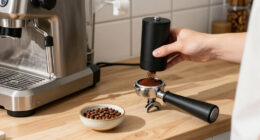
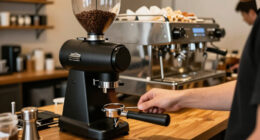
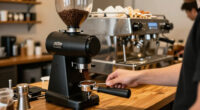
espresso grinder with stepless grind adjustment
As an affiliate, we earn on qualifying purchases.
As an affiliate, we earn on qualifying purchases.
Bean Fragility Can Change How Your Espresso Flows
Decaf beans can be more brittle and porous, which may change the grind and how water moves through the coffee puck. A grinder may create more tiny particles, called fines, from a particular decaf. Those fines can pack tightly and increase resistance, slowing a shot or making the flow uneven. The effect varies with the bean, roast, grinder, and decaffeination method [1].
It is a bit like pouring water through two garden hoses, one of which has a kink: the pump is the same, but the path changes the flow. In an espresso basket, the coffee bed is that path. If one side packs more densely than another, water may find an easier route and leave some grounds less evenly extracted.
For example, suppose your regular coffee runs in 28 seconds, but the new decaf barely drips after 10 seconds. That does not prove every decaf needs a coarse grind; it tells you that this dose and puck are offering too much resistance in this setup. Try a small grind adjustment, check that you distributed the grounds evenly, and watch whether the stream becomes steadier.
Decaf can also run faster, depending on grind distribution, roast, dose, and preparation. So treat shot time as a clue, not a universal rule. The next step is to adjust the recipe without changing everything at once.
espresso scale with 0.1 gram precision and timer
As an affiliate, we earn on qualifying purchases.
As an affiliate, we earn on qualifying purchases.
Dial In Decaf With Four Small, Measured Changes
Start with your familiar espresso recipe, then change one variable at a time based on flow and taste. You do not need a special dose or brew ratio just because the bag says decaf. A steady, stepwise approach helps you learn whether the coffee needs a grind adjustment, a different yield, or better puck preparation.
- Set a baseline: Use your usual dose and yield, and note the shot time and taste. For instance, record 18 grams in and 36 grams out, with the time your machine produces.
- Watch the flow: If the shot barely drips or runs harsh, try a slightly coarser grind. If it gushes and tastes thin or sour, try slightly finer.
- Change only one thing: Keep dose and yield steady while you adjust the grinder. Otherwise, you will not know which change helped.
- Taste before chasing a number: A balanced shot may run differently from your usual coffee and still taste good. Once the grind is close, tune the yield if the espresso seems too sharp, bitter, or heavy.
- Write down the result: A few notes make it easier to return to a recipe that works, especially after switching beans.
Think of dialing in like tuning a radio: turn one knob, listen, then make the next adjustment. If you change grind, dose, and yield together, the signal gets muddy. A home barista who sees a 20-second, sour shot can start by grinding a touch finer and keeping the rest constant.
There is no mandatory decaf recipe. Some coffees will settle near your usual settings; others need a different balance. Once you can read the shot, the remaining question is what flavor you should expect from a good decaf.
bottomless portafilter for home espresso machine
As an affiliate, we earn on qualifying purchases.
As an affiliate, we earn on qualifying purchases.
Good Decaf Can Still Taste Sweet, Bright, and Full
Decaf does not automatically taste flat or inferior; its flavor depends on coffee quality, processing, roast, freshness, and brewing. Some decafs may show less perceived brightness, body, or aromatic intensity than a regular coffee, but that is not a rule. A well-selected and carefully roasted decaf can taste sweet, balanced, and expressive [1].
Think about the difference between a ripe peach and one picked too early. You notice sweetness and aroma, but those qualities depend on what happened before the fruit reached your plate. Coffee also starts with its green beans and carries their character through processing and roasting. A decaf with chocolate and caramel notes may make a comforting milk drink, while a brighter coffee can taste lively as a straight shot.
That is why comparing a weakly brewed decaf with a carefully dialed-in regular espresso will tell you little about the category. Try two well-made shots at the same temperature, with similar serving sizes, and pay attention to sweetness, acidity, body, and aroma. If the decaf tastes hollow, check the recipe and freshness before blaming caffeine removal alone.
The process name alone cannot predict which cup you will prefer. Coffee and roast choices matter alongside decaffeination. And because aroma has such a strong effect on flavor, storing your beans well can make a noticeable difference.
airtight coffee bean storage canister
As an affiliate, we earn on qualifying purchases.
As an affiliate, we earn on qualifying purchases.
Protect Decaf’s Aroma With Better Storage
Decaf loses aroma after roasting like any coffee, so buy it fresh and store it airtight away from heat and light. Because decaf beans may be more porous, some people find their aromas fade quickly, but that varies from one coffee to another [1]. Packaging, roast date, how often you open the bag, and where you keep it all play a part.
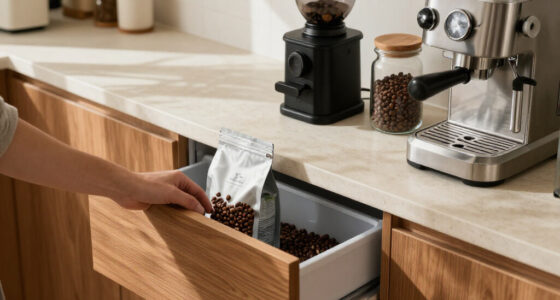
For example, a bag left beside a sunny espresso machine gets warm every afternoon and meets fresh air every morning. Over time, the espresso may smell less fragrant and taste duller. Keep the beans in their sealed bag or an airtight container in a cool, dark cupboard, and avoid storing them beside an oven or on a bright counter.
If you buy more coffee than you can use soon, you can freeze portions while they are well sealed. Divide the beans into small airtight amounts before freezing so you do not repeatedly expose the whole supply to air and moisture. Let a portion reach room temperature while still sealed before opening it; that helps reduce condensation on the beans.
Freshness is a handling habit, not a promise tied to a decaf label. When your shot has lost its aroma, storage may be part of the problem. One final detail matters if you choose decaf for health or sleep: the word does not mean zero caffeine.
Decaf Still Contains Some Caffeine
Decaf espresso is not necessarily caffeine-free; small amounts of caffeine usually remain after processing. The amount in your cup varies with the beans, serving size, and preparation [1]. That means there is no single caffeine figure that accurately describes every decaf shot.
Picture someone ordering decaf after dinner because caffeine keeps them awake. The drink can contain substantially less caffeine than regular coffee, but it is not a guarantee of zero exposure. If you must avoid caffeine completely for medical reasons or personal needs, do not assume decaf meets that requirement; check with a qualified health professional about suitable choices.
The same careful thinking applies when you compare drinks at home. A single espresso shot and a larger drink made with multiple shots do not contain the same amount simply because both use decaf beans. Ask the café how many shots go into the drink, and remember that coffee size and extraction affect the amount you consume.
Decaf means reduced caffeine, not none. This fact does not diminish what a good decaf can offer: a rich coffee ritual, crema, and complex flavor with substantially less caffeine than a regular counterpart. It just gives you a clearer basis for choosing it.
Frequently Asked Questions
Why does my decaf espresso run slower or faster than regular espresso?
Bean structure, grind distribution, roast, dose, and puck preparation all affect shot flow. A particular decaf may produce more fines that increase resistance, but another coffee can run quickly in the same setup. Watch the shot and adjust gradually instead of relying on a universal rule.
Should I grind decaf finer or coarser?
Start from your regular espresso setting and adjust according to the shot. If it chokes or tastes harsh, try a little coarser; if it rushes through and tastes thin or sour, try a little finer. Change one variable at a time so you can tell what helped.
Does decaf need a different dose or brew ratio?
Not automatically. Begin with a familiar dose and yield, then tune the recipe to the coffee’s flow and taste. A different ratio can help balance sweetness, acidity, and bitterness once the grind is close.
Does decaf espresso taste worse than regular espresso?
No single answer fits every coffee. Green-bean quality, decaffeination, roast, freshness, and brewing all shape the cup. A fresh, well-roasted decaf that you dial in carefully can be sweet, balanced, and expressive.
Is decaf espresso completely caffeine-free?
No. Decaf usually contains much less caffeine than regular coffee, but small amounts remain. The quantity varies with the coffee, serving size, and preparation. If you need to avoid caffeine entirely, do not assume decaf contains none.
Can I use the same grinder for regular coffee and decaf?
Yes, you can use the same grinder. Retain a small amount of coffee or purge the grinder after switching if you want to reduce mixing. Brittle beans and fines may affect cleanliness or consistency, depending on your grinder.
Conclusion
Give decaf its own dial-in, not a fixed set of rules. Start with the recipe you know, watch how the shot flows, taste it, and make one measured change at a time. If you do that, a slower or faster shot becomes useful feedback rather than a failed cup.
Buy fresh beans, store them well, and let the coffee tell you what it needs. A good decaf shot can leave your kitchen smelling of cocoa and toasted sugar, with a smooth crema waiting in the cup.
Halloween Picks
halloween
As an affiliate, we earn on qualifying purchases.