TL;DR

Get coffee and tea gear delivered free — and shop member deals
- Fast, free delivery on millions of items
- Access to Prime Big Deal Days deals on October 6–7
- Prime Video, Amazon Music and more included
To keep an espresso station clean, wipe and purge the steam wand after every use, clear the portafilter between shots, and clean spills as they happen. Add a short closing reset, then schedule backflushing and deeper cleaning according to your machine manual, workload, and water. Small habits keep coffee tasting fresh and help equipment last longer without turning cleanup into a second shift.
A single dried ring of milk can turn a neat espresso station into a sticky little crime scene by the end of a busy morning. The fix isn’t scrubbing harder at closing. It’s taking a few seconds at the right moments, before coffee oils, milk, and wet grounds have time to settle in.
This guide shows you how to keep an espresso station clean with a routine that works at home or during café service. You’ll learn what to wipe between drinks, what to clean during a shift, and what belongs on the closing or weekly list. The aim is simple: better-tasting coffee, safer habits, and equipment that lasts—without sacrificing your whole evening to cleanup.
Think of your station like a kitchen cutting board: a quick reset between tasks beats scraping away a day’s worth of dried-on mess. You don’t need to make every minute a cleaning minute. You need a few repeatable moves, clean tools within reach, and a clear idea of what your machine can handle.
Purge the steam wand before steaming, wipe it at once with a dedicated clean damp cloth, then purge again.
Knock out the puck and clear the basket between shots so loose grounds and old coffee oils don’t carry over.
Keep separate cloths for the wand and counter, and replace them when they become dirty.
Backflush only machines designed for it; follow the manufacturer’s instructions for timing, products, and rinsing.
Use a brief closing reset for removable parts, surfaces, and the grinder area, then leave the station dry and ready.
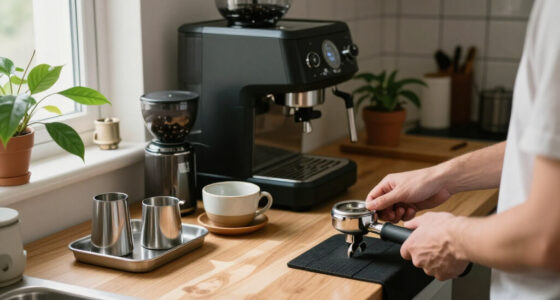
The no-drama espresso station guide
How to Keep an Espresso Station Clean Without Losing Your Mind
A few seconds at the right moments beat one exhausting scrub at the end of the day. Build small resets into your workflow for fresher coffee, safer service, and equipment that lasts.
The key move · After every drink
Wipe the wand while the milk is still fresh. Your future self gets a much easier cleanup.
Between drinks
ResetWand, basket, fresh spillsDuring service
RefreshCloths, bins, drip trayAt closing
RestoreParts, surfaces, machineOn schedule
MaintainBackflush and deep-cleanA three-part rhythm keeps cleanup manageable
Small moves · Less buildupEach moment handles a different kind of mess, so you can keep service moving without carrying one giant chore list in your head.
Clear the last drink
Purge and wipe the steam wand, knock out the puck, rinse and wipe the basket, and tidy fresh grounds or splashes.
Catch the buildup
Replace dirty cloths, wipe spills promptly, and empty the drip tray or grounds bin before either one overflows.
Leave a clean start
Clean removable parts and work surfaces. Backflush or perform other maintenance only when your machine’s schedule calls for it.
Clean the steam wand in seconds
After every useGive the next shot a clean start
Basket · Portafilter · GrinderOld grounds and coffee oils can carry over into the next drink. A quick clear, rinse, and wipe makes each dose a fresh start.
Between shots
Clear the basket
Knock out the puck, rinse away loose grounds, and wipe the basket before dosing again. Check the rim for stuck grounds that can interfere with a clean seal.
Closing care
Clean parts as directed
Use espresso-specific detergent only as the product and machine instructions direct. Rinse parts thoroughly. Don’t put ordinary dish soap into an internal cleaning cycle.
Schedule deeper cleaning for your machine
No universal intervalBackflush only machines designed for it. Follow the manual for timing, cleaning products, and rinsing. Workload and water quality can change how often attention is needed.
Water-only
May be part of routine care on compatible machines; check your manual.
Detergent
Typically less frequent. Use the specified product and amount.
Inspect
Deep-clean removable components and check seals and shower screens.
Water care
Mineral buildup varies. Descale only by the maker’s recommended method.
Small habits that prevent a sticky little crime scene
Common missesLeaving milk to dry on the steam wand.
Using one dirty cloth for every surface.
Backflushing a machine not designed for it.
Guessing at detergent, quantity, or soak time.
Cleaning a grinder with water or unapproved products.
Letting a quick wipe replace scheduled deeper care.
The clean-station chain
A repeatable finishUse a three-part rhythm to keep cleaning manageable
An espresso station stays manageable when you split cleaning into three moments: between drinks, during service, and at closing. Each moment handles a different kind of mess, so you don’t have to remember one giant chore list while the machine is still hissing and the queue is growing.
- Between drinks: purge and wipe the steam wand, clear the puck from the basket, and tidy any fresh grounds or splashes.
- During service: change dirty cloths, wipe spills, and empty the drip tray or grounds bin before either overflows.
- At closing: clean removable parts and work surfaces, then perform the machine’s prescribed backflush or other maintenance if the schedule calls for it.
For example, after steaming milk for a flat white, wipe the wand immediately instead of leaving the dried drop for later. When a rush eases, take a minute to empty a nearly full knock box. Those small pauses can prevent grounds from spilling across the counter and milk from crusting around the wand tip.
Your routine should match your setup. A home machine making three coffees a day doesn’t need the same service rhythm as a café machine pulling shots all morning. Machine design, drink volume, water quality, and manufacturer instructions all affect the schedule. A cleaning prompt or automatic rinse can help, but it doesn’t replace wiping contact surfaces or checking the manual.
That’s the central tradeoff: a clean station requires attention, not constant attention. Short resets keep mess from compounding; a fixed closing routine catches what those resets don’t. Once you practice the rhythm, cleaning feels less like an interruption and more like putting the cup back on its saucer.
espresso machine steam wand cleaner
As an affiliate, we earn on qualifying purchases.
As an affiliate, we earn on qualifying purchases.
Clean the steam wand in seconds after every drink
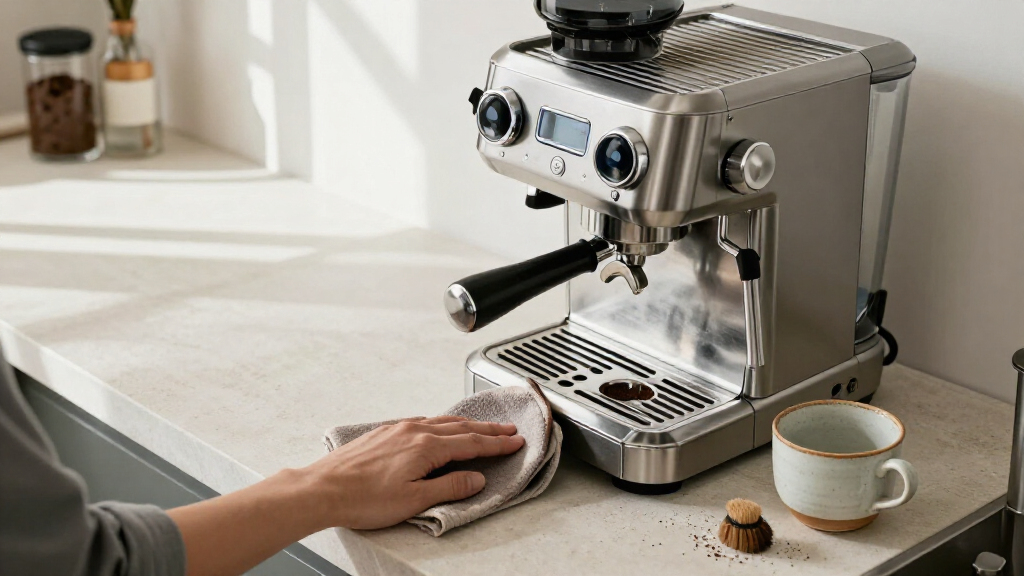
To clean the steam wand, purge it briefly before steaming, wipe it immediately after with a clean damp cloth, then purge again. This quick sequence clears milk from the wand’s exterior and tip before it dries into a tacky film that takes longer to remove.
Keep one cloth dedicated to the steam wand and another for counters or general spills. A cloth that has just wiped up coffee grounds or a food-contact surface shouldn’t go back onto the wand. Likewise, a milk cloth isn’t your all-purpose counter rag. Give each cloth a fixed home so you can grab the right one without thinking.
Imagine the final drink in a rush: you pour a cappuccino, set it on the counter, and immediately wipe the wand with its own clean, damp cloth. A short purge follows. If you walk away to chat first, the milk begins to dry, especially around the tip, and the next wipe becomes a sticky chore. The difference is only seconds, but it saves effort and helps keep milk residue from lingering.
Don’t let “I’ll get it later” become your wand-cleaning method. Dried milk is harder to remove and can harbor bacteria, so clean promptly and follow your machine’s instructions for any deeper tip cleaning.
Keep the cloth damp, not dripping, and replace it when it becomes dirty. Wash used cloths thoroughly rather than leaving them in a warm heap beside the machine. This is a small hygiene habit with a visible payoff: a wand that looks clean, moves freely, and doesn’t leave old milk smells near your next drink.
coffee machine backflush cleaning kit
As an affiliate, we earn on qualifying purchases.
As an affiliate, we earn on qualifying purchases.
Keep coffee oils and old grounds out of your next shot
Clear the portafilter and basket between shots to keep old grounds and coffee oils from carrying over. Knock out the puck, rinse away loose grounds, and wipe the basket before you dose again. A quick check also catches grounds stuck around the rim, where they can interfere with a clean seal.
Picture a busy home morning: you pull one shot, knock out the puck, then rush to grind the next dose while a few wet grounds cling to the basket. They may seem harmless, but old residue can affect flavor, and a dirty basket makes it harder to start each shot with a clean slate. The tap of the knock box, a rinse, and a wipe are faster than wondering why the next espresso tastes stale.
At closing, wash removable portafilter parts according to the machine maker’s advice. Espresso-specific detergent is often used to remove coffee oils, but the product directions and the equipment manual should guide how much to use and how long to soak. Rinse thoroughly before the next drink. Don’t pour ordinary dish soap into an internal machine-cleaning cycle.
Keep the grinder clean with a dry, approved method. Brush grounds from the chute and nearby surfaces, and follow the grinder maker’s directions for deeper cleaning. Don’t pour water into the burr chamber. If you use cleaning tablets or take parts apart, check whether the process can affect grind settings or require recalibration.
Old oils can contribute to bitter or rancid flavors, but they’re not the only cause. Bean freshness, grind size, and brewing variables matter too. Cleaning gives you a cleaner starting point; it doesn’t magically correct every shot. That’s why a clean basket and grinder area are useful habits, not a substitute for good dialing-in.
As an affiliate, we earn on qualifying purchases.
Choose a backflushing schedule your machine can handle
Backflush only if your espresso machine is designed for it, and follow its manual for both frequency and cleaning products. Some machines support water-only backflushing as part of routine care, while detergent backflushing is generally less frequent and depends on machine guidance and workload.
A café pulling shots all day may build up coffee residue faster than a home machine used for a few morning drinks. Even so, a busy schedule isn’t permission to guess with detergent or assume every machine works the same way. Start with the manual, then use workload as a reason to check whether the recommended routine needs attention—not as a reason to invent a new procedure.
For example, if your machine’s instructions call for a water-only cleaning cycle at the end of service and a detergent cycle on a less frequent schedule, write those tasks on separate lines. That simple distinction helps you avoid using detergent every day just because “backflush” sounds like one single chore. It also makes the handover easier if more than one person uses the station.
Use only products meant for the component you’re cleaning. Espresso-machine detergent, milk-system cleaner, and grinder-cleaning products serve different jobs. Follow the label, use the instructed amount, and rinse as directed. More cleaner doesn’t mean a better result; the wrong chemical or a long soak can damage parts or leave residue.
Descaling also deserves care. Mineral buildup can affect performance, but vinegar or another generic home remedy isn’t safe for every machine. Check your manual and water guidance before descaling; some manufacturers require a specific method or professional service. A cleaning routine should protect the machine, not gamble with its internals.
As an affiliate, we earn on qualifying purchases.
Reset the station at closing without starting an all-night scrub
A good closing reset leaves the station clean, dry, and ready for the next shift. Focus on removable parts, visible coffee and milk residue, and surfaces that touch food or hands. Do the scheduled machine cleaning too, but don’t turn a short daily reset into an unapproved deep-cleaning session.
- Clear the work area: put away beans and tools, empty the knock box before it overflows, and wipe loose grounds from the counter.
- Wash removable parts: clean the drip tray, grate, baskets, milk pitchers, and other removable components as directed; rinse thoroughly.
- Clean the machine exterior: wipe splashes and fingerprints with a suitable cloth, taking care around hot surfaces and controls.
- Check the grinder area: brush away accessible grounds, keeping water out of the burr chamber.
- Reset for tomorrow: leave the worktop dry and tools, cloths, and supplies in their usual places.
Here’s the real-world difference: a closing shift that takes a few focused minutes leaves a clean drip tray and dry counter for the opening barista. A shift that skips the reset leaves sour milk spots, damp cloths, and grounds packed around the machine—then the first coffee of the morning begins with cleanup.
Make the checklist visible and short. A note near the station can name the steps and point to any less-frequent tasks, such as detergent backflushing. If several people share the machine, clear assignments prevent the classic “I thought you cleaned it” handoff.
Don’t soak parts longer than the cleaner or manufacturer recommends. Don’t leave a station wet and covered with dirty cloths. A dry, orderly finish makes the next session feel like a fresh start rather than an archaeological dig.
Set up your tools so a clean espresso station makes better coffee
A clean espresso station makes better coffee when the right tools are easy to reach and kept separate. Set out a dedicated wand cloth, a counter cloth, a suitable brush, and a clear place for used cloths. When cleanup takes one smooth motion, you’re more likely to do it during a rush.
Think of your setup as a small stage: the cloth has its mark, the brush has its mark, and the knock box sits where you naturally clear the puck. If the wand cloth is buried under a bag of beans or the brush has disappeared into a drawer, every quick task starts with a search. That friction is small, but it adds up across a morning of drinks.
Use a simple labeled hook or container for clean cloths, and keep used ones apart. Store cleaning products according to their labels, away from coffee beans and ready-to-use tools. If you have separate products for the machine, milk system, and grinder, label the storage spots clearly so nobody reaches for the wrong cleaner during closing.
Modern machines may include rinse cycles, cleaning alerts, or removable components designed to simplify care. Those features can help you remember scheduled tasks, but they don’t clean a splashed counter or remove milk from the wand exterior. A machine prompt is a reminder, not a replacement for a person’s eyes and hands.
The best layout removes tiny excuses. If your cloths are clean and close by, wiping the wand takes seconds. If the brush lives beside the grinder, a quick sweep becomes part of grinding rather than an extra project. Good organization doesn’t make cleaning disappear; it makes the clean version of your routine easier than the messy one.
Adjust the routine for your machine, workload, and water
There is no single cleaning schedule that fits every espresso station. The right rhythm depends on machine design, how many drinks you make, water quality, and the manufacturer’s instructions. Keep the quick habits consistent, then adjust scheduled maintenance to match the equipment and workload.
A home barista who pulls four shots each weekend can usually work with a lighter service rhythm than a café serving espresso continuously through lunch. Both should wipe and purge the steam wand after use and keep baskets clear. The café may need to empty its drip tray and grounds bin more often simply because they fill faster. The same task can be occasional at home and a routine service check in a busy bar.
Water matters because minerals can build up inside equipment, but the right response depends on the machine and the water you use. Follow manufacturer guidance on suitable water and descaling. If your manual recommends a service procedure, or says not to descale at home, don’t substitute a generic recipe from another machine owner.
Use a two-layer schedule: fast cleaning follows each drink or shift, while deeper maintenance follows the manual. For example, a café can assign wand wiping and basket clearing to every drink, drip-tray checks to service, and backflushing to the machine’s stated cadence. A home setup can keep the same between-drink habits and use a reminder for less-frequent cleaning.
This is where a clean station also helps equipment last: you remove residue without exposing parts to unsuitable cleaners or unnecessary soaking. Regular care and aggressive cleaning are not the same thing. The goal is steady maintenance that fits your machine, not the most intense schedule you can imagine.
Frequently Asked Questions
How often should I clean my espresso machine?
Clean the steam wand after every use, clear the basket between shots, and wash removable parts as part of your regular closing routine. Follow your machine manual for backflushing and deeper cleaning, since the schedule varies by design, volume, and water.
Do I need to backflush every day?
Not always. Backflushing depends on whether your machine supports it and what the manufacturer recommends. Some machines allow routine water-only backflushing, while detergent cleaning may be less frequent; check your manual rather than applying one schedule to every machine.
Can I use dish soap on my portafilter and baskets?
Follow the manufacturer’s advice for removable parts. Espresso-specific detergent is commonly used to remove coffee oils, and you should rinse parts thoroughly before use. Don’t put ordinary dish soap into an internal machine-cleaning cycle.
How do I clean the steam wand properly?
Purge, wipe, and purge again. Briefly purge before steaming, wipe the wand immediately after with a clean damp cloth reserved for that job, then purge again to clear milk residue from the tip. Follow the manual if the tip needs deeper cleaning.
Can I clean my espresso grinder with water?
Don’t pour water into the burr chamber. Brush grounds from accessible areas and follow the grinder maker’s approved instructions for deeper cleaning. Some methods can change grind settings or require recalibration, so check before taking parts apart.
When should I descale my espresso machine?
Use the schedule and method in your machine manual. Water quality and machine design affect descaling, and some manufacturers call for a specific product or professional service. Don’t assume vinegar or a generic citric-acid method is safe for your equipment.
How can I clean during service without slowing everything down?
Make the smallest tasks part of each drink. Keep the wand cloth in reach, clear the basket as soon as you knock out the puck, and empty the drip tray or grounds bin before it overflows. A few fast resets are easier than removing a full shift’s worth of buildup.
Conclusion
Make cleaning part of the espresso routine, not a punishment waiting at the end of it. Wipe the wand, clear the basket, catch spills, and close with a short reset; let your machine manual set the pace for deeper cleaning and descaling. Those few habits help your coffee taste fresher and help equipment last without turning cleanup into the main event.
Tomorrow’s first shot should greet you with a clean counter, a dry cloth, and the warm smell of fresh coffee—not yesterday’s milk and grounds.
Halloween Picks
halloween
As an affiliate, we earn on qualifying purchases.