
TL;DR

Get coffee and tea gear delivered free with Prime
- Fast, free delivery on millions of items
- Prime Video, Amazon Music and more included
- Member-only deals all year
Store whole espresso beans in a clean, dry, airtight container in a cool, dark cupboard, and grind only what you need just before brewing. Buy an amount you can finish within a few weeks after opening; freeze small sealed portions only when you need longer storage, and let them reach room temperature before opening.
That beautiful crema can’t hide everything: a bag of beans left open beside a warm espresso machine can lose its lively aroma long before it looks old. Air, heat, light, and moisture gradually dull roasted coffee, and careful storage slows that fade.
You don’t need a high-tech canister to protect your next shot. Here’s how to store espresso beans, when freezing makes sense, and how to tell whether a bean’s age is affecting the cup.
Keep espresso beans whole in a sealed bag or clean, dry, airtight container.
Store everyday beans in a cool, dark cupboard away from the oven, sink, sunlight, and steam.
Aim to use opened beans within a few weeks for the best aroma, while allowing for differences in roast, packaging, and taste.
Freeze extra beans in small airtight portions, and let each portion reach room temperature while still sealed.
Follow the roaster’s advice on resting freshly roasted beans, then judge readiness by shot behavior and flavor.
How to Store Espresso Beans Without Killing the Flavor
Air, heat, light, and moisture gradually dull roasted coffee — and that beautiful crema can’t hide it. A bag left open beside a warm espresso machine loses its lively aroma long before it looks old. Here’s how to slow that fade with ordinary kitchen gear.
Why Your Espresso Beans Lose Their Best Flavor
“Espresso” describes a brewing method, not a special bean — so the same storage rules apply to any roasted coffee. Think of beans like a cut apple: the longer they meet air, the less bright they taste. After roasting, beans release carbon dioxide and gradually lose the aromatic compounds that make a shot smell sweet, nutty, fruity, or chocolatey.
Air / Oxygen
Oxidation dulls aroma steadily. An open bag beside the machine fades far faster than a sealed one.
Heat
Warmth speeds flavor loss. Counters near the oven, kettle, or machine steam are poor homes for beans.
Light
Clear glass looks lovely but lets light reach the beans. Choose opaque canisters or a cupboard.
Moisture
Humidity and condensation harm aroma and the beans themselves — a damp lid is enough to cause trouble.
Use This Simple Routine to Store Beans Well
It tackles the main causes of staling without adding fuss — no high-tech canister required.
Keep Beans Whole
Grind each dose just before brewing. Grounds lose aroma far faster than whole beans.
Seal After Every Use
Close a resealable bag firmly — squeeze out excess air — or use a tight-fitting lid.
Pick a Cool, Dark Spot
A cupboard away from the oven, window, sink, and steam beats any open counter.
Buy a Manageable Amount
Finish opened beans within a few weeks for the best aroma; the exact window depends on taste.
Compare Bags, Canisters, Refrigerators, and Freezers
For everyday espresso, keep beans at room temperature in a shaded cupboard. The right choice depends on how quickly you drink your coffee.
| Storage Option | Verdict | Best For | What to Watch |
|---|---|---|---|
| Resealable Valve Bag | ✓ Recommended | Beans you’ll use over the next few weeks | Press excess air out gently and close the seal fully. |
| Airtight Canister | ✓ Recommended | Daily access, or a bag that won’t reseal | Choose a clean, dry container; opaque sides block light. |
| Refrigerator | ✗ Usually Not | Not recommended for everyday storage | Moisture, temperature swings, and food odors affect beans. |
| Freezer | ~ With Care | Extra beans you won’t use soon | Portion airtight; avoid repeatedly thawing and refreezing. |
Freeze Extra Beans Without Adding Moisture
Freezing preserves beans you won’t use soon — as long as you divide them into small airtight portions and keep each sealed while it thaws. It isn’t necessary for beans you plan to finish in a few weeks.
Freeze Once, in Small Packs
- Split a large bag into dose-sized portions and seal each well.
- Label every pack with the coffee name and roast date.
- Let each portion reach room temperature while still sealed before opening.
- Keep the rest of the supply undisturbed until needed.
Condensation Traps
- Opening a cold container in warm, humid air — condensation forms on cold beans.
- Repeated thawing and refreezing the same beans.
- A large everyday jar you rummage through each morning.
- Moving cold containers straight into humid kitchens unsealed.
Match Your Bean’s Age to a Better Shot
Freshly roasted beans release carbon dioxide that can interfere with extraction, so they often need a short rest — but there is no single resting period that suits every coffee. Follow the roaster’s guidance, then judge readiness by shot behavior and flavor.
Just Roasted
Heavy CO₂ release. Shots may gush, taste sharp, or show uneven crema — usually needs rest.
Settling In
Follow the roaster’s advice on resting. Grind, dose, and brewing also affect the shot.
Ready to Brew
Sweet, nutty, fruity, or chocolatey aromas at their most distinct — dial in and enjoy.
Gently Fading
A flatter cup, less distinct aroma, and shots that seem harder to dial in. Storage slows — but can’t reverse — the fade.
How Aroma Fades Over Time (Illustrative)
Aromatic brightness declines gradually after opening — storage quality decides the slope. “Stale” is partly a matter of taste: beans don’t become unsafe past their peak, just less lively. Espresso’s strong flavor can even mask some dullness, so tasting matters.
Quick Answers
The questions readers ask most about bean storage.
Should espresso beans go in the freezer?
Only when storing longer than the amount you’ll use soon. Portion airtight, thaw sealed, and avoid repeated freezing.
Is the refrigerator a good place for beans?
Usually not. Moisture, temperature swings, and food odors can all affect everyday storage.
How long do beans stay fresh after opening?
There’s no exact cutoff. Flavor declines over time; for best results, use them within a few weeks and keep them sealed.
Do I need a special canister?
No. If your original bag seals tightly and has a valve, it may do the job. A good seal and sensible buying habits beat gadgets.
Why Your Espresso Beans Lose Their Best Flavor
Espresso beans lose flavor when air, heat, light, and moisture speed up the fading of their aroma. “Espresso” describes a brewing method, not a special bean, so the same storage basics apply to any roasted coffee. Think of the beans like a cut apple: the longer they meet air, the less bright they taste.
After roasting, beans release carbon dioxide, and they also gradually lose aromatic compounds that make a shot smell sweet, nutty, fruity, or chocolatey. As their flavor fades, you may notice a flatter cup, less distinct aroma, or shots that seem harder to dial in. Storage can slow those changes; it cannot bring back freshness already lost.
For example, a bag you open every morning and leave beside a sunny kitchen window faces several flavor thieves at once: fresh air, warmth, and light. Move it into a shaded cupboard and seal it between doses, and you remove much of that daily exposure. Small habits add up, even when you use ordinary kitchen gear.
Use This Simple Routine to Store Beans Well
- Keep the beans whole. Grind each dose just before brewing; grounds expose much more surface area to air and lose aroma faster.
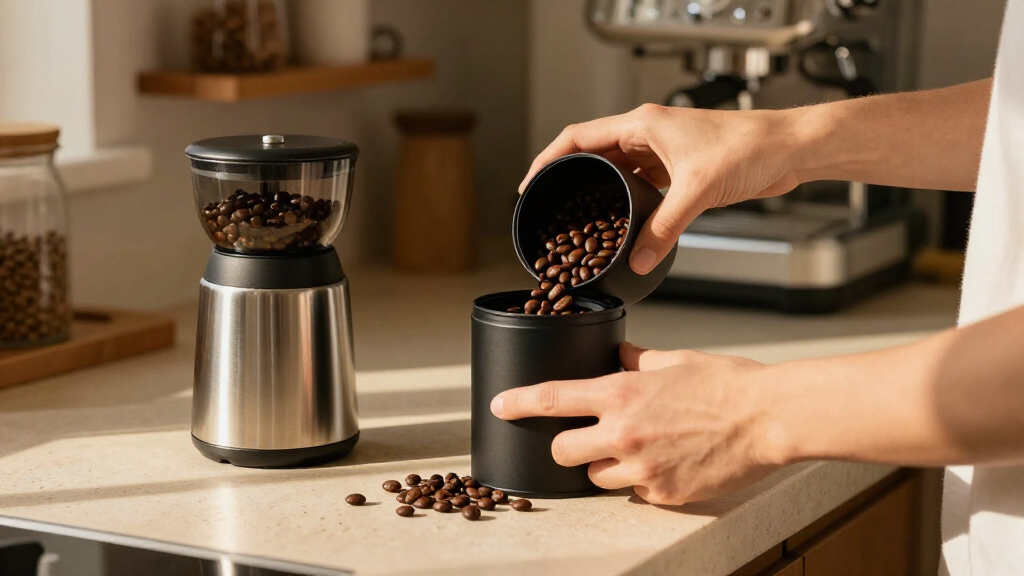
- Seal the beans after every use. Close a resealable coffee bag firmly or transfer the beans to a clean, dry container with a tight-fitting lid.
- Pick a cool, dark, dry spot. A cupboard away from the oven, window, sink, and espresso machine’s steam is a better home than an open counter.
- Buy a manageable amount. Once opened, aim to use the beans within a few weeks for the best aroma; the exact window depends on roast, packaging, and your taste.
This routine works because it tackles the main causes of staling without adding fuss. If you make espresso before work, for instance, take out the amount you need, reseal the bag, then grind your dose at the grinder. Keep the main supply closed while the machine warms up.
When a bag has a one-way valve and a resealable closure, you can often leave the beans in their original packaging. The valve lets gas escape while limiting outside air entering the bag. If the bag won’t reseal well, use an airtight container instead.
Choose a Storage Spot That Protects Every Bag
The best everyday place for espresso beans is a cool, dark, dry cupboard away from strong smells and sudden temperature changes. A pantry shelf can work; the counter beside a kettle or oven usually cannot. Stable conditions matter because heat speeds flavor loss, while moisture can harm both aroma and the beans themselves.
Clear glass looks lovely, but it lets light reach the beans. If you enjoy keeping coffee on display, choose an opaque canister or keep a clear jar inside a cupboard. Either way, wash and dry the container completely before filling it; a damp lid can introduce moisture where you least want it.
Don’t store beans beside spices, onions, or open bags of strongly scented food. Coffee can pick up surrounding odors, and a smoky, cumin-scented shot is rarely the surprise you wanted. Keep different coffees in separate sealed bags or containers, too, so their aromas stay distinct and you can track each roast date.
One common mistake is moving a cold container straight into warm, humid kitchen air and opening it immediately. Condensation can form on cold beans or inside the container. Keep beans away from frequent temperature swings, and if you’ve frozen a portion, leave it sealed as it warms to room temperature.
Compare Bags, Canisters, Refrigerators, and Freezers
A resealable valve bag or a simple airtight canister is usually enough for beans you’ll use soon; the freezer is a tool for longer storage. For everyday espresso, keep beans at room temperature in a shaded cupboard, since refrigeration adds moisture and food-odor risks. The right choice depends on how quickly you drink your coffee.
| Storage option | Best for | What to watch |
|---|---|---|
| Resealable valve bag | Beans you’ll use over the next few weeks | Press excess air out gently and close the seal fully. |
| Airtight canister | Daily access or a bag that won’t reseal | Choose a clean, dry container; opaque sides block light. |
| Refrigerator | Usually not recommended for everyday storage | Moisture, temperature changes, and food odors can affect beans. |
| Freezer | Extra beans you won’t use soon | Portion airtight; avoid repeatedly thawing and refreezing. |
A special coffee canister is not a special requirement. If your original bag seals tightly and has a valve, it may do the job. An air-removing canister can limit air in the container, but sensible buying habits and a consistent seal matter more than adding gadgets.
Say you buy a 1-kilogram bag but use only a small dose each morning. Keep the portion you’ll drink soon in a well-sealed container and freeze the rest in smaller airtight packs. That way, you won’t expose the whole supply each time you reach for breakfast coffee.
Freeze Extra Beans Without Adding Moisture
Freezing can help preserve espresso beans you won’t use soon, as long as you divide them into small airtight portions and keep each portion sealed while it thaws. It isn’t necessary for beans you plan to finish over the next few weeks. Portion first so you only thaw what you need.
For example, split a large bag into several dose-sized or brew-sized portions, seal each one well, and label it with the coffee and roast date. Take out a portion when you’re ready to use it, let it come to room temperature without opening the package, then use it. This keeps warm, humid air from meeting cold beans and leaving condensation behind.
Repeated thawing and refreezing can expose beans to moisture and odors, especially if you keep them in a large container you open often. Avoid freezing an everyday jar that you rummage through each morning. Freeze once in small packs and keep the rest undisturbed until needed.
Match Your Bean’s Age to a Better Espresso Shot
Freshly roasted espresso beans often need a short rest before brewing because they release carbon dioxide after roasting, and that gas can interfere with extraction. There is no single resting period that suits every coffee or roast. Follow the roaster’s guidance, then use the shot’s taste and behavior to decide whether the beans are ready.
If your espresso gushes quickly, tastes sharp, or has an uneven crema, the coffee may need more rest, though grind, dose, and brewing also affect the shot. Give a new bag a little time, then adjust one variable at a time. That makes it easier to see whether age or your recipe is driving the change.
A “best by” date doesn’t promise peak flavor, and beans past that date don’t automatically become unsafe. Roast date, packaging, and how you stored the coffee give you more useful context. If dry beans smell flat but show no signs of mold or contamination, they’re usually a flavor disappointment rather than a safety problem.
Fix These Storage Mistakes Before Your Next Shot
The fastest storage fixes are to close the bag, move it away from heat and light, and stop grinding more coffee than you need. An open bag on a warm counter gives air and heat easy access to the beans. A clear jar on a sunny sill adds light to the problem.
- Don’t refrigerate beans for everyday use; moisture and food odors can creep in.
- Don’t store beans near steam from your kettle or espresso machine.
- Don’t buy more than you can use while the flavor still tastes lively.
- Don’t grind a week’s worth ahead of time if aroma matters to you.
Imagine you open the bag, dose your grinder, and then rush out the door with the bag still unsealed. Make resealing part of the same motion as returning the scoop. That tiny routine keeps the next cup closer to the first.
Good storage slows staling; it doesn’t reverse it. If a coffee tastes dull, start with a fresher bag and store it well from the first opening.
Frequently Asked Questions
Should espresso beans go in the freezer?
Freeze beans when you have more than you’ll use soon, and divide them into small airtight portions first. Keep each portion sealed as it returns to room temperature, and avoid thawing and refreezing it.
Is the refrigerator a good place for coffee beans?
Usually not for everyday storage. Moisture, temperature changes, and strong food odors can affect the beans, so a cool, dark cupboard is a better choice.
How long do espresso beans stay fresh after opening?
There’s no exact cutoff, because roast, packaging, storage, and your taste all matter. For the best aroma, try to finish an opened bag within a few weeks and keep it sealed between uses.
Do I need a special canister to store espresso beans?
No. A resealable valve bag or clean, dry, airtight container can work well in a cool, dark place. An opaque canister helps block light, but careful sealing and buying manageable amounts matter more.
Should I grind espresso beans ahead of time?
Grinding ahead speeds flavor loss because grounds expose more surface area to air. Grind close to brewing to keep more of the beans’ aroma in your cup.
Conclusion
Buy an amount you can use, seal it after each dose, and keep it whole, cool, dark, and dry. When you need longer storage, portion extra beans before freezing and keep each pack sealed as it warms.
Your next espresso should smell lively as the grinder hums and the shot runs dark into the cup. Protect that aroma one simple seal at a time.
Halloween Picks
halloween
As an affiliate, we earn on qualifying purchases.