TL;DR

Get coffee and tea gear delivered free — and shop member deals
- Fast, free delivery on millions of items
- Access to Prime Big Deal Days deals on October 6–7
- Prime Video, Amazon Music and more included
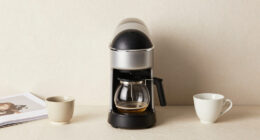
A compact espresso machine is too small when its tank, cup clearance, heating pace, or cleaning routine makes your usual coffee frustrating. Measure the full coffee setup and check how it works with your real cups and daily drink count; footprint alone does not tell you whether it will fit your life.
A machine can fit perfectly on your counter and still make your morning harder. A tiny water tank, a mug that will not slide under the spout, or a lid trapped beneath a cabinet can turn a space-saving purchase into a daily shuffle.
This guide helps you judge how small is too small by looking beyond width and height. You’ll learn what to measure, how machine types affect your routine, and which trade-offs matter when you make one espresso or a round of cappuccinos.
Measure machine dimensions plus the clearance needed to refill, load, operate, and clean it.
Check tank, grounds-bin, and drip-tray capacity against the drinks you make each day.
Test spout clearance with your tallest everyday mug, including any removable tray setup.
For back-to-back milk drinks, compare steaming, recovery, and warm-up performance.
Treat “compact” as a marketing label; compare exact specifications and the full coffee-station footprint.
The small-space espresso field guide
Compact Espresso Machines: How Small Is Too Small?
A machine is too small when its tank, cup clearance, heating pace, or cleanup routine makes your everyday coffee frustrating. Measure the whole coffee station and test it against your real cups and drink count. Footprint alone cannot tell you whether it fits your life.
01 / Fit the whole station
Measure beyond the footprint
The machine is only one tool on the counter. A grinder, tamper, pitcher, knock box, and room for your hands all count toward a usable setup.
Width + depth
Record the usable counter area. Add space to pull out the drip tray and operate controls without hitting a wall or backsplash.
Height + lift room
Measure to the cabinet underside. Check whether a lid opens or a tank lifts out; fitting underneath is not enough.
Spout to tray
Measure your tallest everyday mug. Account for the drip tray and any removable tray or adjustable spout.
Tools + hands
Include the grinder, tamper, milk pitcher, knock box, and space needed to dose, brew, and serve.
Tape the outline
Mark the machine dimensions with painter’s tape, then arrange your accessories inside and around the outline.
Refill + cleanup
Check that the tank, grounds bin, and tray can be reached and removed easily where the machine will sit.
Rule of thumb: judge the usable coffee-station footprint, not just the appliance dimensions listed on a product page.
02 / Choose your workflow
Every machine type saves space differently
Think about how much control, hands-on work, and maintenance your routine can accommodate.
| Machine type | Space + routine | Best fit |
|---|---|---|
| Manual | Hands-on workflow; often needs a separate grinder and room for accessories. | You enjoy controlling each shot and have room for the tools. |
| Semi-automatic | Balances user control with a familiar countertop workflow. | You want to grind, dose, and brew with some control. |
| Capsule | Often small and simple; coffee choices are limited to compatible pods. | Quick single drinks and easy daily use are priorities. |
| Super-automatic | Combines grinding and brewing, with internal cleaning and servicing needs. | You want button-led drinks and can make room for upkeep. |
A built-in grinder may save counter area while adding height, noise, and cleaning. Compare its total dimensions with a separate grinder and brewer side by side.
03 / Match your real demand
Capacity is a daily convenience
Small tanks, grounds containers, and drip trays can mean more interruptions. Capacity needs depend on your drink count and how often you are happy to stop and reset.
Practical checklist emphasis · compare against your own household routine, not a universal score
04 / Your routine sets the limit
One espresso is not a cappuccino relay
Count typical daily drinks, note which include milk, and decide how often you are willing to refill the tank or empty the grounds bin.
A compact setup can be practical
A small manual or capsule machine may suit occasional use. A pause between drinks or a small tank may be an easy trade when you make one coffee at a time.
Workflow starts to matter more
For two cappuccinos before work, compare steaming, recovery, and warm-up performance. A slow second drink can make the morning feel cramped even when the machine fits.
Check the exact model’s instructions for warm-up time, recovery between drinks, milk steaming, and cleaning. Feature names such as PID, pressure profiling, or fast heating do not guarantee the same experience across machines.
05 / A five-step pre-buy check
Test the setup before you choose
Product photos hide awkward access. Walk through the whole routine in the space where the machine will live.
Measure
Record counter width, depth, and cabinet clearance.
Add access
Allow room for lids, tanks, beans, controls, and trays.
Test your cups
Compare your tallest mug with spout clearance.
Count the routine
Match tank and waste capacity to daily drinks.
Check the pace
Review heating, milk workflow, and cleanup access.
Small capacities can work for one or two drinks; several daily drinks may mean frequent refills and emptying.
A tank or tray that comes out easily can simplify access under cabinets or beside a backsplash.
Accessible grounds containers, removable brew groups, and clear instructions help a compact machine feel less cramped.
The decision
Small is too small when your routine has to shrink
A compact brewer can make excellent espresso; size alone does not determine cup quality. Judge the exact machine, its capabilities, and whether its workflow supports the drinks you actually make.
Your mug clears
Your everyday cup fits beneath the spout with the tray setup you plan to use.
Access feels easy
You can refill, load, operate, and clean the machine in its real counter position.
Routine becomes a shuffle
You repeatedly move the machine, refill, wait, or pour into a smaller cup just to make your usual coffee.
What counts as compact depends on your counter and your routine
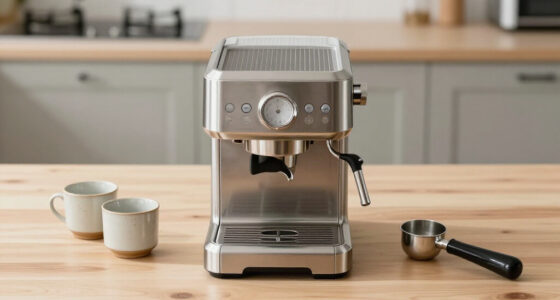
Compact espresso machines are countertop brewers designed to use less space, but there is no standard size that defines the category. Measure the machine’s width, depth, and height, then add the room needed to open lids, remove tanks, reach controls, and pull out the drip tray. A small number on a product page cannot tell you whether the machine will work in your kitchen.
Think of the coffee station like a small cooking workspace: the appliance is only one tool on the counter. A separate grinder, tamper, milk pitcher, knock box, and space for your hands all take room. If you have a narrow apartment counter, mark the machine’s dimensions with painter’s tape and set your accessories inside the outline before buying.
Height deserves special attention. Measure from the counter to the underside of the cabinet, then check whether the machine’s bean lid or water tank needs room to lift out. A model may slide under the cabinet but still force you to pull it forward every time you refill it.
Your drink routine tells you when a small machine is too small
A compact espresso machine is too small when its capacity or layout makes your normal coffee routine frustrating. Count how many drinks you prepare on a typical day, note whether they include steamed milk, and check how often you are willing to refill the tank or empty the grounds bin. The right size for one morning espresso may be a poor fit for a household making four lattes before work.
Picture a two-person household where each person wants a cappuccino. A small tank may handle that pair, but a slow recovery between brewing and steaming can leave the second drink waiting while the milk pitcher cools on the counter. For occasional single drinks, that pause may feel harmless; for daily back-to-back orders, workflow matters more than a few saved centimeters.
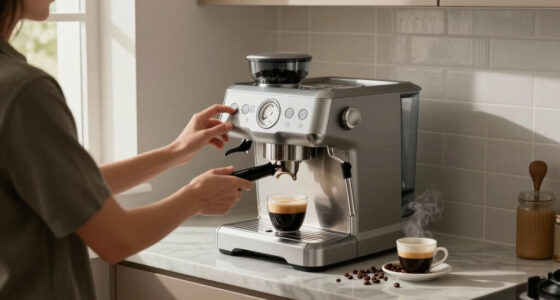
Use your own mugs as part of the test. Measure the tallest cup you regularly use and compare it with the space beneath the spout, accounting for the drip tray. Some machines offer a removable tray or adjustable spout, which can make the difference between fitting a travel mug and pouring espresso into a shot glass first.
Compare machine types before you trade convenience for space
Compact espresso machines come in several styles, and each saves space in a different way. Capsule models often keep the footprint and daily steps small, while manual and semi-automatic machines ask you to do more of the work. A super-automatic can combine grinding and brewing in one box, but its extra mechanisms bring cleaning tasks and can add height.
| Machine type | Space and routine | Best fit |
|---|---|---|
| Manual | Often needs a separate grinder and more hands-on steps | You enjoy controlling each shot and have room for accessories |
| Semi-automatic | Balances machine control with a familiar countertop workflow | You want to grind, dose, and brew with some control |
| Capsule | Usually compact and simple; pods limit your coffee choices | You prioritize quick single drinks and easy daily use |
| Super-automatic | Combines grinder and brewer, but needs internal cleaning | You want button-led drinks and can make room for servicing |
Say you have room for one appliance but want freshly ground beans: a built-in grinder might seem like an easy win. Yet it may make the machine taller, louder, and harder to clean. Before deciding, compare the machine’s total size with a separate grinder and brewer side by side; a smaller combined footprint is not guaranteed.
A small tank and tray can add chores to every coffee
Tank and waste-bin capacity affect how often you stop to refill or empty the machine. Small tanks can work well for one or two drinks, but several drinks a day can mean frequent trips to the sink. Grounds containers and drip trays also fill sooner on compact models, leaving less room between cleanup sessions.
For a real-world check, count the drinks you expect to make before refilling. If your household pulls four drinks each morning, read the manual or specifications for tank volume, then check whether the tank removes easily or must be topped up in place. A removable tank is especially handy when the machine sits under a cabinet or against a backsplash.
Think about cleanup access while the machine is on the counter. A drip tray that slides out cleanly is easier to manage than one you must angle around a nearby wall. Removable brew groups, clear cleaning instructions, and accessible grounds containers can make a compact machine feel less cramped in daily use.
Buying rule: Choose the smallest machine that comfortably supports your usual drinks, cups, refills, and cleanup—not simply the one with the smallest listed footprint.
Heating speed matters more when you make drinks back to back
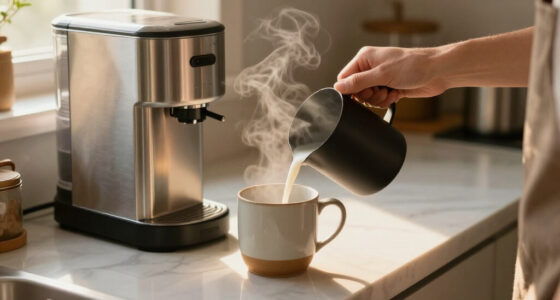
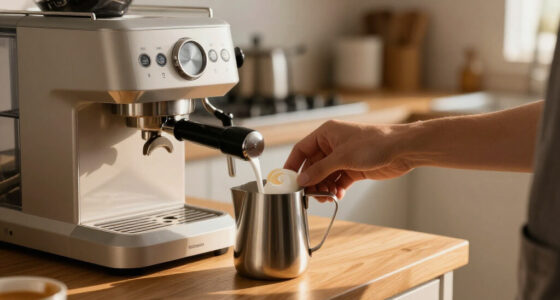
Heating and steaming performance determine how quickly you can make a drink and whether the machine keeps pace with more than one order. Compact models may use thermoblocks or smaller boilers, but specifications and operation vary. Check warm-up time, recovery between drinks, and whether you can steam milk while brewing; these details matter when breakfast is a two-cappuccino relay.
A solo espresso drinker may be happy to switch modes and wait a moment for steam. Someone preparing a flat white and a cappuccino in succession may prefer a machine that handles milk drinks efficiently. A compact setup can save valuable counter space, but a slower sequence may cost more time every morning.
Features such as PID temperature control, pressure profiling, fast-heating systems, or automatic milk functions appear on some newer compact machines. Their presence does not guarantee the same experience across models, and a longer feature list does not answer the practical question: can this machine make your usual drink at your usual pace? Read the operating instructions and specifications for the exact model.
Use this five-step check before you buy
Measure and test your whole coffee station before choosing a compact model. This five-step check catches the awkward details that product photos often hide, from a trapped water tank to a mug that cannot clear the spout.
- Measure the available area. Record counter width, depth, and cabinet clearance where the machine will sit.
- Add access space. Check room for lids, removable tanks, bean loading, controls, drip trays, and regular cleaning.
- Map your setup. Include a grinder, tamper, pitcher, and knock box if you use them; measure the combined footprint.
- Test your actual cups. Measure your tallest everyday mug and compare its height with the spout and drip tray.
- Match capacity to demand. Count daily drinks and decide how often you will refill water, empty grounds, and clean milk parts.
For example, a renter with one narrow counter and one morning espresso may find a capsule machine or compact manual setup fits neatly. A small office serving several people may need faster consecutive drinks and easier access to the tank, even if that calls for a wider machine.
Small convenience still comes with cleaning and care
Compact machines still need regular cleaning, and tight components can make maintenance more noticeable. Empty the drip tray and grounds container as directed, clean milk-contact parts after use, and follow the manufacturer’s schedule for descaling and internal cleaning. A small tray may need attention sooner simply because it holds less.
Built-in grinders save separate counter space, but coffee oils and grounds collect inside them. Milk systems need careful rinsing and cleaning, especially when automatic functions hide tubing or internal parts. If you want the fewest chores, compare the care instructions before choosing a feature-rich machine.
Capsule machines often simplify cleanup because used pods are contained, but you still need to empty the capsule bin and care for the water path. Portable espresso makers are another option for travel, though some need hot water supplied separately or manual pumping. They are not always a direct substitute for a countertop machine that heats, grinds, and brews for you.
Keep these four checks in mind when comparing models
The best compact machine fits your routine as well as your counter. Before you decide, return to the details that affect every drink: space, cup clearance, capacity, and upkeep. A short checklist makes it easier to compare specifications without getting distracted by a long feature list.
- Measure the full setup: include the machine, grinder, and the space your hands need to work.
- Match tank and bin size: base your choice on your household’s usual drink count.
- Check workflow: look at heating, milk steaming, and recovery if you prepare several drinks in a row.
- Plan for cleaning: make sure tanks, trays, brew groups, and milk parts are practical to reach.
If you are exploring machines with premium features in a compact footprint, you can also read this guide to compact high-end espresso machines. Compare any options there against your measurements and daily routine, since specifications and product ranges can change.
Frequently Asked Questions
Can a small espresso machine make espresso as good as a full-size machine?
Size alone does not determine espresso quality. The grinder, coffee, machine controls, and your preparation all matter, while compact machines vary in how much control they offer. Compare the exact model’s features and workflow instead of assuming a smaller body means a weaker shot.
How many drinks can I make before refilling a compact machine?
It depends on tank size and your drink routine. Check the stated water capacity and count how many drinks you make in a typical session; milk drinks may also use water for rinsing or cleaning. A removable tank can make frequent refills less of a nuisance.
Will a compact espresso machine fit under my cabinets?
Measure both the machine and the access it needs. Check the cabinet-to-counter height, then see whether the lid opens or the water tank lifts out from the top. If access is blocked, you may need to pull the machine forward for routine refills.
Is a built-in grinder worth the extra space?
A built-in grinder can save the counter space used by a separate appliance. It can also add height, noise, and cleaning needs, so compare the full machine with a separate grinder and brewer before choosing. Your preference for convenience or hands-on control can tip the decision.
Can compact espresso machines make milk drinks?
Many can, but milk-drink workflow varies by model. Check the steaming method, recovery between drinks, and whether brewing and steaming can happen at the same time. If you regularly make two or more cappuccinos, those details may matter more than a narrow footprint.
Conclusion
Buy the smallest machine that makes your regular coffee routine feel easy. Measure the whole station, try your real cups, and check the refill, milk, and cleaning steps before you commit.
A good compact setup should leave your counter with room to breathe—and your morning with enough room for coffee.
Fall Picks
fall essentials
As an affiliate, we earn on qualifying purchases.