
TL;DR
Coffee water meters report different properties: TDS estimates dissolved material, EC measures conductivity, hardness tracks calcium and magnesium, alkalinity reflects resistance to acidity changes, and pH describes acidity at the moment of testing. A commonly cited brewing-water benchmark is about 150 mg/L TDS, but that number cannot reveal mineral balance or prove that water is safe to drink. Use readings to compare water consistently, then check composition and your equipment maker’s guidance.
Your meter flashes 150 ppm, and the number looks reassuring. But that reading can’t tell you whether your water has the calcium and alkalinity your coffee needs, or whether it could leave scale inside your espresso machine.

Get coffee and tea gear delivered free with Prime
- Fast, free delivery on millions of items
- Prime Video, Amazon Music and more included
- Member-only deals all year
To make sense of coffee water numbers, you need to know what each measurement describes and what it leaves out. This guide explains TDS, conductivity, hardness, alkalinity, and pH in plain language, then walks you through taking a repeatable reading and deciding what to do with it.
You’ll also see why a water meter can help you spot changes without acting as a drinking-water safety test. Think of it like checking the dashboard before a drive: useful signals, but no single gauge tells you everything about the engine—or the road.
TDS usually estimates dissolved material from conductivity; it does not identify the mineral mix.
Hardness mainly tracks calcium and magnesium, while alkalinity describes resistance to acidity changes.
About 150 mg/L TDS is a commonly cited brewing-water benchmark, not a guarantee of good flavor or machine compatibility.
Measure the water after filtration and repeat readings under consistent conditions.
A TDS or EC meter is not a test for lead, pathogens, or other specific drinking-water contaminants.
Read Coffee Water Numbers
Meters reveal useful clues about coffee water, but each measures a different property. Use readings to compare water consistently, then check mineral composition and your equipment maker’s guidance.
Know what each reading tells you
A meter measures specific properties, not a complete score for coffee water.
Estimated dissolved material
Usually converted from conductivity; it does not identify the minerals. Different waters can show the same TDS and brew differently.
Electrical conductivity
Shows how readily water conducts electricity. Dissolved ions generally raise the reading.
Calcium and magnesium
These minerals affect extraction and can contribute to scale in kettles and boilers.
Resistance to acidity changes
Often linked to bicarbonate, it influences how brightly coffee’s acidity comes through.
Read the cup and protect equipment
Water balance affects both flavor and mineral buildup.
- Very low-mineral water can taste thin or unbalanced.
- High alkalinity can soften lively acidity and leave coffee tasting dull.
- Taste alongside measurements; results depend on the coffee and brew method.
- Hardness and alkalinity matter for scale buildup.
- A water recipe that tastes good may not suit your espresso machine.
- Follow the equipment maker’s water guidance.
Take a repeatable reading
Test the water you brew with and keep conditions consistent.
Confirm whether it measures EC, estimated TDS, pH, or another property; note units and conversion scale.
Use the manufacturer’s recommended calibration method and solution.
Rinse the probe as directed, avoid touching its sensing area, and let the reading stabilize.
Measure at a consistent temperature and use automatic temperature compensation if available.
Measure after filtration, repeat surprising results, and use a more complete test when needed.
Know What Your Meter Is Actually Measuring
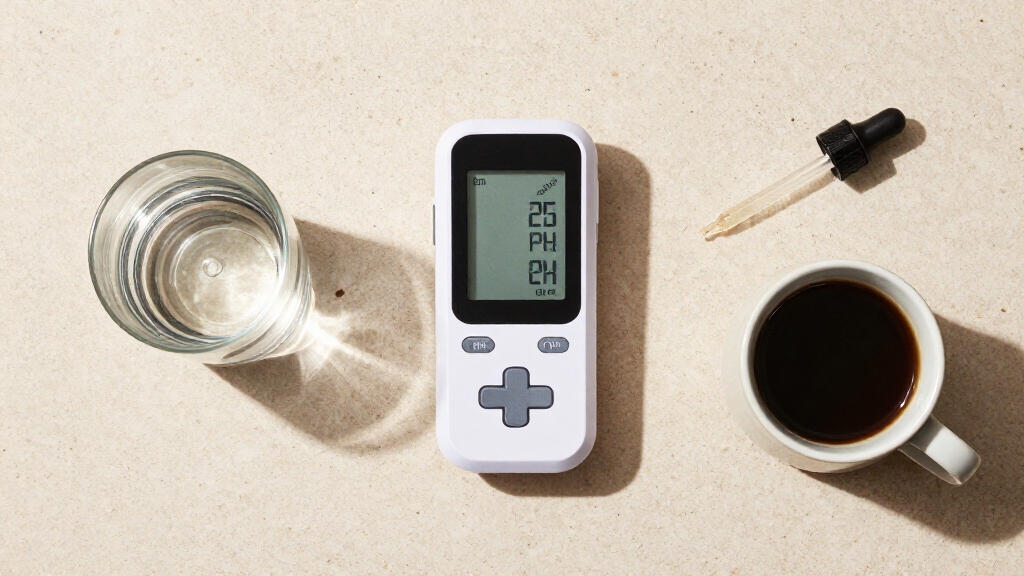
Water quality meters report specific properties, not a complete score for coffee water. A TDS meter usually estimates dissolved material from electrical conductivity, while other instruments may measure pH or temperature. Before you trust a number, check the meter’s display, units, and manual so you know whether it reports a direct measurement or a conversion.
TDS means total dissolved solids and often appears in parts per million (ppm). Most handheld TDS meters do not identify each dissolved substance; they measure how readily the water conducts electricity and apply a conversion factor. That is why two samples with different mineral mixes can display the same TDS.
Electrical conductivity (EC) is the underlying conductivity measurement, commonly shown in microsiemens per centimeter (µS/cm). Dissolved ions generally make water conduct electricity more readily. If your meter offers an EC or TDS mode, the same sample may show two different-looking values because the TDS display is calculated from EC using the meter’s chosen scale.
Imagine two shopping bags that each weigh five pounds: one holds apples, the other holds books. The scale gives you the same total, but it can’t tell you what’s inside. A brewer comparing tap and filtered water at home can use TDS to notice a change, then use a more detailed test to learn which minerals changed. That is the difference between a useful trend reading and a recipe-ready analysis.
Some devices also show oxidation-reduction potential (ORP) or temperature. Those readings have uses in other settings, but daily coffee-water decisions usually begin with mineral composition, hardness, and alkalinity. Check the meter’s instructions for calibration and units; a label that says “TDS” does not mean the device directly counted every dissolved substance.
Products Worth Considering

KitchenAid Classic Series 4.5-Quart Tilt-Head Stand Mixer, Onyx Black

Weber Spirit E-425 4-Burner Propane Gas Grill, Black

Cuisinart GreenGourmet Hard Anodized 12-Piece Cookware Set
As an affiliate, we earn on qualifying purchases.
Use Hardness and Alkalinity to Predict Flavor and Scale
Hardness and alkalinity tell you different things, even when both appear as ppm as CaCO₃. Hardness mainly reflects dissolved calcium and magnesium; alkalinity describes how well the water resists changes in acidity, often because of bicarbonate. Their shared unit does not make them interchangeable, so a single hardness result can’t stand in for an alkalinity test.
For the cup, calcium and magnesium contribute to extraction, while alkalinity influences how brightly coffee’s acidity comes through. Water with very little mineral content may make a cup taste thin or unbalanced. Water with high alkalinity can soften the lively, tart notes in a light roast, leaving the cup tasting flat. Coffee changes with the beans and brewing method, so these are clues to test alongside taste, not guaranteed outcomes.
For your machine, hardness and alkalinity also matter because mineral deposits can build up on heated surfaces. If your kettle develops a chalky ring after repeated boils, that visible residue is a hint that minerals are present; an espresso boiler hides the same buildup inside. A tasty water recipe can still be a poor fit for a particular machine, so check the maker’s water guidance before choosing one.
A handy analogy: hardness is the mineral load, while alkalinity is the water’s buffer against acidity, like a small cushion between the brew and a sharp edge. If your café’s filter has just been replaced, record both values on the filtered water and taste the same coffee before and after. That concrete comparison gives you more to act on than a vague “the water feels different.”
For a complete recipe check, use a test that distinguishes calcium, magnesium, and alkalinity, or begin with a known formulation and measured additions. TDS alone cannot confirm those ingredients or their balance.
Treat 150 ppm as a Starting Point, Not a Flavor Guarantee
A commonly cited Specialty Coffee Association brewing-water benchmark is around 150 mg/L TDS, with a broader stated range of about 75–250 mg/L. Treat those figures as a reference point, not a universal target for every bean, brewer, or machine. The same reference describes pH near 7 and ranges for hardness and alkalinity, but a single TDS number cannot tell you whether your water matches the mineral balance behind a good cup.
For dilute water solutions, people often treat ppm and mg/L as approximately equivalent in practical readings. Still, the exact relationship depends on context, and your meter’s conversion scale can affect its displayed TDS. If you compare readings, use the same meter and settings each time; switching devices or scales can make a normal difference look like a water change.
Say your filtered water reads 145 ppm and your coffee tastes sweet, clear, and balanced. That reading gives you a useful baseline. If the cup later turns dull, you might compare the water again, but you should also check the filter age, grind, and brew ratio before blaming the meter. A similar TDS on two sources does not mean their mineral composition is identical.
Taste and equipment needs can pull in different directions. A water blend that makes a particular coffee shine may not fit your machine’s limits for hardness or alkalinity. Follow the manufacturer’s guidance for your espresso machine or kettle, especially if you use remineralized reverse-osmosis or distilled water. Better flavor is not a reason to ignore what the equipment maker specifies.
Water quality practice increasingly treats hardness, alkalinity, and specific mineral recipes separately instead of using TDS as a complete quality score. That helps you make a more informed adjustment: if acidity seems muted, checking alkalinity may be more revealing than chasing a lower TDS number.
Take a Repeatable Reading in Five Simple Steps
You get a useful meter reading by testing the water you brew with, under consistent conditions. A careful routine helps you tell a genuine change from a dirty probe, stale filter, or temperature difference. Follow your meter’s own instructions for rinsing, calibration, sample depth, and probe care.
- Check the measurement and units. Confirm whether the display shows EC, estimated TDS, pH, or another property. Note the units and, for TDS, any conversion scale listed in the manual.
- Calibrate when recommended. Use the maker’s calibration solution and schedule, especially for a pH meter. Calibration helps you catch drift before it misleads your brew adjustments.
- Prepare a clean sample and probe. Rinse the probe as directed, avoid touching its sensing area, and use a clean cup. Let the reading settle instead of copying the first flickering number.
- Keep temperature consistent. Temperature can affect a reading. If your meter has automatic temperature compensation, check how to use it; otherwise, sample and measure in a consistent way.
- Test after filtration, then repeat surprises. Measure the water that actually goes into your brewer. If a result looks unusual, test another sample and consider a more complete water test.
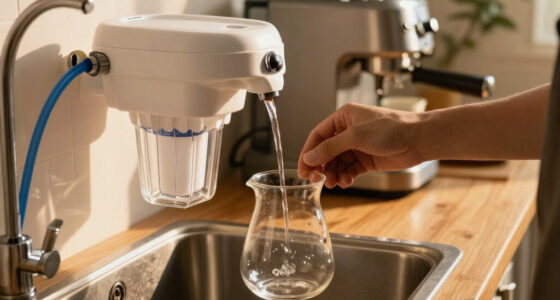
Here’s a real kitchen example: your tap water reads one value, but your espresso machine uses water from a countertop filter. The tap result cannot describe the filtered water. Measure at the filter’s output, write down the result and date, and repeat that check when the cartridge changes or your coffee begins tasting different.
A short log makes changes easier to spot: record the source, meter mode, reading, date, and filter age. Consistency matters more than false precision from a budget instrument. Low-cost meters can help you compare broad changes, but they are not laboratory chemical analysis. For water recipes, use tests that distinguish the minerals involved rather than trying to infer the recipe from TDS alone.
Match the Test to the Question You Want Answered
Choose a test based on the decision you need to make: flavor, scaling, or safety call for different evidence. An EC or TDS meter can compare samples; hardness and alkalinity tests can clarify mineral questions; drinking-water concerns require testing for specific contaminants. One tool cannot answer all three questions just because its display shows several digits.
If you’re dialing in a pour-over and the cup tastes hollow, compare your brew water with a more mineral-balanced option and keep your recipe steady. If your espresso machine needs protection, prioritize the manufacturer’s limits and appropriate hardness or alkalinity checks. If you’re worried about lead or microbes, a TDS meter cannot confirm whether they are present or absent; use an appropriate water-safety test or guidance for your area.
Many household filters reduce chlorine or certain contaminants while leaving much of the dissolved mineral content in the water. So filtered water may still show a high TDS, depending on the filter type and condition. A number that barely changes after filtration doesn’t prove the filter has failed: it may target substances that a basic TDS reading does not reveal.
Distilled and reverse-osmosis water may need remineralization for brewing and equipment compatibility, but the right approach depends on your machine and water recipe. If you are blending or adding minerals, measure carefully and use a formulation that states what it supplies. A barista experimenting with a new mineral concentrate could log each addition and taste the same coffee, instead of adding minerals until the meter shows a preferred number.
Water quality meters can help coffee brewers track changes, compare sources, and notice broad differences. They cannot by themselves certify water safety or identify every dissolved compound. If safety is the question, seek a test built for the substance you’re concerned about.
Use a Small Water Log to Make Better Coffee Decisions
A simple water log connects meter readings to what you taste and what your equipment needs. The number becomes more useful when you record the sample source, date, filter age, brewing method, and a short flavor note. This gives you a way to compare like with like instead of chasing a reading in isolation.
For example, write: “Filtered water, cartridge six weeks old, 148 ppm TDS, light roast pour-over tasted muted.” Repeat the same coffee and brew recipe after replacing the cartridge. If the reading and flavor both shift, you have a stronger reason to investigate the water; if only the flavor shifts, grind size, dose, or bean age may explain the change better.
Keep separate notes for taste goals and machine limits. A lively cup might be your preference, while the machine maker sets a hardness range to reduce scale risk. If the two seem to conflict, get a more complete water analysis and consult the equipment guidance instead of assuming a TDS reading settles the choice.
Recent coffee-water practice has put more attention on repeatable mineral recipes, blending, and remineralizing low-mineral water. That can make comparisons easier when you brew often or use specialty coffee, but it does not turn a handheld meter into a lab instrument. Product displays and water guidance can change, so check current specifications when you choose a device or set a recipe.
Think of the log like a cook’s notebook: the first attempt tells you what happened, and the next one tells you what changed. If you want help choosing a device for espresso, Espressoguide’s guide to water quality meters for espresso can help you compare the kinds of readings different meters offer. Use the meter as a steady reference, then let a proper composition test answer questions that the display cannot.
Frequently Asked Questions
Is a TDS meter enough to tell me whether water is good for coffee?
No. A TDS meter usually estimates dissolved material from conductivity and does not identify the minerals or their balance. Use it to compare samples, then check hardness and alkalinity when you need a fuller picture.
What TDS should I aim for when brewing coffee?
A commonly cited brewing-water reference is about 150 mg/L TDS, with a broader range of roughly 75–250 mg/L. Treat it as a starting point because taste, mineral composition, brewing method, and machine requirements all matter.
Are ppm and mg/L the same for coffee water?
For dilute water solutions, people often treat ppm and mg/L as approximately equivalent in everyday use. Read your meter’s manual, since its display and conversion scale affect how you should compare results.
Why can two waters with the same TDS taste different?
They can contain different mixes of dissolved minerals while producing the same estimated total. Calcium, magnesium, and bicarbonate affect extraction and perceived acidity in different ways, so equal TDS does not mean equal brewing behavior.
Does a TDS meter test whether my water is safe to drink?
No. A basic TDS or EC meter cannot confirm that water is free of lead, pathogens, or other specific contaminants. Use an appropriate safety test for the concern you have.
Why does my filtered water still show a high TDS?
Many filters reduce chlorine or certain contaminants while leaving much of the dissolved mineral content behind. The reading depends on the filter type and condition, and a small TDS change alone does not prove the filter has failed.
Conclusion
Remember what your meter can answer before you act on its number. Use TDS or EC to compare water consistently, test hardness and alkalinity when flavor or scale calls for a closer look, and follow your machine maker’s limits. If you’re checking drinking-water safety, choose a test designed for the contaminant in question.
Keep a few readings beside your tasting notes. Then the next time your coffee shifts from bright to flat, you’ll have more than a blinking number—you’ll have a trail to follow, one cup at a time.