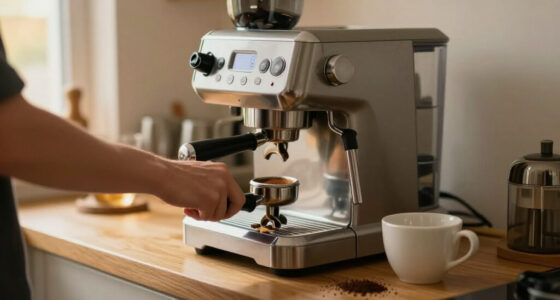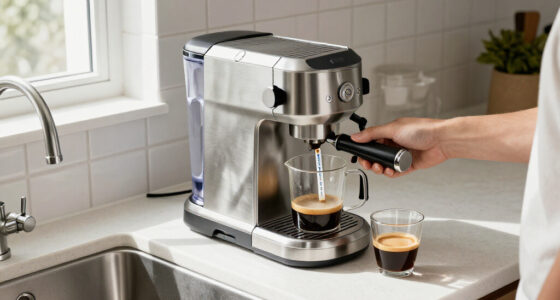

The best manual lever espresso machines pair hands-on pressure control with a setup that fits your counter, skill level, and routine. I rank the La Pavoni PC-16 Professional as the best overall for its substantial lever-machine format and ability to support repeat brewing, while the Flair Classic is a more approachable value pick and the Flair 2GO suits portable brewing. The main tradeoff is between a more involved, durable-feeling machine and a simpler, packable setup that asks you to manage more steps yourself. Pressure gauges and dual-lever controls can add feedback, but they do not replace a capable grinder or careful preparation. Read on for how all six options differ and which type of brewer each suits.
Complete the kit


Key Takeaways
- The La Pavoni PC-16 Professional ranks first for buyers seeking a substantial manual lever machine for regular home brewing, while its greater involvement makes it less suited to someone who wants a quick, simple routine.
- The Flair Classic is the value-oriented entry point in this group; buyers give up some of the specialized feedback and portability offered by the PRO and 2GO models.
- The Flair 2GO prioritizes packability, making it the clearest fit for travel or limited storage, though its compact format brings more setup steps than a countertop machine.
- The Flair 49 PRO and dual-lever pressure-control set emphasize pressure feedback; that control can help refine technique, but it also gives beginners more variables to learn.
- The La Pavoni EPC-8 Europiccola is the premium-style alternative to the PC-16, while the two Flair lever models offer a more compact, modular approach to manual espresso.
| La Pavoni PC-16 Professional Lever Espresso Machine |  | Best for Serving a Small Group | Model: PC-16 | Operation: Lever-operated espresso machine | Boiler capacity: 38 oz | VIEW LATEST PRICE | See Our Full Breakdown |
| Flair 2GO Portable Collapsible Lever Espresso Machine, Grounds Model |  | Best for Travel | Type: Manual espresso machine | Brew pressure: 6–9 bar | Capacity: 60 ml | VIEW LATEST PRICE | See Our Full Breakdown |
| Manual Espresso Maker Set with Dual-Lever Pressure Control |  | Best for Shot Profiling | Pressure range: 3–12 bar | Construction: 4 mm stainless steel with brass reinforcements | Weight: 3.8 kg (8.4 lb) | VIEW LATEST PRICE | See Our Full Breakdown |
| Flair Classic Manual Lever Espresso Maker |  | Best for a Simple Manual Setup | Machine type: Manual lever espresso maker | Coffee dose: Up to 18 grams | Water per shot: 60 ml | VIEW LATEST PRICE | See Our Full Breakdown |
| La Pavoni EPC-8 Europiccola Manual Lever Espresso Machine |  | Best for Personal Home Espresso | Model: EPC-8 Europiccola | Operation: Manual lever | Water capacity: 0.8 L | VIEW LATEST PRICE | See Our Full Breakdown |
| Flair 49 PRO Manual Lever Espresso Maker with Pressure Gauge, Black |  | Best for Pressure Feedback | Type: Manual lever espresso maker | Portafilter size: 49 mm | Pressure gauge: Integrated; marked espresso zone from 5–9 bar | VIEW LATEST PRICE | See Our Full Breakdown |
| manual lever espresso machine | Pressure gauge |
|---|---|
| La Pavoni PC-16 Professional L | Integrated |
| Flair 2GO Portable Collapsible | — |
| Manual Espresso Maker Set with | 360° |
| Flair Classic Manual Lever Esp | — |
| La Pavoni EPC-8 Europiccola Ma | — |
| Flair 49 PRO Manual Lever Espr | Integrated; marked espresso zone from 5–9 bar |
More Details on Our Top Picks
La Pavoni PC-16 Professional Lever Espresso Machine
The PC-16 Professional suits buyers who want a lever machine with enough boiler capacity to make several drinks before refilling. Its 38-ounce brass boiler is rated for up to 16 shots per fill, giving it a clear serving advantage over the La Pavoni EPC-8, which is designed for one or two cups at a time. The integrated pressure gauge adds feedback as you pull the lever, while the steam wand and automatic cappuccino maker give milk drinkers two ways to prepare foam. That broader setup comes with more upkeep: the boiler needs regular descaling, and the polished chrome calls for gentle cleaning. Choose this model for home gatherings or a small office; skip it if you want a compact, low-maintenance machine.
Pros:- 38-ounce boiler is rated for up to 16 shots per fill
- Lever operation and an integrated pressure gauge offer hands-on brewing control
- Includes both a steam wand and an automatic cappuccino maker
- Instructional materials support learning espresso preparation and milk frothing
Cons:- Requires regular descaling
- Chrome finish needs nonabrasive cleaning
- Fresh grounds are needed for each brewing cycle
Best for: Households or small offices that want to prepare several espresso drinks and milk drinks between refills.
Not ideal for: Buyers seeking a compact, low-upkeep setup or a machine that does not require fresh grounds for each shot.
- Model:PC-16
- Operation:Lever-operated espresso machine
- Boiler capacity:38 oz
- Boiler material:Nickel-plated brass
- Capacity:Up to 16 shots per fill
- Milk frothing:Steam wand and automatic cappuccino maker
- Pressure gauge:Integrated
- Origin:Italy
Our verdict“Choose the PC-16 if you want a lever machine with higher serving capacity and built-in milk-frothing options.”
Flair 2GO Portable Collapsible Lever Espresso Machine, Grounds Model
The Flair 2GO is the lineup’s travel specialist: it collapses into a case measuring 9.5 × 5.25 × 4 inches and weighs less than four pounds. That makes it far easier to pack than the 3.8 kg Manual Espresso Maker Set with Dual-Lever Pressure Control, which offers more adjustment but is much heavier. The 2GO’s integrated gauge helps you monitor pressure across its 6–9 bar brewing range, so portability does not mean giving up all feedback. Its bottomless 2-in-1 portafilter also supports hands-on control. The tradeoff is the setup around the machine: you need an espresso-capable burr grinder and must supply the effort for each pull. Pick it for trips where you can bring or access good grinding equipment; it is a poor fit for effortless espresso on the go.
Pros:- Collapsible design packs into a compact travel case
- Weighs less than four pounds
- Integrated gauge provides pressure feedback across a 6–9 bar range
- Aircraft-grade aluminum frame and stainless steel brew cylinder
Cons:- Requires an espresso-capable burr grinder
- Manual lever operation takes physical effort
- 60 ml capacity limits the brew volume
Best for: Travelers and campers who pack light, have access to an espresso-capable burr grinder, and want control over manual shots.
Not ideal for: Buyers who need a self-contained coffee setup or want to avoid the effort and extra equipment required for manual brewing.
- Type:Manual espresso machine
- Brew pressure:6–9 bar
- Capacity:60 ml
- Weight:Less than 4 lbs
- Case dimensions:9.5 × 5.25 × 4 in (253 × 135 × 104 mm)
- Frame material:Aircraft-grade 6061 aluminum
- Brew cylinder material:Stainless steel
- Portafilter:Bottomless 2-in-1
Our verdict“Choose the Flair 2GO if compact packing matters more than an all-in-one setup.”
Manual Espresso Maker Set with Dual-Lever Pressure Control
For buyers who want to shape a shot rather than repeat a fixed lever pull, the Dual-Lever Pressure Control set offers the broadest stated adjustment range here: 3–12 bar, with pre-infusion and adjustable water temperature. Its 360° pressure gauge makes that pressure feedback visible as you work. Compared with the Flair Classic, which emphasizes a straightforward manual setup and two portafilter options, this set gives more room to experiment with extraction variables. The cost of that flexibility is a steeper hands-on process and a weight of 3.8 kg, which makes its “portable” description relative; the Flair 2GO is much lighter for actual travel. Choose it if profiling is the point and you have a stable counter space. Skip it if you want quick, simple shots.
Pros:- 3–12 bar pressure range enables varied shot profiles
- Pre-infusion and brewing parameters are adjustable
- 360° pressure gauge supports monitoring during extraction
- Stainless steel and brass construction with a 58 mm portafilter
Cons:- At 3.8 kg, it is heavy compared with the Flair 2GO
- Requires hands-on control throughout brewing
- Adjustable settings may add complexity for buyers who want a simple routine
Best for: Espresso hobbyists who want to adjust pressure, pre-infusion, and water temperature while dialing in shots.
Not ideal for: Frequent travelers or beginners who want a lightweight machine with a simpler brewing routine.
- Pressure range:3–12 bar
- Construction:4 mm stainless steel with brass reinforcements
- Weight:3.8 kg (8.4 lb)
- Portafilter size:58 mm
- Adjustable water temperature:92°–98°C
- Pressure gauge:360°
- Pre-infusion:Adjustable pre-infusion time
Our verdict“Choose this set if pressure profiling and temperature adjustment matter more to you than easy portability.”
Flair Classic Manual Lever Espresso Maker
The Flair Classic keeps the workflow focused: add up to 18 grams of coffee, use separately boiled water, and pull the shot by hand. Its detachable stainless steel brewing head can be rinsed after use, and the included bottomless 2-in-1 and Flow Control portafilters give buyers two brewing approaches without adding an electrical system. That makes it a more straightforward choice than the Dual-Lever Pressure Control set, which adds temperature and pressure adjustments for users who want to tune each extraction. The Classic’s simplicity still asks something of the owner: water must be heated separately, and every shot takes manual effort. With a 40 ml yield and no boiler, it is best for a personal espresso routine rather than serving several people in succession.
Pros:- Fully manual operation requires no plugs or electronics
- Includes bottomless 2-in-1 and Flow Control portafilters
- Detachable stainless steel brewing head is easy to rinse
- Press stand and brewing head have a 3-year warranty
Cons:- Requires manual effort for every shot
- Water must be boiled separately
- 40 ml shot yield is suited to individual servings
Best for: Solo espresso drinkers who want a plug-free manual machine with two portafilter options and easy-to-rinse brewing parts.
Not ideal for: People who want integrated heating, minimal physical effort, or a machine suited to serving a group quickly.
- Machine type:Manual lever espresso maker
- Coffee dose:Up to 18 grams
- Water per shot:60 ml
- Shot yield:40 ml
- Portafilters:Bottomless 2-in-1 and Flow Control
- Brewing head:Detachable stainless steel
- Dimensions:6 × 12 × 10 inches
- Warranty:3 years for press stand and brewing head
Our verdict“Choose the Flair Classic for a simple, plug-free espresso routine with flexible portafilter options.”
La Pavoni EPC-8 Europiccola Manual Lever Espresso Machine
The EPC-8 Europiccola is aimed at a different kind of manual brewing than the Flair Classic: its 0.8 L water capacity and chrome-and-silver design suit a home counter where one or two cups at a time are enough. The lever lets you control extraction directly, while a removable drip tray makes routine cleanup simpler. Compared with the PC-16 Professional, the EPC-8 has a smaller stated serving capacity and lacks the listed steam wand, automatic cappuccino maker, and pressure gauge. That narrower setup may suit someone who wants espresso for personal use without choosing the larger machine’s broader drink-making kit. Its limits are clear: manual pulls take effort, and the one-or-two-cup format is not built for serving a crowd. Pick it for a focused home routine.
Pros:- Lever operation gives direct control over extraction
- 0.8 L water capacity suits personal use or small offices
- Removable drip tray simplifies maintenance
- Chrome and silver finish has a polished look
Cons:- Makes only one or two cups at a time
- Manual lever operation requires hands-on effort
- Product data does not list a pressure gauge or milk-frothing accessories
Best for: Home espresso drinkers or small offices that usually prepare one or two cups at a time.
Not ideal for: Households that regularly serve several people or buyers seeking listed milk-frothing accessories and pressure feedback.
- Model:EPC-8 Europiccola
- Operation:Manual lever
- Water capacity:0.8 L
- Finish:Chrome and silver
- Serving capacity:One or two cups at a time
- Drip tray:Removable
Our verdict“Choose the EPC-8 if you want a home lever machine for one or two cups at a time.”
Flair 49 PRO Manual Lever Espresso Maker with Pressure Gauge, Black
The Flair 49 PRO suits espresso drinkers who want direct control and a clearer cue for adjusting their lever technique. Its integrated pressure gauge marks an espresso zone from 5–9 bar, giving you feedback as you press; compared with the simpler Flair Classic, that makes pressure adjustments easier to track. The included pressurized and bottomless baskets also let newer users start with more forgiving brewing and move toward a more hands-on setup. Stainless steel brew components keep plastic out of the brew path, while its roughly 12 × 8-inch footprint fits a counter or office nook. The tradeoffs are the physical effort required for each shot and a 49 mm portafilter, which is smaller than the traditional 58 mm size. Choose it for feedback and control, not push-button convenience.
Pros:- Integrated gauge provides a marked 5–9 bar espresso zone for pressure feedback
- Stainless steel cylinder, valve plunger, and stem keep plastic out of the brew water
- Pressurized and bottomless baskets accommodate different experience levels
- Compact footprint suits a kitchen counter or office
Cons:- Pulling a shot requires applying force to the lever
- The 49 mm portafilter is smaller than the traditional 58 mm format
Best for: Home baristas who want pressure feedback while learning to pull shots manually, with baskets that support both forgiving and more hands-on brewing.
Not ideal for: People who want effortless, repeatable shots at the press of a button or prefer the accessory compatibility of a traditional 58 mm portafilter.
- Type:Manual lever espresso maker
- Portafilter size:49 mm
- Pressure gauge:Integrated; marked espresso zone from 5–9 bar
- Brew path materials:Stainless steel cylinder, valve plunger, and stem
- Included baskets:Pressurized and bottomless
- Footprint:Approximately 12 × 8 inches
- Color:Black
Our verdict“Choose the Flair 49 PRO if pressure feedback and manual control matter more to you than low-effort brewing or a 58 mm portafilter.”

How We Picked
I compared these machines by how well their design supports controlled espresso brewing, how much setup and technique they ask of the owner, and how readily they fit different routines. I also weighed portability, pressure feedback, construction style, likely cleanup needs, and whether the machine’s features solve a real buyer problem or add another variable to manage.
The PC-16 leads for its fuller home-machine role and balance of capability with practical use. The EPC-8 follows as a more premium-leaning alternative, while the Flair Classic earns its place as the straightforward value choice. The 49 PRO and dual-lever set rank for buyers who want pressure information and active control; the 2GO ranks for portability, where compactness matters more than a fixed countertop workflow. These are design-based comparisons of the six listed products, not claims of hands-on testing.
Factors to Consider When Choosing Best Manual Lever Espresso Machines
Manual lever machines reward attention to the whole brewing process. Before choosing a model, decide which parts of that process you want to control and which practical limits—counter space, water heating, storage, and cleanup—you can accommodate.
Decide How Much of the Process You Want to Control
A manual lever gives you direct influence over pressure and shot timing, but that control also shifts consistency onto your preparation and technique. Ask whether adjusting those variables sounds enjoyable or like extra work during a busy morning. A pressure gauge can make changes easier to observe, though it cannot tell you whether your grind, dose, or puck preparation is sound. New owners often assume more controls automatically make better espresso; controls are useful when you have a repeatable baseline to compare against. If you want to learn gradually, favor a simple workflow and add complexity only when you can identify what you want to change.
Plan for Water Heating and Temperature
Many manual lever setups require you to heat water separately, so the machine is only one part of the brewing station. Check what equipment you already own and where you will heat and pour water safely. Temperature can shift during preparation, especially when parts start cold, and that variation may affect a shot even if your lever technique is steady. A common buying mistake is comparing machines while overlooking the kettle, preheating, and serving steps around them. If convenience matters more than portability or hands-on control, account for the full workflow before committing to a compact manual design.
Match the Machine to Your Grinder
Lever machines need coffee ground finely and consistently enough for espresso, so grinder capability has a direct effect on how useful the machine will be. A machine with pressure feedback can show that resistance changed, but it cannot compensate for grounds that vary too much from shot to shot. Before buying, confirm that your grinder can make small, repeatable adjustments and that you are willing to dial in each coffee. Beginners sometimes spend their attention on the lever while changing several grind and dose variables at once. Keep one variable steady as you learn, and judge a machine by how well it fits the equipment you can actually use.
Measure Your Space and Storage Habits
Consider the whole footprint: machine, grinder, kettle, cups, and the room needed to operate the lever. A portable or collapsible model can solve storage and travel problems, but it may require assembly and a clean, stable surface each time you brew. A more permanent machine can make the routine feel settled while claiming more counter space. Think about whether you will leave the machine set up, store it between uses, or carry it away from home. Choosing by machine dimensions alone can leave you without room for the accessories and motions that make brewing workable.
Weigh Feedback Against Learning Curve
Gauges and pressure-control mechanisms are most helpful when you use them to repeat a recipe and make measured adjustments. They can also encourage beginners to chase a particular reading before the coffee itself tastes balanced. If you prefer to learn by feel, a simpler lever may keep attention on grind, dose, and shot flow. If you enjoy recording recipes, feedback can help you understand why one extraction differed from another. Choose the amount of instrumentation that matches your learning style, rather than treating extra indicators as a guarantee of easier brewing.
Think Through Cleanup and Replacement Parts
Manual machines still need regular attention to coffee residue, seals, and the parts that contact hot water. Before purchase, look for clear cleaning instructions and replacement parts for the components most likely to wear. A design that separates into a few accessible pieces may be easier to maintain than one that asks you to work around a more involved assembly. Consider how often you expect to brew, since daily use makes small cleanup annoyances more noticeable. A little research into maintenance can prevent a machine from becoming an occasional-use item simply because the after-shot routine feels cumbersome.
Frequently Asked Questions
Is a manual lever espresso machine a good first espresso machine?
It can be a good first choice if you want to learn how grind, dose, and pressure affect a shot and are comfortable with a hands-on routine. It is a less natural fit if you expect push-button convenience or need the same result with minimal adjustment each morning. A capable espresso grinder and access to hot water matter as much as the lever itself. For a beginner, a simpler design can make it easier to learn one variable at a time. Choose based on whether the process is part of the appeal.
Do I need a pressure gauge to make good espresso with a lever machine?
No; a gauge provides information, but it does not make the brewing decisions for you. You still need suitable coffee, consistent grinding, a well-prepared puck, and controlled operation. A gauge can help you repeat a pressure approach once you have a recipe that tastes good. It may be less useful at the start if you are already juggling several unfamiliar steps. Think of it as a learning aid for comparison, not a substitute for technique.
Can I use pre-ground coffee with these machines?
It may be possible, but pre-ground coffee often lacks the fine adjustment and freshness that espresso brewing benefits from. Lever machines are sensitive to how quickly water passes through the coffee, and grind size is a major part of that resistance. If you do not own an espresso-capable grinder, consider that limitation before choosing a machine built around hands-on pressure control. A quality grinder can make the learning process more predictable. For occasional brewing, a suitable pre-ground option may work, but expect less control over dialing in.
Which matters more: portability or a permanent countertop setup?
The right priority depends on where and how often you brew. A portable design is useful when storage space is tight or you want to bring your setup along, though packing and assembly become part of the routine. A machine that stays on the counter can be quicker to prepare for regular home use, but it needs dedicated room alongside a grinder and water-heating equipment. Think about the complete station rather than the lever alone. If you move the machine rarely, portability may add little practical value.
What should I budget time for beyond pulling the shot?
Plan for grinding, dosing, preparing the coffee bed, heating water, and cleaning after brewing. Depending on the machine and your setup, you may also need to preheat components so the brewing temperature stays more consistent. Those steps can take longer than operating the lever itself. This matters especially if you expect to make several drinks in succession or brew while rushing out the door. A manual machine is most satisfying when you have room in your routine for the preparation as well as the extraction.
Conclusion
I recommend the La Pavoni PC-16 Professional as the best overall pick for a home brewer who wants a substantial lever machine and accepts a hands-on routine. The Flair Classic is my best value choice and a sensible starting point for learning manual espresso. For a premium-style countertop option, consider the La Pavoni EPC-8 Europiccola; for a beginner who wants pressure feedback to study, the Flair 49 PRO offers a more instrumented path, though its controls add complexity. Choose the Flair 2GO if travel and compact storage come first, or the dual-lever pressure-control set if active pressure adjustment is your specific priority. The right choice comes down to whether you value a permanent home setup, a simpler learning curve, feedback, or portability most.