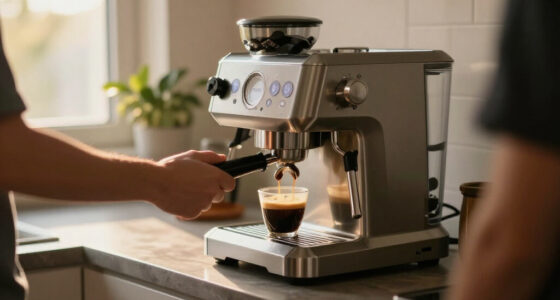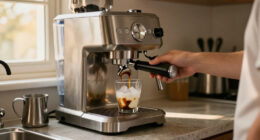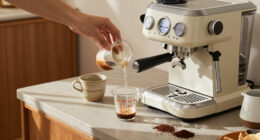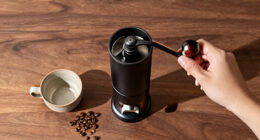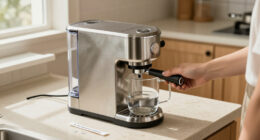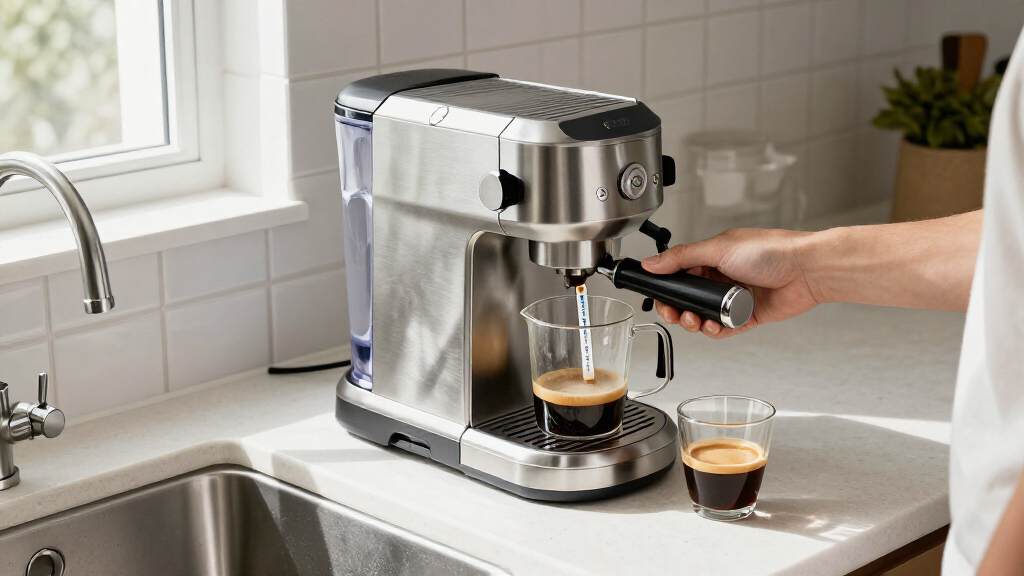
The best espresso machine for a hard water home is one you can maintain regularly, not simply one with the highest pressure or the most drink settings. My best overall pick is the Breville Barista Pro, which pairs an integrated grinder with fast heating and gives hands-on owners control over their routine. The Breville Bambino Plus is a simpler alternative for buyers who want fewer built-in systems to maintain, while the Ninja Luxe Café Premier suits households that want several kinds of coffee from one machine. The tradeoff is between convenience and complexity: grinders, frothers, and extra water paths can add upkeep, while simpler machines may require separate gear. Read on for the full comparison and the maintenance choices that matter most when your water leaves mineral scale.

Get coffee and tea gear delivered free with Prime
- Fast, free delivery on millions of items
- Prime Video, Amazon Music and more included
- Member-only deals all year
Complete the kit


Key Takeaways
- The Barista Pro ranks first for control and integrated workflow, but its built-in grinder adds another component to clean and maintain.
- The Bambino Plus is the simpler Breville route for buyers prioritizing a compact machine and a more straightforward setup over an integrated grinder.
- The Ninja Luxe Café Premier stands apart for drink variety; that versatility brings more systems and maintenance points than a basic espresso machine.
- Built-in self-cleaning does not mean scale-proof. The AMZCHEF self-cleaning model still calls for attention to the water and descaling routine.
- None of these model names alone establishes hard-water protection. Water treatment, the maker’s maintenance directions, and access to descaling procedures remain central to ownership.
| Breville BES878BSS Barista Pro Espresso Machine, Brushed Stainless Steel |  | Best Overall for Filter-Conscious Home Baristas | Heating system: ThermoJet | Water tank capacity: 67 oz | Bean hopper capacity: 1/2 lb | VIEW LATEST PRICE | See Our Full Breakdown |
| Breville BES870BTR Barista Express Espresso Machine, Black Truffle |  | Best for Hands-On Espresso Control | Operation mode: Semi-automatic | Water tank capacity: 67 oz | Bean hopper capacity: 1/2 lb | VIEW LATEST PRICE | See Our Full Breakdown |
| De’Longhi Classic Signature Espresso Machine with Adjustable Milk Frother |  | Best Lightweight Ground-Coffee Option | Operation mode: Fully automatic (as listed) | Coffee input: Ground coffee | Heating system: Thermoblock | VIEW LATEST PRICE | See Our Full Breakdown |
| Waterdrop MC-02M Semi-Automatic Espresso Machine, 20 Bar Pressure |  | Best Built-In Filtration Feature | Operation mode: Semi-automatic | Water tank capacity: 40 oz | Filtration media: Activated carbon and magnesium-enhanced media | VIEW LATEST PRICE | See Our Full Breakdown |
| AMZCHEF Espresso Machine With Grinder, Temp Control, 44 Grind Settings |  | Best for Grind and Temperature Adjustments | Operation mode: Semi-automatic | Water tank capacity: 60 oz | Grind settings: 44 | VIEW LATEST PRICE | See Our Full Breakdown |
| Breville Bambino Espresso Machine, Brushed Stainless Steel |  | Best Compact Manual Pick | Water capacity: 47 fluid ounces | Dimensions: 13.7 × 6.3 × 12 inches | Weight: 10.9 pounds | VIEW LATEST PRICE | See Our Full Breakdown |
| Breville Bambino Plus Espresso Machine, Brushed Stainless Steel |  | Best for Automatic Milk Texturing | Water capacity: Listed as 4 pounds in product data | Dimensions: 7.6 × 12.5 × 12.2 inches | Weight: 11 pounds | VIEW LATEST PRICE | See Our Full Breakdown |
| AIRMSEN Espresso Machine with Grinder, 20 Bar, Milk Frothing Steam Wand |  | Best Built-In Grinder on a Compact Footprint | Water tank capacity: 61 ounces | Dimensions: 10.2 × 7.9 × 12 inches | Weight: 15 pounds | VIEW LATEST PRICE | See Our Full Breakdown |
| Ninja Luxe Café Premier 3-in-1 Espresso Machine, Drip Coffee, & Cold Brew |  | Best for Hard-Water Maintenance Guidance | Water reservoir capacity: 70 ounces | Dimensions: 12.99 × 13.39 × 14.57 inches | Power: 1650 watts | VIEW LATEST PRICE | See Our Full Breakdown |
| AMZCHEF Espresso Machine with Self-Cleaning, 20-Bar Coffee Maker, Platinum |  | Best for Simplified Routine Cleaning | Water tank capacity: 44 ounces | Pump pressure: 20 bar | Power: 1350 watts | VIEW LATEST PRICE | See Our Full Breakdown |
| espresso machines for hard water home | Dimensions | Weight | Operation mode | Water tank capacity |
|---|---|---|---|---|
| Breville BES878BSS Barista Pro | 13"D x 14"W x 16"H | 19.5 pounds | — | 67 oz |
| Breville BES870BTR Barista Exp | 13.8"D x 12.5"W x 15.9"H | 22.1 pounds | Semi-automatic | 67 oz |
| De’Longhi Classic Signature Es | 11.22"D x 13.98"W x 15.94"H | 9.3 pounds | Fully automatic (as listed) | — |
| Waterdrop MC-02M Semi-Automati | 15.35"D x 7.48"W x 13.59"H | — | Semi-automatic | 40 oz |
| AMZCHEF Espresso Machine With | 12.5"D x 10.82"W x 13.38"H | 13.9 pounds | Semi-automatic | 60 oz |
| Breville Bambino Espresso Mach | 13.7 × 6.3 × 12 inches | 10.9 pounds | — | — |
| Breville Bambino Plus Espresso | 7.6 × 12.5 × 12.2 inches | 11 pounds | Semi-automatic | — |
| AIRMSEN Espresso Machine with | 10.2 × 7.9 × 12 inches | 15 pounds | — | 61 ounces |
| Ninja Luxe Café Premier 3-in-1 | 12.99 × 13.39 × 14.57 inches | — | Fully automatic | — |
| AMZCHEF Espresso Machine with | 12.1 × 13 × 6.5 inches | 8.5 pounds | Semi-automatic | 44 ounces |
More Details on Our Top Picks
Breville BES878BSS Barista Pro Espresso Machine, Brushed Stainless Steel
The Barista Pro is my strongest all-around pick here for hard-water homes where filtration and regular descaling are part of the routine, not an afterthought. Its 67-ounce removable water tank offers room for a filtration setup, though the supplied product details do not specify a built-in filter or a hard-water treatment system. The fast ThermoJet heater and built-in grinder make it easier to move from beans to espresso without a separate grinder or long warm-up. Compared with the Waterdrop MC-02M, it gives you more control over grinding and a larger reservoir, while the Waterdrop has the clearer built-in filtration advantage. The tradeoff is its footprint, weight, and hands-on learning curve; buyers wanting a simpler, smaller machine may prefer the De’Longhi Classic Signature.
Pros:- Built-in conical burr grinder with dose control reduces the need for separate equipment.
- ThermoJet heating system shortens the wait before brewing.
- 67-ounce water tank leaves room for a filter pitcher or other water-preparation routine.
- Manual steam wand offers control over milk texture for cappuccinos and lattes.
Cons:- No built-in water filtration or stated hard-water protection.
- Its 14-inch width and 19.5-pound weight can be awkward in a small kitchen.
- Dialing in grind, dose, and milk texture requires practice.
Best for: Home baristas who want an integrated grinder, quick heating, and a roomy tank that can accommodate their chosen water-filtration routine.
Not ideal for: Buyers seeking built-in hard-water treatment or an especially compact, low-effort machine; its listed features do not include integrated filtration, and its manual workflow takes practice.
- Heating system:ThermoJet
- Water tank capacity:67 oz
- Bean hopper capacity:1/2 lb
- Grinder:Built-in conical burr grinder with dose control
- Wattage:1680 watts
- Dimensions:13″D x 14″W x 16″H
- Weight:19.5 pounds
- Material:Stainless steel
Our verdict“Choose the Barista Pro if you want an integrated grinder and fast workflow, and are prepared to manage hard water with separate filtration and maintenance.”
Breville BES870BTR Barista Express Espresso Machine, Black Truffle
The Barista Express suits buyers who want to adjust their espresso routine themselves and pair it with a separate water-treatment plan. Its built-in conical burr grinder keeps the setup self-contained, while PID temperature control supports steadier extraction; neither feature filters hard water, so use appropriately treated water and follow the manufacturer’s descaling guidance. Against the Barista Pro, this model has a similar 67-ounce tank and integrated grinding, but lacks the Pro’s stated ThermoJet quick-heating system and LCD interface. That makes the Express a more traditional, hands-on alternative rather than a speed-focused upgrade. Its manual steam wand rewards practice, but the 22.1-pound body is heavy, and buyers who want filtration built into the machine should look to the Waterdrop MC-02M instead.
Pros:- Built-in conical burr grinder supports grinding fresh beans without a separate appliance.
- PID temperature control helps maintain consistent brewing temperature.
- 67-ounce water tank reduces how often it needs refilling.
- Manual steam wand provides control over milk texture.
Cons:- No built-in water filtration or stated scale-reduction feature.
- At 22.1 pounds, it is difficult to move and may overwhelm a small counter.
- Manual grinding, shot preparation, and milk texturing take practice.
Best for: Espresso hobbyists who want an integrated grinder, manual brewing control, and enough counter space for a substantial machine.
Not ideal for: People who need integrated hard-water filtration, a lightweight machine, or a more automated milk and espresso workflow.
- Operation mode:Semi-automatic
- Water tank capacity:67 oz
- Bean hopper capacity:1/2 lb
- Grinder:Built-in conical burr grinder
- Wattage:1600 watts
- Voltage:120 volts
- Dimensions:13.8″D x 12.5″W x 15.9″H
- Weight:22.1 pounds
Our verdict“Pick the Barista Express if manual control and an integrated grinder matter more than built-in filtration or a quicker, more guided workflow.”
De’Longhi Classic Signature Espresso Machine with Adjustable Milk Frother
At 9.3 pounds, the De’Longhi Classic Signature is the easiest machine in this group to move or fit into a kitchen where counter space is shared. Its removable tank and ground-coffee workflow keep daily handling straightforward, but the product details list no built-in water filter, so hard-water users will need to treat their water separately and keep up with descaling. Compared with the grinder-equipped Barista Express, this De’Longhi takes less space and avoids the extra grinder mechanism, but it cannot grind beans on demand. The adjustable steam wand gives it more milk-texturing flexibility than a basic espresso maker, while the manual process still asks for some learning. The listed tank-capacity figure is unusual, so I would verify usable water volume before buying.
Pros:- Light 9.3-pound listed weight makes it easier to reposition than the Breville machines.
- Removable water tank simplifies filling and routine cleaning.
- Adjustable steam wand supports different milk-frothing styles.
- Thermoblock heating system and 15-bar pump are specified.
Cons:- No built-in water filtration or stated hard-water treatment.
- Ground coffee is required; there is no integrated grinder or listed pod compatibility.
- The listed capacity of 3.6 pounds is unclear for an espresso machine’s water capacity.
Best for: Buyers with limited counter space who already use ground coffee and want a relatively light machine with a removable tank.
Not ideal for: People who want built-in filtration for hard water, a grinder, or a clearly specified large water reservoir.
- Operation mode:Fully automatic (as listed)
- Coffee input:Ground coffee
- Heating system:Thermoblock
- Output pressure:15 bar
- Water tank:Removable; capacity not clearly specified
- Wattage:1350 watts
- Dimensions:11.22″D x 13.98″W x 15.94″H
- Weight:9.3 pounds
Our verdict“Choose this De’Longhi if a lighter ground-coffee machine matters most and you are willing to handle water treatment and descaling separately.”
Waterdrop MC-02M Semi-Automatic Espresso Machine, 20 Bar Pressure
The Waterdrop MC-02M is the clearest match for this hard-water roundup because its listed activated-carbon and magnesium-enhanced filtration targets water taste and flavor before brewing. The product description does not state how much hardness or scale the system removes, so I would not treat it as a substitute for checking local water or following the maker’s maintenance instructions. Its adjustable pre-infusion gives hands-on users another way to shape extraction, and the 40-ounce tank is smaller than the 67-ounce reservoirs on both Breville machines. That means more refills, but the narrow 7.48-inch width may suit counters where the wider Barista Pro will not. This is a stronger filtration-led choice than the grinder-equipped AMZCHEF, though it requires separately sourced ground coffee.
Pros:- Built-in activated-carbon and magnesium-enhanced media are specified for water filtration.
- Adjustable pre-infusion allows some control over extraction.
- Narrow 7.48-inch listed width can fit tighter counters than the Breville machines.
- Stainless-steel construction and a steam wand support an espresso-and-milk workflow.
Cons:- Filtration claims do not specify hardness reduction or protection against scale buildup.
- The 40-ounce tank is smaller than the 67-ounce tanks on the Breville models.
- No built-in grinder or digital display is listed.
Best for: Hard-water households that prioritize an integrated taste-filtration system and are comfortable using pre-ground coffee and semi-automatic controls.
Not ideal for: Buyers who need verified scale reduction, a built-in grinder, or a large water reservoir for frequent drinks.
- Operation mode:Semi-automatic
- Water tank capacity:40 oz
- Filtration media:Activated carbon and magnesium-enhanced media
- Output pressure:9 bar
- Pre-infusion:Adjustable
- Material:Stainless steel
- Dimensions:15.35″D x 7.48″W x 13.59″H
Our verdict“Choose the Waterdrop if an integrated filter is your leading priority, but confirm its limits for your water and maintain the machine as directed.”
AMZCHEF Espresso Machine With Grinder, Temp Control, 44 Grind Settings
The AMZCHEF is the most adjustable grinder-equipped option here: its 44 grind settings and stated 190–201°F temperature range give curious users room to tune a shot. A touch screen and built-in grinder make it more guided than the manual Barista Express, though its product details do not list a water filter or hard-water treatment. In a hard-water home, plan on treating water separately and cleaning regularly rather than assuming the machine’s controls address scale. Its 60-ounce tank is close to the Breville models’ capacity, while the compact 10.82-inch width is narrower than either. The tradeoff is extra cleaning around the grinder and steam wand, and buyers who value filtration over customization are better matched to the Waterdrop MC-02M.
Pros:- 44 grind settings give users broad control over grind size.
- Temperature can be adjusted from 190°F to 201°F.
- Built-in grinder and touch-screen interface combine preparation steps in one machine.
- The 60-ounce tank and 10.82-inch width balance capacity with a relatively narrow footprint.
Cons:- No built-in water filtration or stated hard-water protection.
- Grinder and steam-wand components call for regular cleaning.
- Its multiple adjustment options may add setup work for beginners.
Best for: Enthusiasts who want to experiment with grind size and brew temperature in a narrower machine, and who already have a water-treatment plan.
Not ideal for: Buyers who want built-in filtration, minimal cleaning, or a simple machine that needs little dialing-in.
- Operation mode:Semi-automatic
- Water tank capacity:60 oz
- Grind settings:44
- Temperature range:190°F–201°F
- Wattage:1500 watts
- Grinder:Built-in
- Display:Touch screen
- Dimensions:12.5″D x 10.82″W x 13.38″H
- Weight:13.9 pounds
Our verdict“Pick the AMZCHEF for grind and temperature experimentation, not for hard-water protection; plan on separate water treatment and routine maintenance.”
Breville Bambino Espresso Machine, Brushed Stainless Steel
For a hard-water home where counter space matters, I’d choose the Breville Bambino when compactness and hands-on control matter more than built-in convenience. Its 47-ounce tank is removable, making it easier to empty and refill with filtered water—a useful habit because this model’s supplied details do not identify a water filter or automatic descaling system. The ThermoJet quick heat-up also means less waiting between turning it on and brewing. Compared with the Bambino Plus, this version leaves milk texturing to you, so it suits buyers who want to practice rather than rely on automatic frothing. The tradeoff is that you’ll need a separate grinder and regular attention to scale; the machine itself does not solve hard-water maintenance.
Pros:- Compact 6.3-inch width suits kitchens with limited counter space.
- ThermoJet heating reduces the wait before brewing.
- Manual steam wand gives control over milk texture.
- Removable 47-ounce water capacity supports frequent refilling with filtered water.
Cons:- No built-in grinder, so fresh-ground coffee requires separate equipment.
- No water filter or automatic descaling feature is specified, leaving hard-water care to the owner.
- Limited to one- or two-cup settings.
Best for: Small-kitchen owners who already have a grinder and are willing to use filtered water and keep up with descaling.
Not ideal for: Buyers seeking an all-in-one setup, automatic milk texturing, or a machine with specified built-in water treatment.
- Water capacity:47 fluid ounces
- Dimensions:13.7 × 6.3 × 12 inches
- Weight:10.9 pounds
- Power:1560 watts
- Voltage:120 volts
- Material:Stainless steel
- Warranty:1-year limited
Our verdict“Choose the Bambino if you want a narrow, quick-heating machine and are prepared to manage water quality and scale yourself.”
Breville Bambino Plus Espresso Machine, Brushed Stainless Steel
I’d pick the Breville Bambino Plus over the standard Bambino when milk drinks are frequent and repeatable frothing matters more than manual control. Its automatic milk steam wand reduces the skill needed for cappuccinos and lattes, while the compact body still takes up less space than the larger, more versatile Ninja Luxe Café Premier. For hard-water households, the main advantage is practical rather than protective: its fast heating and small footprint make daily use convenient, but the supplied details do not specify filtration or automatic descaling. I would use filtered water and follow the cleaning guidance rather than assume the machine handles mineral buildup. The reported capacity is listed as 4 pounds, an unusual unit for a water reservoir, so I would not use it to plan refilling frequency.
Pros:- Automatic milk texturing reduces the technique required for consistent foam.
- ThermoJet system is specified to heat up in 3 seconds.
- Compact dimensions fit more easily than larger multi-drink machines.
- Semi-automatic operation retains control over espresso preparation.
Cons:- No built-in grinder, so an extra appliance is needed for whole beans.
- Water capacity is listed in pounds, making reservoir planning unclear.
- No filtration or automatic descaling feature is specified for hard-water use.
Best for: Households that make milk-based espresso drinks often and want guided, automatic frothing in a compact machine.
Not ideal for: Buyers who want a clearly specified large water tank, built-in grinder, or documented water filtration for hard-water protection.
- Water capacity:Listed as 4 pounds in product data
- Dimensions:7.6 × 12.5 × 12.2 inches
- Weight:11 pounds
- Power:1560 watts
- Voltage:120 volts
- Operation mode:Semi-automatic
- Milk frothing:Automatic steam wand
Our verdict“Choose the Bambino Plus for compact convenience and automatic milk frothing, but plan to manage hard-water scale separately.”
AIRMSEN Espresso Machine with Grinder, 20 Bar, Milk Frothing Steam Wand
The AIRMSEN combines a conical burr grinder and espresso machine in a narrow body, which makes it a practical alternative to the Breville Bambino if you do not already own a grinder. Its 10 grind settings offer some adjustment as beans and preferences change, and the 61-ounce tank means fewer refills than the Bambino’s 47-ounce reservoir. For hard-water homes, though, a larger tank is not a substitute for filtration: the supplied product details do not list a water filter or automatic descaling program. The grinder and steam wand also add parts that need routine cleaning, a meaningful upkeep tradeoff in a machine intended to simplify the setup. Its 4.1-inch maximum cup height may restrict taller mugs, so measure your usual cup before choosing it.
Pros:- Built-in conical burr grinder avoids buying a separate grinder.
- Ten grind settings allow adjustment for different beans and brewing preferences.
- 61-ounce tank holds more water than the Breville Bambino’s 47-ounce capacity.
- Touchscreen provides a direct interface for machine controls.
Cons:- No water filtration or automatic descaling feature is specified.
- Grinder and steam wand require additional cleaning and maintenance.
- 4.1-inch maximum cup height limits the size of cups that fit.
Best for: Buyers wanting a compact, all-in-one grinder-and-espresso setup who can clean the grinder and descale regularly.
Not ideal for: People using tall travel mugs or anyone expecting built-in filtration or low-maintenance hard-water protection.
- Water tank capacity:61 ounces
- Dimensions:10.2 × 7.9 × 12 inches
- Weight:15 pounds
- Power:1350 watts
- Voltage:120 volts
- Grind settings:10
- Maximum cup height:4.1 inches
- Burr material:3Cr13 stainless steel
Our verdict“Choose the AIRMSEN if you want an integrated grinder in a small footprint and are ready to handle regular cleaning and scale care.”
Ninja Luxe Café Premier 3-in-1 Espresso Machine, Drip Coffee, & Cold Brew
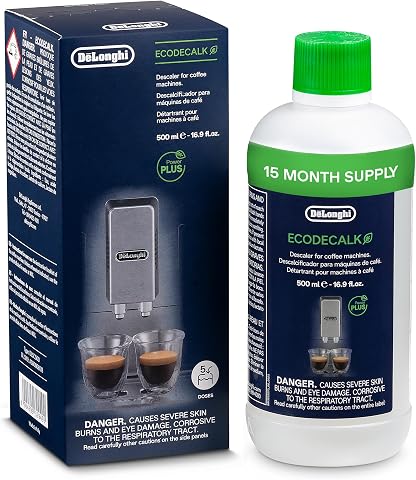
Among these five, the Ninja Luxe Café Premier is the clearest choice for buyers who want a machine that acknowledges water care: its included accessories list contains a hard-water testing kit and descaling powder. That does not mean the machine prevents scale, but it gives owners tools to check and address it. The 70-ounce reservoir also holds more than the AIRMSEN’s 61-ounce tank, while the built-in grinder and guided controls cover espresso, drip coffee, and cold brew. The tradeoff is size: at nearly 14 inches wide and over 14 inches tall, it takes appreciably more counter space than either Breville Bambino. Its many drink modes may also be more machine than an espresso-only household needs, and the supplied details do not specify a built-in water filter.
Pros:- Includes a hard-water testing kit and descaling powder.
- 70-ounce reservoir reduces refill frequency compared with the AIRMSEN’s 61-ounce tank.
- Three brew styles cover espresso, drip coffee, and cold brew.
- Built-in grinder with 25 settings and assisted controls supports a guided workflow.
Cons:- Larger footprint than the compact Breville Bambino models.
- No built-in water filter is specified, so hard-water management still requires owner attention.
- Multiple brewing features may add complexity for espresso-only users.
Best for: Multi-coffee households that want espresso and other brew styles, plus supplied tools for checking and treating hard-water scale.
Not ideal for: Buyers with tight counter space or those who want a simple espresso-only machine with documented built-in filtration.
- Water reservoir capacity:70 ounces
- Dimensions:12.99 × 13.39 × 14.57 inches
- Power:1650 watts
- Voltage:120 volts
- Operation mode:Fully automatic
- Grind settings:25
- Included water-care accessories:Hard-water testing kit and descaling powder
- Brew styles:Espresso, drip coffee, and cold brew
Our verdict“Choose the Ninja if you want several brew styles and included hard-water care tools, and have room for its larger body.”
AMZCHEF Espresso Machine with Self-Cleaning, 20-Bar Coffee Maker, Platinum
The AMZCHEF self-cleaning espresso machine stands out for a cleaning function that may reduce routine effort, but I would not treat that feature as a replacement for descaling in a hard-water home. The product details do not explain what the self-cleaning cycle covers or specify a water filter, so owners still need to follow the manual’s scale-care instructions and use suitable water. Compared with the Breville Bambino, this model has a 44-ounce tank, slightly less capacity than the Bambino’s 47 ounces, and a manual steam wand rather than a focus on compact, fast-heating operation. The 20-bar pump and LED touch display give it straightforward controls, but the semi-automatic workflow calls for some hands-on skill. Its listed dimensions should also be checked against available counter space.
Pros:- Self-cleaning function is specified as part of the machine’s maintenance features.
- Removable 44-ounce tank supports straightforward refilling and cleaning.
- Manual steam wand allows hands-on milk frothing.
- LED touch display provides machine status information.
Cons:- Self-cleaning details do not establish that the cycle removes mineral scale.
- No built-in grinder or water filtration is specified.
- Semi-automatic brewing and manual milk steaming require user involvement.
Best for: Hands-on espresso beginners who value a stated self-cleaning function and are willing to confirm separate descaling steps.
Not ideal for: Buyers seeking built-in filtration, an integrated grinder, or proof that a cleaning cycle handles hard-water scale.
- Water tank capacity:44 ounces
- Pump pressure:20 bar
- Power:1350 watts
- Voltage:120 volts
- Dimensions:12.1 × 13 × 6.5 inches
- Weight:8.5 pounds
- Operation mode:Semi-automatic
- Display:LED touch
Our verdict“Choose the AMZCHEF if a self-cleaning function appeals to you, but only if you are comfortable handling hard-water descaling separately.”
How We Picked
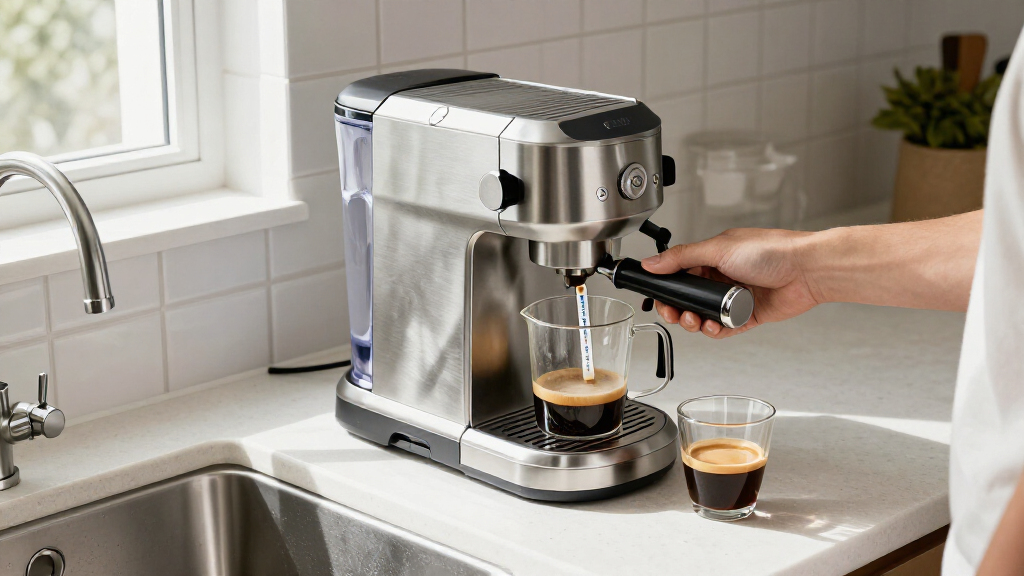
I ranked these machines around the concerns that matter most when mineral-heavy water is part of daily use: how manageable routine cleaning is, how much control an owner has over the workflow, and how many integrated systems may need care. I also weighed usability, footprint, versatility, and whether the setup makes sense for someone who wants to maintain a machine rather than replace it when scale builds up. A feature such as self-cleaning can help with routine residue, but I did not treat it as proof that a machine prevents mineral deposits.
The Breville Barista Pro leads for its balance of control and all-in-one convenience, while the Bambino Plus earns a separate place for buyers who prefer a simpler machine. The Ninja Luxe Café Premier ranks as the versatility pick, not the lowest-maintenance choice. The remaining models serve different needs—from integrated grinding to straightforward espresso-making—but their placement reflects the importance of checking each maker’s specific water and descaling instructions. I do not claim first-hand testing or a verified hard-water protection system for any model.
| espresso machines for hard water home | Operation mode |
|---|---|
| Breville BES878BSS Barista Pro | — |
| Breville BES870BTR Barista Exp | Semi-automatic |
| De’Longhi Classic Signature Es | Fully automatic (as listed) |
| Waterdrop MC-02M Semi-Automati | Semi-automatic |
| AMZCHEF Espresso Machine With | Semi-automatic |
| Breville Bambino Espresso Mach | — |
| Breville Bambino Plus Espresso | Semi-automatic |
| AIRMSEN Espresso Machine with | — |
| Ninja Luxe Café Premier 3-in-1 | Fully automatic |
| AMZCHEF Espresso Machine with | Semi-automatic |
Factors to Consider When Choosing Best Espresso Machines For Hard Water Homes
Hard-water ownership is shaped as much by your water and upkeep habits as by the machine itself. Before choosing a model, look beyond pressure claims and drink menus: check the manufacturer’s cleaning guidance, think about how often you will make coffee, and decide which extra systems you are willing to maintain.
Check the Water Before Choosing a Machine
Hardness can vary by neighborhood and even by water source, so a general label is not enough to set a maintenance schedule. Use a local water report or a suitable hardness test to get a clearer picture of what is coming from your tap. Then check the machine maker’s instructions for water recommendations and any limits on filtration or softening products. Do not assume that filtered water is scale-free; many filters improve taste without removing all minerals. A common mistake is to wait for a warning light or a change in performance before looking into deposits. Your water result and the manual should guide the routine, not a one-size-fits-all interval.
Treat Descaling as Separate From Everyday Cleaning
Rinsing a portafilter or cleaning a milk wand deals with coffee oils and milk residue, while descaling targets mineral buildup inside water pathways. A self-cleaning program may cover part of routine care, but its name does not tell you whether it removes scale or replaces a manufacturer-approved descaling procedure. Before buying, find the exact maintenance directions for the model and check which descaling products, if any, the maker permits. Using an unsuitable solution can damage components or affect warranty coverage. Also check whether the machine gives clear prompts or requires you to track maintenance yourself. Choose the routine you are realistically prepared to follow.
Count Every Built-In System as Another Care Task
An integrated grinder saves counter space and speeds up the morning routine, but it adds a path for coffee grounds and another component to clean. A milk system brings its own rinse and cleaning needs, especially when used every day. Multi-drink machines can be convenient for households with varied tastes, yet added functions may mean more parts and procedures to learn. A simpler espresso machine can reduce the number of systems you manage, though you may need separate equipment for grinding or milk texturing. Do not equate fewer controls with no maintenance; water still passes through the machine. Match the machine’s complexity to the time you will spend caring for it.
Decide Whether Convenience Is Worth the Extra Upkeep
Paying for an integrated grinder, automatic milk features, or multiple brew styles makes sense when those functions will see regular use. If espresso is your only priority, extra capabilities may add cost, counter space, and cleaning without improving your core routine. The Barista Pro and AMZCHEF grinder models bundle grinding into the machine, while the Bambino models keep the espresso maker separate from that decision. The Ninja’s broader menu serves a different household need than a focused espresso setup. Compare what you will actually use each week rather than choosing by the longest feature list. In a hard-water home, simpler equipment can be appealing if it is easier for you to maintain consistently.
Plan for Water Access and Routine Maintenance
Consider where you will fill the reservoir, empty drip trays, and store any cleaning supplies before you choose a machine. If the reservoir is awkward to reach in your kitchen, even a short daily routine may become easy to put off. Think through who will handle cleaning and whether the machine’s instructions are easy for everyone in the household to follow. A water filter can fit into a routine, but confirm compatibility and replacement guidance instead of assuming all filters work with all machines. Make room in your schedule for maintenance before scale affects temperature or flow. The most suitable pick is the one whose upkeep fits your kitchen and habits.
Frequently Asked Questions
Can any of these machines be used with hard tap water without treatment?
That depends on your water’s measured hardness and the specific instructions for the machine; the product name alone cannot answer it. Check the maker’s guidance for water quality, filtration, and descaling before using untreated tap water. If your water is very hard, ask the manufacturer whether a particular filter or softened water is appropriate. Do not assume that an ordinary taste filter removes enough minerals to prevent scale. A suitable water plan can protect performance and reduce the chance of avoidable maintenance problems.
Does a self-cleaning espresso machine remove hard-water scale?
Not necessarily. Self-cleaning can refer to rinsing or clearing coffee residue, and that is different from removing mineral deposits from internal water paths. Read the manual to see exactly what the cleaning cycle does and whether a separate descaling procedure is required. Follow only the maker’s recommended method and products. The AMZCHEF self-cleaning model should not be treated as maintenance-free just because that feature appears in its name.
Which type of machine is easier to maintain in a small hard-water household?
A focused machine with fewer integrated systems may be easier to fit into a compact kitchen and simpler to keep clean, but it still needs appropriate water care and descaling. The Bambino models are the more straightforward direction in this lineup compared with machines that combine espresso, grinding, and other drink options. A separate grinder adds another item on the counter, so weigh reduced machine complexity against added equipment. Check reservoir access and cleaning instructions as carefully as the exterior dimensions. Choose the workflow you can keep up with rather than assuming compact means maintenance-free.
Should I buy an espresso machine with a built-in grinder?
A built-in grinder can save counter space and make espresso preparation more convenient, which may justify the extra complexity for frequent espresso drinkers. It also adds a component that needs cleaning and may need attention as coffee residue accumulates. In a hard-water home, the grinder does not address scale; water maintenance remains a separate task. The Barista Pro and the AMZCHEF and AIRMSEN grinder models bundle grinding, while the Bambino models leave that choice open. If you already own a suitable grinder or want fewer integrated parts, a machine without one may fit better.
Is a multi-function machine a good choice if my main concern is hard water?
Extra drink options do not, by themselves, make a machine more resistant to mineral buildup. The Ninja Luxe Café Premier is aimed at households that value espresso alongside other brew styles, but its additional functions are not a substitute for checking water guidance and descaling instructions. If you mainly make espresso, a more focused machine may be easier to understand and maintain. If several people use different brewing methods, the broader menu may justify the additional care. Base the decision on which functions will get regular use and how much maintenance the household will handle.
Conclusion
For most buyers who want an integrated setup and hands-on control, I’d choose the Breville Barista Pro as best overall, with the clear caveat that its grinder adds upkeep. The best value direction is the Waterdrop MC-02M for shoppers seeking a more basic semi-automatic setup, provided its maintenance guidance suits their water. For a premium, all-in-one experience with broader drink options, the Ninja Luxe Café Premier is the standout, though it is not the simplest machine to care for. Beginners who want a focused setup should look at the Breville Bambino Plus; buyers with limited counter space or who prefer fewer integrated systems may favor the Bambino. For specific needs, choose the AMZCHEF or AIRMSEN grinder models if built-in grinding matters, and consider the AMZCHEF self-cleaning model only after confirming what its cleaning cycle covers. Across every pick, I’d make the final choice based on your water and the maker’s care instructions—not on a claim that any machine is scale-proof.
Fall Picks
fall essentials
As an affiliate, we earn on qualifying purchases.