
TL;DR
Espresso keeps spraying after better puck prep because distribution is only one part of even extraction: grind, dose, headspace, basket condition, and water delivery can all create weak paths for water. Check the basket and dose first, keep preparation consistent, then adjust grind in small steps while judging the shot by taste as well as appearance.
You spend a few extra seconds breaking up clumps and leveling the grounds, lock in the portafilter, and—there it is—a fine jet of espresso hitting the counter. Better puck prep can reduce channeling, but it cannot eliminate every cause of spraying. The coffee bed is only one part of the route water takes through your machine.

Get coffee and tea gear delivered free with Prime
- Fast, free delivery on millions of items
- Prime Video, Amazon Music and more included
- Member-only deals all year
This guide helps you sort a harmless stray droplet from persistent, forceful spraying and find what to check next. You’ll work through dose, grind, headspace, basket condition, and water delivery, without changing everything at once. Along the way, you’ll see why espresso keeps spraying after better puck prep, and why your cup’s flavor matters more than a perfectly centered stream.
WDT can break up clumps, but spraying can still come from grind, dose, headspace, basket condition, coffee changes, or water delivery.
A few stray droplets are not the same clue as a persistent, forceful jet; check how the shot behaves over time.
Verify that the basket suits your dose and that the puck is not contacting the shower screen before adjusting grind.
Change one variable at a time and compare taste, yield, and flow rather than chasing a perfect stream.
If spraying continues across consistent preparations, inspect the basket, shower screen, and machine water delivery.
Why Espresso Keeps Spraying After Better Puck Prep
Better distribution can reduce channeling, but grind, dose, basket fit, coffee, and water delivery also shape the shot. Treat spray as a clue, then check flow and taste.
What spraying tells you
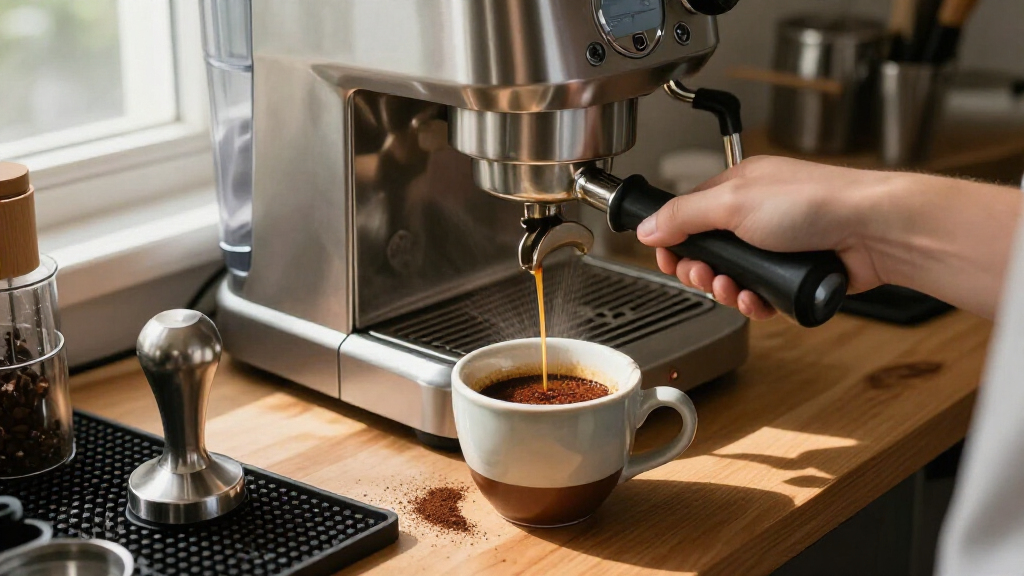
A bottomless portafilter reveals flow that a spouted one may hide. A few droplets alone do not prove the shot is ruined.
- A few stray droplets
- Flow settles into a steady stream
- Taste remains acceptable
- Forceful spray continues
- May point to uneven puck resistance or equipment
- Check flow and flavor across shots
Check dose and basket first
Dose and headspace affect how water crosses the puck. Confirm the basket suits the dose before changing grind.
Keep it consistent
Too little coffee can let water pass quickly; too much can press the puck against the shower screen.
Inspect its condition
Check that it is clean, undamaged, seated correctly, and appropriate for your dose.
Account for new beans
A new bag can grind or respond to water differently, even with the same routine.
Troubleshoot one change at a time
Hold preparation steady so each shot shows whether an adjustment helped.
Confirm the basket is clean and fits the dose; look for signs of shower-screen contact.
Weigh the dose, distribute evenly, tamp consistently, and avoid disturbing the puck afterward.
Change one variable, then compare the next shot’s flow, taste, and brew ratio.
If spray persists across consistent preparations, check the shower screen and machine water delivery.
Why Espresso Keeps Spraying Even After WDT
Espresso keeps spraying after better puck prep because distribution fixes only some causes of uneven flow. A concentrated water path can still form when the grind, dose, basket, coffee, or machine sends water through one weak spot in the puck. WDT can break up clumps; it cannot make every other variable correct.
Think of the puck as a packed bed of sand. If the bed has a loose patch, water finds that route and widens it as the shot runs. A few flecks or droplets may appear even with careful prep, while a persistent jet usually gives you more reason to investigate the puck’s resistance or the hardware.
For example, you might use the same needle routine every morning but switch to a new bag of beans. The new coffee could grind differently or respond differently to water, even at the same grinder setting. Your careful preparation may be unchanged, yet the shot can start spraying because the coffee itself has changed.
WDT is useful when clumps are part of the problem, but extra rituals cannot compensate for a dose that does not suit the basket or a grind that lets water rush through. Better puck preparation can reduce channeling; it does not guarantee an even extraction. Start by treating spray as evidence to investigate, rather than proof that one tool or technique has failed.
Products Worth Considering

Cuisinart Chef's Classic 17-Piece Stainless Steel Cookware Set

Instant Pot Pro Plus 6-Quart 10-in-1 Electric Pressure Cooker

De'Longhi Classic Signature Espresso Machine with Adjustable Milk Frother
As an affiliate, we earn on qualifying purchases.
Tell Harmless Droplets from a Shot That Needs Fixing
Spraying is a symptom, not a diagnosis. A couple of stray droplets from a bottomless portafilter do not prove that your shot is ruined. A forceful, sustained jet or several streams that break away from the main flow point more strongly to uneven resistance, a weak area in the puck, or an equipment issue worth checking.
A bottomless portafilter makes flow visible from the underside of the basket. With a spouted portafilter, some of the same irregular flow may already have been happening out of sight. It’s a little like turning on the kitchen light: you see the mess more clearly, but the light did not create it.
Picture a shot that begins with a few drops, gathers into a steady stream, and tastes balanced. That’s different from an early, sharp jet that splatters the counter and leaves the espresso thin or harsh. Look at when the spray starts, how persistent it is, and whether the flow and flavor change from shot to shot.
Appearance alone is not a flavor score. A visually imperfect shot can still taste acceptable, while a smooth-looking stream can taste sour, bitter, or flat. If a small spray appears but the shot tastes good and repeats consistently, note it rather than rebuilding your routine around a single stray droplet.
Check Dose and Headspace Before You Grind Finer
Dose and headspace affect how evenly water can cross the puck. Too little coffee, or a dose that leaves excessive room above the puck, can let water move through too quickly. Too much coffee can push the puck into the shower screen, where contact may disturb or fracture it during brewing. Both situations can produce irregular flow even after careful distribution.
Headspace is the room between the top of the prepared puck and the shower screen. It depends on the basket and the dose; a number that works in one basket may not suit another. For a practical check, prepare the puck as usual, lock in the portafilter, and look for evidence of screen contact after brewing, such as a clear imprint. That mark is a clue to investigate, not a universal measure of the correct dose.
Say your usual recipe is 18 grams in a basket that fits that dose well. Moving to a different basket but keeping the same dose could leave too little room or too much, depending on its shape and capacity. When spray begins after that change, verify the basket and dose together before blaming WDT or reaching for a finer grind.
Use a scale to keep the dose consistent and avoid disturbing the puck after tamping. A repeatable dose gives you a fair comparison from shot to shot. Check basket fit and headspace before changing grind, especially if you recently changed baskets, coffee, or the amount of coffee in the portafilter.
Adjust Grind in Small Steps and Change One Thing
Grind size changes how readily water moves through the puck. If the coffee is too coarse, water can pass through quickly and concentrate into a fast path. A small move finer may help when the shot runs too quickly, but changing grind without checking dose or basket fit can mask the real problem or create a new one.
Use a controlled sequence so you can tell what helped: keep the dose and preparation steady, make one small grind adjustment, then pull another shot. Compare the flow and taste with the previous shot. If you change the grind, dose, tamp, and distribution all at once, you’ll have no clear way to know which change mattered.
- Check the basket. Confirm that it is clean, undamaged, seated correctly, and suited to your dose.
- Keep prep repeatable. Weigh the dose, distribute grounds evenly, tamp consistently, and leave the puck undisturbed afterward.
- Check headspace. Look for signs that an overly high dose contacts the shower screen.
- Adjust grind in a small step. Hold the other variables steady for the next shot.
- Record taste and yield. Note whether the shot flows and tastes better, not just whether the spray disappears.
For example, if a shot gushes and tastes thin, a small finer adjustment could help. If it is already slow and tastes harsh, going finer just to calm a stray spray could push the recipe further in the wrong direction.
Inspect the Basket and Shower Screen for Uneven Flow
A dirty, damaged, blocked, or poorly seated basket can contribute to irregular flow. Puck prep cannot correct a bent basket, blocked holes, or uneven water delivery from the machine. Before changing several coffee variables, look at the parts that hold and wet the puck.
Remove the basket and check its holes against a light. Coffee residue and oils can build up, while damage can alter how water leaves the basket. Also make sure the basket sits properly in the portafilter. If the shower screen is visibly dirty, clean it according to your machine’s care instructions; residue there can interfere with water distribution.
Imagine that your shots spray in a similar way across several bags of coffee, even when your dose and prep stay steady. That repeatable pattern makes the basket or machine more plausible than a sudden flaw in your distribution technique. If you can borrow another compatible basket or portafilter, comparing a shot can help narrow down where the irregularity begins.
Do not read a single blocked-looking hole as a full diagnosis. Check for a pattern, clean the relevant parts, and then pull a shot with the same recipe. If spraying persists across consistent preparations, inspect water delivery or test another basket if available. This step can save you from chasing a grinder setting when the source sits in the hardware.
Expect a New Bag of Coffee to Change the Shot
Coffee freshness, roast, bean composition, and resting time can change how a puck behaves. A familiar recipe may flow differently with a new bag because the coffee does not grind or release gas in exactly the same way. That can bring back spraying even when your dose and distribution routine have not changed.
Think of a new bag as a new ingredient, not a guaranteed copy of the last one. A darker roast and a lighter roast can respond differently at the same grinder setting; two coffees roasted to similar color can still behave differently. Coffee also changes as it rests after roasting, so a shot that was predictable earlier may need a small adjustment later.
If spraying starts on the first morning with a new bag, write down the dose, yield, grind setting, and what you see in the cup. Make one small change at a time and judge it by flavor. A tiny droplet may not need a recipe change at all, while fast flow paired with thin flavor gives you a more useful reason to adjust.
Repeatability matters more than adding a longer list of rituals. Tools such as WDT needles, calibrated tampers, and precision baskets may help with some setups, but none can compensate for unsuitable grind, dose, or damaged equipment. When the beans change, check the recipe again, using the same method you use for any other new ingredient.
Use Taste and Repeatability to Decide What to Fix
The best next step depends on both flow and flavor. Spraying can point toward uneven flow, but it cannot tell you on its own whether the espresso tastes good or whether the grind is wrong. Taste the shot and compare its yield and behavior with your usual recipe before deciding that every visible imperfection needs a fix.
Suppose a shot has a small side spray but tastes sweet and balanced, and the next shot behaves much the same. You may choose to leave the recipe alone. If another shot produces a forceful jet, runs much faster than usual, and tastes weak, you have several aligned clues that something has changed.
Keep a simple note of dose, yield, grind setting, coffee, and whether spraying occurred. This need not become a spreadsheet project; a few words beside the grinder can help you spot that spraying began with a new bag or after switching baskets. Change only one factor at a time so the next shot teaches you something.
A smooth stream does not guarantee a good extraction, and a visually untidy shot is not automatically bad. Treat the bottomless portafilter as a diagnostic window, then let taste and repeatable results guide the repair. If the issue continues with stable preparation across coffees, move your attention from the puck toward the basket and machine.
Frequently Asked Questions
Does spraying always mean channeling?
No. Spraying often suggests uneven flow, but it does not identify the cause by itself. Dose, basket condition, or inconsistent water delivery can create similar symptoms.
Why does my shot still spray after using WDT?
WDT can break up clumps and improve distribution, but it cannot fix every issue. Check grind, dose, headspace, tamp consistency, and basket condition while keeping the other variables steady.
Should I grind finer to stop espresso spraying?
Possibly, if the shot flows too quickly, but make a small adjustment and taste the result. Check dose and basket fit first, since grinding finer may not solve a headspace or hardware problem.
Can a puck screen stop spraying?
A puck screen may help distribute water and keep the shower screen cleaner, but it is not a guaranteed cure for channeling or basket problems. If you try one, keep your dose and grind stable so you can judge its effect.
Is a spraying shot always bad to drink?
No. A visually imperfect shot can still taste acceptable, and a smooth-looking shot can still taste unbalanced. Use the spray as a clue, then judge the espresso by its flavor and repeatability.
What should I check first when espresso sprays?
Check that the basket is clean, undamaged, seated properly, and suited to your dose. Then keep preparation consistent, check headspace, and make small grind changes only when the flow and taste point that way.
Conclusion
When espresso keeps spraying after better puck prep, check the whole path from dose to basket to machine. Keep your preparation steady, verify headspace and basket condition, then adjust grind in small steps and taste the result. The bottomless portafilter shows you what was hidden; the cup tells you whether it matters.
Next time a jet hits the counter, note when it starts, what the shot tastes like, and what changed. A few droplets may be only a splash in the story. A repeated pattern is your clue to turn the next page.