TL;DR

Get coffee and tea gear delivered free with Prime
- Fast, free delivery on millions of items
- Prime Video, Amazon Music and more included
- Member-only deals all year
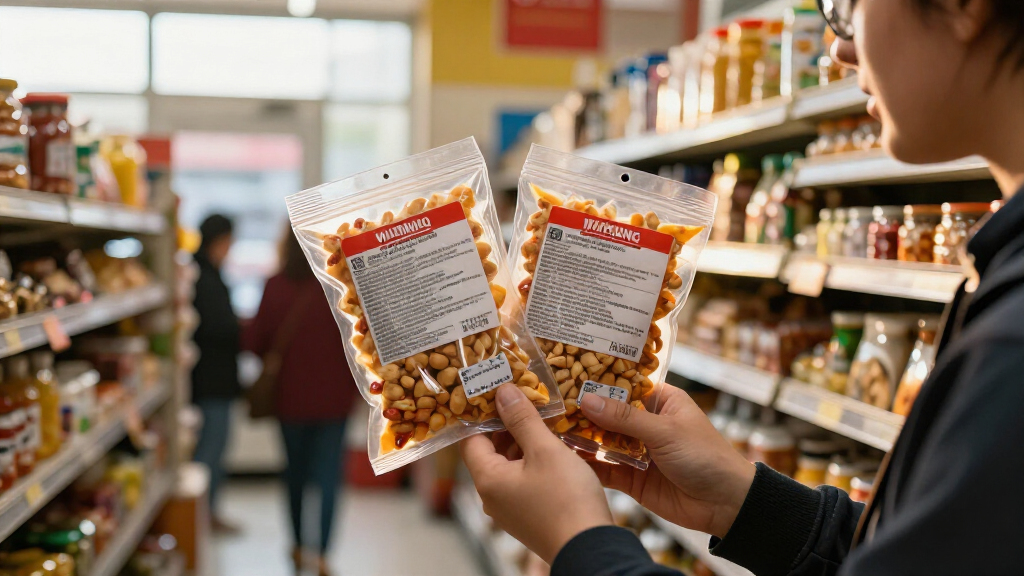
A University of Chicago study estimates that mandatory front-of-package labels for ultraprocessed foods could add $14 billion a year to food-industry costs. The estimate includes reformulation and ingredient expenses; the study also projects possible losses for domestic agriculture and increased food imports. No mandate is in place, and the FDA’s proposed definition remains under review.
A University of Chicago study published Oct. 27 estimates that a hypothetical U.S. requirement for front-of-package ultraprocessed-food labels could cost food companies an additional $14 billion a year. The estimate describes possible industry costs, not an enacted policy or a confirmed increase in consumer prices; the FDA’s proposed definition of ultraprocessed foods is still under federal review.
The study estimates $9.5 billion annually in reformulation costs and another $4.5 billion in higher ingredient costs. Researchers estimated that a mandate based on the definition used in their analysis would apply to 72% of packaged foods, representing 51% of consumers’ grocery spending. These figures are the study’s projections under a hypothetical labeling policy, not measured costs from an existing rule.
The researchers also estimated that a mandatory label could mean $1 billion a year in lost revenue for domestic agriculture and an increase in food imports of up to $9.7 billion annually. The $14 billion industry-cost estimate does not include potential litigation costs, according to the report. The source material does not describe those agricultural and import estimates as components of the $14 billion figure.
The analysis used a definition proposed by Healthy Eating Research, drawing on the Nova classification system. It identifies ultraprocessed products through particular ingredients considered markers of processing and exempts foods that meet the FDA’s criteria for a “healthy” claim. The study was conducted through the University of Chicago’s Initiative on Enabling Choice and Competition in Health Care.
Potential Costs Across Food Supply
The estimate adds a cost-focused argument to a developing policy debate over whether and how the federal government should define ultraprocessed foods. If a labeling mandate were eventually adopted, manufacturers might need to change recipes or source different ingredients to avoid a label, while the study projects possible effects for domestic agriculture and imports. Those outcomes are not guaranteed by the research: they depend on the policy’s final definition, scope and implementation.
For shoppers, the estimates matter because reformulation and ingredient expenses could affect product choices and prices. But the study does not establish that consumers would pay more, or quantify any price change. Experts quoted in the source material argue that a shared definition could help families make informed choices; the cost analysis raises a separate question about how regulation might affect producers and the food supply.
Products Worth Considering

Vitamix 5200 Professional-Grade Blender, 64 oz. Container, Black

De'Longhi Linea Classic Espresso Machine with Adjustable Milk Frother

Vitamix Propel Series 510 Professional-Grade Blender, 3 Programs, Black
As an affiliate, we earn on qualifying purchases.
FDA Definition Still Under Review
The FDA submitted a proposed definition of ultraprocessed foods to the White House about two months before the study’s publication. The proposal is not legally binding and remains under review, so it does not itself require companies to label products or change recipes. The source reports that progress on a definition has slowed amid industry pushback.
The issue is part of Health and Human Services Secretary Robert F. Kennedy Jr.’s “Make America Healthy Again” initiative. More than 100 nutrition and medical experts recently signed an open letter urging the Office of Management and Budget to release the administration’s definition. The University of Chicago analysis addresses a possible labeling mandate using a separate definition from Healthy Eating Research; the source does not say that this framework has been adopted by the FDA.
“There is no clear relationship between processing and nutritiousness.”
— University of Chicago study researchers
Policy Scope and Price Effects
No labeling mandate has been enacted, and the FDA’s proposed definition remains under review. It is not clear whether the administration will release or adopt a definition, whether any later rule would require front-of-package labels, or whether it would use the same criteria as the study’s analysis. The study’s cost estimate depends on its chosen definition and assumptions; the supplied report does not detail all of those assumptions.
It is also unknown whether companies would pass any added costs on to shoppers, absorb them, or respond in other ways. The $14 billion estimate excludes litigation, and the source does not give an estimate for potential consumer price changes. The projected effect on domestic agriculture and imports should likewise be treated as a modeled outcome, not an observed result.
Awaiting Federal Review
The next policy milestone is the federal review of the FDA’s proposed definition. The source material gives no release date or timetable for a decision. The open letter’s signatories are calling for the administration to make the definition public, while the study provides an estimate of possible costs if a separate labeling mandate were pursued.
Any future proposal would need to clarify which foods qualify as ultraprocessed, whether labels would be required, and how exemptions would work before its effects could be assessed. Until federal action is announced, the $14 billion figure remains a study estimate for a hypothetical mandate, not a bill currently facing the food industry.
Key Questions
Would ultraprocessed-food labels cost the industry $14 billion right now?
No. The $14 billion figure is a University of Chicago estimate for a hypothetical labeling mandate. No such mandate is described as being in force.
What costs make up the $14 billion estimate?
The study assigns $9.5 billion a year to reformulation and $4.5 billion to higher ingredient costs. It says the total does not include potential litigation costs.
How much of the packaged-food market could be covered?
Using the definition in its analysis, the study estimates labels would apply to 72% of packaged foods and products representing 51% of consumers’ grocery spending.
Could shoppers pay more for food?
The study estimates industry costs but does not establish how much, if any, would be passed on to consumers. The effect on grocery prices is unclear.
Has the FDA finalized its definition of ultraprocessed foods?
No. The FDA’s proposed definition was submitted to the White House and remains under review. The source says the proposal would not itself be legally binding.
Source: fooddive.com