
TL;DR
The E61 is a chrome-plated brass espresso group introduced on Faema’s 1961 E61 machine, known for thermal mass, a lever-controlled brew cycle, and a design technicians can service. It can support consistent espresso and a low-pressure pre-infusion phase, but warm-up time, temperature behavior, and results depend on the machine’s boiler, controls, plumbing, and upkeep.
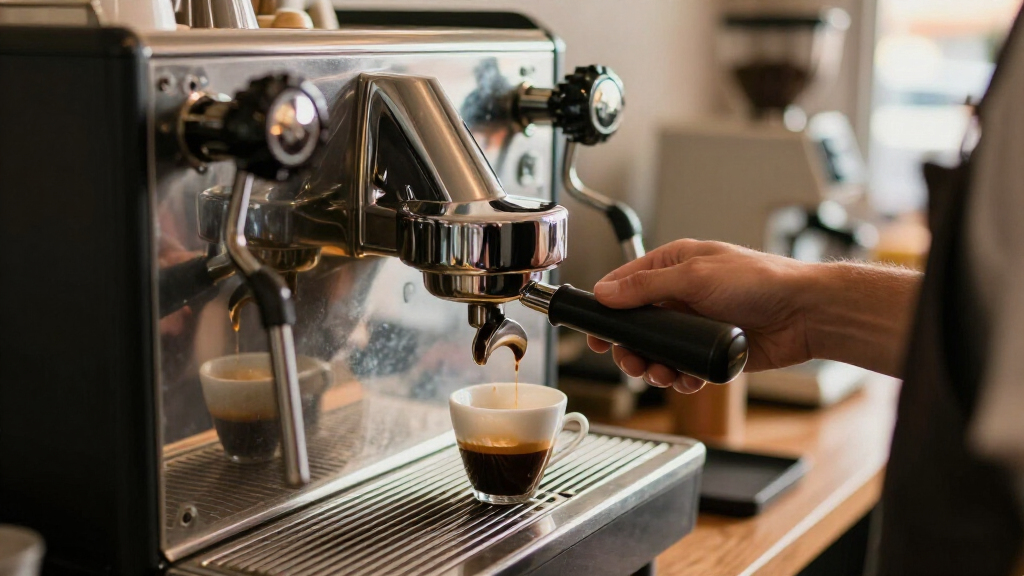
That gleaming chrome dome above a portafilter is more than decoration: an E61 group head is a working piece of espresso history, and it still shapes what many buyers expect from a traditional machine. Its exposed lever, hefty brass body, and familiar silhouette make it one of the most recognizable designs in espresso.
But fame can blur the practical details. The E61 can help a machine hold heat and manage a distinctive brew cycle, yet it does not guarantee better shots or precise temperature on its own. To choose wisely, you need to know how the group works, what its lever actually does, and where its strengths come with trade-offs.
This guide walks you through the design, the brew cycle, the reasons it became famous, and the questions worth asking before you buy. You’ll also see how it compares with newer group designs, so the chrome dome can be a real feature you understand—not just a pretty badge.
The E61 is a brass espresso group introduced on Faema’s 1961 E61 machine; it holds the portafilter and delivers brewing water.
Its large metal mass can buffer quick temperature changes, but it does not actively control brew temperature.
The side lever operates a mechanical valve; pre-infusion pressure and timing vary with the machine’s pump and plumbing.
Allow the group and portafilter to heat fully, and follow your specific machine’s guidance on cooling flushes and cleaning.
Compare complete machines by warm-up, temperature controls, maintenance, dimensions, and workflow—not by the E61 name alone.
Espresso design · A practical field guide
E61 Group Heads Explained: Why This Design Became Famous
A chrome-plated brass classic with a tactile lever and a long service history. Learn how it shapes the brew cycle, what its thermal mass can—and cannot—do, and which details matter when comparing espresso machines.
Key insight
Thermal buffering is not temperature control.The heavy group can resist quick temperature swings. Boiler settings, thermosiphon tuning, idle time and the rest of the machine still shape brew temperature.
01 / The assembly
What an E61 group head does
The group is the machine’s connection point between hot water and the coffee puck.
An E61 is a large brass assembly, usually finished in chrome, that locks and seals the portafilter while delivering brewing water. Faema introduced it on the E61 machine in 1961; the model name is associated with the solar eclipse that occurred that year.
On many machines, a thermosiphon loop circulates hot water through passages in the group, carrying heat from the boiler or heat exchanger. Layouts differ, so machines with the same familiar dome may not behave alike.
The mass takes time to warm, then helps resist rapid temperature changes. A ready light can signal a hot boiler while the group and locked-in portafilter are still heat-soaking.
02 / Why it endured
Four traits behind the reputation
Useful engineering, hands-on operation and a distinctive silhouette made the design familiar to home users and technicians.
Thermal mass
The heavy brass body can buffer quick temperature shifts after it has fully warmed.
Mechanical lever
The side lever visibly opens and closes the brew valve, making an otherwise hidden action tactile.
Repairable mechanics
Decades of production made many parts and service practices familiar to espresso technicians.
Recognizable shape
The exposed chrome dome and long lever became shorthand for traditional espresso equipment.
Possible pre-infusion
Some plumbing lets water wet the puck at relatively low pressure before full pump pressure arrives.
Whole-machine results
A familiar group cannot rescue stale beans, a poor grinder, or an unsuitable recipe.
03 / The brew sequence
What the lever actually does
Lift to open the brew path. Lower to stop flow; on machines with the relevant valve, the lever also vents pressure after the shot.
Lock in
Dose, distribute and tamp, then secure the portafilter in the warmed group.
Raise lever
The mechanical valve opens and water reaches the group and coffee puck.
Watch the shot
A low-pressure wetting phase may happen first. Pressure and timing depend on the machine.
Lower lever
Flow stops; a three-way valve, when fitted, releases pressure from the puck.
04 / Expectations
Strengths—and their limits
The E61 is a mature design. How it performs depends on the heating system, controls, water path, upkeep and workflow around it.
What the design contributes
These are characteristics the group can support, rather than guarantees for every machine.
Trade-offs to plan around
Use your specific machine’s manual for warm-up, flushes and cleaning routines.
The term can suggest a fixed profile. Pump type, plumbing, pressure settings and optional flow-control equipment all change how quickly water reaches the puck.
05 / Choosing a machine
Compare the whole system
Newer group designs can make excellent espresso too. The group name alone is not a performance score.
| Decision point | E61 setup | What to check on any machine |
|---|---|---|
| Heat readiness | Large group needs time to heat through | Warm-up guidance; group and portafilter readiness |
| Temperature | Mass buffers; it does not actively regulate | Boiler controls, PID or other temperature management |
| Water flow | Pre-infusion varies with plumbing and pump | Pressure behavior and any flow-control options |
| Upkeep | Lever, cam, seals, valves and passages need care | Service access, parts availability and cleaning routine |
| Fit and workflow | Group size can affect height and clearance | Counter dimensions, cup clearance and daily routine |
Current improvements often come from the machine built around the group: PID-regulated boilers, better insulation, dual boilers and optional flow-control kits.
06 / Before you buy
Five questions worth asking
Turn the iconic chrome dome into a practical choice by checking the details that shape your daily espresso.
The E61 earned its fame through a heat-buffering brass group, a visible mechanical brew cycle, serviceable parts and an unmistakable look. It can support consistent espresso, but excellent shots come from the complete machine, good upkeep and a repeatable recipe.
What an E61 group head does for your espresso
An E61 group head is the heavy metal assembly that locks onto your portafilter and delivers brewing water to the coffee; the E61 model introduced by Italian manufacturer Faema in 1961 gave the design its name. It is usually made from brass with a chrome-plated exterior, and its mass helps resist quick temperature swings as water moves through the brew path. That is the short version of group heads explained: the group is the machine’s connection point between hot water and the coffee puck.
The name has a small piece of history attached. Faema introduced the E61 espresso machine in 1961, and the model name is associated with the solar eclipse that occurred that year. The year became part of the machine’s identity, then the name stuck to its widely copied group design. When someone asks what an E61 group head is, they usually mean this recognizable brass-and-chrome assembly, not a promise that every machine around it works the same way.
In many E61 machines, water circulates through the group in a thermosiphon loop, carrying heat from the boiler or heat exchanger. Think of it as a slow-moving warm-water circuit that keeps the large metal head ready for brewing. The exact layout varies by machine, so two machines with the same-looking group can behave differently.
For example, you might switch on an E61 machine, see its ready light come on, and assume you can immediately pull a shot. The boiler may be hot while the thick group and locked-in portafilter are still warming. The head acts more like a cast-iron pan than a thin kettle wall: it takes time to heat, then holds warmth well. That is useful once it is ready, but it changes how you plan your morning coffee.
As an affiliate, we earn on qualifying purchases.
Why the E61 became a familiar sight on espresso machines
The E61 became famous because it combined thermal mass, a lever-operated brew cycle, serviceable mechanics, and a striking look in one design. Its heavy brass body can buffer rapid temperature changes, while its side lever gives you a visible, tactile way to start and stop brewing. Decades of production also made its parts and repair practices familiar to many espresso technicians.
The lever matters because it turns an otherwise hidden action into something you can see and feel. Lift it, and a mechanical valve opens the path for water; lower it, and the machine ends the brew cycle. On machines with the relevant plumbing, lowering the lever also activates a three-way valve that releases pressure from the coffee puck. It feels a little like operating a small machine rather than pressing a button on a black box.
Its silhouette did the rest. The rounded, exposed chrome dome and long lever became visual shorthand for traditional espresso equipment. That appearance helped the group stand apart from machines with more enclosed, less visibly mechanical brew assemblies. It is no accident that the E61 remains one of the most recognizable designs even for people who have not learned the name.
Here’s a practical scene: you walk into a café or home kitchen and see a polished E61. The large head and lever suggest a machine built for hands-on use; they also show you where the brew action happens. That familiarity can make operation feel intuitive, and a mature design can be easier for a technician to recognize. But recognition is not a performance score. A well-controlled newer group can make excellent espresso too, while a neglected E61 can struggle with temperature, seals, or flow.
The design’s reputation rests on useful engineering and recognizability, not magic. It became famous for combining thermal buffering with a mechanical brew cycle in a form that manufacturers could continue to build and service. What the design cannot do is correct a poor grinder, stale beans, or an unsuitable recipe.
As an affiliate, we earn on qualifying purchases.
How the E61 lever changes the brew cycle
The E61’s lever opens a mechanical brew valve, allowing water to reach the coffee; depending on the machine’s plumbing, that water may wet the puck at relatively low pressure before full pump pressure arrives. This early wetting is called pre-infusion. The lever is therefore more than a decorative handle, but it does not make every E61’s pressure curve identical.
A typical brew goes like this. First, you raise the lever, which opens the brew path. Water reaches the group and coffee puck; on some setups, a low-pressure phase wets the coffee before the pump builds to full brewing pressure. Then you lower the lever to stop brewing. If the machine uses a three-way valve, that action also vents pressure from the group, making it easier to remove the portafilter without a pressurized puck spraying grounds.
- Prepare the puck: Dose, distribute, and tamp your coffee as usual, then lock the portafilter into the warmed group.
- Raise the lever: This opens the mechanical brew valve and starts water flow. How much pressure the coffee sees at first depends on the machine’s configuration.
- Watch the extraction: Let the shot run to your chosen yield and time. A scale helps you repeat the recipe instead of relying on color alone.
- Lower the lever: This closes the brew path and, on machines with the relevant valve, relieves pressure after the shot.
People often call the initial wetting passive pre-infusion, but that phrase can imply more precision than the design guarantees. Pump type, pressure settings, plumbing, and added flow-control equipment all affect how the water reaches the puck. In practical terms, one E61 might wet the coffee gently for a short period, while another moves toward full pressure much faster.
Imagine you switch from one E61 machine to another and keep the same coffee dose and grind. The first shot might start smoothly; the second could run faster or taste sharper because the pump and plumbing create a different flow pattern. Treat the group as part of a whole system, and adjust your recipe by taste. The lever shows you when brewing starts; it does not tell you the exact pressure at every moment.
commercial espresso machine with E61 group
As an affiliate, we earn on qualifying purchases.
As an affiliate, we earn on qualifying purchases.
What an E61’s thermal mass helps with—and what it cannot do
An E61’s substantial brass body helps hold heat and resist quick temperature changes, but thermal mass is not active temperature control. The group can stay more stable once fully heated, yet its brewing temperature still depends on the boiler, thermosiphon design, controls, room conditions, and time spent idle. A heavy metal head is a buffer, not a thermostat.
That difference matters when you compare machines. Some E61 models use a heat exchanger, while others pair the group with different boiler arrangements or temperature controls. A PID-regulated boiler can help manage boiler temperature, but it does not automatically remove every temperature variation at the group. Thermosiphon tuning and insulation also affect how heat reaches the head.
Long idle periods can change what happens at the group. Depending on the machine, the group may run hotter after sitting, and some machines benefit from a cooling flush—a short water flush intended to bring an overheated brew path closer to the desired temperature. The right amount, or whether you need one at all, varies by model. Follow the manufacturer’s guidance rather than copying a flush routine from a different machine.
For a real-world example, say you switch on a machine, make one espresso, then leave it idle while you answer messages. The next shot may behave differently from the first if the group has continued to gain heat. If your machine’s instructions recommend a flush after a long pause, use that guidance and keep the routine consistent. A thermometer or careful shot tracking can help you notice patterns, but the machine manual should guide safe operation.
Heat-up time deserves the same attention. The boiler’s ready light does not always mean the group and portafilter have fully heat-soaked. Allow the warm-up time specified by the manufacturer, and give the locked-in portafilter time to warm too. You get the benefit of the brass mass only after the metal itself reaches a stable working temperature.
As an affiliate, we earn on qualifying purchases.
How an E61 compares with newer group designs
An E61 is not automatically better than a newer group: the main differences are how each design manages heat, how quickly it warms, and how much of the brew process happens through visible mechanical parts. E61 groups are known for a substantial brass head and familiar lever operation; other designs, including saturated and electronically controlled groups, may offer faster warm-up or more direct integrated temperature management. The best fit depends on the complete machine and how you brew.
| Feature | E61 group | Other modern group designs |
|---|---|---|
| Heat approach | Large brass mass; many machines use thermosiphon circulation | May use different heating layouts and integrated temperature control |
| Warm-up | Often needs time for the group and portafilter to heat through | Some designs are built for quicker readiness, though models vary |
| Brew operation | Visible side lever operates a mechanical valve | May use buttons, electronic controls, or different mechanical systems |
| Maintenance | Familiar service points, including seals, valves, and lever parts | Maintenance depends on the design and the parts it uses |
| Temperature behavior | Shaped by thermosiphon tuning, boiler settings, and idle time | Shaped by the design’s own sensors, heating, and control system |
That comparison is a starting point, not a ranking. A well-designed E61 machine can be steady and enjoyable; a poorly tuned one can be frustrating. A newer electronically controlled group may shorten warm-up or make temperature adjustments more direct, but it still depends on sound engineering and appropriate maintenance.
Suppose you make one espresso before work and cannot wait for a long heat-up. A machine designed for quicker readiness may suit your routine better than a classic E61. If you enjoy switching on the machine ahead of time, warming cups on top, and pulling several drinks in a row, the E61’s heat-holding mass and visible lever may feel like a good match. Compare the actual machine’s specifications and workflow, not just the group’s label.
The useful question is not “Which group is best?” It is “Which machine fits my schedule, control preferences, and service needs?” That question keeps the decision grounded in how you will use the machine every day.
What to check before buying an E61 machine
Before buying an E61 machine, check its warm-up routine, temperature controls, boiler setup, service access, and dimensions; the group’s famous name cannot answer those questions for you. A solid group head works best as part of a well-matched machine, and your daily routine matters as much as the machine’s appearance. Look for clear operating instructions, not just a photo of a shiny lever.
Start by asking how the machine heats and controls water. Does it use a heat exchanger or another boiler configuration? Does it have a PID or other temperature-management feature? How does the manufacturer recommend handling idle periods and cooling flushes? These details help you understand how the machine behaves between its first shot and its fifth, rather than assuming every E61 runs alike.
- Check the warm-up guidance. Find the manufacturer’s recommended heat-up time and whether the portafilter should stay locked in during warm-up.
- Ask about temperature management. Check the boiler arrangement, available controls, and any machine-specific flush routine.
- Look at repair and cleaning needs. Ask how to backflush the machine, which cleaning products are approved, and when seals or valves need inspection.
- Measure your counter space. Check the machine’s height, footprint, cup clearance, and room for the lever to move.
- Match the machine to your schedule. A machine that needs a longer heat soak may not suit a quick, unplanned morning shot.
Think about a narrow counter with low cabinets. The E61’s height and lever movement can affect whether you can fit a tall cup underneath or open the lever comfortably. Measure the space before you buy; a group head can be thermally impressive and still be physically awkward in your kitchen.
Serviceability is another practical advantage, but it is not maintenance-free. The lever, cam, seals, valves, and internal passages can need cleaning or replacement. Ask about local service options and follow the manual for cleaning and backflushing. A mature design may be familiar to technicians, but a neglected machine still needs proper care.
How to care for the group and keep shots consistent
Keep an E61 group working well with regular cleaning, suitable backflushing when the machine permits it, and periodic inspection of its seals and valves. Follow the manufacturer’s maintenance schedule because machines differ in plumbing and recommended products. Careful upkeep protects both the brew path and the mechanical parts that make the lever feel smooth.
After making coffee, wipe the shower screen and the area around the portafilter so old grounds do not build up. Use the machine’s approved cleaning method, and do not assume every group can be backflushed in the same way. If your manual allows backflushing, follow its steps and use an espresso-machine cleaner designed for that purpose; household dish soap is not a substitute for group-cleaning detergent.
For example, if your lever starts feeling unusually stiff or you notice water escaping around the portafilter, do not force the handle and hope the issue disappears. Stop and check the manual or contact a qualified technician. Worn seals, a dirty valve, or another service issue can affect the machine’s operation. Regular inspection can catch small problems before they become a frustrating morning routine.
Consistency also comes from repeatable brewing, not from the group alone. Keep a simple note of your coffee dose, grinder setting, yield, and shot time. If a shot tastes different after the machine has been idle, note whether you followed a flush routine. Those small records help you distinguish a brewing change from a temperature or maintenance issue.
Food safety matters around coffee equipment too. Use clean, potable water and store coffee beans in a sealed container in a cool, dry place; do not leave wet grounds sitting in the portafilter. Coffee machines heat water for brewing, but they do not replace routine cleaning. For hot-water handling and cleaning chemicals, follow the manufacturer’s safety directions to avoid burns or unwanted residue.
What the E61’s reputation means when you choose a machine
The E61’s reputation means you are looking at a proven, familiar design—not a guarantee of superior espresso. It became famous for combining thermal mass, mechanical operation, and repairable parts in a durable-looking package. The phrase “for combining thermal” may sound like a slogan, but the useful point is straightforward: thermal buffering works alongside the machine’s heating and control systems, not instead of them.
The design has also adapted around its mature core. Manufacturers now pair E61 groups with features such as PID-regulated boilers, improved insulation, dual-boiler configurations, and optional flow-control devices. Some machines can accept a flow-control kit installed in or near the group’s valve assembly, though compatibility and brewing effects depend on the model. These additions can change how you manage extraction without turning every E61 into the same machine.
That explains why two E61 owners may describe very different experiences. One may have a machine with careful temperature control and a repeatable warm-up routine. Another may use a simpler setup that needs more attention to idle time and flushing. Both can enjoy the same recognizable lever and chrome head, but their shot consistency and workflow can differ.
So when you read that it became famous, take the phrase as a clue to its history and staying power, not as a buying verdict. A well-matched machine should suit the number of drinks you make, the control you want, your available counter space, and your willingness to maintain it. Taste also depends on fresh coffee, grinder quality, water, and a workable recipe.
Choose the E61 if its hands-on brew cycle, familiar service design, and traditional look genuinely suit you. Choose another group if faster readiness or different integrated controls fit your life better. The chrome dome is a memorable part of the story; your daily workflow is what decides whether it belongs on your counter.
Frequently Asked Questions
Does an E61 group head make better espresso?
Not on its own. An E61 can support consistent brewing when it is fully warmed and maintained, but the grinder, coffee, water, recipe, and machine’s temperature and pressure controls all affect the cup. A well-designed machine with another group can also make excellent espresso.
How long does an E61 machine take to warm up?
Warm-up time varies by machine and room conditions because the group and portafilter need to heat along with the boiler. Follow the manufacturer’s instructions instead of relying only on the ready light, which may indicate boiler readiness rather than a fully heat-soaked group.
What does pre-infusion mean on an E61?
Pre-infusion is the early wetting of the coffee puck before full brewing pressure. An E61’s mechanical valve can provide a lower-pressure phase on many machines, but its pressure and duration depend on the pump, plumbing, settings, and any flow-control equipment.
Do all E61 machines have the same temperature behavior?
No. Boiler type, thermosiphon tuning, insulation, temperature controls, and how long the machine sits idle all affect group temperature. Check the instructions for your exact model, especially before adopting a cooling-flush routine.
What is a cooling flush, and does every E61 need one?
A cooling flush is a short water flush used on some machines to bring an overheated group or brew path closer to its desired temperature. Whether you need one—and how much water to use—depends on the machine and its operating conditions. Follow the manufacturer’s guidance rather than assuming all E61s behave alike.
Can you add flow control to an E61 machine?
Many E61 machines can accept a flow-control device fitted in or near the group’s valve assembly. Compatibility and the effect on extraction depend on the machine and kit, so confirm fit with the manufacturer or a qualified technician before installing one.
Conclusion
Remember this: an E61 is a well-known mechanical design, not a shortcut to perfect espresso. Its brass mass, lever, and service history can make it a rewarding fit when the whole machine matches your routine, but temperature behavior and shot quality still depend on the system around it.
Before you buy, check the warm-up instructions, controls, service needs, and counter measurements. Then decide whether you want that familiar lever in your daily ritual—or whether a quicker, more automated group suits your mornings better. A beautiful chrome dome should earn its place one cup at a time.