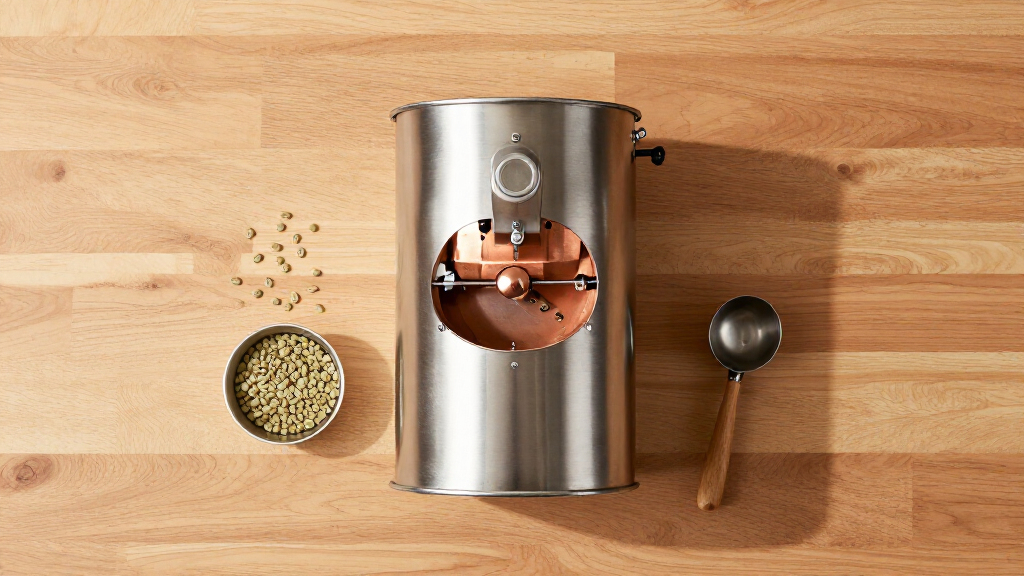

For home roasting, I’d put the Hottop KN-8828B2K+ first for its programmable control and manageable 9-ounce batches, while the MISLOOPY 3.8L gas roaster stands out for its included cooler and sieves. The DYVEE 400 g quartz-glass drum is another compelling option if seeing the beans change color matters to you. The main tradeoffs are batch size versus control, electric convenience versus gas flexibility, and built-in cooling versus a simpler setup. The best coffee roasting drums for home depend on your available space, ventilation, and how involved you want each roast to be. Continue reading for the full breakdown of all 10 options and a guide to choosing the right fit.

Get coffee and tea gear delivered free with Prime
- Fast, free delivery on millions of items
- Prime Video, Amazon Music and more included
- Member-only deals all year
Complete the kit



Key Takeaways
- Batch size and control pull in different directions: the Hottop’s 9-ounce capacity favors smaller, managed roasts, while the 1 kg and 14.5 L drums target much larger batches that may be harder to fit into a typical home routine.
- Cooling can shape the whole workflow: the MISLOOPY and 3.8 L stainless-steel drum include cooling equipment, unlike simpler drum options that may require a separate plan for stopping the roast promptly.
- Home roasters have distinct heat-source choices: electric models such as the Fatamorgana and Hottop offer an appliance-style setup, while gas drums ask buyers to account for burner access, ventilation, and more hands-on operation.
- Visibility is a real differentiator: the DYVEE’s quartz-glass drum may help users watch bean color changes, while stainless-steel drums prioritize a metal construction rather than a clear view of the roast.
- Large capacity does not automatically mean a better home fit: the 1 kg and ICZW 14.5 L options make more sense when output is the priority; compact hot-air or smaller-capacity options may suit limited space and occasional roasting better.
| Bokknppo Stainless Steel Coffee Bean Drum Roaster, 3.45 Qt |  | Best Stovetop Pick | Material: Stainless steel | Capacity: 3.45 qt; 0.3–0.5 kg (0.66–1.1 lb) per batch | Drum speed: 5–60 RPM | VIEW LATEST PRICE | See Our Full Breakdown |
| Fatamorgana 450 g Electric Coffee Bean Roaster |  | Best Versatile Electric Pick | Batch capacity: 50–450 g | Wattage: 1000 W | Voltage: 110 V | VIEW LATEST PRICE | See Our Full Breakdown |
| 1 kg Commercial Electric Coffee Roaster, 240 V, 2000 W |  | Best for High-Volume Home Roasting | Capacity: 1 kg (2 lb) | Daily roasting capacity: Up to 20 kg (44 lb) of green beans | Power: 2000 W | VIEW LATEST PRICE | See Our Full Breakdown |
| MISLOOPY 3.8L Gas Coffee Roaster with Bean Cooler and Sieves |  | Best Stovetop Kit for Cooling and Sorting | Material: Stainless steel | Capacity: 3.8 L; 0.66–1.1 lb per batch | Motor speed: 5–60 rpm | VIEW LATEST PRICE | See Our Full Breakdown |
| Hottop KN-8828B2K+ Programmable Coffee Roaster, 9 oz |  | Best for Data-Driven Roast Control | Model: KN-8828B2K+ | Capacity: 9 oz | Temperature sensors: Dual thermocouples | VIEW LATEST PRICE | See Our Full Breakdown |
| 3.8 L Stainless Steel Drum Coffee Roaster with Cooler and Thermometer |  | Best Gas-Stovetop Kit | Capacity: 3.8 L (3.45 qt) | Batch capacity: 0.3–0.5 kg (0.66–1.1 lb) | Heating method: Gas stovetop | VIEW LATEST PRICE | See Our Full Breakdown |
| EliteBloom Electric Hot Air Coffee Bean Roaster |  | Best for Watching the Roast | Heating method: Electric hot air | Power: 1600 W | Temperature range: 100–300°C | VIEW LATEST PRICE | See Our Full Breakdown |
| Electric Coffee Bean Roaster with Smokeless Drum and Automatic Roasting |  | Best for Guided Electric Roasting | Maximum bean capacity: 500 g | Roasting modes: Auto, Assistant, Manual | Detection: Bean temperature and rate of rise | VIEW LATEST PRICE | See Our Full Breakdown |
| ICZW 14.5L Stainless Steel Drum Coffee Bean Roaster |  | Best for Large Batches | Capacity: 14.5 L | Batch capacity: Approximately 3.5–4.0 kg (7.7–8.8 lb) | Heating method: Gas stove | VIEW LATEST PRICE | See Our Full Breakdown |
| DYVEE Home Coffee Roaster, 400 g Capacity, Quartz Glass Drum |  | Best Compact-Batch Visual Roaster | Maximum capacity: 400 g | Recommended batch size: 200–300 g | Drum material: Quartz glass | VIEW LATEST PRICE | See Our Full Breakdown |
| coffee roasting drums for home | Capacity | Material | Dimensions |
|---|---|---|---|
| Bokknppo Stainless Steel Coffe | 3.45 qt; 0.3–0.5 kg (0.66–1.1 lb) per batch | Stainless steel | 9.4 × 7.1 × 10 in |
| Fatamorgana 450 g Electric Cof | — | Stainless steel | 8 × 15 × 9.5 in (D × W × H) |
| 1 kg Commercial Electric Coffe | 1 kg (2 lb) | — | — |
| MISLOOPY 3.8L Gas Coffee Roast | 3.8 L; 0.66–1.1 lb per batch | Stainless steel | — |
| Hottop KN-8828B2K+ Programmabl | 9 oz | — | — |
| 3.8 L Stainless Steel Drum Cof | 3.8 L (3.45 qt) | Stainless steel | 9.4 × 7.1 × 9.99 in (D × W × H) |
| EliteBloom Electric Hot Air Co | — | — | 46 × 20 × 22 cm |
| Electric Coffee Bean Roaster w | — | — | 19.29 × 10.24 × 15.75 in |
| ICZW 14.5L Stainless Steel Dru | 14.5 L | Stainless steel | — |
| DYVEE Home Coffee Roaster | — | — | — |
More Details on Our Top Picks
Bokknppo Stainless Steel Coffee Bean Drum Roaster, 3.45 Qt
The Bokknppo suits home roasters who want a stovetop drum and direct control over rotation without moving to a large electric appliance. Its 5–60 RPM speed range lets you adjust bean movement, while the thermometer and viewing window make it easier to monitor a batch. Compared with the Fatamorgana 450 g Electric Coffee Bean Roaster, this model relies on a gas or electric stovetop for heat rather than its own 1000 W heater, so it offers a different setup, not a plug-in roasting experience. The included cooler and two sieves also give you tools for handling beans after roasting. The tradeoffs are assembly before use and a batch limit of 0.3–0.5 kg; buyers seeking larger runs should look at the 1 kg Commercial Electric Coffee Roaster instead.
Pros:- Stainless steel construction with a lockable drum door
- Adjustable drum speed from 5 to 60 RPM
- Thermometer and viewing window support batch monitoring
- Includes a bean cooler and two sieves
Cons:- Requires assembly before roasting
- Batch capacity tops out at 0.5 kg
- Needs a compatible stovetop as its heat source
Best for: Home roasters with a compatible gas or electric stovetop who want adjustable drum speed and included bean-cooling accessories.
Not ideal for: Buyers who want a self-heating electric roaster, dislike assembling equipment, or need batches larger than 0.5 kg.
- Material:Stainless steel
- Capacity:3.45 qt; 0.3–0.5 kg (0.66–1.1 lb) per batch
- Drum speed:5–60 RPM
- Motor:12 V DC, 18 W
- Voltage:110–120 V
- Dimensions:9.4 × 7.1 × 10 in
- Stovetop compatibility:Gas and electric
- Included components:Bean cooler, two sieves, speed controller, thermometer, English manual
Our verdict“Choose the Bokknppo if you want a stovetop drum with adjustable rotation and useful cooling accessories in a home-scale batch size.”
Fatamorgana 450 g Electric Coffee Bean Roaster
The Fatamorgana is a practical fit for home roasters who want an electric heating unit that can also handle nuts and grains. Its stated 50–450 g batch range gives you room to roast small tests or a larger home batch, while the 1000 W heater is designed for even heating. Compared with the stovetop-based Bokknppo Stainless Steel Coffee Bean Drum Roaster, the Fatamorgana does not depend on a burner for heat, but it also weighs 17 lb and needs a 110 V outlet. Its stainless steel shell and grain-drying capability add flexibility beyond coffee, though the supplied package is simpler: it lists a power cord and manual, not the cooler and sieves included with the Bokknppo. The one-year warranty is useful coverage, but this is still a substantial countertop appliance rather than a lightweight, portable drum.
Pros:- Electric heating avoids reliance on a stovetop burner
- Batch range spans 50–450 g
- Designed for coffee, nuts, grains, and grain drying
- Includes a one-year warranty
Cons:- Requires a 110 V electrical supply
- Weighs 17 lb, making storage and relocation less convenient
- No bean cooler or sieves are listed among the included components
Best for: Home roasters who want an electric appliance for coffee plus occasional nut, grain, or grain-drying tasks.
Not ideal for: People with limited counter or storage space, or buyers who want a lighter stovetop setup with included cooling accessories.
- Batch capacity:50–450 g
- Wattage:1000 W
- Voltage:110 V
- Material:Stainless steel
- Dimensions:8 × 15 × 9.5 in (D × W × H)
- Weight:17 lb
- Uses:Coffee, nuts, and grains; grain drying
- Warranty:1 year
Our verdict“Pick the Fatamorgana if you want a versatile, self-heating home roaster and can accommodate its weight and countertop footprint.”
1 kg Commercial Electric Coffee Roaster, 240 V, 2000 W
This 1 kg roaster is the lineup’s choice for a dedicated roasting space and frequent, larger batches. Its 10 automatic profiles, manual profile saving, touchscreen, and Artisan compatibility offer more roast-control tools than the Hottop KN-8828B2K+, whose stated capacity is 9 oz. That capacity advantage comes with serious home-use demands: the machine weighs 70 lb and requires 240 V power through a NEMA 6-15 outlet. Its stated daily capacity of up to 20 kg points toward sustained production, not occasional kitchen use. The large display can show curves and process information, but buyers should not assume that advanced controls make setup simple. Compared with the smaller Bokknppo stovetop drum, this is a much more substantial investment in space, electrical infrastructure, and roast volume.
Pros:- 1 kg batch capacity suits larger home roasting runs
- Ten automatic profiles plus manual profile saving
- Artisan compatibility with curve import and export
- Large touchscreen displays roast curves and process information
Cons:- Requires 240 V power and a NEMA 6-15 outlet
- 70 lb weight makes moving the unit difficult
- Its capacity and daily-use design may be excessive for occasional home batches
Best for: Experienced home roasters with a dedicated workspace, a compatible 240 V circuit, and a need to roast large batches regularly.
Not ideal for: Beginners, renters without a suitable 240 V outlet, or anyone who needs a compact roaster they can move or store easily.
- Capacity:1 kg (2 lb)
- Daily roasting capacity:Up to 20 kg (44 lb) of green beans
- Power:2000 W
- Voltage and plug:240 V AC; NEMA 6-15
- Controls:Semi-automatic touchscreen
- Display:10.1-inch HD LCD
- Profiles and software:10 automatic profiles; manual profile saving; Artisan compatible
- Dimensions and weight:21.3 × 13.4 × 17.7 in (D × W × H); 70 lb
Our verdict“Choose this model only if your home setup can support a heavy 240 V machine and you will use its larger capacity and profile controls.”
MISLOOPY 3.8L Gas Coffee Roaster with Bean Cooler and Sieves
The MISLOOPY’s clearest advantage is its ready-to-handle post-roast kit: a bean cooler and two sieves come alongside the drum. Its 3.8 L capacity is stated as 0.66–1.1 lb per batch, putting it in a similar home-scale range to the Bokknppo 3.45 qt. Both offer adjustable rotation from 5–60 rpm, a thermometer, and a viewing window, so the choice is less about roast monitoring than the included tools and exact capacity. MISLOOPY is listed for gas or electric stoves, which means it does not provide an independent electric heat source. Assembly is required, and its 1.1 lb upper limit will frustrate anyone trying to roast larger quantities at once. Compared with the 1 kg commercial model, this is a simpler, lighter-duty stovetop approach for home batches.
Pros:- Includes a bean cooler and 6-mesh and 40-mesh sieves
- Adjustable motor speed from 5 to 60 rpm
- Viewing window and built-in thermometer help monitor roasting
- Can roast coffee beans, nuts, seeds, and legumes
Cons:- Requires assembly
- Needs a compatible gas or electric stove for heat
- Maximum stated batch size is 1.1 lb
Best for: Stovetop users who want a drum roaster packaged with a bean cooler and two sieves for post-roast handling.
Not ideal for: Roasters who need batches above 1.1 lb, want a self-heating electric machine, or prefer equipment that needs no assembly.
- Material:Stainless steel
- Capacity:3.8 L; 0.66–1.1 lb per batch
- Motor speed:5–60 rpm
- Power and voltage:18 W; 110–120 V
- Product size:9.4 × 7.1 × 10 in
- Net weight:9.85 lb
- Sieves:6 mesh and 40 mesh
- Assembly:Required
Our verdict“The MISLOOPY fits home roasters who want a stovetop drum and bundled cooling and sieving tools rather than a larger electric machine.”
Hottop KN-8828B2K+ Programmable Coffee Roaster, 9 oz
The Hottop is the better fit for home roasters who value temperature monitoring and saved roast data more than batch size. Its dual thermocouples show bean and chamber temperatures, while bi-directional USB supports transferring data, storing profiles, and connecting to compatible third-party software. That gives it a more focused control-and-recordkeeping angle than the Fatamorgana 450 g Electric Coffee Bean Roaster, which lists a larger 450 g capacity but does not specify comparable sensors or USB features. The tradeoff is capacity: at 9 oz, the Hottop handles smaller batches than the Fatamorgana and the stovetop MISLOOPY. Computer graphing and control also depend on compatible software, so the USB connection alone does not promise a complete software workflow. Choose it for tracking and repeatability, not high-volume roasting.
Pros:- Dual thermocouples display bean and chamber temperatures
- Bi-directional USB supports data transfer and profile storage
- Programmable operation with roast data shown on an LED display
- Compact 9 oz capacity suits smaller, tracked batches
Cons:- 9 oz capacity is smaller than the Fatamorgana’s 450 g and MISLOOPY’s 1.1 lb maximum
- Computer control and graphing depend on compatible third-party software
- The listed features focus on coffee roasting rather than multiple food uses
Best for: Home roasting hobbyists who want dual temperature readings, saved profiles, and the option to work with compatible roast-analysis software.
Not ideal for: Buyers who prioritize large batches, want computer graphing without checking software compatibility, or need a multifunction roaster for nuts and grains.
- Model:KN-8828B2K+
- Capacity:9 oz
- Temperature sensors:Dual thermocouples
- Display:LED
- Connectivity:Bi-directional USB
- Programmable:Yes
- Brand:Tophot
Our verdict“Pick the Hottop if temperature readings and roast-data workflows matter more to you than batch capacity or extra uses.”
3.8 L Stainless Steel Drum Coffee Roaster with Cooler and Thermometer
This gas-stovetop drum pairs adjustable rotation with dual baffles, giving beans help moving through the chamber as you manage heat at the burner. Its 0.3–0.5 kg batch range is more practical for home roasting than the much larger ICZW 14.5L model, which is aimed at buyers handling several kilograms at a time. A thermometer provides a direct temperature reference, while the included cooling fan and two mesh filters make post-roast handling less improvised. The tradeoff is that the burner supplies the heat, so it needs a gas stove and more hands-on attention than the electric BAMI-T500. Its stated minimum ingredient size also rules out very small seeds. I’d choose it for a home setup that values included cooling gear and adjustable drum speed over push-button roasting.
Pros:- Adjustable 5–60 RPM rotation and dual baffles support controlled ingredient movement.
- Cooling fan and two reusable mesh filters are included.
- Thermometer gives a direct way to monitor temperature during roasting.
- Heat-proof handles and a latched loading door aid handling.
Cons:- Relies on a gas stovetop for heat, so it is not a self-contained electric roaster.
- Ingredients smaller than 0.08 inches are outside its stated size range.
Best for: Home roasters with a gas stove who want adjustable drum speed, a thermometer, and included equipment for cooling and sorting a moderate batch.
Not ideal for: Buyers without a gas stove, or anyone roasting ingredients smaller than the stated 0.08-inch minimum.
- Capacity:3.8 L (3.45 qt)
- Batch capacity:0.3–0.5 kg (0.66–1.1 lb)
- Heating method:Gas stovetop
- Material:Stainless steel
- Rotation speed:Adjustable, 5–60 RPM
- Motor:DC 12 V, 18 W
- Included components:Cooler, speed controller, thermometer, 6-mesh sieve, and 40-mesh sieve
- Dimensions:9.4 × 7.1 × 9.99 in (D × W × H)
Our verdict“Choose this gas-stovetop kit if you want a moderate-capacity drum with temperature monitoring and cooling accessories, and already have a suitable burner.”
EliteBloom Electric Hot Air Coffee Bean Roaster
The EliteBloom’s quartz glass chamber makes bean color visible during roasting, a useful contrast with the stainless-steel drums in the 3.8 L gas-stovetop model and the ICZW 14.5L roaster. Its electric hot-air heating also avoids the need to position a drum over a gas burner, while adjustable temperature and rotation speed offer some control over roast progression. At 3 kg, it is a smaller-footprint alternative to the 22-pound BAMI-T500, though its supplied data does not state a batch capacity, so buyers cannot compare output as directly. The glass brings its own handling demands: the chamber gets hot and needs to cool naturally to reduce cracking risk. Roasting can also leave coffee oil on the chamber, adding cleanup. This is a good fit for curious home roasters who value visibility over a metal drum’s more enclosed build.
Pros:- Quartz glass chamber lets the user observe beans as their color changes.
- Temperature and rotation speed are adjustable.
- Electric hot-air heating does not depend on a gas stovetop.
- Can also handle nuts, seeds, and some dried foods.
Cons:- The hot glass chamber requires careful handling and natural cooling.
- Coffee oils may require cleaning from the roasting chamber.
- The supplied product data does not state a batch capacity.
Best for: Home roasters who want to watch bean color through a clear chamber and prefer electric hot-air heating to a gas-stove setup.
Not ideal for: Buyers who need a clearly specified batch size, want a metal roasting chamber, or prefer quick cooling and low-maintenance cleanup.
- Heating method:Electric hot air
- Power:1600 W
- Temperature range:100–300°C
- Rotation speed:10–60 rpm
- Chamber material:Quartz glass
- Weight:3 kg
- Dimensions:46 × 20 × 22 cm
- Included:1 grain dryer
Our verdict“Pick the EliteBloom if seeing the roast develop matters more to you than a stated batch capacity or the simpler handling of a steel drum.”
Electric Coffee Bean Roaster with Smokeless Drum and Automatic Roasting
The BAMI-T500 is the most control-oriented electric pick here: its automatic, assistant, and manual modes let a home roaster choose between a guided process and adjusting the roast directly. Bean-temperature and rate-of-rise detection, along with firepower and damper controls, provide more feedback than the EliteBloom’s adjustable temperature and rotation settings alone. Its smoke and dust purifier is designed to reduce emissions, a useful feature for indoor roasting, though it should not be mistaken for a guarantee of smoke-free operation. The 500 g maximum batch is modest beside the ICZW’s stated 3.5–4.0 kg capacity, but much more realistic for many household sessions. At 22 pounds and nearly 20 inches long, it takes dedicated counter space; manual mode also expects the operator to make roasting decisions.
Pros:- Automatic, assistant, and manual modes suit different levels of roast control.
- Bean-temperature and rate-of-rise detection provide feedback during roasting.
- Firepower and damper controls allow adjustments to the roast.
- Purifier is designed to reduce smoke and dust emissions.
Cons:- Maximum capacity is 500 g, far below the ICZW 14.5L drum’s stated batch capacity.
- Its 22-pound weight and 19.29-inch length require dedicated space.
- Manual mode requires the user to adjust roasting parameters.
Best for: Home roasters seeking an electric drum with guided and manual modes, roast-development feedback, and smoke-and-dust reduction features.
Not ideal for: Buyers who want a compact appliance, a very large batch per roast, or a fully hands-off process without parameter adjustments.
- Maximum bean capacity:500 g
- Roasting modes:Auto, Assistant, Manual
- Detection:Bean temperature and rate of rise
- Controls:Firepower and damper control
- Purifier:Smoke and dust purification
- Dimensions:19.29 × 10.24 × 15.75 in
- Weight:22 lb
- Model:BAMI-T500
Our verdict“Choose the BAMI-T500 if you want an electric machine with roast feedback and guided modes, and can spare the counter space for a 500 g-capacity unit.”
ICZW 14.5L Stainless Steel Drum Coffee Bean Roaster
With a stated 3.5–4.0 kg batch capacity, the ICZW is in a different scale category from the other home-focused picks: it can handle far more per run than the 500 g BAMI-T500 or the 400 g DYVEE. That size makes sense for households roasting in bulk or sharing beans, but it is a poor match for occasional small batches where the extra capacity goes unused. The gas-stove heating keeps the setup mechanically straightforward, while a thermometer, cooling holes, and double baffles support temperature checks and bean movement. Unlike the electric BAMI-T500, this model depends on a gas burner and does not offer the same described roasting modes or detection controls. Its product data also lists dimensions smaller than the stated 14.5-liter capacity might suggest, so I would verify fit and setup details before buying.
Pros:- Stated 3.5–4.0 kg batch capacity exceeds the other listed home-oriented drums.
- Stainless steel construction is suited to repeated roasting and cleaning.
- Thermometer supports temperature monitoring.
- Cooling holes and double baffles support cooling and ingredient movement.
Cons:- Requires a gas stove for heating.
- Its large stated batch capacity may be excessive for occasional home roasting.
- Suitable ingredients must be larger than 2 mm.
Best for: Bulk home roasters who have a suitable gas stove and regularly need batches measured in kilograms rather than a few hundred grams.
Not ideal for: Small-batch hobbyists, buyers without a gas stove, or anyone who wants electric controls and detailed roast feedback.
- Capacity:14.5 L
- Batch capacity:Approximately 3.5–4.0 kg (7.7–8.8 lb)
- Heating method:Gas stove
- Material:Stainless steel
- Operation mode:Fully automatic
- Power:22 W
- Suitable ingredient size:Larger than 2 mm
- Included components:Adapter, drum-type roaster, S-hook, shovel, and thermometer
Our verdict“Choose the ICZW only if you regularly roast in bulk and have a gas setup; for smaller household batches, the BAMI-T500 or DYVEE is a more proportionate fit.”
DYVEE Home Coffee Roaster, 400 g Capacity, Quartz Glass Drum
The DYVEE pairs a transparent quartz glass drum with a manually adjusted gas flame, making it a more hands-on and visually direct option than the electric EliteBloom. Its 400 g maximum sounds generous for a home unit, but the recommended 200–300 g batch is the more useful figure for planning; that is below the BAMI-T500’s 500 g maximum and well below the ICZW’s bulk capacity. The glass lets you track bean color, while the stainless-steel frame supports the drum and a 12 V motor turns it during roasting. The tradeoff is a two-source setup: heat comes from gas, while the motor needs electricity. It also weighs 17 pounds, so this is not especially easy to move despite its smaller batch size. I’d pick it for careful, small-batch roasting where visibility matters more than convenience.
Pros:- Quartz glass drum makes bean color visible during roasting.
- Adjustable gas flame gives the operator direct control over heat.
- 12 V motor turns the drum during roasting.
- Can also roast peanuts and other nuts.
Cons:- Requires both a gas burner for heat and electricity for the motor.
- Recommended batch size is 200–300 g, below the 400 g maximum.
- At 17 lb, it is relatively heavy for a small-batch roaster.
Best for: Hands-on home roasters who want to watch bean color in a glass drum and typically roast 200–300 g at a time.
Not ideal for: Buyers seeking a self-contained electric roaster, frequent large batches, or a lightweight appliance that is easy to put away.
- Maximum capacity:400 g
- Recommended batch size:200–300 g
- Drum material:Quartz glass
- Frame material:304 stainless steel
- Operation:Manual
- Power source:Gas and electricity
- Motor:12 V
- Dimensions and weight:43 × 21 × 21.5 cm; 17 lb
Our verdict“Choose the DYVEE for visible, hands-on roasting in modest batches, but skip it if you want one power source or higher routine capacity.”
How We Picked
I ranked these options around the work a home roaster actually needs to do: produce a batch at a useful size, manage heat and roast progression, cool beans after roasting, and fit the equipment into a safe, practical workspace. I also weighed the tradeoffs between drum and hot-air designs, electric and gas heat, visible roasting, included accessories, and stated capacity. A feature only counted as an advantage when it could improve a buyer’s routine; a larger drum, for example, is less appealing if its footprint or operating demands do not suit home use.
The Hottop leads because its programmable controls and smaller batch size point to a more controlled home-roasting experience. The MISLOOPY follows for buyers who value an integrated cooling workflow, while the DYVEE offers a distinct visual advantage through its quartz-glass drum. Larger-capacity machines rank lower for general home use because their output can bring added space and setup demands; simpler electric and hot-air choices remain useful for buyers who prioritize convenience or a lower-complexity routine. Where product details do not establish a capability, I avoid treating it as a proven advantage.
Factors to Consider When Choosing Best Coffee Roasting Drums For Home
Choosing a home roasting drum is less about finding the biggest machine and more about matching its workflow to your space, batch habits, and willingness to manage heat and smoke. I’d use these factors to narrow the field before focusing on individual features.
Choose Batch Size Around How You Brew
Start with how much roasted coffee you go through before it loses the freshness you want, then look for a batch size that supports that routine. A larger capacity can reduce how often you roast, but it can also encourage making more coffee than you can use promptly. Small batches give you room to compare roast levels and origins without committing a large amount of green coffee. Do not assume a listed maximum capacity is the best working batch for every machine; roast behavior and consistency can vary with the load. If you are new to roasting, a modest batch often makes experimentation easier. Reserve high-capacity drums for households or shared use that can genuinely use the output.
Match the Heat Source to Your Workspace
Electric machines can be easier to place in a home routine, but they still produce smoke and chaff that need a sensible path out of the room. Gas models give buyers a different heating setup, yet they require a compatible burner arrangement and careful attention to ventilation. Before buying, check electrical requirements, outlet access, clearances, and where the machine can operate without disrupting the household. A common mistake is planning only for the appliance and not for the heat, smoke, and chaff around it. If your roasting spot is indoors, prioritize a workable ventilation plan over extra capacity. A garage or outdoor setup may open more choices, though weather and access still matter.
Decide How Much Control You Want
Programmable controls can make repeating a roast easier, while more hands-on designs leave more decisions to the operator. Neither approach guarantees better coffee; control helps only when you can use it to repeat a result or make a deliberate adjustment. New roasters may prefer a machine that keeps the process manageable, while hobbyists who enjoy recording roast changes may welcome more direct involvement. Consider whether you want to monitor the roast closely or set a process and follow a simpler routine. Avoid paying for control features you are unlikely to use. Also check which temperature readings, timers, or automatic functions are actually specified rather than assuming every electric roaster offers them.
Treat Cooling as Part of the Roaster
Roasting does not end when heat is switched off: beans need to cool promptly so they do not continue cooking from retained heat. A machine with an included cooler or a well-integrated cooling step can simplify the process and reduce the need to handle hot beans with improvised tools. If cooling is not included, decide in advance what equipment and counter space the extra step will require. Buyers sometimes compare roasting capacity but overlook cooling capacity, which can become a bottleneck during back-to-back batches. Sieves can also help separate chaff, but they do not replace cooling. Choose a setup that makes the post-roast routine safe and repeatable, not merely one that starts the roast easily.
Balance Drum Material and Roast Visibility
A clear drum can make bean color changes easier to observe, which may help a learner connect appearance with roast progression. Stainless steel offers a conventional opaque drum construction, so buyers may rely more on the machine’s controls and other ways of monitoring the roast. Visibility alone does not tell the whole story: color is only one clue, and a clear surface does not guarantee even roasting or precise control. Think about whether watching the beans is part of how you want to learn, or whether you would rather focus on a more automated routine. Compare cleaning access and the manufacturer’s care instructions before choosing based on material. The right choice is the one whose monitoring style you will use consistently.
Account for Maintenance and Repeat Use
Chaff, dust, and residue are part of home roasting, so accessible cleaning points can matter more than a long list of features. Check whether the drum and cooling components can be reached for routine cleanup, and follow the maker’s instructions for any removable parts. A larger machine may take more room to store and clean even when its capacity sounds attractive. Think about where accessories such as sieves, trays, or a separate cooling setup will live between roasts. Frequent roasting makes a repeatable cleanup routine especially valuable; occasional roasting may make a simpler device easier to live with. Include this ongoing effort in your decision, rather than judging the machine only by its first roast.
Frequently Asked Questions
Is a 1 kg coffee roaster too large for a typical home?
It may be more capacity than an occasional home roaster needs, especially if you want to drink each batch while it is fresh or try different profiles often. Larger batches can cut down the number of roasting sessions, but they also ask for more room and a plan for handling the full batch after roasting. Check the machine’s working capacity, not just the number in its name, and consider whether your ventilation setup can handle its use. If you roast for a household, friends, or a small shared group, that output may be useful. For one or two coffee drinkers, a smaller machine can make experimentation and storage simpler.
Should I choose a roaster with a built-in bean cooler?
A built-in cooler can make the post-roast step more convenient and reduce the need to arrange separate cooling equipment. It is especially useful if you plan to roast several batches in one session or want a more contained workflow. It does not remove the need to manage chaff, handle hot parts safely, or follow the maker’s cooling instructions. If you roast infrequently and already have a safe cooling method, a model without an integrated cooler may still fit. Compare the cooler’s capacity and placement with the batch size so the roasting step does not outpace the cooling step.
Is a quartz-glass drum better for learning to roast?
A clear drum, such as the one specified for the DYVEE, can help you observe bean color changes without relying only on controls or external readings. That view may be helpful for learning how a batch changes, but color is not a complete measure of roast development. You will still need to follow safe operating guidance and learn how your chosen machine behaves. Buyers who prefer a more automated process may get less value from visibility than from programmable controls or a simpler routine. Treat a glass drum as a monitoring aid, not a guarantee of more consistent results.
Can I use a home coffee roaster indoors?
Do not assume that an electric label makes a roaster suitable for an unventilated kitchen. Coffee roasting produces smoke and chaff, and the amount and handling needs depend on the machine and roast. Check the manufacturer’s placement and ventilation instructions before choosing a location, and plan how you will keep hot equipment and chaff away from people and combustible materials. A smokeless claim should not replace checking the stated operating requirements. If your home has no practical ventilation route, compare outdoor or garage use only where the machine’s instructions and local conditions allow it.
Is a gas drum or an electric roaster the easier first purchase?
Electric models are often the simpler starting point when you want an appliance-style setup, but ease depends on the controls, capacity, and instructions of the specific machine. A gas drum may suit someone who already has an appropriate burner and wants a more hands-on routine, but it adds setup and ventilation needs. For a first purchase, prioritize clear operating instructions, a manageable batch size, and a realistic plan for cooling and cleanup. Do not choose solely by heat source; a small electric roaster can still be demanding if its workflow is unclear. Match the machine to the space and process you can use safely and repeatably.
Conclusion
For a general home setup, I’d choose the Hottop KN-8828B2K+ as the best overall pick because its programmable approach and 9-ounce batch size suit controlled, smaller roasts. The best value by workflow is the MISLOOPY 3.8L gas roaster for buyers who want cooling and sieves included, provided they can accommodate gas and ventilation needs. For a premium, control-focused choice, the Hottop is also the clearest fit in this lineup; I would not infer premium build details beyond its stated features. Beginners who want a visible roast may prefer the DYVEE, while those seeking a straightforward electric format can compare the Fatamorgana and EliteBloom. For high-output needs, look at the 1 kg electric roaster or ICZW 14.5 L drum, but choose either only if your space, ventilation, and batch habits justify the larger scale.