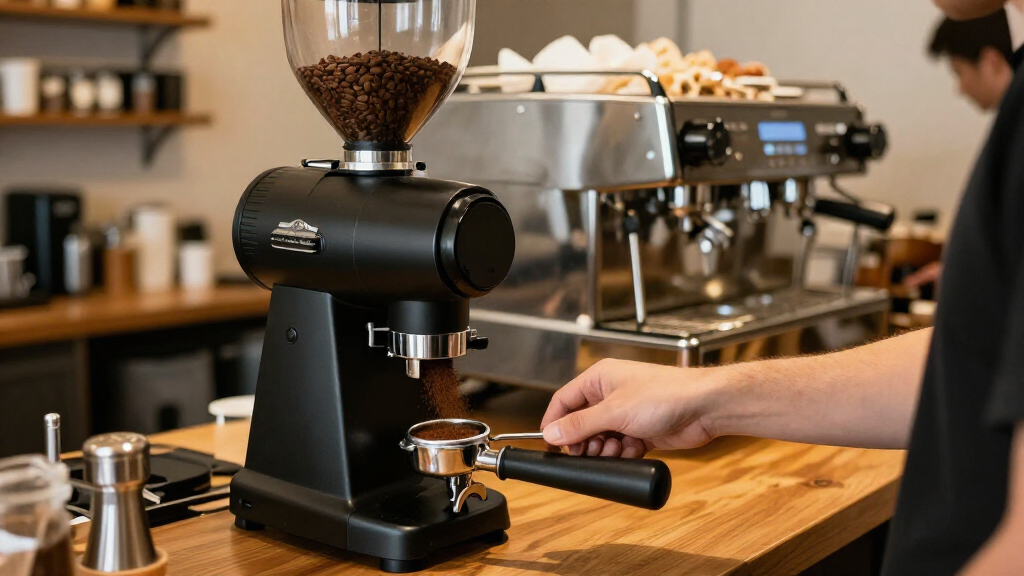
For a cafe-style espresso setup, I would start by comparing the Tuni G3, SHARDOR 64 mm Flat Burr, and Breville Smart Grinder Pro. The Tuni offers fine adjustment and a single-dose option, the SHARDOR pairs large flat burrs with programmable shot dosing, and the Breville makes grind and dose controls easy to read. Each serves a different kind of home espresso routine, and none is a substitute for checking whether its adjustment and workflow suit your machine.

Get coffee and tea gear delivered free with Prime
- Fast, free delivery on millions of items
- Prime Video, Amazon Music and more included
- Member-only deals all year
The main tradeoff is between espresso-focused control and all-purpose flexibility. Larger flat-burr models give buyers a different adjustment and hopper experience from compact conical-burr choices, while a broader range of settings does not by itself guarantee better espresso. I rank these grinders by how clearly their stated features support repeatable espresso preparation, how they handle portafilter or dose workflow, and what limitations buyers should know before choosing.
Complete the kit


Key Takeaways
- Tuni G3: The most flexible listed hopper arrangement, with a small single-dose hopper as well as a larger 250 g hopper and 64 mm flat burrs.
- SHARDOR CG305B: A strong fit for buyers who want 64 mm flat burrs and programmable single- and double-shot dosing, but its 11.4-pound weight and conflicting hopper-capacity details deserve attention.
- Breville Smart Grinder Pro: The clearest control interface in the group, with an LCD and 0.2-second dose adjustments; its 60 grind settings are not described as stepless.
- Neretva PE3766SU: Offers direct portafilter support for 51 mm and 58 mm baskets and an anti-static feature, though it has fewer settings than the flat-burr models.
- AMZCHEF: A multi-brew option with 48 settings and a removable 10.6-ounce hopper, but its stated cup selection begins at two cups rather than a single espresso dose.
| Tuni G3 64 mm Flat Burr Coffee Grinder, Ivory |  | Best Overall for Flexible Espresso Workflow | Burr type: 64 mm stainless steel flat burrs | Grind adjustment: 100 settings; described as stepless | Hopper options: 250 g and 50 g | VIEW LATEST PRICE | See Our Full Breakdown |
| SHARDOR 64 mm Flat Burr Coffee Grinder with 100 Grind Settings |  | Best for Programmable Shot Dosing | Burrs: 64 mm SUS420 stainless steel flat burrs | Grind settings: 100 | Hopper capacity: Listed as 17.6 oz; other supplied product information says 1.1 lb | VIEW LATEST PRICE | See Our Full Breakdown |
| Breville Smart Grinder Pro Conical Burr Coffee Grinder, Brushed Stainless Steel |  | Best for Clear Controls and Fine Timer Adjustments | Model: BCG820BSS | Grinder type: Programmable conical burr | Grind settings: 60 | VIEW LATEST PRICE | See Our Full Breakdown |
| Neretva Stainless Steel Espresso Grinder with Portafilter Holder, Silver |  | Best for a Direct Portafilter Setup | Model: PE3766SU | Burr material: Stainless steel conical burrs | Grind settings: 30 | VIEW LATEST PRICE | See Our Full Breakdown |
| AMZCHEF Burr Coffee Grinder with 48 Grind Settings |  | Best for Multi-Brew Use in a Compact Footprint | Burr type: 40 mm stainless steel conical burrs | Grind settings: 48 | Hopper capacity: 10.6 oz; removable | VIEW LATEST PRICE | See Our Full Breakdown |
| cafe espresso grinder | Grind settings | Power and voltage | Dimensions |
|---|---|---|---|
| Tuni G3 64 mm Flat Burr Coffee | — | — | — |
| SHARDOR 64 mm Flat Burr Coffee | 100 | 350 watts; 120 volts | 14.4 × 8.9 × 16.1 inches |
| Breville Smart Grinder Pro Con | 60 | 165 watts; 120 volts | 6.28 × 8.46 × 15.33 inches |
| Neretva Stainless Steel Espres | 30 | 150 watts; 120 volts | 4.92 × 8.07 × 13.03 inches |
| AMZCHEF Burr Coffee Grinder wi | 48 | 150 watts; 120 volts | 7.4 × 5.1 × 13.4 inches |
More Details on Our Top Picks
Tuni G3 64 mm Flat Burr Coffee Grinder, Ivory
The Tuni G3 earns my top spot because its stated setup offers the most convincing combination of espresso adjustment and dosing flexibility in this group. It has 64 mm stainless steel flat burrs, 100 settings described as stepless adjustment, and two interchangeable hoppers: a 250 g option for keeping beans ready and a compact 50 g option for smaller doses. That lets a buyer choose between a loaded hopper routine and weighing out coffee in smaller batches without buying a second grinder.
Its touchscreen provides timed single, double, and continuous grinding, and the package includes a portafilter holder compatible with 51–58 mm portafilters plus a dosing cup and ring. Those accessories make it more espresso-oriented out of the box than the AMZCHEF, whose listed cup selection starts at two cups. Compared with the SHARDOR, the Tuni’s clearest distinction is its interchangeable small hopper; the SHARDOR instead calls out programmable single- and double-shot dosing and a larger listed hopper.
The tradeoff is that Tuni describes grind timing in 0.5-second increments, which may be less precise for time-based dose adjustments than the Breville’s 0.2-second increments. The supplied details also do not state power or dimensions, so buyers comparing counter fit and electrical specifications have less information here. I would choose it for flexibility and the stated adjustment range, not assume that the setting count alone guarantees a preferred espresso result.
Pros:- 64 mm stainless steel flat burrs with 100 settings and stated stepless adjustment.
- Interchangeable 250 g and 50 g hoppers suit both loaded-hopper and smaller-dose routines.
- Timed single, double, and continuous grinding offers several dosing modes.
- Portafilter holder fits 51–58 mm portafilters and accessories include a dosing cup and ring.
Cons:- Grinding time adjusts in 0.5-second increments, less finely than the Breville’s stated 0.2-second increments.
- The supplied specifications do not list dimensions or power.
- A 100-setting label does not establish how each adjustment performs with a particular espresso machine or bean.
Best for: Home espresso drinkers who want 64 mm flat burrs, a broad adjustment range, portafilter support, and the option to switch between a larger hopper and single-dose grinding.
Not ideal for: Buyers who prioritize tightly specified timed dosing, need published power and dimensions before purchase, or want a grinder with a lower-profile feature set.
- Burr type:64 mm stainless steel flat burrs
- Grind adjustment:100 settings; described as stepless
- Hopper options:250 g and 50 g
- Timed modes:Single, double, and continuous
- Portafilter fit:51–58 mm
- Color:Ivory
- Warranty and support:1-year warranty; lifetime technical support
Our verdict“I rank the Tuni G3 first for its unusual mix of 64 mm flat burrs, stated stepless adjustment, and a genuine choice between hopper and single-dose workflows.”
SHARDOR 64 mm Flat Burr Coffee Grinder with 100 Grind Settings
The SHARDOR CG305B is my pick for buyers who want large flat burrs and a clearly stated espresso dosing routine. Its 64 mm SUS420 stainless steel flat burrs, 100 grind settings, touchscreen, anti-static system, and adjustable portafilter holder give it a serious set of home-use features. Most relevant for espresso, it offers programmable single- and double-shot dosing with manual override, so the user can follow a repeatable timed routine or take control when needed.
Compared with the Tuni G3, SHARDOR puts more emphasis on programmable shot dosing and a larger bean hopper, while Tuni offers a dedicated small hopper for single-dose use and explicitly describes its adjustment as stepless. The Breville is easier to compare on timer precision because its dose adjusts in 0.2-second steps; the SHARDOR information does not specify a timing increment. That makes the SHARDOR a better fit for a buyer attracted to the flat-burr format and shot presets than for someone choosing by the finest published timer control.
Its footprint and weight are meaningful tradeoffs: at 11.4 pounds and 14.4 × 8.9 × 16.1 inches, it is less suited to a small, frequently rearranged coffee station than the lighter Breville or AMZCHEF. Capacity details also conflict: the listed specification says 17.6 ounces, while the product information gives 1.1 pounds. I would check the current manufacturer listing before relying on an exact hopper capacity. The feature set is appealing, but those practical uncertainties keep it behind the Tuni in my ranking.
Pros:- 64 mm SUS420 stainless steel flat burrs and 100 listed grind settings.
- Programmable single- and double-shot dosing includes manual override.
- Adjustable portafilter holder and touchscreen support espresso-oriented use.
- Aluminum housing and grinding chamber with an anti-static system.
Cons:- At 11.4 pounds and 14.4 × 8.9 × 16.1 inches, it is the largest listed choice here.
- Hopper capacity is inconsistent in the supplied information: 17.6 ounces versus 1.1 pounds.
- The supplied details do not specify dose-timer increments or a warranty.
Best for: Espresso drinkers who want 64 mm flat burrs, a portafilter holder, and programmable single- and double-shot dosing for a set home routine.
Not ideal for: People with limited counter space, anyone who needs a confirmed hopper capacity before buying, or buyers who want a compact single-dose setup.
- Burrs:64 mm SUS420 stainless steel flat burrs
- Grind settings:100
- Hopper capacity:Listed as 17.6 oz; other supplied product information says 1.1 lb
- Dosing:Programmable single and double shots; manual override
- Power and voltage:350 watts; 120 volts
- Weight:11.4 pounds
- Dimensions:14.4 × 8.9 × 16.1 inches
- Housing and chamber:Die-cast aluminum
Our verdict“I recommend the SHARDOR for buyers who value programmable shot dosing and large flat burrs more than compact size or clearly resolved capacity details.”
Breville Smart Grinder Pro Conical Burr Coffee Grinder, Brushed Stainless Steel
The Breville Smart Grinder Pro is the most straightforward choice for buyers who want a readable interface and fine control over timed dosing rather than a 64 mm flat-burr setup. Its LCD shows the selected grind setting, time, and chosen shots or cups; the dose timer adjusts in 0.2-second increments. It can grind into a portafilter or into the included airtight-container setup, giving the user a useful choice between making espresso directly and collecting grounds for another step.
That clarity makes it easier to understand at a glance than the listed controls on the Neretva and AMZCHEF, whose descriptions do not specify the same combination of display information and shot selection. It also offers 60 grind settings, more than Neretva’s 30, and covers multiple brew methods. But the Tuni and SHARDOR have larger 64 mm flat burrs and 100 settings; the Breville’s appeal is its interface and dosing increments, not the highest setting count or a stepless adjustment claim.
The conical burr design and 18-ounce bean hopper suit a routine where beans stay loaded, but this is a relatively tall unit at 15.33 inches. Its stated 120-volt market specification should also be checked against the buyer’s local electrical supply; the provided product details flag compatibility limits in some regions. I would pick it over the flat-burr models when intuitive controls and small timed-dose changes matter more than hopper flexibility or a stated stepless range.
Pros:- LCD displays grind setting, time, and selected shots or cups.
- Programmable dose adjusts in 0.2-second increments.
- 60 settings cover espresso and other brewing methods.
- Can grind into a portafilter or an airtight container; both portafilter cradles are included.
Cons:- Its conical burr design and 60 settings differ from the larger flat-burr, 100-setting Tuni and SHARDOR models.
- The listed voltage range may limit compatibility in some regions.
- Its 15.33-inch height may not suit every counter or cabinet clearance.
Best for: Home users who want an LCD that shows grind and dose selections, fine timed adjustments, and the option to grind directly into a portafilter or container.
Not ideal for: Buyers seeking 64 mm flat burrs, a single-dose hopper arrangement, or compatibility beyond the listed 110–120-volt range without confirming support.
- Model:BCG820BSS
- Grinder type:Programmable conical burr
- Grind settings:60
- Dose adjustment:0.2-second increments
- Bean hopper capacity:18 oz
- Power and voltage:165 watts; 120 volts
- Dimensions:6.28 × 8.46 × 15.33 inches
- Warranty:2-year limited
Our verdict“I would choose the Breville when an easy-to-read display and fine timer increments matter more than the flat-burr format or single-dose flexibility of the higher-ranked picks.”
Neretva Stainless Steel Espresso Grinder with Portafilter Holder, Silver
The Neretva PE3766SU makes sense for buyers who want a compact, espresso-directed workflow without stepping up to a 64 mm flat-burr machine. Its stainless steel conical burrs, 30 grind settings, and holder for 51 mm or 58 mm portafilters make the intended use clear. A timer adjustable up to 60 seconds and a plasma generator intended to reduce static and residue round out a practical feature list for dosing into a basket.
Compared with the Breville, Neretva gives the portafilter holder a central role, while Breville offers more grind settings, a more detailed LCD, and finer stated timing increments. Compared with AMZCHEF, Neretva explicitly supports two common portafilter sizes, whereas AMZCHEF’s description emphasizes cup selection and a removable hopper. That makes Neretva the more direct pick for someone who wants to grind into a portafilter, though the portafilter itself is not included.
The 30 settings are the fewest in this lineup, and the listing says it is not recommended for Turkish coffee. That limitation is less relevant to an espresso-focused buyer, but buyers who want one grinder for many fine-to-coarse styles have more range in the Breville, AMZCHEF, Tuni, or SHARDOR. Neretva’s supplied details do not give timer increments, so it is harder to judge how closely a timed dose can be repeated than with the Breville. The anti-static feature is a useful design intention, not a promise of a mess-free counter.
Pros:- Stainless steel conical burrs with 30 grind settings.
- Portafilter holder supports 2-ear or 3-ear portafilters in 51 mm and 58 mm sizes.
- Electronic timer runs up to 60 seconds.
- Plasma generator is designed to reduce static and grounds residue.
Cons:- Portafilter is not included.
- Its 30 settings are fewer than every other grinder in this lineup.
- Not recommended for Turkish coffee, and timer increments are not specified.
Best for: Espresso users who want an included holder that accommodates 51 mm and 58 mm portafilters and do not need the broadest grind-setting range.
Not ideal for: Buyers who need a portafilter included, want the largest adjustment range, or plan to grind for Turkish coffee and a wide range of other brewing methods.
- Model:PE3766SU
- Burr material:Stainless steel conical burrs
- Grind settings:30
- Timer:Up to 60 seconds
- Portafilter compatibility:2-ear or 3-ear; 51 mm or 58 mm
- Capacity:6.34 oz
- Dimensions:4.92 × 8.07 × 13.03 inches
- Power and voltage:150 watts; 120 volts
Our verdict“I recommend Neretva for a straightforward portafilter-centered setup, but buyers who want finer published control should compare it with the Breville or Tuni.”
AMZCHEF Burr Coffee Grinder with 48 Grind Settings
The AMZCHEF Burr Coffee Grinder is the most broadly positioned all-purpose option here. Its 40 mm stainless steel conical burrs and 48 settings span espresso-fine through coarse grinds for French press, drip, pour-over, and cold brew. The touchscreen combines cup selection with grind time, while the removable 10.6-ounce hopper includes a spill-reducing trap door. That setup is appealing for households that use the grinder for more than espresso and want easier refilling.
For espresso specifically, it has less directly targeted workflow detail than Neretva, whose holder is specified for common 51 mm and 58 mm portafilters, and less dose control detail than Breville, whose timer steps are stated at 0.2 seconds. AMZCHEF’s 48 settings exceed Neretva’s 30, but its cup selection is limited to two through 12 cups. The supplied information does not describe a dedicated single- or double-shot program, so I would not make it my first pick for someone who wants shot-focused dosing controls.
Its footprint is comparatively moderate at 7.4 × 5.1 × 13.4 inches, and it weighs 5.4 pounds, making it easier to place than the SHARDOR. But the provided product information does not address noise, so buyers sensitive to sound have no stated basis for comparing it. Anti-static technology may help reduce mess, but it is not a substitute for a workflow that catches grounds cleanly. I place it fifth because its strongest features support versatility and handling, not a particularly espresso-specific routine.
Pros:- 48 grind settings span espresso-fine through coarse brewing styles.
- 40 mm stainless steel conical burrs are specified.
- Removable 10.6-ounce hopper includes a spill-reducing trap door.
- Anti-static technology is intended to reduce mess.
Cons:- Cup selection is limited to 2–12 cups, with no listed single-shot mode.
- The provided details do not specify noise level or a portafilter holder.
- Its espresso dosing controls are less clearly described than Breville’s or SHARDOR’s.
Best for: Households that brew espresso alongside drip, pour-over, French press, or cold brew and want a removable hopper and a modest footprint.
Not ideal for: Espresso-focused buyers who want explicit single-shot dosing, a stated portafilter holder, or published dose-timer increments.
- Burr type:40 mm stainless steel conical burrs
- Grind settings:48
- Hopper capacity:10.6 oz; removable
- Grind time:Up to 40 seconds, adjustable in 0.5-second increments
- Cup selection:2–12 cups
- Power and voltage:150 watts; 120 volts
- Weight:5.4 pounds
- Dimensions:7.4 × 5.1 × 13.4 inches
Our verdict“I would choose AMZCHEF for mixed brewing needs and a removable hopper, not for the most explicitly espresso-focused workflow in this group.”
How We Picked
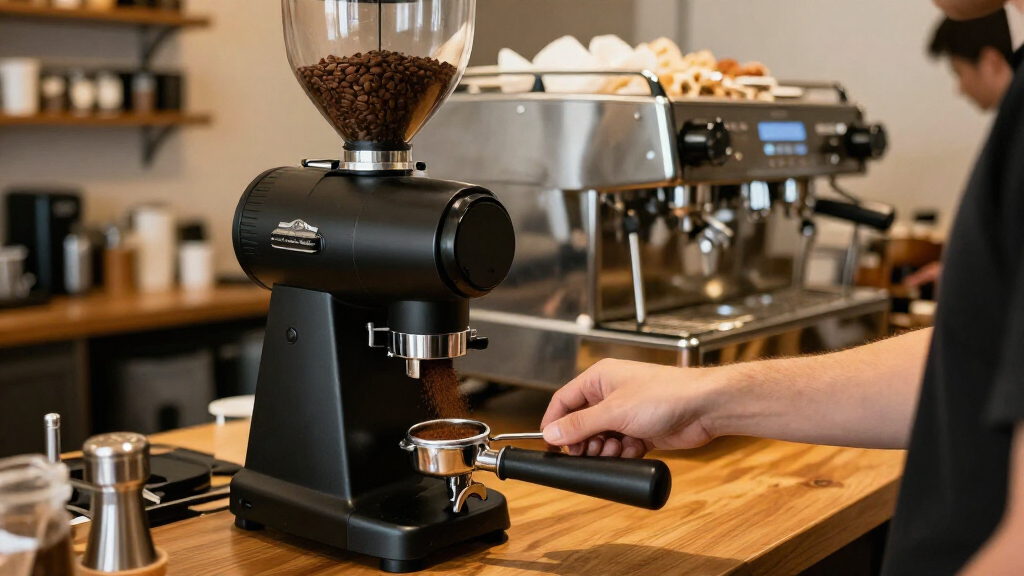
I ranked these five grinders for a specific job: making espresso at home with a cafe-style workflow. I did not treat a long grind-setting list as proof of espresso performance. A useful espresso grinder needs adjustment that can be made and repeated, a practical way to dose or catch grounds, and a design that fits how the buyer prepares coffee. The product information supplied for these models describes features and specifications, not comparative extraction results, so I avoid claims about shot quality that those details cannot substantiate.
Adjustment and stated espresso use came first. I looked at the range of settings, whether adjustment is described as stepless, and whether espresso is explicitly included among the supported grind styles. That favors the Tuni and SHARDOR for their 64 mm flat-burr configurations and many stated settings, while the Breville earns credit for fine-grained timed dosing rather than a stepless adjustment claim. Neretva and AMZCHEF remain viable multi-brew choices, but their listed controls offer a different degree of stated granularity.
Workflow mattered just as much as burr size. A portafilter holder can make dosing tidier and faster for espresso; adjustable time controls can help repeat a routine; and hopper choices affect whether a buyer keeps beans loaded or weighs out each dose. I gave weight to those practical distinctions rather than assuming that the largest burr or hopper automatically makes the best choice. The Tuni’s interchangeable hopper setup, the SHARDOR’s programmable shot dosing, and the Breville’s clear display each address different routines.
Finally, I considered fit, limitations, and clarity of the supplied information. Dimensions, capacity, included accessories, voltage, and stated limitations can affect daily use. Where details conflict, as with the SHARDOR hopper capacity, I flag the discrepancy instead of choosing a figure. I also do not infer that anti-static features eliminate retention or mess, or that a particular grinder is quiet, durable, or cafe-commercial grade without supporting information. The ranking reflects the relative usefulness of the described features for home espresso, not a claim of firsthand testing.
Factors to Consider When Choosing Best Cafe Espresso Grinders
I would choose a cafe-style espresso grinder by matching its adjustment and dosing controls to the way I make coffee, not by counting settings alone. The differences among these five models come down to burr format, the kind of control each listing actually specifies, how grounds reach the portafilter, and whether the grinder needs to serve other brew methods.Match the adjustment to your espresso routine
Espresso often calls for small grind changes as beans, dose, or preparation change. A long setting list can offer more places to adjust, but the listing does not tell me how useful each step will be on a particular machine. The Tuni and SHARDOR both list 100 settings, while Tuni also describes its adjustment as stepless. Breville lists 60 settings and emphasizes a readable LCD, while Neretva lists 30 and AMZCHEF lists 48. I would treat those numbers as a comparison of stated controls, not a guarantee of finer or better shots.
If you value a clear indication of the selected setting and dose, Breville has the most explicit display information here. If your priority is the broadest listed adjustment range among these options, Tuni and SHARDOR stand out, but their other differences matter: Tuni offers two hopper sizes, and SHARDOR specifies programmable single- and double-shot dosing. Buyers should also confirm that the grinder’s adjustment range suits their espresso machine and preferred beans; the supplied product details do not report comparative extraction results.
Choose a dosing workflow you will actually use
Think about whether you prefer to grind directly into a basket, use a dosing cup, or collect grounds in a container. Breville can grind into a portafilter or an airtight container and includes small and large portafilter cradles. Neretva has a holder specified for 51 mm and 58 mm portafilters, but the portafilter itself is not included. Tuni includes a compatible holder and dosing accessories, while SHARDOR lists an adjustable portafilter holder. AMZCHEF’s supplied description does not specify a portafilter holder, so its cup selection may fit a less direct espresso routine.
Timing controls are another point of separation. Breville’s 0.2-second increments are the finest stated interval in this set. AMZCHEF and Tuni describe 0.5-second increments, though the Tuni listing includes timed single and double modes. SHARDOR specifies programmable shot dosing but not its timing steps; Neretva gives a maximum timer duration without an increment. I would avoid treating an unspecified detail as a weakness in operation, but I would ask for clarification if precise timed dosing is a deciding factor.
Decide between a loaded hopper and smaller doses
A larger hopper can keep beans ready for frequent drinks, while a smaller or removable hopper can better suit buyers who prefer to weigh smaller amounts. Breville lists an 18-ounce bean hopper, and SHARDOR lists 17.6 ounces in its specifications, though another supplied figure says 1.1 pounds. I would verify SHARDOR’s current capacity details rather than relying on one figure. Neretva lists 6.34 ounces, while AMZCHEF offers a removable 10.6-ounce hopper with a trap door.
The Tuni has the most explicit choice: a 250 g hopper and a 50 g hopper. That lets a buyer select a different setup instead of committing to one capacity. Hopper size is not the same as dose precision or espresso suitability, though, and the right choice depends on how often you brew, how you store beans, and how much room you have. If you plan to single-dose, look at the small-hopper option and included accessories rather than assuming a large hopper can be used the same way.
Read burr size and type as part of the whole package
Tuni and SHARDOR specify 64 mm flat burrs, while Breville and Neretva use conical burrs, and AMZCHEF specifies 40 mm conical burrs. Those distinctions help identify the designs, but they do not prove that one grinder will make better coffee in every setup. I would compare them alongside the adjustment mechanism, dose method, and supplied fit information. For example, Tuni’s flat burrs come with interchangeable hoppers and a portafilter holder; SHARDOR pairs flat burrs with programmable shot dosing but is heavier and larger.
Do not buy on burr diameter alone. The product descriptions provide no controlled comparison of grind consistency or shot results. A grinder that better matches your routine, basket, available space, and preferred controls may be a more satisfying choice than a model selected for a larger number or size on a spec sheet.
Check counter fit, electrical details, and unclear specifications
Measure the space where the grinder will sit, including clearance beneath cabinets. The SHARDOR’s listed dimensions and 11.4-pound weight make it the least convenient of these choices to move around. Breville is tall at 15.33 inches; AMZCHEF is 13.4 inches high, and Neretva is 13.03 inches high. Tuni’s supplied details do not provide dimensions, so I would look those up before ordering if space is tight. A portafilter holder or dosing cup also needs room to be used comfortably.
Check the voltage against your location and confirm any specifications that appear inconsistent. The Breville listing identifies a 110–120-volt range and notes possible regional compatibility limits; the other supplied voltage figures are 120 volts. SHARDOR has conflicting hopper-capacity figures, and its listed capacity should be clarified. I would also check warranty coverage and support terms for the particular retailer and region, since those details are not equally complete across all five product descriptions.
Treat anti-static claims as a convenience, not a cure-all
Neretva, AMZCHEF, Tuni, and SHARDOR all describe an anti-static feature or system. These features are intended to reduce static, clumping, or residue, which can make grounds easier to manage around a portafilter and counter. The listings do not quantify how much mess each system prevents, so I would not rank a grinder on that feature alone. The included brush and container design may matter just as much to routine cleanup.
Also look at what comes in the box. Tuni includes a dosing cup, ring, bellows blower, portafilter holder, and brushes; Breville includes cradles and a lidded grounds container; Neretva includes a jar and cleaning accessories. AMZCHEF’s listed package includes a cleaning brush. These extras do not replace a good match between grinder and espresso routine, but they can reduce the need to source basic accessories separately.
Frequently Asked Questions
Which grinder is the best fit for a cafe-style espresso routine at home?
I rank the Tuni G3 first because its stated features combine 64 mm flat burrs, 100 settings described as stepless, a portafilter holder, timed single and double modes, and both large and small hopper options. That makes it the most adaptable choice in this lineup for different home routines. Buyers who care more about programmable shot dosing may prefer the SHARDOR, while someone who wants the clearest display and finest stated timer increments may find Breville a better fit.
Do more grind settings mean a grinder will make better espresso?
No. A setting count tells you how many positions or adjustments the product lists, but it does not establish grind consistency or shot quality. Tuni and SHARDOR list 100 settings, while Breville lists 60 and Neretva lists 30; their burr types, dosing methods, and adjustment descriptions also differ. I would use the number as one comparison point, then check the grinder’s espresso workflow, portafilter support, and adjustment details against your own machine and brewing habits.
Should I choose flat burrs or conical burrs for espresso?
The product details here do not provide a controlled comparison that would justify declaring one burr style better for every espresso setup. Tuni and SHARDOR list 64 mm flat burrs, while Breville and Neretva use conical burrs and AMZCHEF specifies 40 mm conical burrs. I would compare burr type with adjustment range, timer controls, fit, and how you plan to dose rather than selecting a model based on burr shape or diameter alone.
Which of these grinders is easiest to use with a portafilter?
Neretva, Breville, Tuni, and SHARDOR all specify portafilter support in some form. Neretva’s holder is listed for 51 mm and 58 mm portafilters, Breville can grind into the portafilter and includes two cradle sizes, and Tuni includes a holder compatible with 51–58 mm portafilters. SHARDOR lists an adjustable holder. AMZCHEF’s supplied product information does not specify a portafilter holder, so I would look at another option if direct basket dosing is central to your routine.
Which grinder should I choose if I brew methods beyond espresso?
AMZCHEF is explicitly described for espresso-fine through coarse grinds and names French press, drip, pour-over, and cold brew, so I would put it high on the list for a mixed-brew household. Breville also lists 60 settings for different brewing methods, while Tuni and SHARDOR describe ranges from espresso to French press. Neretva lists several brew methods too, but its description says it is not recommended for Turkish coffee. Match the grinder’s stated range to the methods you actually use rather than assuming each model has identical versatility.
Conclusion
My overall pick is the Tuni G3 for buyers who want the widest stated adjustment range alongside a choice between a loaded hopper and smaller-dose workflow. Choose the SHARDOR if programmable single- and double-shot dosing and 64 mm flat burrs are the priority, and you have room for its larger, heavier body. For clear controls and fine timer adjustment, I would choose the Breville Smart Grinder Pro; its LCD and 0.2-second increments are its strongest distinctions.
Choose Neretva if an included holder for common portafilter sizes matters more than a large adjustment range, and choose AMZCHEF if your household regularly switches between espresso and other brew methods. Before ordering, I would verify the SHARDOR hopper capacity, check voltage and counter clearance, and make sure the chosen grinder’s dosing style fits your espresso machine. The best choice is the one whose controls and workflow you will use consistently, not simply the one with the longest feature list.
Halloween Picks
halloween
As an affiliate, we earn on qualifying purchases.