TL;DR

Get coffee and tea gear delivered free with Prime
- Fast, free delivery on millions of items
- Prime Video, Amazon Music and more included
- Member-only deals all year
Espresso recipes break when you change beans because roast, density, processing, freshness, and flavor balance change how water moves through the puck and what the shot tastes like. Keep dose and preparation steady, adjust grind to bring flow into a workable range, then tune yield by taste; treat time and a 1:2 ratio as guides, not rules.
A recipe that made syrupy, sweet espresso yesterday can turn sharp and watery when you open a new bag today. Your machine did not suddenly forget its job. The beans changed the way water moves through the coffee and the flavors it can pull out.
Espresso recipes are useful because they give you a repeatable starting point: a dose, a grind setting, a beverage yield, and a rough shot time. They are not universal formulas. In this guide, you’ll see why a new coffee can run faster or slower, how roast and freshness affect the cup, and how to adjust your shot without changing five things at once.
You’ll also get a simple dialing-in routine you can use at home. Keep your dose and puck preparation steady, read the flow and taste together, and let the coffee tell you what to change. That approach makes a new bag feel less like guesswork and more like a conversation.
Treat a familiar recipe as a starting point because roast, structure, processing, and freshness affect flow and flavor.
Keep dose and puck preparation steady while adjusting grind to bring flow into a workable range.
Once flow is workable, tune beverage yield to taste; light and dark coffees may prefer different ratios.
Use shot time as one clue alongside taste, yield, and flow, not as a quality score.
Record dose, yield, time, grinder setting, temperature when adjustable, and a brief tasting note.
Home espresso · A practical guide
Why Espresso Recipes Break When You Change Beans
A recipe is a repeatable starting point, not a universal formula. New beans change how water moves through the puck and which flavors the shot reveals.
Same settings. Different coffee. Different shot.
Roast, bean structure, age, and equipment all affect puck resistance, flow, and extraction. A familiar recipe gives you a baseline for learning those differences.
Roast level
Darker roasts often dissolve readily. Lighter roasts may need finer grinding, hotter water, or a longer yield to taste balanced.
Bean structure
Density, origin, processing, and roast development can change how easily water travels through the coffee bed.
Freshness
Freshly roasted coffee releases carbon dioxide. As beans degas, puck wetting and shot flow can shift.
Yield preference
One coffee may taste sweet at a given yield; another may taste sour, thin, bitter, or dry at the same ratio.
Grinder and machine
Burrs, alignment, temperature, pressure, basket shape, and puck preparation affect the result and recipe transfer.
Time is a clue
A faster shot is not automatically bad. Pair time with taste, yield, and how evenly the coffee flows.
Darker roast
More readily soluble for many coffees. A long yield can push the cup toward bitterness or dryness.
Lighter roast
Often less soluble. A finer grind or longer ratio may bring more sweetness and clarity into the cup.
Change one thing at a time.
Keep dose and preparation consistent so each shot gives you useful feedback. Let flow guide the grind; let flavor guide the yield.
Set a baseline
Weigh your usual dose, such as 18 g, and start near 36 g out. Distribute and tamp consistently.
Read the flow
Much faster than usual? Try finer. Very slow or barely dripping? Try coarser.
Taste the cup
Notice sourness, sweetness, bitterness, thinness, dryness, and whether the flow looked even.
Tune the yield
With workable flow, test a modestly longer or shorter yield to improve the flavor balance.
Let the coffee set the ratio.
There is no single industry-wide recipe that fits every coffee or setup. Use familiar numbers to compare, then adjust based on the cup.
When to move away from it
A light roast that tastes sharply sour at your baseline may benefit from a slightly longer yield, a finer grind, or a small temperature increase if available. Change one variable, then taste again.
If a shot turns harsh or dry, test a shorter yield or a coarser grind. Sourness and bitterness can have several causes, including the coffee itself and uneven puck flow, so time alone cannot diagnose the cup.
From new bag to better shot.
Think of the puck as a path for water. Different beans alter the path; your shot gives you clues about what to adjust next.
Yesterday’s recipe is today’s reference.
Keep your dose and preparation steady. Watch the shot, taste what is in the cup, and let the new coffee tell you what it needs.
Why the same espresso recipe changes with a new bag
Why espresso recipes change with new beans comes down to how each coffee lets water pass through the puck and what flavors it gives up along the way. A recipe records your settings, but a bag of beans is not a fixed material: roast, density, processing, and age can all shift the shot. That is why the same dose, grind, and yield can produce a different flow and flavor.
Think of the puck like a garden path after rain. One soil stays firm, while another turns soft and lets water rush through. Coffee beds behave in their own way: some offer more resistance at the same grinder setting, and others let water travel faster. Your old bag might have produced 36 grams in 29 seconds; the new one might hit that same yield in 21 seconds, even if you touched nothing.
That faster shot does not automatically mean you have made bad espresso. Time is a clue, not a verdict. If the coffee tastes sweet and clear, the shorter time may suit that bean. If it tastes thin and sharply sour, the flow and flavor together suggest you should adjust.
An espresso recipe is a starting point, not a universal target for every coffee. A familiar 18-gram dose and 36-gram yield can help you compare bags, but each bag may need a different grind or yield. Once you see the new coffee as a different ingredient, the shift in your shot makes sense.
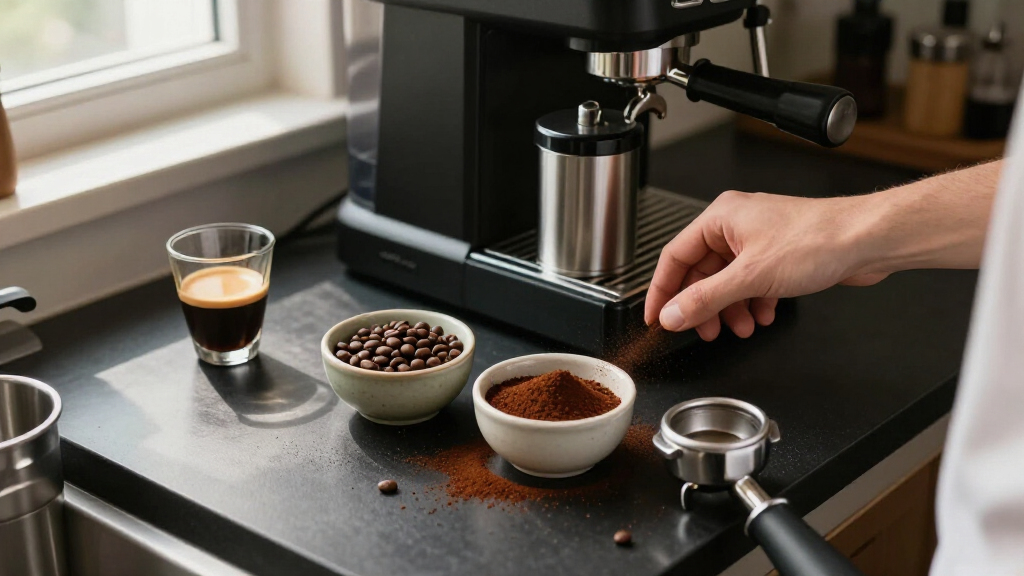
espresso grinder for dialing in new beans
As an affiliate, we earn on qualifying purchases.
As an affiliate, we earn on qualifying purchases.
How roast and bean structure change the shot
Roast and bean structure change how readily coffee dissolves and how easily water moves through the puck. Darker roasts are generally more soluble and often extract readily; lighter roasts can be less soluble and may need a finer grind, hotter water, or a longer ratio to taste balanced. Those are useful tendencies, not promises for every bag.
Imagine two coffees in your grinder: a dark roast that smells like toasted chocolate and a light roast with a citrusy aroma. The dark coffee may give up its flavors easily, so a long yield could push the cup toward bitterness or dryness. The light coffee may taste pointed and sour at the same yield, and a longer ratio could help reveal sweetness. But origin, processing, and roast development can change the result, so taste still gets the final say.
Density and processing also affect the way the grounds behave. Two medium roasts can look similar in the basket but resist water differently. If the new coffee flows much faster at your usual setting, try grinding finer while keeping dose and puck preparation steady. If it crawls or chokes, try a coarser setting before assuming the coffee itself is the problem.
One change at a time lets you learn what the beans need. For example, if a light roast tastes sour, make the grind slightly finer and repeat the same dose and yield. If the flow becomes more even but the taste remains sharp, then test a longer yield or a small temperature increase if your machine allows it.
As an affiliate, we earn on qualifying purchases.
Why fresh beans can make yesterday’s settings drift
Freshness changes how a shot flows because newly roasted coffee releases carbon dioxide. That gas can interfere with puck wetting and extraction, so very fresh beans may behave differently from the same coffee after it has rested. As the beans degas, your shots can drift even though the grinder setting stays put.
Say you open a bag on Monday and the first shots spray or run unevenly. By Friday, the coffee may settle into a more predictable flow. You may need to adjust the grind again as the beans age. That does not mean you made a mistake on Monday; it means your ingredient is changing over time.
There is no universal number of days that works for every coffee. Roast style, packaging, and the coffee itself all matter. Many coffees become easier to dial in after several days, but let the shot guide you rather than treating a calendar as a rule. If you buy a bag roasted yesterday, expect a little more movement than you might see from beans that have rested for a while.
Keep the bag sealed between shots and store it in a cool, dry place, away from heat and sunlight. Note the roast date alongside your settings. If Tuesday’s espresso tastes lively but Friday’s tastes hollow at the same recipe, that simple record helps you recognize a freshness shift instead of starting over blind.
As an affiliate, we earn on qualifying purchases.
How to dial in a new bean without chasing every variable
Dial in a new bean by keeping dose and puck preparation steady, adjusting grind to bring the flow into a workable range, and then changing yield to improve flavor. This order gives you a clearer read on each shot. It also stops a common kitchen spiral: changing the dose, grind, temperature, and tamp all at once, then having no idea which change helped.
- Set a baseline. Weigh your usual dose, such as 18 grams, and aim for a familiar starting yield, such as 36 grams. Use consistent distribution and tamping.
- Watch the flow. If the shot reaches the target yield much faster than usual, grind a little finer. If it runs very slowly or barely drips, grind a little coarser.
- Taste the shot. Check whether it tastes sour, sweet, bitter, thin, or dry. A timer helps you compare shots, but it cannot tell you whether the cup tastes good.
- Adjust yield next. Once the flow is workable, try a modestly longer yield for a sharp, underdeveloped taste or a shorter one if the cup turns harsh and dry.
- Write it down. Record dose, yield, time, grinder setting, temperature if adjustable, and a short tasting note.
For example, your first shot from a new light roast might run 36 grams in 22 seconds and taste lemon-sharp. A finer grind may slow the next shot and add sweetness. If it still tastes too intense, try a slightly longer yield while holding the other settings steady. Small, clear steps beat random tweaks.
As an affiliate, we earn on qualifying purchases.
When a 1:2 ratio helps—and when to break from it
A 1:2 brew ratio is a handy reference: 18 grams of ground coffee in, 36 grams of espresso out. It gives you a consistent first shot to taste, but it is not a universal recipe. Different coffees can taste more balanced at different yields, so use the ratio as a starting marker and let the cup decide what comes next.
| What you notice | What you could try | Why it may help |
|---|---|---|
| Light roast tastes sharply sour at 1:2 | Try a modestly longer yield; consider finer grinding or a slightly higher temperature | More water passing through the coffee can bring out additional flavors, though the best adjustment depends on the bean |
| Dark roast tastes bitter or dry at 1:2 | Try a shorter yield or a slightly coarser grind | A shorter shot may reduce the harsh finish for a coffee that extracts readily |
| Shot tastes sweet and clear at a different ratio | Keep that ratio for this bag | Flavor is a better target than matching a number for its own sake |
Picture two morning routines. On Monday, an 18-to-36-gram shot from a light roast tastes tight and sour, while a longer yield softens the cup and brings out fruit. On Wednesday, a darker bag tastes rich at a shorter yield, but turns ashy when you push it to the same longer output. The same machine can make both cups well because the beans call for different endpoints.
Break from the ratio when taste gives you a clear reason. Keep your dose stable to make comparisons easier, then explore yield in small steps. A recipe number is a measuring stick, not a scorecard.
Why shot time alone can send you in the wrong direction
Shot time is a guide, not a quality score. A fast shot can taste balanced, and a slow shot can taste harsh or uneven. Time tells you something about resistance and flow, but it cannot describe the whole cup or reveal every problem inside the puck.
Suppose your usual espresso reaches 36 grams in 28 seconds, but a new coffee reaches it in 23. If that faster shot tastes sweet, has a pleasant body, and leaves a clean finish, there may be no reason to force it to match the old time. Grinding finer just to make the timer look familiar could make it bitter or clog the basket.
The reverse happens too. A shot may take 35 seconds yet taste both sour and dry. That mixed signal can point to uneven flow, where some parts of the puck let water race through while others resist it. Puck preparation, grinder alignment, basket shape, water temperature, and machine pressure all play a part, so the coffee is not always the sole cause.
Modern scales and flow-aware machines make it easier to record what happened, but better measurement does not replace tasting. Think of your timer like a speedometer: it tells you how fast you travelled, not whether the ride was smooth. Use the time alongside yield and flavor, then make one small change you can evaluate in the next shot.
What to record so the next bag takes fewer shots
A short shot log turns dialing in from memory work into a repeatable process. Record dose, beverage yield, shot time, grinder setting, temperature if you can adjust it, and one sentence about flavor. The notes do not need to look like a lab notebook; a line in your phone is enough.
For example: “18 g in, 36 g out, 24 seconds, grinder 4.2, sour lemon finish.” On the next shot, you might keep dose, yield, and temperature fixed, move slightly finer, and write down the new result. If the cup gets sweeter, you have useful evidence. If it gets dry, you can undo that change and test a longer yield instead.
Your equipment matters when you compare recipes. Burr design and grinder alignment affect particle size; baskets vary in shape; machines can differ in temperature and pressure. A recipe shared by a friend on another setup can still give you a clue, but it may not transfer exactly. Treat it as a starting point for your machine and your bag.
After a few bags, your notes can reveal patterns. Perhaps coffees from one roast style often taste better with longer yields, or beans that are very fresh settle down after a few days. That record makes the next change less mysterious—and helps you repeat the shot you liked.
Frequently Asked Questions
Why does the same grind setting produce a different shot with a new bag?
Different beans resist water differently. Density, roast, processing, and age all affect puck flow, so the same grinder setting can run faster or slower with a new bag. Watch the shot and taste it before deciding whether to grind finer or coarser.
Should I change grind size or dose first?
Usually, adjust grind first while keeping dose and puck preparation steady. That makes it easier to see how the coffee responds. Change dose when your basket fill or chosen recipe calls for it.
Does a faster shot always mean under-extraction?
No. Time alone cannot diagnose taste. A fast shot can be sweet and balanced, while a slower one can be harsh or uneven. Use flavor, yield, and flow together to choose your next adjustment.
Why does my espresso taste sour?
Sourness can come from a shot that has not extracted enough, but it can also reflect the coffee’s character or an unsuitable yield, temperature, or uneven puck flow. Try one modest change at a time, such as a finer grind or a longer yield, and taste the result.
How long should I wait after roasting before using espresso beans?
There is no universal waiting period. Very fresh beans release more carbon dioxide and can be harder to dial in; many coffees become easier to use after several days. Packaging and the coffee itself affect the timing, so follow how the shots behave.
What should I write down when dialing in a new coffee?
Record dose, beverage yield, shot time, and grinder setting. Add temperature if adjustable, the roast date, and a short tasting note such as “sweet, cocoa finish” or “sharp and thin.” Those details help you compare one change with the next.
Conclusion
When you change beans, expect the shot to change with them. Start with a familiar dose and ratio, use grind to steady the flow, then adjust yield until the cup tastes balanced. Change one thing at a time and keep a short note so you can repeat what works.
Remember the recipe as a map, not a destination. The best shot is the one that makes this bag taste good in your cup.
Halloween Picks
halloween
As an affiliate, we earn on qualifying purchases.