TL;DR

Get coffee and tea gear delivered free — and shop member deals
- Fast, free delivery on millions of items
- Access to Prime Big Deal Days deals on October 6–7
- Prime Video, Amazon Music and more included
Espresso can be both tiny and intense because water is forced through finely-ground coffee at about 9 bars of pressure, pulling out oils and dissolved solids that drip brewing leaves behind. A shot is roughly 8-12% dissolved coffee solids versus about 1.2-1.5% for drip, so every sip carries up to ten times the coffee. Per serving, though, espresso actually has less caffeine than a full cup of drip.
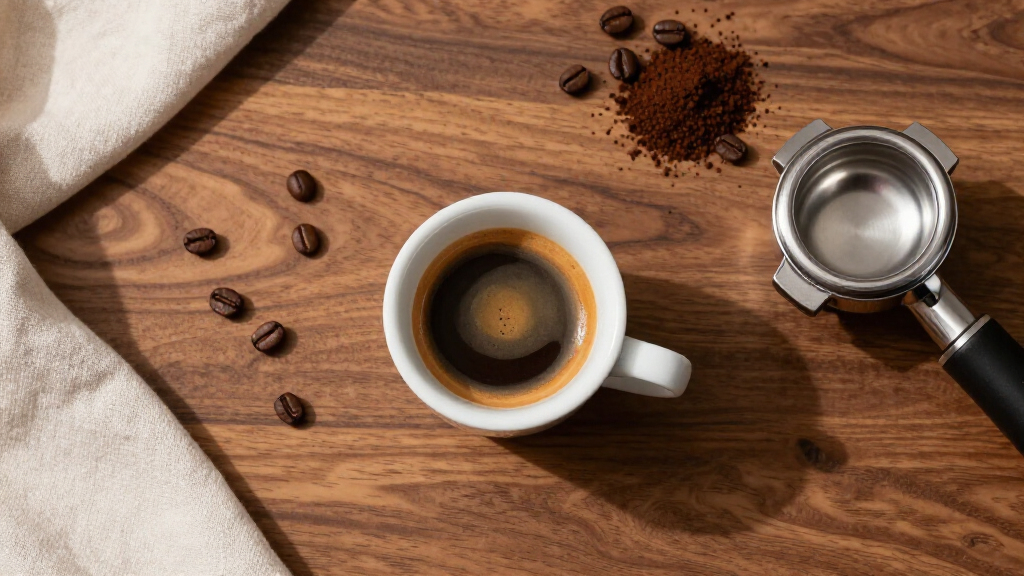
The first time you watch a barista pull a shot, it looks almost comically small. Two ounces of dark liquid dribbling into a tiny cup, while the guy next to you gets a mug you could swim in. Then you taste it. That little shot hits like liquid velvet with a thunderclap behind it.
So what’s going on? How can something so small taste so loud? The answer comes down to concentration through pressurized extraction — a trick no other brewing method can pull off.
In the next few minutes, you’ll learn exactly why espresso is intense, why its caffeine reputation is mostly wrong, and what that golden foam on top really tells you (hint: less than you think).
Espresso is 8-12% dissolved coffee solids versus ~1.2-1.5% for drip — up to 10x more concentrated sip for sip.
The 9-bar pressure standard came from lever-machine engineering, not flavor science — and it emulsifies oils no drip method can extract.
A 1:2 brew ratio (18-20g coffee in, 36-40g liquid out) in 25-30 seconds is the baseline recipe for a balanced shot.
Per serving, espresso has LESS caffeine than drip: 60-80mg per shot versus 95-165mg per cup.
Crema indicates freshness, not quality — robusta beans make big crema and often harsh flavor.
The 9-Bar Trick That Makes Espresso Possible
Espresso is intense because water is forced through finely-ground coffee at roughly 9 bars of pressure — about 130 psi, or nearly five times the pressure in a car tire. That pressure extracts oils, dissolved solids, and aromatic compounds that gravity-fed drip brewing simply leaves behind.
Think of it like washing a dirty sponge. Drip brewing is holding it under a slow faucet. Espresso is blasting it with a pressure washer. Same sponge, very different results.
Here’s the neat historical accident: the 9-bar standard wasn’t chosen by flavor scientists. It came from lever-machine engineering. Achille Gaggia’s lever machine — patented in 1938 and commercialized around 1948 — used a spring-loaded piston a human arm could actually operate. That mechanical limit happened to land in the flavor sweet spot, and modern pump machines replicate it to this day.
Before Gaggia, Luigi Bezzera’s 1901 machines made fast coffee, but it was thin stuff. True high-pressure espresso with crema only arrived when the lever machine did. The crema you see today is a direct descendant of that engineering constraint.
1:2 vs. 1:16 — The Brew Ratio That Explains Everything
Espresso’s intensity comes down to a brew ratio of about 1:2 — typically 18-20g of ground coffee yielding 36-40g of liquid espresso. Drip coffee uses roughly 1:16. That means espresso uses eight times less water for the same amount of coffee, so the flavor doesn’t have anywhere to hide.
Compare the numbers side by side:
| Metric | Espresso | Drip Coffee |
|---|---|---|
| Brew ratio | ~1:2 | ~1:16 |
| Total dissolved solids (TDS) | ~8-12% | ~1.2-1.5% |
| Brew time | 25-30 seconds | 4-6 minutes |
| Pressure | ~9 bars | Gravity only |
| Serving size | ~1 oz (30 ml) | 8-12 oz |
That TDS number is the headline. A shot of espresso is 8-12% dissolved coffee; drip is barely 1.5%. Sip for sip, espresso carries up to ten times the coffee solids. It’s the difference between orange juice and orange-flavored water.
Fast but Strong: Why 25 Seconds Beats 5 Minutes
Espresso can be both fast and intense because a fine grind creates enormous surface area, letting water extract a lot of flavor in just 25-30 seconds. Drip coffee takes minutes because its coarser grind offers the water far less coffee to grab per second.
Imagine steeping two tea bags: one whole, one ripped into shreds. The shredded one colors the water almost instantly. Espresso grind is the shredded one — ground so fine it feels like powdered sugar or damp sand.
Speed alone would make espresso bitter mud, though. The craft is stopping at the right moment. The industry target is an extraction yield of 18-22% — the percentage of the coffee bean’s mass that ends up dissolved in your cup. Under that, and the shot tastes sour and thin. Over it, and you’re pulling bitter, astringent compounds nobody wants.
That window is why baristas obsess over grind size, dose, and timing. A two-second difference in shot time can push you from bright and sweet to harsh and drying.
Crema and Emulsified Oils: The Stuff Drip Coffee Can’t Do
Crema exists because 9-bar pressure emulsifies coffee oils — oils that never dissolve in drip brewing. Those oils trap carbon dioxide bubbles coming off the fresh grounds, creating the golden-brown foam layer on top of a shot.
It’s a bit like mayonnaise. Oil and water don’t mix on their own, but whip them hard enough with the right stabilizers and you get something new. In espresso, proteins and melanoidins (browned compounds from roasting) stabilize the foam the same way egg yolk stabilizes mayo.
Now the myth-busting: thick crema is not a reliable quality signal. Robusta beans produce generous crema but often taste harsher than arabica. A beautiful hazelnut-colored foam tells you the coffee is fresh and the machine hit its pressure. It does not tell you the shot tastes good.
Judge a shot by how it tastes, not by how pretty the foam looks. Gorgeous crema has rescued many mediocre shots from criticism.
The Caffeine Surprise: Espresso Is Stronger Per Sip, Not Per Cup
Per serving, espresso has less caffeine than drip coffee: a single 1-oz shot delivers roughly 60-80mg, while a standard cup of drip packs 95-165mg. The confusion comes from concentration. Per ounce, espresso wins by a mile — but nobody drinks 12 ounces of straight espresso.
Picture the classic scenario: you order a doppio (2 oz, ~125mg caffeine) and your friend orders a 16-oz drip (~160-200mg). You’ll both feel the buzz in about 30 minutes. Your friend just needed 14 more ounces to get there.
Espresso also delivers caffeine faster. Because it’s concentrated and you drink it quickly, the spike hits sooner than nursing a mug over an hour. That’s why an after-dinner espresso wakes you up by dessert, not by bedtime.
- Single shot (1 oz): ~60-80mg caffeine
- Doppio (2 oz): ~120-160mg
- 8-oz drip cup: ~95-165mg
So if you’re avoiding late-day caffeine, the espresso isn’t your friend — but it’s not the monster its reputation suggests either.
Fix It: Why Your Shots Taste Bitter or Sour
Bitter espresso means over-extraction; sour, thin espresso means under-extraction. Both come down to grind size and timing, and both are fixable in one adjustment.
- Sour and weak? Your grind is too coarse or your shot ran too fast (under 20 seconds). Grind finer.
- Bitter and drying? Your grind is too fine or the shot crawled past 35 seconds. Grind coarser.
- Dial in with a scale. Weigh 18g in, aim for 36g out in 25-30 seconds. Guessing by volume is how home shots go wrong.
- Change one variable at a time. Adjust dose or grind, never both, or you won’t know what worked.
- Check your water temperature — 195-205°F (90-96°C) is the target range. Too cool tastes sour; too hot tastes burnt.
One more real-world trap: stale coffee. Beans past their prime lose the CO₂ that creates crema and flow unevenly. Buy whole beans roasted within the last few weeks, and grind right before brewing. Pre-ground espresso ages out fast.
Can You Make Espresso Without a Machine?
Not truly — pressure is essential to espresso, and nothing replicates 9 bars without a pump or lever. Moka pots reach maybe 1-2 bars; an AeroPress with firm pressing hits less than 1 bar. Both make strong, tasty coffee. Neither makes espresso.
A moka pot sitting on a stovetop hisses and sputters like it’s doing something dramatic, but it brews closer to strong drip than true espresso. You’ll get concentrated coffee with body — but no emulsified oils, no real crema, no 12% TDS.
If you want actual espresso at home without café money, the honest options are a manual lever press (Flair and similar, from around $100-500) or an entry-level pump machine like a Breville/Sage. The post-2020 home espresso boom means good machines are easier to find than ever — but the cheap steam-toy machines marked “espresso” on the box won’t get you there either.
New Trends: Turbo Shots, Paper Filters, and Lighter Roasts
The espresso world is quietly rewriting its own rules. “Turbo shots” — coarser grind, lower dose, longer pulls — trade some punch for smoother, sweeter flavor and higher extraction yield. Specialty cafés have been adopting them fast.
Paper-filtered espresso, popularized by brewing author Scott Rao, lines the basket with a small paper disc. It reduces channeling (water sneaking through cracks in the puck) and strips out astringency. The result tastes cleaner, though you sacrifice some body and crema.
Roast style has shifted too. The old assumption that espresso demands oily dark roasts has faded; third-wave lighter roasts highlight acidity and the bean’s origin character — an Ethiopian shot can taste of blueberry, something a French roast would never show you. Meanwhile, the older Italian certification standards (INEI’s “certified Italian espresso”) still defend the traditional profile, so the debate continues.
None of this changes the fundamentals. Pressure, fine grind, 1:2 ratio — the trends are variations on a century-old theme.
Frequently Asked Questions
Does espresso have more caffeine than regular coffee?
Per ounce, yes — dramatically more. Per serving, no. A single 1-oz espresso shot contains about 60-80mg of caffeine, while a typical 8-oz cup of drip coffee contains 95-165mg. Espresso feels stronger because you consume it quickly and the caffeine absorbs fast.
Is thick crema a sign of good espresso?
Not necessarily. Crema shows your coffee is fresh and the machine reached proper pressure, but it doesn’t guarantee flavor. Robusta beans produce abundant crema yet often taste harsher than arabica. Taste the shot — don’t grade the foam.
Are espresso beans different from regular coffee beans?
No bean variety is inherently “espresso.” Any coffee can be used for espresso — what matters is the grind (very fine), the dose, and the machine’s pressure. Roasters often blend and roast beans with espresso in mind, but that’s a choice, not a requirement.
Why is my espresso sour or bitter?
Sour and thin means under-extraction — grind finer or extend the shot. Bitter and drying means over-extraction — grind coarser. Aim for 18g of coffee yielding 36g of liquid in 25-30 seconds, and adjust one variable at a time until it lands there.
What’s the difference between a ristretto and a lungo?
A ristretto uses the same dose but less water (around 1:1 ratio), producing a shorter, sweeter, more syrupy shot. A lungo uses more water (around 1:3 or longer), giving a larger, more diluted, slightly more bitter shot. Same coffee, different concentration.
Conclusion
Espresso isn’t strong because of special beans or dark roasts. It’s strong because pressure, a fine grind, and a tight 1:2 ratio squeeze an entire mug’s worth of flavor into one ounce. Remove any one of those three and you just have strong coffee.
Next time a tiny shot lands in front of you, you’ll know exactly what you’re looking at: a century of Italian engineering, compressed into 25 seconds. Sip it before the crema fades.
Fall Picks
fall essentials
As an affiliate, we earn on qualifying purchases.