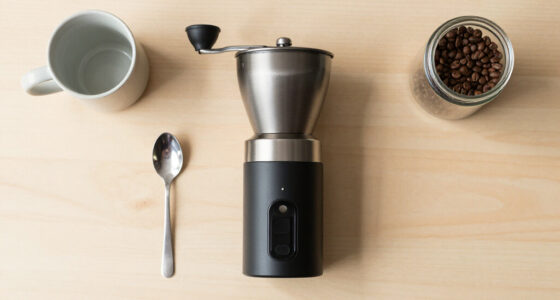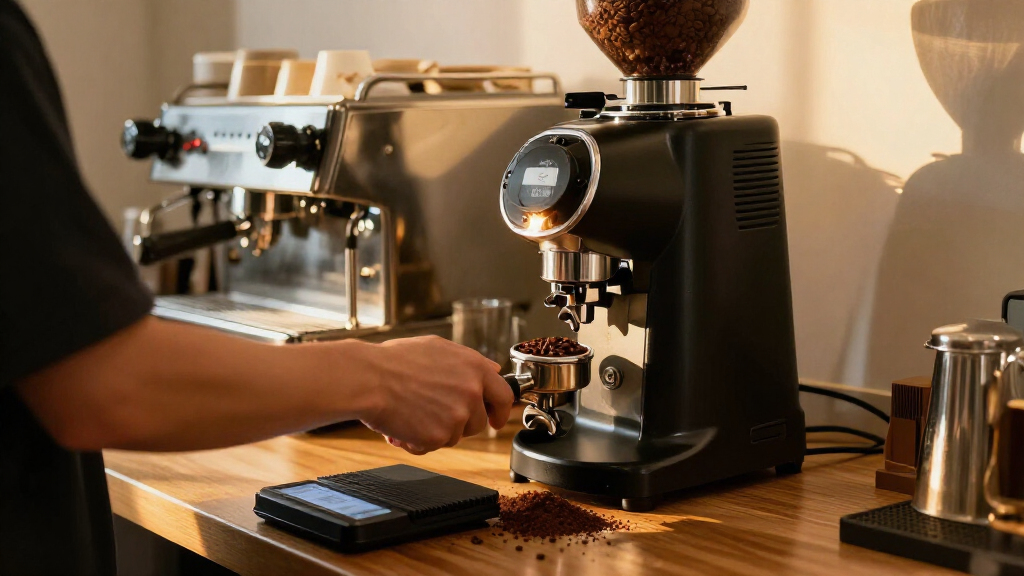

The best grind-by-weight espresso grinders combine repeatable dosing with espresso-ready grinding, and my best overall pick is the Eureka Mignon Libra for its dedicated weight-based workflow and 55 mm burrs. The Baratza Sette 270Wi is another standout for buyers who want grind-by-weight dosing in a more open, fast-working design, while the AAOBOSI cordless grinder suits shoppers drawn to a flexible, scale-equipped setup. The main tradeoff is between dedicated dosing systems and less specialized grinders that add a scale but may ask for more manual steps. Burr design, adjustment control, footprint, and upkeep matter just as much as the weight feature. Read on for my full comparison and buying advice.

Get coffee and tea gear delivered free with Prime
- Fast, free delivery on millions of items
- Prime Video, Amazon Music and more included
- Member-only deals all year
Complete the kit


Key Takeaways
- The Eureka Mignon Libra and Baratza Sette 270Wi are the clearest dedicated grind-by-weight options in this lineup; the other models are better treated as scale-equipped or adjustable alternatives unless their product details confirm a true integrated dosing workflow.
- Burr size alone does not define the best choice. The MOKKOM and Tuni G3 offer 64 mm flat burrs and broad adjustment ranges, but that does not make them direct substitutes for grinders that dose by weight.
- The Sette 270Wi and Mignon Libra serve different routines: the Sette emphasizes an open, fast workflow, while the Libra centers on a compact, enclosed espresso-focused format.
- Scale-equipped grinders can suit buyers who value flexibility, but a built-in scale is not automatically equivalent to automatic grind-by-weight dosing into a portafilter.
- Buy for your actual espresso routine, not the largest setting count. Adjustment usability, dose consistency, workflow, and cleanup carry more weight here than a long list of grind settings.
| MOKKOM 64mm Flat Burr Coffee Grinder – 100 Grind Settings |  | Best for Broad Grind Range | Brand: MOKKOM | Model: BD-CG308 | Burr size: 64 mm stainless-steel flat burrs | VIEW LATEST PRICE | See Our Full Breakdown |
| Breville Smart Grinder Pro Conical Burr Coffee Grinder, Brushed Stainless Steel |  | Best for Programmable Timed Dosing | Brand: Breville | Model: BCG820BSS | Burr type: Conical burr | VIEW LATEST PRICE | See Our Full Breakdown |
| AAOBOSI Cordless Conical Burr Coffee Grinder with Grind-by-Weight Dosing |  | Best for True Grind-by-Weight Dosing | Brand: AAOBOSI | Burr type: 40 mm SUS420 stainless-steel conical burr | Grind settings: 60 main settings plus 5 extra-fine positions | VIEW LATEST PRICE | See Our Full Breakdown |
| Fellow Opus 2 Electric Conical Burr Coffee Grinder |  | Best Compact, Low-Retention Option | Brand: Fellow | Model: 1222MB-NA | Burr type: 48 mm conical burrs | VIEW LATEST PRICE | See Our Full Breakdown |
| Tuni G3 64mm Flat Burr Coffee Grinder, 100 Grind Settings, Ivory |  | Best for Timed Espresso Presets | Brand: Tuni | Model: G3 | Burr type: 64 mm stainless-steel flat burrs | VIEW LATEST PRICE | See Our Full Breakdown |
| MOKKOM Conical Burr Coffee Grinder with Scale, 31 Settings |  | Best Multi-Brew Value | Brand: MOKKOM | Model: CG020A | Burr material: Stainless steel | VIEW LATEST PRICE | See Our Full Breakdown |
| Eureka Mignon Libra Espresso Grinder with Grind-by-Weight Dosing, 55 mm Burrs |  | Best Dedicated Espresso Pick | Brand and model: Eureka Mignon Libra | Burrs: 55 mm hardened steel | Grind adjustment: Stepless | VIEW LATEST PRICE | See Our Full Breakdown |
| Mokkom Conical Burr Coffee Grinder with Scale, 5-in-1 Programmable |  | Best Connected Dosing Features | Burr type: Stainless steel conical burr | Grind settings: 31 | Programmable modes: 5-in-1: cup count, ounces, grams, and manual | VIEW LATEST PRICE | See Our Full Breakdown |
| Baratza Sette 270Wi Grind-by-Weight Conical Burr Grinder |  | Best for Fine Grind Range | Grinder type: Conical burr | Grind settings: 270 | Dosing: Grind by weight with Acaia weighing technology and Bluetooth | VIEW LATEST PRICE | See Our Full Breakdown |
| grind by weight espresso grinder | Grind settings | Brand | Model | Burr type |
|---|---|---|---|---|
| MOKKOM 64mm Flat Burr Coffee G | 100 | MOKKOM | BD-CG308 | — |
| Breville Smart Grinder Pro Con | 60 | Breville | BCG820BSS | Conical burr |
| AAOBOSI Cordless Conical Burr | 60 main settings plus 5 extra-fine positions | AAOBOSI | — | 40 mm SUS420 stainless-steel conical burr |
| Fellow Opus 2 Electric Conical | — | Fellow | 1222MB-NA | 48 mm conical burrs |
| Tuni G3 64mm Flat Burr Coffee | 100, stepless adjustment | Tuni | G3 | 64 mm stainless-steel flat burrs |
| MOKKOM Conical Burr Coffee Gri | 31 | MOKKOM | CG020A | — |
| Eureka Mignon Libra Espresso G | — | — | — | — |
| Mokkom Conical Burr Coffee Gri | 31 | — | — | Stainless steel conical burr |
| Baratza Sette 270Wi Grind-by-W | 270 | — | — | — |
More Details on Our Top Picks
MOKKOM 64mm Flat Burr Coffee Grinder – 100 Grind Settings
The MOKKOM is the strongest fit here for buyers who want a wide adjustment range and hopper flexibility in one grinder. Its 64 mm flat burrs and 100 grind settings span espresso through French press, while the 0.1-second timer gives finer control over timed doses than the Breville Smart Grinder Pro’s 0.2-second increments. Dual hoppers also let you switch between keeping beans ready and single-dose grinding. That flexibility comes with a substantial counter footprint and more removable parts to clean. Unlike the AAOBOSI, it does not list built-in weight-based dosing, so buyers seeking measured doses with automatic stop should look there instead. I’d rank it for versatility, not for compactness or true grind-by-weight control.
Pros:- 64 mm flat burrs and 100 settings support a broad range of brew methods.
- Dual hoppers accommodate bulk storage or single-dose grinding.
- 0.1-second LED timer increments allow precise timed dosing.
- Anti-static plasma generator is designed to reduce grounds mess.
Cons:- Large footprint may be difficult to accommodate on a crowded counter.
- Multiple removable parts make cleaning more involved.
- Timed dosing does not provide the built-in weight-based shutoff offered by the AAOBOSI.
Best for: Home coffee drinkers who switch between espresso and other brew styles and want both bulk and single-dose hopper options.
Not ideal for: Espresso buyers who require built-in weight-based dosing, or anyone with limited counter space and a preference for simple cleanup.
- Brand:MOKKOM
- Model:BD-CG308
- Burr size:64 mm stainless-steel flat burrs
- Grind settings:100
- Capacity:12.35 oz (350 g)
- Power:260 W
- Voltage:120 V
- Dosing controls:LED timer with 0.1-second accuracy; dual hoppers
Our verdict“Choose the MOKKOM if grind-range flexibility and interchangeable hopper styles matter more than compact size or weight-based dosing.”
Breville Smart Grinder Pro Conical Burr Coffee Grinder, Brushed Stainless Steel
The Breville Smart Grinder Pro suits espresso buyers who want clear, repeatable timed dosing without moving up to a grinder with a built-in scale. Its LCD readout displays grind setting, time, and selected shots or cups, and the 0.2-second timer increments make adjustments more deliberate than a basic on/off grinder. Portafilter cradles let grounds go straight into the basket, while the included container supports other brew routines. Compared with the AAOBOSI, the Breville lacks automatic weight-based dosing, but it offers a larger 18 oz hopper and a corded setup that avoids battery limits. Its 60 settings are fewer than the MOKKOM’s 100, and the product information does not list an included scale. This is a straightforward programmable pick, not a true grind-by-weight model.
Pros:- LCD shows grind setting, grind time, and selected shots or cups.
- Timer adjusts in 0.2-second increments for repeatable timed doses.
- Small and large portafilter cradles support direct grinding into a basket.
- 18 oz bean hopper reduces how often beans need replenishing.
Cons:- No built-in scale or automatic weight-based shutoff is listed.
- 60 grind settings offer fewer adjustment points than the MOKKOM’s 100.
- Limited to 110–120 V power.
Best for: Home espresso drinkers who want portafilter-ready timed doses, a readable display, and a large bean hopper.
Not ideal for: Buyers who need automatic gram-based dosing, cordless use, or the finest adjustment range offered by the MOKKOM.
- Brand:Breville
- Model:BCG820BSS
- Burr type:Conical burr
- Grind settings:60
- Grind time adjustment:0.2-second increments
- Bean hopper capacity:18 oz
- Power:165 W
- Dimensions:6.28 × 8.46 × 15.33 in
- Warranty:2-year limited
Our verdict“Pick the Breville for convenient, display-guided timed grinding if you do not need the AAOBOSI’s automatic gram-based dosing.”
AAOBOSI Cordless Conical Burr Coffee Grinder with Grind-by-Weight Dosing
The AAOBOSI is the clearest choice in this group for buyers whose priority is grinding a measured dose rather than relying on a timer. Its built-in scale doses from 6–30 g in 0.1 g steps and stops automatically, a more direct route to repeatable espresso doses than the timed Breville Smart Grinder Pro or the MOKKOM. Cordless USB-C charging also gives it flexibility away from an outlet, and the included portafilter cradle and bellows support an espresso-focused workflow. The tradeoff is capacity: its 130 g bean hopper and 25–35 doses per charge are less suited to frequent, high-volume use. Its 40 mm conical burrs and stated dosing tolerance may also matter to buyers comparing it with larger-burr options. I’d choose it for weight-based convenience, not maximum capacity.
Pros:- Built-in scale doses 6–30 g in 0.1 g increments and stops automatically.
- Cordless operation with USB-C charging supports flexible placement.
- Portafilter cradle and bellows help streamline espresso prep and clear grounds.
- 60 main settings plus five extra-fine positions cover several brew styles.
Cons:- Battery is specified for about 25–35 doses per charge under stated conditions.
- 130 g hopper is smaller than the Breville’s 18 oz hopper.
- 40 mm conical burrs are smaller than the 64 mm flat burrs in the MOKKOM and Tuni G3.
Best for: Espresso drinkers who want automatic gram-based dosing, a portafilter cradle, and the option to grind without a power cord.
Not ideal for: High-volume households or users who want a large hopper, uninterrupted corded operation, or a 64 mm flat-burr design.
- Brand:AAOBOSI
- Burr type:40 mm SUS420 stainless-steel conical burr
- Grind settings:60 main settings plus 5 extra-fine positions
- Dose range:6–30 g in 0.1 g increments
- Dosing accuracy:±0.3 g
- Bean hopper capacity:130 g
- Battery:2600 mAh, USB-C rechargeable
- Grinds per charge:About 25–35 doses at 18 g and setting 5
- Warranty:1 year
Our verdict“Choose the AAOBOSI if automatic gram-based dosing is your priority and its smaller hopper and rechargeable battery fit your routine.”
Fellow Opus 2 Electric Conical Burr Coffee Grinder
The Fellow Opus 2 stands apart for buyers who value a compact footprint and a tidier, lower-retention workflow more than pre-set dose-by-weight automation. Its stepless adjustment gives espresso users room to fine-tune between settings, while anti-static technology, near-zero grind retention, and two magnetic catch cups target mess and leftover grounds. At 7.95 × 5.12 × 10.49 inches, it is shorter than the Breville Smart Grinder Pro, which may make it easier to place in a crowded coffee area. The tradeoff is that the supplied details do not describe a built-in scale or timed weight-based shutoff, so the AAOBOSI is the more direct choice for gram-based dosing. Stepless adjustment also asks for more manual dialing than a grinder with numbered settings. I’d pick this for compact flexibility, not dosing automation.
Pros:- Stepless adjustment allows fine espresso changes between marked settings.
- Near-zero grind retention and anti-static technology are designed to reduce mess and leftover grounds.
- Two magnetic catch cups support different grinding routines.
- Tool-free burr access makes cleaning more convenient.
Cons:- No built-in scale or automatic weight-based dosing is listed, unlike the AAOBOSI.
- Stepless adjustment may be less straightforward to repeat than the Breville’s numbered settings.
- Product information does not specify a hopper capacity or grind-time controls.
Best for: Espresso drinkers with limited counter space who want stepless adjustment, low stated retention, and flexible catch-cup use.
Not ideal for: Buyers who want built-in grind-by-weight dosing or numbered settings for easy repeatability.
- Brand:Fellow
- Model:1222MB-NA
- Burr type:48 mm conical burrs
- Grind adjustment:Stepless
- Recommended uses:Espresso, pour-over, drip coffee, French press, cold brew
- Dimensions:7.95 × 5.12 × 10.49 in
- Features:Anti-static technology, near-zero grind retention, automatic shutoff
- Included components:Grinder and two magnetic catch cups
- Warranty:2 years
Our verdict“Choose the Opus 2 if compact placement and stepless tuning matter more to you than automatic weight-based dosing.”
Tuni G3 64mm Flat Burr Coffee Grinder, 100 Grind Settings, Ivory
The Tuni G3 is a good fit for espresso drinkers who want preset shot modes alongside the broad range of a 64 mm flat-burr grinder. Its 100 stepless settings cover multiple brew styles, while the touchscreen offers single-shot, double-shot, and continuous modes. Those controls make it more espresso-oriented than the MOKKOM’s general-purpose timer, but the Tuni’s grind-time increments are 0.5 seconds rather than the MOKKOM’s 0.1-second accuracy. Two interchangeable hoppers support bulk storage or single dosing, and anti-static technology helps keep grounds contained. Neither model lists built-in weight-based dosing, so the AAOBOSI remains the better match for buyers seeking gram-based automatic shutoff. The Tuni also lacks stated dimensions and weight, making counter-fit harder to judge. Its strongest case is preset workflow, not measured dosing.
Pros:- 64 mm stainless-steel flat burrs and 100 stepless settings support a broad grind range.
- Touchscreen includes single-shot, double-shot, and continuous modes.
- Interchangeable 250 g and 50 g hoppers support bulk or single-dose grinding.
- Anti-static technology and included dosing accessories support a more contained workflow.
Cons:- 0.5-second grind-time increments are less precise than the MOKKOM’s 0.1-second timer.
- No built-in scale or automatic weight-based dosing is listed.
- Dimensions and weight are not provided, making counter-space planning less certain.
Best for: Home espresso drinkers who want single- and double-shot timed modes, 64 mm flat burrs, and both bulk and single-dose hopper options.
Not ideal for: Buyers who need automatic gram-based dosing, sub-second timer control, or confirmed dimensions before planning counter space.
- Brand:Tuni
- Model:G3
- Burr type:64 mm stainless-steel flat burrs
- Grind settings:100, stepless adjustment
- Hopper capacities:250 g (8.8 oz) and 50 g (1.7 oz)
- Controls:LED touchscreen with single-shot, double-shot, and continuous modes
- Grind-time increments:0.5 seconds
- Warranty:1 year, with lifetime tech support
Our verdict“Pick the Tuni G3 for espresso-oriented timed presets and hopper flexibility, but choose the AAOBOSI if automatic weight-based dosing is non-negotiable.”
MOKKOM Conical Burr Coffee Grinder with Scale, 31 Settings
The MOKKOM CG020A is the versatile pick for households that want weight-based dosing without limiting the grinder to espresso. Its detachable digital scale supports measured portions, while 31 settings cover espresso through French press. Compared with the espresso-focused Eureka Mignon Libra, it offers more brewing range and removable parts for cleaning, but gives up the Libra’s stepless adjustment and two saved espresso doses. Anti-static technology can help keep the counter tidier, though it does not make this a compact setup: its 8.9-inch length and 150 g capacity call for dedicated counter space. I’d choose it for varied daily brewing, not for a workflow centered on finely repeatable espresso adjustments.
Pros:- Detachable digital scale supports measured dosing in grams, ounces, or cups.
- 31 grind settings span several common brewing methods.
- Anti-static feature helps reduce grounds mess and retention.
- Removable hopper, burrs, and grounds chamber simplify cleaning.
Cons:- Larger footprint than a compact espresso-focused setup.
- Stepped settings offer less fine adjustment than the Eureka Mignon Libra’s stepless control.
Best for: Households switching between espresso, pour-over, drip, and press brewing that want measured doses and removable cleaning parts.
Not ideal for: Espresso-focused users who want stepless fine-tuning and saved dose programs, or anyone with very limited counter space.
- Brand:MOKKOM
- Model:CG020A
- Burr material:Stainless steel
- Grind settings:31
- Built-in scale:Yes; detachable digital scale
- Capacity:150 g
- Dimensions:8.9 × 6.3 × 12.2 in
- Wattage and voltage:200 W; 120 V
Our verdict“Choose the MOKKOM CG020A if you want one scale-equipped grinder for several brew styles and can spare the counter space.”
Eureka Mignon Libra Espresso Grinder with Grind-by-Weight Dosing, 55 mm Burrs
The Eureka Mignon Libra puts espresso dosing ahead of all-purpose flexibility. Its weight-based programming saves two doses, helping a two-recipe household repeat portions without weighing each grind separately; stepless adjustment gives finer control when dialing in espresso than the stepped MOKKOM CG020A. The 55 mm hardened-steel burrs and included dosing funnel suit a portafilter-centered workflow, while the listed noise level of around 64 dB may appeal to people who grind near others. The tradeoff is focus: unlike the Baratza Sette 270Wi, the Libra is presented as an espresso grinder rather than a choice for several manual brewing methods. Its 12-ounce hopper also may not suit larger batch grinding.
Pros:- Weight-based dosing can save two programmed portions.
- Stepless adjustment allows fine espresso grind tuning.
- 55 mm hardened-steel burrs and an included dosing funnel suit portafilter use.
- Listed operating noise is around 64 dB.
Cons:- Espresso-specific focus makes it less suitable as a general-purpose grinder.
- 12-ounce hopper may be limiting for larger batches.
- Offers two saved doses, fewer than the Baratza Sette 270Wi’s three programmable buttons.
Best for: Espresso drinkers who switch between two regular recipes and value repeatable, saved weight-based doses with stepless adjustment.
Not ideal for: Buyers seeking one grinder for espresso and broad brew-method use, or those who regularly grind large batches.
- Brand and model:Eureka Mignon Libra
- Burrs:55 mm hardened steel
- Grind adjustment:Stepless
- Dosing:Weight-based; two saved doses
- Hopper capacity:12 oz
- Noise level:Around 64 dB
- Dimensions:6 × 6 × 14 in
- Origin:Handbuilt in Florence, Italy
Our verdict“Pick the Mignon Libra for a repeatable espresso routine with saved doses and fine adjustment, rather than broad brewing versatility.”
Mokkom Conical Burr Coffee Grinder with Scale, 5-in-1 Programmable
This Mokkom grinder is the feature-led option for buyers who want dosing controls beyond a basic scale. Its Bluetooth weight tracking and 5-in-1 modes include cup count, ounces, grams, and manual operation, making it adaptable to different routines. Against the other Mokkom in this group, it adds connectivity and a stated quiet 200 W motor, while the CG020A lists a detachable scale and specifically calls out removable burrs and grounds components for cleaning. The two models share 31 settings and anti-static technology, so the decision comes down to connected programming versus the CG020A’s stated cleaning convenience. Neither listing describes espresso-focused stepless adjustment like the Eureka Mignon Libra; espresso dial-in buyers may prefer that style of control.
Pros:- Bluetooth connectivity supports weight tracking.
- Five-in-one modes include cup count, ounces, grams, and manual dosing.
- Anti-static technology helps limit grounds mess.
- Listed 200 W motor is described as low-noise.
Cons:- 31 settings are stepped rather than the stepless adjustment listed for the Eureka Mignon Libra.
- The listing does not specify removable burrs or grounds components for cleaning.
- Hopper and grounds container capacities are limited to 5.3 oz and 4.2 oz.
Best for: Tech-minded home brewers who want Bluetooth weight tracking and several programmable dosing modes across different brew routines.
Not ideal for: Espresso users who prioritize stepless micro-adjustment, or buyers who want clearly listed removable cleaning components.
- Burr type:Stainless steel conical burr
- Grind settings:31
- Programmable modes:5-in-1: cup count, ounces, grams, and manual
- Connectivity:Bluetooth for weight tracking
- Bean hopper capacity:5.3 oz
- Grounds container capacity:4.2 oz
- Motor:200 W; described as low-noise
- Color:Black
Our verdict“Choose this Mokkom if connected dosing modes matter more to you than espresso-specific stepless adjustment or clearly documented removable cleaning parts.”
Baratza Sette 270Wi Grind-by-Weight Conical Burr Grinder
The Baratza Sette 270Wi stands apart for buyers who want grind-by-weight dosing paired with an unusually broad adjustment range. Its 270 settings and three programmable buttons provide more listed grind choices and saved doses than the Eureka Mignon Libra’s two-dose setup, while the straight-through design is described as retaining little coffee and grinding at up to 5 g per second. That combination suits frequent espresso changes and other fine-grind brewing, though the speed and range do not make it the quietest or most refined-looking option by default. The tradeoff is its plastic construction; buyers prioritizing a metal-bodied feel may prefer the stainless-steel Libra. It also requires 120 V power, so it is not a universal-voltage choice.
Pros:- Grind-by-weight dosing includes three programmable buttons.
- 270 grind settings offer a broad adjustment range.
- Straight-through design is described as having minimal retention.
- Grinding speed is listed at up to 5 g per second.
Cons:- Plastic construction may not suit buyers seeking an all-metal build.
- Designed for 120 V power.
- Its many settings may be unnecessary for users who keep one espresso recipe.
Best for: Espresso drinkers who frequently adjust grind settings and want three programmable weight doses with low-retention, fast grinding.
Not ideal for: Buyers who prioritize a metal-bodied grinder, quiet operation, or a grinder that supports power systems beyond 120 V.
- Grinder type:Conical burr
- Grind settings:270
- Dosing:Grind by weight with Acaia weighing technology and Bluetooth
- Programmable dosing buttons:3
- Grinding speed:Up to 5 g/second
- Dimensions:5.12 × 9.45 × 14.96 in
- Capacity:0.3 kg
- Wattage and voltage:200 W; 120 V
Our verdict“Pick the Sette 270Wi if you want extensive grind adjustment and three weight-dose programs, and can accept its plastic construction.”

How We Picked
I ranked these grinders by how directly they serve the stated purpose: reliable espresso dosing by weight. Dedicated grind-by-weight systems received priority because they can reduce the need to weigh each dose separately. I also weighed espresso suitability, adjustment range, workflow, stated burr design, and the practical distinction between an integrated dosing system and a grinder that merely includes a scale. Where a product name does not establish that it doses automatically by weight, I treat it as a secondary alternative rather than assuming a capability.
The ranking also reflects usability beyond the headline feature: counter space, controls, cleanup, and flexibility all affect whether a grinder fits daily use. A dedicated dosing model ranks ahead of a general-purpose grinder when the dosing function is clear, while scale-equipped and broad-adjustment models remain useful for buyers willing to handle more of the workflow themselves. I avoid treating setting counts or burr diameter as proof of superior espresso results; the best match depends on how much automation and adjustment control each buyer needs.
| grind by weight espresso grinder | Brand |
|---|---|
| MOKKOM 64mm Flat Burr Coffee G | MOKKOM |
| Breville Smart Grinder Pro Con | Breville |
| AAOBOSI Cordless Conical Burr | AAOBOSI |
| Fellow Opus 2 Electric Conical | Fellow |
| Tuni G3 64mm Flat Burr Coffee | Tuni |
| MOKKOM Conical Burr Coffee Gri | MOKKOM |
| Eureka Mignon Libra Espresso G | — |
| Mokkom Conical Burr Coffee Gri | — |
| Baratza Sette 270Wi Grind-by-W | — |
Factors to Consider When Choosing Best Grind By Weight Espresso Grinders
Grind-by-weight is a workflow choice, not just a feature label. Before picking a grinder, I would check how the weight measurement works, how it fits your portafilter and beans, and whether the rest of the machine suits your espresso routine.
Confirm What “Grind by Weight” Actually Means
Some grinders measure the dose during grinding and stop at a target weight; others offer a scale or scale-assisted workflow that still leaves the user in control. Those are not interchangeable. Check whether the grinder weighs into the portafilter, a dosing cup, or another container, and whether the target can be set for each session. A scale-equipped model may help with repeatability without automating the whole dose. A common mistake is to buy based on the phrase “with scale” and expect the same hands-off routine as a dedicated grind-by-weight system. If minimizing steps is your main goal, prioritize a clearly described automatic dosing process.
Match Burrs and Adjustment to Your Espresso
Espresso often requires small grind changes, so the feel and precision of adjustment can matter more than the number printed in a settings list. A grinder with many settings is not automatically easier to dial in if the steps are too broad for your coffee or hard to repeat. Flat and conical burrs can produce different cup profiles, but burr shape alone cannot predict which will suit your taste. Think about how often you change beans and whether you also make filter coffee. Frequent switching makes a broad, clearly adjustable range more useful; an espresso-only routine may favor simple, repeatable fine adjustment. Check whether the manufacturer describes the machine’s espresso range and adjustment behavior rather than relying on setting counts alone.
Treat Dose Consistency as a Whole-System Issue
Weight-based dosing can reduce one source of variation, but it cannot correct every inconsistency in espresso preparation. Bean age, retained grounds, clumping, and the way coffee lands in the basket can still affect the shot. Ask how the grinder handles changes between doses and whether the portafilter or dosing cup sits steadily in the intended position. A grinder that weighs accurately but leaves a messy pile may add distribution work instead of removing it. Buyers switching between beans should also check how easy it is to clear old grounds before dialing in a new coffee. I would prioritize a coherent workflow over a single accuracy claim.
Choose Automation You Will Actually Use
Automatic dose stopping is most useful when you make espresso frequently and want the same starting dose without weighing separately each time. If you enjoy weighing beans before grinding, a simpler grinder may meet your needs with fewer systems to learn or maintain. Consider who uses the machine, how many drinks are made in a session, and whether changing dose targets is straightforward. More automation can add controls and setup tasks, so it is not automatically the easiest choice for a beginner. A novice may benefit more from clear adjustments and a predictable routine than from features they rarely touch. Match the level of automation to the steps you want to remove.
Plan for Counter Space, Cleaning, and Service
Grinders with dosing mechanisms, scales, or larger burr assemblies can take up more counter space and may have more parts around the grind outlet to keep clean. Measure the available height and width, including room to remove a hopper or access adjustment controls. Fine coffee particles gather around the chute and dosing area, so check whether those areas are easy to reach without disassembly. If you switch beans often, retained grounds and cleanup become part of every changeover. Also look for accessible replacement parts and service information, since a grinder is a long-term appliance rather than a disposable accessory. A compact footprint helps only if it does not make daily access awkward.
Decide When a Dedicated System Is Worth It
A dedicated grind-by-weight grinder makes the most sense when you value a repeatable dose and expect to use that function every day. Paying for it may be harder to justify if you already weigh beans manually or make only occasional espresso. Compare the complete workflow, not just the feature name: setup, target changes, portafilter fit, cleanup, and flexibility for other brew methods all affect value. Broad-setting flat-burr models can be appealing for users who want adjustment options, but they should not be mistaken for automated dosing without clear confirmation. A scale-equipped grinder can be a sensible compromise when you want weighing support and accept a more hands-on routine. Choose the least complicated system that solves your actual dosing problem.
Frequently Asked Questions
Does a grinder with a built-in scale automatically grind by weight?
No. A built-in scale may display or support weighing without automatically stopping the grinder at a preset dose. Check the product details for an explicit grind-by-weight function, programmable target doses, and how the coffee is weighed during grinding. If the listing only says “with scale,” plan for the possibility of manual steps. This distinction matters most if you are buying to avoid weighing each dose yourself.
Should I choose the Eureka Mignon Libra or Baratza Sette 270Wi?
Both are the most clearly designated dedicated grind-by-weight choices in this lineup, so the deciding factor is the workflow and grinder format you prefer. The Mignon Libra pairs its dosing function with 55 mm burrs in an enclosed espresso-focused design, while the Sette 270Wi has a more open layout. Compare their footprint, portafilter fit, controls, and cleaning access against your setup before deciding. I would not choose between them on burr size alone; the day-to-day handling is likely to matter more.
Are the MOKKOM 64 mm and Tuni G3 good alternatives if I want grind-by-weight dosing?
They may be appealing if you want 64 mm flat burrs and a wide adjustment range, but those features do not establish automatic weight-based dosing. Treat them as alternatives for buyers who value grind adjustment and are comfortable weighing or managing doses separately, unless their current product specifications explicitly confirm an integrated grind-by-weight function. This distinction prevents paying for an expectation the listed features may not support. Compare their espresso adjustment and workflow with a dedicated option before choosing.
Is grind-by-weight worth it if I weigh my coffee beans before grinding?
It may not be, especially if weighing beans is already a quick and reliable part of your routine. Grind-by-weight can be more appealing when you want the grinder to stop at a dose target, make several drinks, or reduce repeated manual steps. Pre-weighing beans can also make it easier to switch coffees and keep a single-dose workflow. Consider whether the automation solves a real inconvenience rather than simply adding another feature. If you are happy with your current process, prioritize espresso adjustment and build fit instead.
What should I check before buying a weight-dosing grinder for my espresso machine?
Check portafilter compatibility, dosing position, counter clearance, and whether the grinder’s weight-based operation matches your preferred basket and dose size. Confirm how target weights are set and whether the grinder can accommodate changes without a complicated reset. Look for practical details about cleaning the chute and reaching the scale or dosing area. If you use multiple coffees, ask how much old ground coffee may remain between doses. These checks can reveal a poor workflow fit even when the grinder’s headline feature sounds right.
Conclusion
For a dedicated, espresso-centered grind-by-weight routine, my best overall pick is the Eureka Mignon Libra; the Baratza Sette 270Wi is a strong alternative for buyers who prefer its open, fast-working format. For best value, I would compare the scale-equipped Mokkom conical grinder or the AAOBOSI against your needs, while confirming whether their listed weighing features provide automatic dosing. For beginners, choose the model with the clearest controls and simplest dose-setting routine rather than the most settings. For premium-focused buyers, prioritize a dedicated system whose workflow, construction, and service support justify the added investment. If your main need is broad grind adjustment rather than automated dosing, the MOKKOM 64 mm or Tuni G3 may fit better—but they should not replace a clearly specified grind-by-weight model when automation is the priority.
Halloween Picks
halloween
As an affiliate, we earn on qualifying purchases.