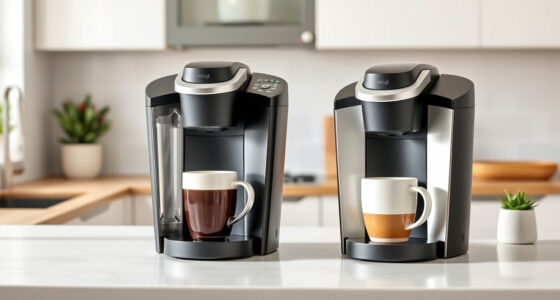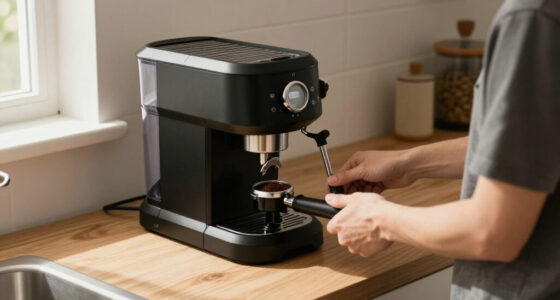
Making espresso at home offers convenience and control over your coffee. This guide walks you through choosing the right machine, setting it up, brewing your first shot, and maintaining it. Perfect for beginners or those upgrading their home setup, expect to spend about 30 to 60 minutes to get started. By following these steps, you’ll be able to produce rich, flavorful espresso comparable to café quality, right in your kitchen.

Get coffee and tea gear delivered free with Prime
- Fast, free delivery on millions of items
- Prime Video, Amazon Music and more included
- Member-only deals all year

MEGAWISE Espresso Machine with 20-Bar High-Pressure Extraction System
- ✔ Pressure: 20-bar
- ✔ Power: 1,450 watts
- ✔ Water Tank Capacity: 40.6 ounces

De’Longhi Magnifica Duo Automatic Espresso Machine with Milk Frother, Silver
- ✔ Number of Recipes: 20
- ✔ Brewing Technologies: 3 (espresso, drip, cold brew)
- ✔ Milk Frothing: Yes, hot and cold foam

Philips 3300 Series Fully Automatic Espresso Machine with LatteGo Milk System
- ✔ Presets: 6
- ✔ Milk System: LatteGo
- ✔ Display: Full color
Difficulty: Beginner | Time: 30-60 minutes for setup and first brew; ongoing use varies
What You’ll Need
Tools & Materials:
- Fresh coffee beans (preferably espresso roast)
- Coffee grinder (burr grinder recommended)
- Tamper
- Measuring scale (optional but helpful)
- Clean cloth or sponge
Knowledge:
- Basic understanding of coffee grind sizes
- Ability to read machine instructions
Ensure your workspace is clean and stable. Have access to clean water and a power outlet suitable for your machine. Read the machine manual for specific instructions related to your model.
MEGAWISE Espresso Machine with 20-Bar High-Pressure Extraction System
<p>The <strong>MEGAWISE Espresso Machine</strong> stands out for its <strong>professional 20-bar pump</strong> that delivers rich crema and aroma, mimicking traditional Italian espresso. Its quick 30-second preheat and compact stainless steel build make it suitable for small spaces, whether in a home, dorm, or office. However, it requires some technical setup and has no built-in grinder, so users need to source grounds separately. It’s ideal for those who want authentic espresso without investing in fully automatic features or extensive customization, but beginners might face a learning curve.</p>
Pros:
- Professional 20-bar pump ensures authentic espresso quality
- Fast preheat time of 30 seconds
- Includes milk frother for cappuccinos and lattes
- Compact, space-saving design
Cons:
- Requires some assembly and learning curve
- Limited to espresso and milk drinks
- No built-in grinder, needs ground coffee
Best for: Beginners and budget-conscious users seeking authentic espresso
Not ideal for: Those wanting a one-touch experience or a built-in grinder
Bottom line: A solid choice for espresso purists who prioritize authentic flavor and compact size, but not ideal for beginners seeking simplicity.
“A solid choice for espresso purists who prioritize authentic flavor and compact size, but not ideal for beginners seeking simplicity.”
De’Longhi Magnifica Duo Automatic Espresso Machine with Milk Frother, Silver
<p>The <strong>De’Longhi Magnifica Duo</strong> offers an impressive range of <strong>20 preset hot and iced drinks</strong>, making it ideal for households that enjoy experimenting with different beverages. Its <strong>built-in conical burr grinder</strong> ensures freshness, and the milk frother produces both hot and cold foam for a variety of drinks. The machine’s advanced brewing technologies deliver consistent flavor, but its setup can be complex, and ongoing maintenance may be time-consuming. This model suits those who value versatility and are willing to spend time on setup and upkeep.</p>
Pros:
- Wide range of preset recipes for hot and iced drinks
- Built-in conical burr grinder for fresh coffee
- Milk frother produces smooth hot and cold foam
- Versatile with multiple brewing options
Cons:
- Complex setup and learning curve
- Higher purchase price
- Maintenance can be cumbersome
Best for: Coffee enthusiasts who want a wide variety of drinks and fresh grounds
Not ideal for: Users seeking a straightforward, no-fuss machine
Bottom line: Perfect for serious coffee lovers who want variety and fresh grounds, but less suitable for those seeking simplicity or quick operation.
“Perfect for serious coffee lovers who want variety and fresh grounds, but less suitable for those seeking simplicity or quick operation.”
Philips 3300 Series Fully Automatic Espresso Machine with LatteGo Milk System
<p>The <strong>Philips 3300 Series</strong> offers <strong>six preset beverages</strong>, including espresso, cappuccino, and latte macchiato, with intuitive controls and a full-color display. Its <strong>LatteGo milk system</strong> simplifies cleaning, while the <strong>AquaClean filter</strong> reduces descaling needs, making it highly convenient for busy households. This machine’s main tradeoff is its higher initial cost and the need for regular filter replacements, but it excels in delivering consistent, cafe-quality drinks with minimal effort. This pick makes the most sense for users prioritizing automation and ease of maintenance over initial price.</p>
Pros:
- Multiple beverage options with customizable settings
- Quick and easy milk system cleaning with LatteGo
- Reduced maintenance thanks to AquaClean filter
- Full color display for easy operation
Cons:
- Higher initial purchase price
- Regular filter replacements required
- Limited to six preset drinks
Best for: Busy households or those new to espresso who want a quick, consistent experience
Not ideal for: Connoisseurs who want extensive customization or prefer manual control
Bottom line: An excellent choice for users seeking convenience, consistency, and minimal maintenance, though at a higher upfront cost.
“An excellent choice for users seeking convenience, consistency, and minimal maintenance, though at a higher upfront cost.”
As an Amazon Associate we earn from qualifying purchases.
Before You Start
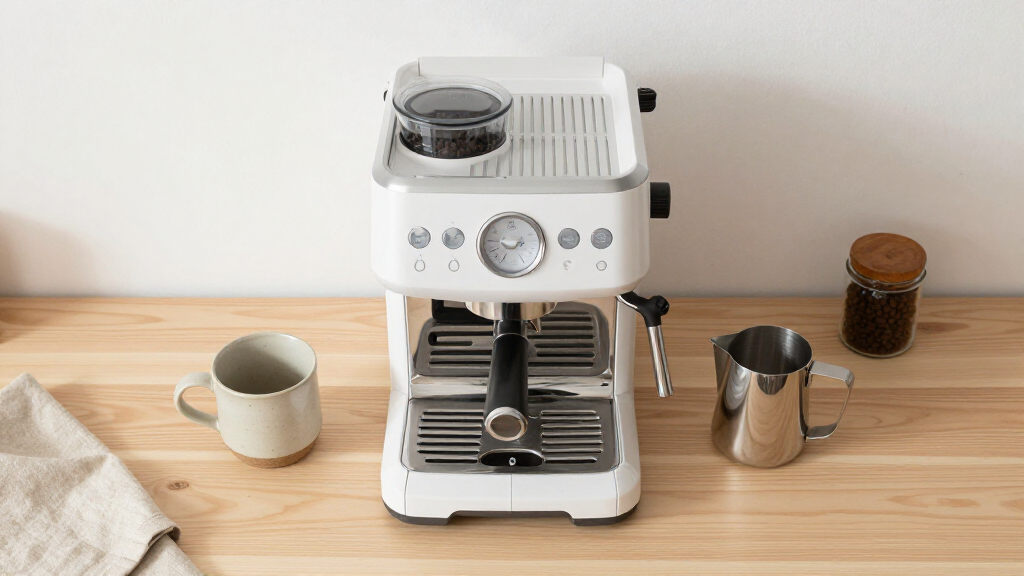
Check that your espresso machine is placed on a flat, stable surface near an outlet. Confirm you have all necessary tools and ingredients. Do not operate the machine without water in the tank. Familiarize yourself with the machine’s parts, such as the portafilter, drip tray, and steam wand.
Step-by-Step Instructions
Step 1: Fill the water reservoir
Remove the water tank from the machine and fill it with fresh, cold water up to the indicated maximum line. Reattach the tank securely onto the machine.
Tip: Use filtered water if possible to improve taste and reduce mineral buildup.
Check: Water flows smoothly into the machine without leaks or spillage when reattached.
Step 2: Preheat the machine
Turn on the espresso machine and allow it to heat up until the indicator light signals readiness, typically 15-30 minutes depending on the model. Run hot water through the empty portafilter to warm it and the machine’s components.
Tip: Preheating ensures the water and components are at optimal temperature, leading to better extraction.
Check: The water flows hot and steady, and the machine indicates it’s at operating temperature.
Step 3: Grind the coffee beans
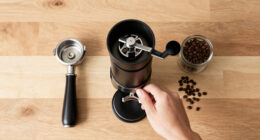
Measure 18-20 grams of coffee beans for a double shot. Use a burr grinder to grind the beans to a fine, consistent consistency similar to granulated sugar. Adjust grind size if water flows too quickly or too slowly during brewing.
Tip: Aim for a uniform grind to ensure even extraction; too coarse results in weak espresso, too fine may cause clogging.
Check: The ground coffee appears evenly textured, and the dose weighs approximately 18-20 grams.
Step 4: Dose and tamp the coffee
Distribute the ground coffee evenly in the portafilter. Use a tamper to press down firmly and evenly with about 30 pounds of pressure until the coffee is compacted and level. Wipe any excess coffee grounds from the edge of the portafilter.
Tip: Consistent tamping pressure and even distribution prevent channeling and ensure uniform extraction.
Check: The tamped coffee surface is flat, firm, and free of cracks or loose grounds.
Step 5: Brew the espresso
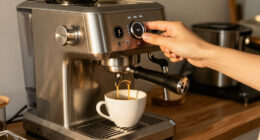
Insert the portafilter into the machine’s brew head and secure it tightly. Place a cup under the spout. Start the brew cycle and watch the espresso flow into the cup. Aim for a shot time of about 25-30 seconds.
Tip: Start timing immediately once the machine begins to extract. If the flow is too fast, try a finer grind; if too slow, coarser grind.
Check: A rich, caramel-colored crema forms on top of the espresso, and the shot duration is within 25-30 seconds.
Step 6: Steam milk (optional)
If making milk-based drinks, fill a pitcher with cold milk. Purge the steam wand, then submerge it just below the milk surface. Turn on steam and move the pitcher to create a whirlpool, heating the milk to 150°F (65°C). Turn off steam and wipe the wand clean with a damp cloth.
Tip: Keep the wand tip just below the surface to create microfoam. Use a thermometer for accuracy.
Check: The milk is smooth, glossy, and reaches 150°F without boiling, with a velvety texture.
Step 7: Clean the machine
Remove the used coffee puck and rinse the portafilter and basket. Run hot water through the brew head to clear any residual coffee. Wipe down the steam wand and other accessible parts. Follow your machine’s cleaning schedule, including descaling if needed.
Tip: Regular cleaning prevents clogs and maintains flavor quality.
Check: All parts are free of coffee grounds and residue, and the machine operates smoothly for the next use.
Common Mistakes to Avoid
- Using too coarse or too fine a grind — Adjust grind size based on shot timing; fine for slow flow, coarser for fast flow.
- Inconsistent tamping pressure — Use a scale or consistent force, and tamp evenly each time.
- Running the machine without preheating — Allow sufficient warm-up time before brewing to ensure stable temperature.
- Not cleaning after use — Clean the portafilter, brew head, and steam wand immediately after brewing.
Troubleshooting
Problem: Espresso flows too quickly and lacks body
Solution: Use a finer grind, increase tamp pressure, or check for clogs.
Problem: Espresso drips slowly or not at all
Solution: Use a coarser grind, ensure the machine is fully heated, and check for blockages.
Problem: Milk does not froth or is too thin
Solution: Purge the steam wand, use cold milk, and ensure correct technique during steaming.
Problem: Machine leaks or drips after brewing
Solution: Check for loose fittings, clean the brew head gasket, and descale if necessary.
What Success Looks Like
You produce a shot with a rich, caramel-colored crema, extraction time around 25-30 seconds, and balanced flavor. Milk, if used, is velvety with microfoam. The machine operates smoothly, and the cleaning process is straightforward. The espresso should taste fresh, robust, and well-extracted.
Next Steps
Refine your grind size and tamping technique to improve shot quality. Experiment with different beans and ratios. Schedule regular cleaning and descaling. Invest in accessories like a scale or better grinder for consistent results. Practice steaming milk to perfect microfoam. When ready, explore different espresso-based drinks like lattes, cappuccinos, and macchiatos.
Frequently Asked Questions
How often should I descale my espresso machine?
Descale your machine every 1-3 months, depending on water hardness and usage frequency. Follow the manufacturer’s instructions for descaling solutions and procedures.
Can I use regular coffee instead of espresso grind?
No. Espresso requires a fine, consistent grind for proper extraction. Using coarser coffee will result in weak or under-extracted shots.
Why is my espresso watery or lacking crema?
This may be caused by over-grinding, insufficient tamping, or using stale beans. Adjust grind size, tamp firmly, and use fresh coffee for better crema.
Is it necessary to buy an expensive machine?
Not necessarily. Many affordable machines produce good espresso once set up correctly. Focus on quality grind, tamping, and maintenance regardless of price.
Columbus Day / Indigenous Peoples' Day Picks
long weekend sales
As an affiliate, we earn on qualifying purchases.