
TL;DR

Get coffee and tea gear delivered free with Prime
- Fast, free delivery on millions of items
- Prime Video, Amazon Music and more included
- Member-only deals all year
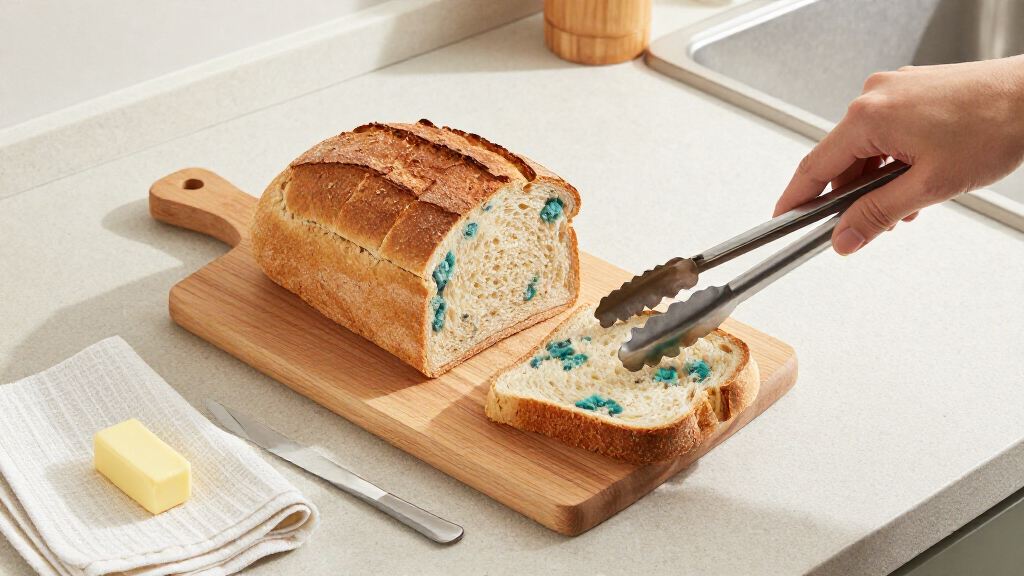
A Good Housekeeping report advises throwing away or composting an entire loaf of bread if any mold is visible, including pre-sliced bread. Food safety expert Darin Detwiler says mold can send microscopic threads through soft bread, so cutting away the affected area cannot reliably remove contamination.
A Good Housekeeping food-safety report says people should discard an entire loaf of bread when they find visible mold, rather than cut off the affected slice or section. Food safety expert Darin Detwiler says mold can spread through bread in microscopic threads that are not visible, making it impossible to tell by appearance whether the remaining bread is free of contamination.
The report describes visible mold as only part of the concern: mold can produce mycotoxins and send microscopic threads into surrounding food. Detwiler, a professor emeritus of food regulatory affairs, says those threads move more readily through soft, porous foods such as bread. Because they cannot be seen with the naked eye, removing the visible patch does not establish that the rest of the loaf is safe.
The advice applies to sliced bread as well as an unsliced loaf. The report recommends putting the entire loaf in the trash or compost if mold appears on even one slice. It lists possible health effects from consuming or inhaling mold as nausea, vomiting and breathing problems, and says avoiding exposure is especially important for people who are immunocompromised.
For bread without visible mold, Detwiler recommends keeping it as dry as possible. A breadbox or paper bag can allow air to circulate and help prevent moisture buildup, according to the report. It advises against refrigeration because bread can go stale more quickly there; freezing is presented as a better option for longer storage, particularly when the bread will be toasted.
Why Cutting Away Mold Falls Short
The practical decision matters because the mold visible on bread does not show how far contamination may extend. A person who removes one spot cannot check whether microscopic threads have reached other parts of the loaf, according to Detwiler. Appearance alone cannot confirm safety, so the report’s recommendation is to discard the loaf instead of trying to salvage it.
That guidance also helps distinguish bread from some harder foods that may be handled differently. Bread is soft and porous, allowing mold threads to travel through it more readily, Detwiler says. For people at higher risk from exposure, including those who are immunocompromised, the report emphasizes avoiding the gamble of eating or handling moldy bread.
As an affiliate, we earn on qualifying purchases.
Bread Storage and the Mold Advice
The advice comes from a Good Housekeeping report focused on what to do after discovering a moldy slice. It cites Detwiler, identified as a food safety expert and professor emeritus of food regulatory affairs, for the explanation of why visible mold may not mark the full extent of contamination. The supplied report does not include laboratory results or a separate agency advisory.
Its storage suggestions are aimed at reducing moisture, which can contribute to mold growth. The report recommends a breadbox or paper bag at room temperature to allow air circulation, and freezing bread for longer keeping. It cautions that a refrigerator can make bread stale faster, rather than presenting refrigeration as a mold-prevention solution.
“If we see [mold], it’s like the tip-of-the-iceberg sort of thing.”
— Darin Detwiler, food safety expert and professor emeritus of food regulatory affairs
As an affiliate, we earn on qualifying purchases.
What the Report Does Not Establish
The supplied material does not specify the report’s publication date, cite a laboratory test of a particular loaf, or give a threshold for how much visible mold would make bread unsafe. The recommendation is based on the possibility that mold threads have spread beyond what can be seen, not on a claim that every moldy loaf has been tested and found contaminated throughout.
The report also does not quantify the likelihood or severity of illness from a particular exposure, identify specific mold species, or provide separate instructions for every bread product. Its guidance is to discard bread when mold is visible and not to rely on cutting away the affected portion.
As an affiliate, we earn on qualifying purchases.
How to Handle the Next Loaf
If mold appears on a loaf, follow the report’s advice and discard or compost the whole loaf; do not taste it or try to remove only the visible area. For future storage, keep bread dry in a paper bag or breadbox, or freeze it if it needs to be kept longer. The report says refrigeration may make bread stale more quickly.
The source material gives no announced follow-up study or pending policy change. Readers who need guidance for a specific health concern can seek advice from a qualified health professional; the report particularly cautions that mold exposure may pose added concerns for people who are immunocompromised.
As an affiliate, we earn on qualifying purchases.
Key Questions
Should I throw away the whole loaf if only one slice has mold?
Yes. The report says to discard the entire loaf, including pre-sliced bread, because mold threads may have spread beyond the visible spot.
Can I cut off the moldy part and eat the rest?
No. Detwiler says cutting away the visible mold does not guarantee that contamination has been removed. The threads may be too small to see.
Can mold on bread make you sick?
The report says mold can produce mycotoxins and lists nausea, vomiting and breathing problems among possible effects of consuming or inhaling mold. It does not quantify the risk from a specific exposure.
How should I store bread to help prevent mold?
The report recommends keeping bread dry in a breadbox or paper bag, where air can circulate. For longer storage, it says freezing is preferable to refrigeration, which can make bread stale more quickly.
Source: rss
Halloween Picks
halloween
As an affiliate, we earn on qualifying purchases.