
TL;DR

Get coffee and tea gear delivered free with Prime
- Fast, free delivery on millions of items
- Prime Video, Amazon Music and more included
- Member-only deals all year
The Kitchn associate recipe producer Jan Valdez reports that a sweet onion dressing from Sheldon Simeon’s cookbook uses a whole onion blended with oil, vinegar and seasonings. Valdez says the onion helps the mixture emulsify and adds sweetness; those are her observations from trying the recipe, not results from a comparative test.
The Kitchn associate recipe producer Jan Valdez has reported on a sweet onion salad dressing from Sheldon Simeon’s cookbook, saying that blending in a whole sweet onion gives the mixture body and a naturally sweet flavor. Her account describes a recipe made with oil, apple cider vinegar, sugar, Dijon mustard and celery salt, and explains why she preferred it to bottled dressing; it is a personal recipe report, not a controlled comparison.
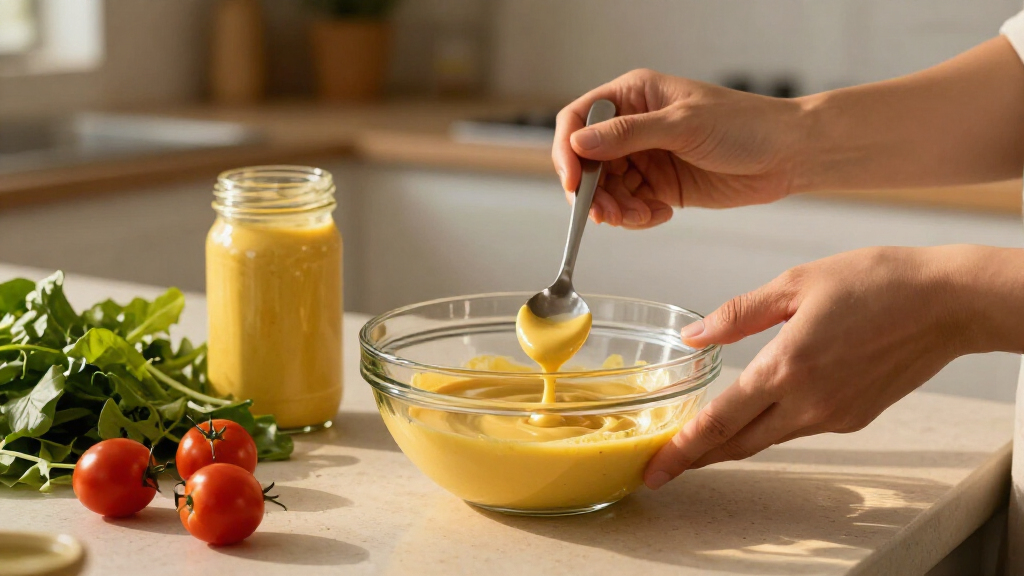
Valdez said the recipe caught her attention while she was looking through Simeon’s Cook Real Hawai’i. She had used minced shallots and grated garlic in vinaigrettes before, but had not tried adding an entire onion. She tested the recipe and said the onion blended into the dressing rather than leaving a noticeable raw-onion texture.
According to Valdez, the onion helps oil and vinegar come together, creating a creamy texture without mayonnaise or yogurt. She describes the flavor as sweet and tangy, with apple cider vinegar, granulated sugar and Dijon mustard balancing the onion. Celery salt, she writes, adds a savory note. The report does not provide a measured comparison of texture or taste against other dressings.
For her own version, Valdez used olive oil in place of the recipe’s neutral oil. She also suggests trying other mustards or replacing some sugar with honey or maple syrup. Those are her suggested variations, not tested outcomes in the article. She says she served the dressing with kale and apple and suggests it could also work with Cobb salad, spinach and apples, cabbage slaw, roasted vegetables or a grain bowl.
A Whole Onion Changes the Dressing
The report offers home cooks a way to add flavor and texture using an everyday ingredient, rather than relying on mayonnaise or yogurt for creaminess. Valdez’s explanation gives readers a practical reason to try blending the onion into the liquid ingredients: in her experience, it helps the oil and vinegar form a more cohesive dressing.
The claim should be read as a recipe observation, not proof that onion will emulsify every dressing or that the result is better than commercial alternatives. Still, the technique may be useful for cooks who want a sweet-tangy dressing that can be adjusted to suit different salads and vegetables. The article does not give price comparisons, so its description of the ingredient as inexpensive is not backed by a specific cost estimate.
Products Worth Considering

Vitamix Propel Series 510 Professional-Grade Blender, 3 Programs, Black

Vitamix Propel Series 750 Professional-Grade Blender, 4 Programs, Black

Ninja Crispi Glass Air Fryer (Stone) – 4‑in‑1
As an affiliate, we earn on qualifying purchases.
The Cookbook Behind the Recipe
The dressing comes from Sheldon Simeon’s Cook Real Hawai’i, which Valdez says she was browsing when she encountered the recipe. The Kitchn report is framed around her test of that cookbook recipe, rather than a new product launch or a formal review of dressings.
Valdez identifies herself as an associate recipe producer who writes and updates recipes and has 10 years of experience in research-and-development test kitchens and food publishing. That experience is relevant background, but the source describes this particular dressing through her own tasting and does not report an independent evaluation.
““I haven’t looked at bottled dressing the same way since.””
— Jan Valdez, The Kitchn associate recipe producer
What the Recipe Report Does Not Establish
The source does not include the complete ingredient quantities or preparation steps, so readers would need the linked Kitchn article or Simeon’s cookbook for the full recipe. It also does not provide nutrition information, storage guidance, shelf life or a test of how long the mixture stays emulsified after blending.
Valdez’s account does not establish that a whole onion will produce the same texture with every oil, vinegar or blender, or that it will suit every taste. Her suggested substitutions and serving ideas are recommendations; the report does not say that each variation was tested. No cost figure or comparison with bottled dressing is supplied.
Find the Full Recipe Before Making It
The immediate next step for readers interested in trying the dressing is to consult the full recipe in the linked Kitchn report or Simeon’s cookbook for exact measurements and method. Valdez’s account suggests starting with the listed sweet onion and seasonings, then treating changes such as olive oil or a different sweetener as personal adjustments rather than guaranteed equivalents.
The source does not announce additional testing or a follow-up from The Kitchn. Until more details are available, questions about quantities, preparation time and storage remain unanswered in the supplied report.
Key Questions
What is the inexpensive ingredient in the dressing?
It is a whole sweet onion, such as a Maui, Walla Walla or Vidalia onion, according to Jan Valdez’s report. The source does not give a price estimate.
What else goes into the dressing?
The report names oil, apple cider vinegar, granulated sugar, Dijon mustard and celery salt alongside the onion. It does not provide the ingredient quantities in the supplied material.
Why does Valdez say the onion helps?
Valdez says the blended onion helps the oil and vinegar emulsify and adds natural sweetness, producing a creamy texture without mayonnaise or yogurt. That description reflects her experience with the recipe, not a controlled test.
What foods does the report suggest serving it with?
Valdez says she tried it with kale and apple. She also suggests Cobb salad, spinach with tart apples and walnuts, cabbage slaw, roasted vegetables and grain bowls.
Source: thekitchn.com