TL;DR
Coffee makers with built-in grinders grind whole beans just before brewing, saving counter space and a separate step. They can improve freshness, but coffee quality still depends on the grinder, brew method, beans, water, and cleaning. Compare grind settings, batch size, cleaning access, noise, and warranty before buying.
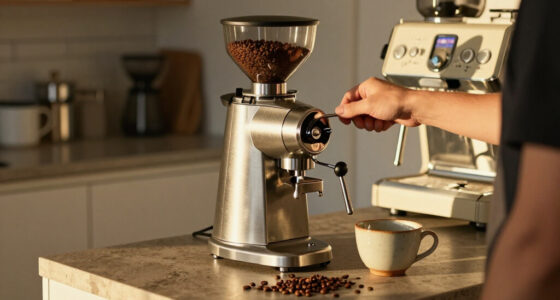
The best part of a fresh pot can happen before the first sip: the burrs whir, beans crack open, and a warm, nutty smell rolls through the kitchen. Coffee makers with built-in grinders bring that moment and the brewing into one appliance, so you can skip a separate grinder and a scoop of pre-ground coffee.

Get coffee and tea gear delivered free with Prime
- Fast, free delivery on millions of items
- Prime Video, Amazon Music and more included
- Member-only deals all year
That convenience comes with practical questions. You’ll want to know what kind of grinder the machine uses, whether it brews the style of coffee you drink, and how much cleaning it asks of you. A sleek machine can save counter space, but a clogged grinder or a repair bill can sour the routine.
This guide explains how these machines work, how they compare with separate setups, and which details to check before you buy. You’ll also get a simple way to match hopper and carafe capacity to your mornings, so your new machine fits the life you have rather than an idealized coffee ritual.
A built-in burr grinder can simplify fresh grinding, but bean quality, water, brew ratio, and machine consistency still shape the cup.
Most grinder-equipped coffee makers brew drip coffee; buy an espresso machine if you want espresso-style extraction.
Check carafe and reservoir capacity against your usual mugs because manufacturer cup counts may be smaller than standard servings.
Look for easy grinder access and follow the manual’s cleaning directions; never put water in the grinder unless the maker permits it.
Compare warranty, service, and parts availability because an integrated grinder and brewer can be harder to replace separately.
How a built-in grinder gets beans from hopper to cup
A coffee maker with a built-in grinder stores whole beans, grinds a chosen amount, and sends the grounds into its brewing system. Most models make drip coffee: you fill the reservoir, add beans to the hopper, pick a setting, and let the machine handle the sequence. The appeal is straightforward—freshly ground coffee without another appliance or a separate transfer step.
The grind matters because water pulls flavor from coffee as it passes through the grounds. For drip brewing, a medium grind is a sensible place to start; grounds that are too fine can make a cup taste bitter, while very coarse grounds may leave it thin. Try one change at a time. If your weekday pot tastes harsh, move the grind a little coarser before changing beans, water, and brew strength all at once.
Many better-known machines use burr grinders, which crush beans between surfaces and tend to produce more uniform grounds than blade grinders. That consistency can help water extract flavor more evenly, though the word “burr” alone doesn’t tell you how good the adjustment range is. A model with a handful of settings may suit everyday drip coffee; someone experimenting with several beans may want finer control.
Think of the grinder and brewer as two linked steps in a small kitchen line. Fresh grinding helps, but the beans, water, brew temperature, coffee-to-water ratio, and machine consistency still shape the cup. If the brewer doesn’t offer espresso pressure, a fine setting won’t turn it into an espresso machine.
Products Worth Considering

Traeger Pro 22 Wood Pellet Grill and Smoker, 572 sq. in.

Traeger Tailgater 20 Portable Wood Pellet Grill and Smoker, 300 sq. in.

Vitamix 5200 Blender with 64 oz Container, Black
As an affiliate, we earn on qualifying purchases.
Choose an all-in-one setup or keep your grinder separate
Choose an all-in-one machine when saving space and steps matters more than swapping parts independently. Choose separate equipment when you want the freedom to upgrade or replace the grinder without changing your brewer. Coffee makers with built-in grinders put both jobs in one appliance, which is handy on a crowded counter, but that tight integration shapes what you can repair later.
| What you’re comparing | Built-in grinder | Separate grinder and brewer |
|---|---|---|
| Counter space | Usually one footprint | Needs room for two appliances |
| Morning routine | Can grind and brew in sequence | Requires moving grounds or coordinating steps |
| Upgrades | Grinder and brewer stay linked | You can replace either component on its own |
| Cleaning access | Depends on the machine’s design | Each component can be cleaned separately |
| Repair choices | A failure may affect the whole appliance | A fault may be limited to one component |
For example, if your kitchen has one narrow counter beside the kettle, an all-in-one model could make room for a cutting board. If you already own a brewer you love but find its coffee flat, a separate burr grinder lets you test fresher grinding without replacing a working machine.
The trade-off becomes sharper over time. Integrated parts can be less straightforward to service, while a separate grinder can often be swapped or upgraded independently. Before buying, check the warranty, service options, and whether replacement parts are available. Convenience matters every morning; repairability matters on the morning something stops working.
Match the grinder and brew method to the coffee you actually drink
Match the machine’s brewing system to your cup: a drip coffee maker brews drip coffee, and only a machine designed for espresso can make espresso-style coffee. Many coffee makers with built-in grinders focus on drip brewing, even when their product pages show rich, dark espresso-like drinks. Check the listed brew method before treating appearance, a fine grind, or a strong setting as proof that it makes espresso.
The grinder’s adjustment range should suit that method. A medium grind is a practical starting point for drip coffee. Espresso calls for a much finer, carefully controlled grind, along with a brewer that can apply the pressure and extraction its method requires. If you mostly fill a travel mug with drip coffee, an espresso-capable machine may add cost and settings you never use.
Picture two mornings. You brew a full carafe for a family before school, then occasionally make a small cup on Saturday. A flexible drip machine with batch-size options may fit better than a dedicated espresso setup. If your daily ritual is a short espresso followed by steaming milk, a drip machine with a built-in grinder won’t deliver the same drink just because it has a strength button.
Some newer machines combine multiple brewing styles or add touchscreens, dose controls, and built-in scales. Those features may help you repeat a recipe, especially when you’re experimenting with different beans. They also add complexity, so ask what each mode changes and whether the grinder settings actually suit it. A longer feature list doesn’t automatically mean a better cup.
Use capacity, noise, and programmability to predict your daily routine
The right machine fits how much coffee you make, when you make it, and how quietly your household wakes up. Compare the water reservoir, bean hopper, and carafe size with your real routine; manufacturer “cup” counts often mean less than a standard mug. If you pour two large mugs each morning, a machine advertised for ten cups may deliver fewer servings than you expect.
Hopper capacity affects how often you refill, but storing a large quantity of beans in the hopper for a long time can work against freshness. Beans hold flavor better when stored airtight, away from heat, light, and moisture. If you make one pot a day, try loading only what you’ll use soon rather than treating the hopper like a long-term storage jar.
Grinding makes noise. In an open-plan home, the grinder can sound as sharp as a small blender at 6 a.m. A timer may help you set up the machine in advance, but check what it actually automates: some models can start a brew at a set time, while others still need beans, water, or a carafe positioned before bedtime. A timer can simplify the routine, but it doesn’t make an empty reservoir fill itself.
For example, a single person who brews one mug before leaving may value a small-batch setting and easy controls more than a large hopper. A household of four might prioritize a generous reservoir and a carafe that pours cleanly. Think about sound and mess, too. Read the manual or product details for options such as brew-strength control, automatic shutoff, and adjustable grind amount, then focus on the settings you’ll actually use.
Keep the grinder clean so yesterday’s coffee doesn’t flavor today’s
Clean the grinder and brew path as the manufacturer directs, because loose grounds and coffee oils can build up and affect flavor or contribute to clogs. A fresh grind can still make a stale-tasting cup when old residue lingers inside the machine. Before buying, look for clear instructions and easy access to the grinder; a component you can reach without a frustrating teardown is easier to maintain.
Build cleaning into a routine instead of waiting for a bitter cup. After brewing, remove used grounds and rinse washable parts according to the manual. Follow the machine’s schedule for deeper cleaning, and don’t put water into the grinder unless the manufacturer explicitly says that’s allowed. Some parts may be dishwasher-safe, but assume nothing from their appearance—check the instructions first.
Imagine you return from a week away and brew a pot without checking the machine. Old grounds or oily residue can leave an unpleasant, woody edge behind. Clearing the loose grounds and cleaning the removable parts before your next batch helps the new beans taste like themselves. If you switch between flavored and unflavored coffee, regular cleaning can also help prevent one batch from leaving its scent behind.
Cleaning shortcut to skip: never rinse a grinder with water unless the manual says it’s safe. Follow the maker’s directions for removing grounds and coffee oils.
Cleaning also matters when you compare models. A machine with a removable brew basket and accessible grinder may take less effort to maintain than one where grounds collect in hard-to-reach corners. Ease of cleaning isn’t glamorous, but it can make the difference between a daily appliance and a dusty one.
Follow five checks before you put a model on your counter
Choose a coffee maker by checking brew style, grind control, capacity, cleaning access, and support before you compare extra features. These five checks reveal whether the machine fits your actual cup and whether you’ll want to use it after the first week. Start with your routine: one mug before work and a weekend pot call for a different setup than six cups before the family leaves.
- Confirm the brew method. Make sure the machine brews the style you drink. Drip coffee and espresso use different brewing systems.
- Check the grinder and settings. Look for burr versus blade design and an adjustment range that suits your brew style.
- Match capacity to your servings. Compare the reservoir and carafe with the mugs you actually pour, not just the advertised cup count.
- Inspect cleaning access and noise. Find the cleaning instructions and think about whether the grinder will wake anyone nearby.
- Review warranty and replacement parts. Ask what happens if the grinder or brewer fails after the warranty period.
Take a real example: you share a small apartment, brew two mugs at 7 a.m., and prefer a straightforward routine. A compact drip model with a modest hopper, simple controls, and accessible cleaning parts may serve you better than a large touchscreen machine with features designed for espresso experimentation.
Use pre-ground coffee only if the model supports it. Some machines have a bypass chute or a pre-ground setting; others expect beans to pass through the grinder. That small detail can matter when you receive a bag of ground coffee as a gift or need a backup on a rushed morning.
Frequently Asked Questions
Does a built-in grinder make better coffee?
It can make fresher coffee because the machine grinds beans just before brewing, reducing the time grounds sit exposed to air. The cup still depends on bean quality, grinder consistency, water, coffee-to-water ratio, brewing temperature, and cleaning.
Are burr grinders better than blade grinders?
Burr grinders generally produce more uniform grounds, which supports more even extraction. Blade grinders tend to chop beans into a less consistent mix and often cost less, so your choice depends on your budget and how much control you want.
Can a coffee maker with a built-in grinder make espresso?
Only if it is designed as an espresso machine. Most grinder-equipped coffee makers brew drip coffee, which does not use the espresso-style pressure and extraction system. Check the machine’s stated brew modes before you buy.
What grind setting should I use for drip coffee?
Start with a medium grind, then adjust to taste. If your coffee tastes harsh, try a slightly coarser setting; if it tastes thin, try a finer one. The right setting varies with your machine and beans.
How often should I clean a built-in grinder?
Follow the manufacturer’s cleaning schedule. Clear loose grounds regularly and clean built-up oils as directed; don’t put water in the grinder unless the manual explicitly allows it. Easy-to-reach parts make this routine simpler.
Can I use pre-ground coffee in one of these machines?
Some models support pre-ground coffee through a bypass chute or dedicated mode, while others require whole beans. Check the manual or product specifications before buying if you want that option.
Are coffee makers with built-in grinders worth the extra cost?
They can be worth it if you value freshly ground beans, a compact setup, and fewer morning steps. A separate grinder and brewer can offer more flexibility and simpler replacement if one component fails.
Conclusion
Buy a built-in grinder coffee maker when one-step brewing and a smaller countertop setup solve a real problem in your kitchen. Before you choose, confirm the brew method, match capacity to your mugs, and check that cleaning and repair support look manageable.
Freshly ground beans can make the kitchen smell like a café at opening time. The machine earns its space when that bright, warm start fits your mornings—and keeps tasting good long after the first pot.