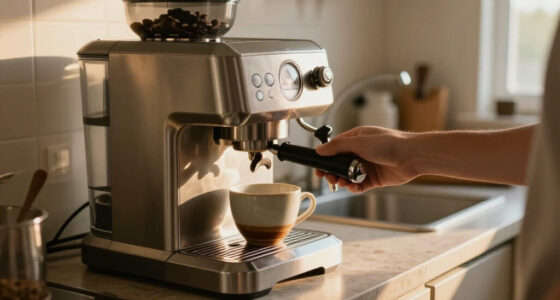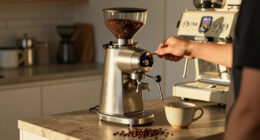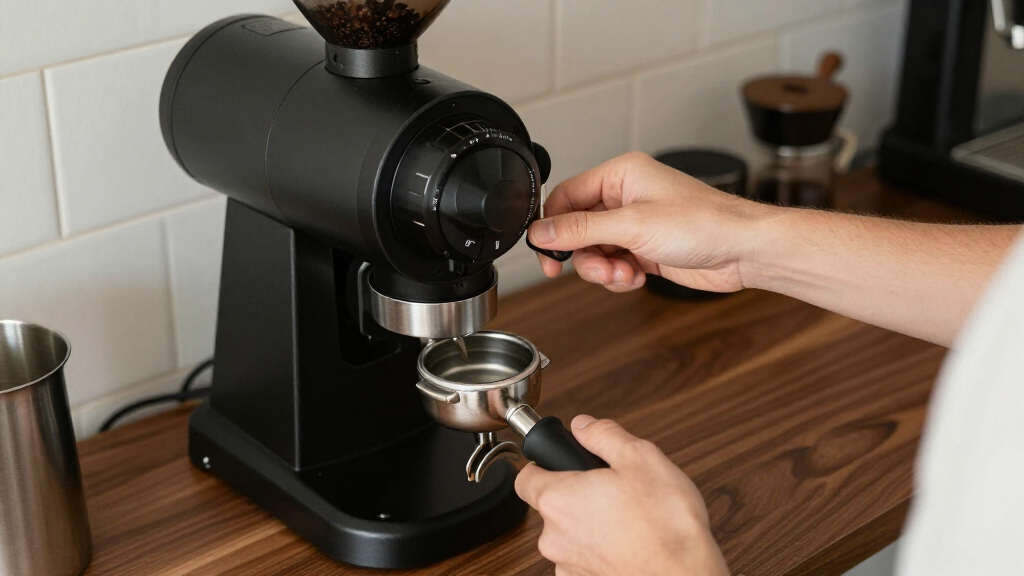
Among the best conical burr espresso grinders in this roundup, I put the Fellow Opus 2 forward as the most versatile pick, with a broad grind range and stepless adjustment. The Breville Smart Grinder Pro stands out for its guided, timed dosing, while the AMZCHEF offers many settings for buyers who want flexibility on a tighter budget. The main tradeoffs are espresso adjustment precision, ease of dialing in, and how much room a grinder gives you to explore other brew methods. A large number of settings alone does not guarantee fine control at espresso settings. Read on for the full comparison and guidance on choosing a grinder that suits your machine, routine, and preferred drinks.

Get coffee and tea gear delivered free with Prime
- Fast, free delivery on millions of items
- Prime Video, Amazon Music and more included
- Member-only deals all year
Complete the kit


Key Takeaways
- The Fellow Opus 2 leads for versatility: stepless adjustment and a wide brew range make it the clearest fit for households that switch between espresso and other methods.
- The Breville Smart Grinder Pro is the practical all-rounder: its timed dosing and broad settings favor repeatable routines, though its stepped adjustment may feel limiting during fine espresso tuning.
- More numbered settings do not automatically mean finer espresso control: the AMZCHEF, Aromaster, and Tuni G1 advertise 48 settings, but buyers should also weigh adjustment design and the grinder’s espresso suitability.
- Several picks lean toward convenience over espresso specialization: the OXO, Ollygrin, and SHARDOR can suit straightforward home use, but their feature sets should be judged against the precision needs of the machine.
- The two Breville listings share the same grinder model: the Brushed Stainless Steel and Olive Tapenade versions differ by finish, so the choice between them is about appearance rather than a distinct grinding role.


| conical burr espresso grinder | Grind settings | Dimensions | Power | Model |
|---|---|---|---|---|
| Breville Smart Grinder Pro Con | 60 | 6.28 × 8.46 × 15.33 in | 165 W | BCG820BSS |
| Fellow Opus 2 Conical Burr Gri | — | 7.95 × 5.12 × 10.49 in | — | — |
| Breville Smart Grinder Pro Con | 60 | 8.5 × 6 × 15.5 in | 165 W | BCG820OLT |
| AMZCHEF Burr Coffee Grinder | 48 | 7.4 × 5.1 × 13.4 in | 150 W | UL-CG209-SV |
| OXO Brew Conical Burr Electric | 15 settings with 43 micro-adjustments | 7.5 × 5.3 × 12.9 in | 100 W | — |
| Aromaster Conical Coffee Bean | 48 | 8 × 5 × 16 inches | Electric, 120V, 60Hz | CG204 |
| SHARDOR Conical Burr Espresso | 51 | 7.4 × 4.9 × 13.5 inches | 165 watts, 120 volts | — |
| Ollygrin Electric Conical Burr | 30 | 5.4 × 7 × 12 inches | 150 watts, 220 volts | BG702S-PG |
| Tuni G1 Conical Burr Coffee Gr | 48 | — | — | G1-S |
More Details on Our Top Picks
Breville Smart Grinder Pro Conical Burr Coffee Grinder, Brushed Stainless Steel
The Smart Grinder Pro is my most balanced pick for espresso drinkers who also brew other styles. Its 60 settings and 0.2-second timer adjustments give more control over grind range and dose timing than the OXO Brew, whose 15 main settings rely on micro-adjustments. It can grind straight into a portafilter, so there is less transferring and fewer loose grounds when making espresso. The LCD keeps the chosen setting, time, and shot or cup selection visible, which makes repeatable routines easier to manage.
The tradeoff is a relatively tall, feature-rich machine rather than a compact, espresso-only tool. Its 18-ounce hopper suits regular use, but the grinder is limited to 120 V and has a two-year limited warranty. I would choose the Fellow Opus 2 for stepless adjustment and anti-static features, but the Breville is the stronger all-rounder for buyers who value clear controls and direct portafilter grinding.
Pros:- 60 settings cover espresso and a broad range of other brew methods.
- 0.2-second timer increments support finer control over timed dosing.
- Grinds directly into a portafilter or the included container.
- LCD displays grind setting, time, and selected shots or cups.
Cons:- Its 15.33-inch height may be awkward under low cabinets.
- Limited to 120 V power.
- The listed warranty is limited to two years.
Best for: Home espresso drinkers who also make drip or French press coffee and want programmable dosing with direct portafilter grinding.
Not ideal for: Buyers seeking a compact grinder, stepless adjustment, or a model intended for power supplies outside 120 V.
- Model:BCG820BSS
- Grind settings:60
- Grind time adjustment:0.2-second increments
- Bean hopper capacity:18 oz
- Power:165 W
- Voltage:120 V
- Dimensions:6.28 × 8.46 × 15.33 in
- Warranty:2-year limited
Our verdict“Choose the Smart Grinder Pro if you want one clearly controlled grinder for espresso and several other brew methods.”
Fellow Opus 2 Conical Burr Grinder – 48 mm Burrs, Stepless Grind Adjustment, Espresso to Cold Brew Range, Anti-Static, Auto Stop, Black
The Fellow Opus 2 is the pick here for espresso drinkers who want to adjust grind size continuously rather than choose among numbered steps. That stepless adjustment can make small changes easier when dialing in a shot, while the Smart Grinder Pro offers 60 defined settings and timed dosing instead. Fellow also lists 48 mm conical burrs, anti-static technology, automatic shutoff, and magnetic catch cups—useful details for reducing mess and simplifying cleanup between brews.
Its range from espresso to cold brew makes it more flexible than a narrowly focused espresso grinder, but the available product data does not list a hopper capacity or a dose timer. Its footprint is also relatively large for a grinder of this style. I would favor the Breville for its visible shot and cup controls; the Opus 2 makes more sense for buyers who prize continuous adjustment and low-mess handling over a detailed dosing display.
Pros:- Stepless adjustment allows continuous grind-size changes.
- Listed 48 mm conical burrs support a broad brew range.
- Anti-static technology is intended to reduce grounds scattering.
- Automatic shutoff and magnetic catch cups simplify daily handling.
Cons:- The listed footprint may take substantial counter space.
- The supplied product data does not specify hopper capacity.
- The supplied product data does not list a timer for repeatable timed doses.
Best for: Espresso hobbyists who like to make small grind adjustments and want one grinder for espresso through cold brew.
Not ideal for: Buyers who need a compact counter setup or want clearly specified hopper capacity and timed dose controls.
- Model number:1222MB-NA
- Burr size:48 mm
- Grind adjustment:Stepless
- Brew range:Espresso to cold brew
- Dimensions:7.95 × 5.12 × 10.49 in
- Material:Stainless steel
- Color:Black
- Listed features:Anti-static technology, automatic shutoff, magnetic catch cups, tool-free burr access
Our verdict“Pick the Opus 2 if fine, continuous grind adjustment matters more to you than a detailed dose display or compact footprint.”
Breville Smart Grinder Pro Conical Burr Coffee Grinder, Olive Tapenade
This Olive Tapenade version brings the same useful core as the brushed-stainless Smart Grinder Pro: 60 grind settings, a 0.2-second timer, an LCD, and direct grinding into a portafilter or container. That makes it a practical fit for someone who wants measured, repeatable espresso dosing without giving up settings for other brew methods. Compared with the AMZCHEF, it offers more grind steps and finer stated timer increments; the AMZCHEF counters with anti-static features and a shorter listed height.
The distinction from the other Breville in this roundup is primarily its finish, not its grinding function. Both share an 18-ounce hopper and similar controls, so buyers should choose this one for its Olive Tapenade color rather than expect a performance upgrade. It remains fairly tall, runs on 110–120 V, and has a two-year limited warranty. Those who want stepless adjustment should look to the Fellow Opus 2 instead.
Pros:- 60 settings serve espresso and a variety of other brew methods.
- 0.2-second timer increments help refine timed dosing.
- Direct portafilter grinding reduces the need to transfer grounds.
- LCD shows settings, time, and selected shots or cups.
Cons:- Its core functionality closely matches the brushed-stainless Smart Grinder Pro.
- The 15.5-inch listed height may not fit beneath low cabinets.
- The two-year limited warranty is shorter than some buyers may prefer.
Best for: Buyers who want the Smart Grinder Pro’s programmable espresso workflow and prefer an Olive Tapenade finish in their kitchen.
Not ideal for: Shoppers who want a distinct feature upgrade over the brushed-stainless Smart Grinder Pro or need stepless adjustment.
- Model:BCG820OLT
- Grind settings:60
- Grind time adjustment:0.2-second increments
- Bean hopper capacity:18 oz
- Power:165 W
- Voltage:110–120 V
- Dimensions:8.5 × 6 × 15.5 in
- Color:Olive Tapenade
Our verdict“Choose this version over the brushed-stainless Smart Grinder Pro when the Olive Tapenade finish is the deciding factor.”
AMZCHEF Burr Coffee Grinder, 48 Settings, Metallic Silver
The AMZCHEF pairs 48 grind settings with a touchscreen timer adjustable in half-second steps, making it a straightforward choice for households that switch between espresso, pour-over, and cold brew. Its 10.6-ounce removable hopper is smaller than the Breville Smart Grinder Pro’s 18-ounce hopper, which can suit buyers who prefer loading fewer beans at a time, though it means more frequent refills. A UV-blocking tint and anti-static features add practical touches for storage and cleanup.
Against the OXO Brew, the AMZCHEF offers many more listed settings and a broader control range; the OXO is more compact and uses one-touch operation that remembers the previous setting. The AMZCHEF’s 40 mm stainless steel conical burrs and 120 V power keep its specification straightforward, but its timer’s half-second steps offer less fine adjustment than the Breville’s 0.2-second increments. I would choose it for multi-brew flexibility and a removable hopper, not for the finest dose timing.
Pros:- 48 settings cover espresso, drip, pour-over, French press, and cold brew.
- Removable 10.6-ounce hopper has a UV-blocking tint.
- Anti-static features are designed to limit grounds mess.
- Touchscreen timer can be adjusted up to 40 seconds.
Cons:- The 10.6-ounce hopper holds less than the Breville Smart Grinder Pro’s 18-ounce hopper.
- Half-second timer increments are less fine than the Breville’s 0.2-second adjustments.
- Designed for 120 V AC power.
Best for: Home brewers who rotate between espresso and other methods and prefer a removable, moderate-capacity hopper.
Not ideal for: Frequent high-volume grinders who want fewer refills, finer timer increments, or a grinder for non-120 V power.
- Model:UL-CG209-SV
- Grind settings:48
- Burr type:40 mm stainless steel conical
- Hopper capacity:10.6 oz
- Timer:Up to 40 seconds; 0.5-second increments
- Power:150 W
- Voltage:120 V AC
- Dimensions:7.4 × 5.1 × 13.4 in
Our verdict“Choose the AMZCHEF if you want broad brew coverage and a removable hopper, and can accept more frequent refills than with the larger Breville.”
OXO Brew Conical Burr Electric Coffee Grinder, 12 oz, Silver
The OXO Brew suits espresso drinkers who want a less involved control panel and a grinder that remembers their last setting. Its 15 settings with 43 micro-adjustments provide a useful range, while one-touch operation keeps daily use simple. The 12-ounce UV-blocking hopper is larger than the AMZCHEF’s 10.6-ounce hopper, yet the OXO is shorter than either Breville Smart Grinder Pro, which may make it easier to place under cabinets.
For buyers who make espresso their main focus, the 60-setting Breville offers more explicit grind choices and a timer adjustable in finer increments. The Fellow Opus 2 goes further in a different direction with stepless adjustment. OXO’s appeal is straightforward repeatability, not maximum control: the listed specs do not include a programmable timer or direct portafilter grinding. Choose it for a simple multi-brew routine, but skip it if you expect frequent fine espresso dialing.
Pros:- 15 settings plus 43 micro-adjustments offer more choice than a basic stepped dial.
- One-touch operation remembers the last setting.
- 12-ounce UV-blocking hopper holds more than the AMZCHEF’s 10.6-ounce hopper.
- Shorter listed height than the Breville Smart Grinder Pro models.
Cons:- Fewer main settings than the Breville Smart Grinder Pro’s 60.
- Product data does not list a programmable timer or direct portafilter grinding.
- Limited to 120 V power.
Best for: Home users who make espresso alongside other brews and want simple one-touch operation with a remembered setting.
Not ideal for: Espresso enthusiasts who frequently make fine grind changes or want timed dosing and direct portafilter grinding.
- Model number:8717000
- Burr type:40 mm stainless steel conical
- Grind settings:15 settings with 43 micro-adjustments
- Bean hopper capacity:12 oz
- Power:100 W
- Voltage:120 V
- Dimensions:7.5 × 5.3 × 12.9 in
- Warranty:Two years
Our verdict“Pick the OXO Brew for an uncomplicated, space-conscious daily routine, but choose the Breville or Fellow if espresso adjustment is your priority.”
Aromaster Conical Coffee Bean Grinder, 48 Settings, Anti-Static, Silver
The Aromaster suits households or small offices that want one grinder for espresso and other brew methods without repeatedly refilling the hopper. Its 3.9-ounce capacity is a clear advantage over the SHARDOR, which holds just 1.4 ounces, though the SHARDOR offers finer 0.1-second timer adjustments and direct portafilter grinding. Aromaster’s 48 settings span espresso to French press, while anti-static features help keep grounds from scattering. A removable burr and built-in brush simplify routine cleaning, but the description gives no portafilter holder or fine timer increments to support espresso dosing as directly as the SHARDOR. Its 16-inch height also calls for more vertical counter space than the shorter SHARDOR. Choose it for shared use and flexible brewing; skip it if espresso workflow precision or compact storage matters most.
Pros:- 3.9-ounce capacity supports larger shared batches than the SHARDOR’s 1.4-ounce capacity.
- 48 grind settings cover espresso through French press.
- Anti-static design helps contain grounds and limit counter mess.
- Removable burr and included brush make routine cleaning more manageable.
Cons:- Its 16-inch height may be awkward beneath low cabinets.
- The listed power requirement is limited to 120V, 60Hz systems.
- The burr must stay dry to avoid electrical short-circuiting.
Best for: Households and small offices that brew several cups across espresso and French press styles and want less frequent hopper refills.
Not ideal for: Espresso-focused users who want direct portafilter dosing or fine-grained timer control, and buyers without compatible 120V, 60Hz power.
- Model:CG204
- Grind settings:48
- Capacity:3.9 ounces
- Timer:Adjustable up to 40 seconds
- Power:Electric, 120V, 60Hz
- Material:Stainless steel
- Dimensions:8 × 5 × 16 inches
- Color:Premium Silver
Our verdict“Choose the Aromaster for flexible brewing and a larger hopper for shared use, but pick the SHARDOR if direct portafilter grinding and precise timer increments matter more.”
SHARDOR Conical Burr Espresso Coffee Grinder with Precision Timer
The SHARDOR is the most espresso-workflow-focused option in this group: its portafilter cradle lets grounds go straight into the basket, and its touchscreen timer adjusts in 0.1-second increments. That gives it more dosing control than the Aromaster’s adjustable 40-second timer, whose increments are not specified. Its 51 settings cover a broad range, but a high setting count alone does not establish how precisely the grinder can dial in espresso. The tradeoff is capacity: at 1.4 ounces, it holds less than the Tuni G1’s 8.8-ounce hopper and suits individual shots better than repeated group brewing. At 4.9 pounds and 13.5 inches tall, it is relatively easy to place, though the 120-volt requirement limits where it can be used. Pick it for a guided, direct-to-portafilter routine; choose the Tuni for a larger hopper.
Pros:- Portafilter cradle supports direct grinding into the basket.
- Timer adjusts in precise 0.1-second increments up to 60 seconds.
- 51 settings span espresso-fine through French press-coarse.
- Anti-static design and included cleaning tools help manage grounds and upkeep.
Cons:- The 1.4-ounce capacity is small for repeated or larger-batch grinding.
- Designed for 120-volt power, limiting compatibility in other electrical systems.
Best for: Espresso drinkers who prepare shots one at a time and want timed dosing directly into a 54–58 mm portafilter workflow.
Not ideal for: Households grinding for several people at once or buyers who need a grinder for electrical systems other than 120 volts.
- Burrs:40 mm stainless steel conical burrs
- Grind settings:51
- Timer:Up to 60 seconds, adjustable in 0.1-second increments
- Capacity:1.4 ounces
- Cup settings:1–12 cups
- Power:165 watts, 120 volts
- Dimensions:7.4 × 4.9 × 13.5 inches
- Weight:4.9 pounds
- Included components:Cleaning brush, grounds residual cleaner, dosing ring, portafilter cradle
Our verdict“Choose the SHARDOR for fine timer control and direct portafilter dosing, but choose the Tuni G1 if you need a much larger bean hopper.”
Ollygrin Electric Conical Burr Coffee Grinder with 30 Grind Settings
The Ollygrin prioritizes storing more beans over offering the broadest adjustment range. Its 10-ounce hopper is larger than the Tuni G1’s 8.8-ounce hopper, making it a practical fit for households that brew frequently and prefer fewer refills. The compromise is 30 grind settings, fewer than the Tuni’s 48 or the SHARDOR’s 51; that may be enough for moving between broad brewing styles, but it gives less step-by-step choice when dialing in espresso. Its removable upper burr and cleaning brush support upkeep, while overheating protection and a friction clutch add protective features. The listed 220V power is a key compatibility limit, and the product data does not specify a timer or direct portafilter holder. I’d choose it for hopper capacity and varied household brewing, not for a highly controlled espresso workflow.
Pros:- 10-ounce hopper exceeds the Tuni G1’s 8.8-ounce capacity.
- 30 settings cover espresso through French press.
- Removable upper burr and included brush support cleaning.
- Overheating protection and friction clutch provide protective features.
Cons:- 220V power may not match the electrical systems available to many buyers.
- Fewer grind settings than the SHARDOR and Tuni G1 limit adjustment choices.
- The provided specifications do not list a timer or portafilter holder.
Best for: Frequent-brewing households with compatible 220V power that value a large bean hopper and simple coverage of several brew methods.
Not ideal for: Espresso dial-in enthusiasts seeking finer adjustment steps or buyers who need 120V compatibility and a specified timer or portafilter workflow.
- Model:BG702S-PG
- Burrs:40 mm stainless steel conical burrs
- Grind settings:30
- Hopper capacity:10 ounces
- Cup settings:2–12 cups
- Power:150 watts, 220 volts
- Dimensions:5.4 × 7 × 12 inches
- Weight:2 kg
- Included components:Machine body, removable bean hopper, removable grounds container, cleaning brush
Our verdict“Choose the Ollygrin for a large hopper and broad everyday brewing range if your power supply supports 220V, but favor the Tuni G1 for more grind settings and a specified timer.”
Tuni G1 Conical Burr Coffee Grinder with 48 Grind Settings
The Tuni G1 balances a fairly compact footprint with features aimed at both espresso and everyday batch brewing. Its 48 grind settings and timer adjustable in 0.5-second steps give it more defined dosing control than the Ollygrin, which lists no timer, while the 8.8-ounce hopper holds nearly as much as the Ollygrin’s 10 ounces. The Tuni also includes a portafilter holder for 54–58 mm baskets, adding a direct espresso option the Aromaster does not list. Its 450 RPM grinding speed and anti-static system are specified, though those details alone do not establish espresso grind consistency. The main limits are its 2.6-ounce grounds container, which may need frequent emptying for larger batches, and a holder restricted to the stated portafilter sizes. Choose it when versatility and footprint matter more than bulk grinding capacity.
Pros:- 48 settings cover espresso through French press.
- 8.8-ounce hopper offers substantial capacity in a compact body.
- Timer adjusts in 0.5-second increments up to 40 seconds, with 2–12 cup settings.
- Portafilter holder fits the specified 54–58 mm range.
Cons:- The 2.6-ounce grounds container may require frequent emptying for larger batches.
- The portafilter holder does not fit sizes outside 54–58 mm.
- Timer adjustment is less fine than the SHARDOR’s 0.1-second increments.
Best for: Home espresso drinkers who also brew other styles and want a compact grinder with a sizable hopper, timer, and compatible portafilter holder.
Not ideal for: Users grinding large batches into the grounds container or owners of portafilters outside the 54–58 mm range.
- Model:G1-S
- Burr:40 mm conical burr
- Grind settings:48
- Grinding speed:450 RPM
- Timer:0.5-second increments, up to 40 seconds
- Capacities:8.8-ounce bean hopper; 2.6-ounce grounds container
- Portafilter compatibility:54–58 mm
- Dimensions and weight:7.08 × 4.52 × 14.01 inches; 4.8 pounds
- Included components:Bean hopper, dosing cup, dosing ring, portafilter holder, cleaning brush, user manual
Our verdict“Choose the Tuni G1 for a compact, versatile setup with a large hopper and portafilter support, but pick the SHARDOR if finer timer increments matter more.”
How We Picked
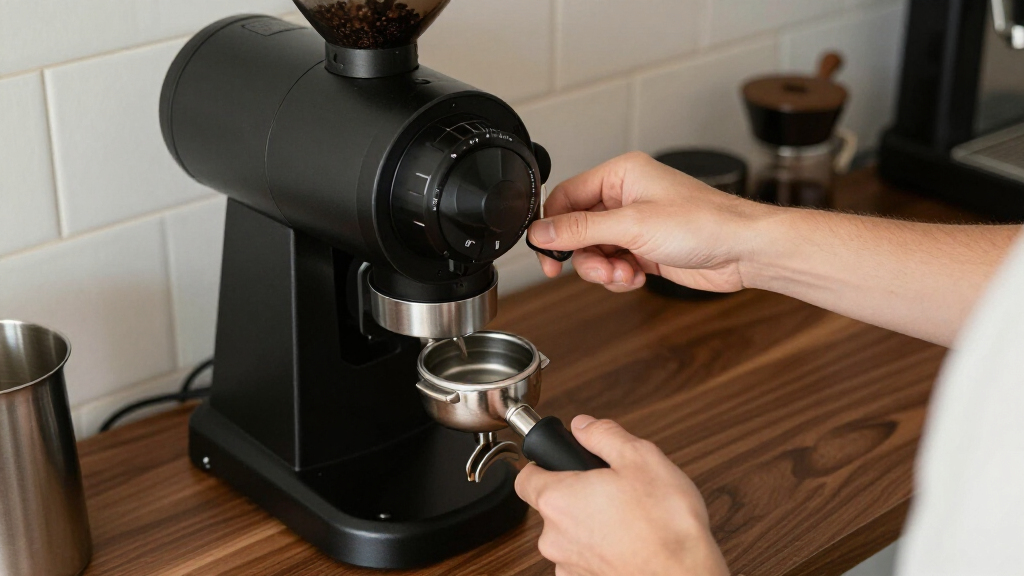
I compared these grinders through the needs of a home espresso buyer: the ability to reach espresso-fine grounds, make small grind changes, repeat doses, and handle the cleaning and workflow of regular use. I also looked at stated range, adjustment style, capacity, controls, and whether each grinder appears aimed at espresso specifically or at a range of brewing methods. A long settings list matters less if the steps are too coarse for dialing in a shot.
The ranking gives more weight to espresso adjustment and useful versatility than to feature counts alone. That puts the Fellow Opus 2 first for its stepless control and broad range, with the Breville Smart Grinder Pro close behind for a more guided dosing routine. The remaining models are ordered by their apparent balance of espresso usefulness, straightforward operation, and flexibility; where the product information does not establish a clear advantage for espresso, I treat that as a reason for a more cautious recommendation. The two Breville finishes are grouped as one grinder design rather than presented as separate performance leaders.
| conical burr espresso grinder | Model |
|---|---|
| Breville Smart Grinder Pro Con | BCG820BSS |
| Fellow Opus 2 Conical Burr Gri | — |
| Breville Smart Grinder Pro Con | BCG820OLT |
| AMZCHEF Burr Coffee Grinder | UL-CG209-SV |
| OXO Brew Conical Burr Electric | — |
| Aromaster Conical Coffee Bean | CG204 |
| SHARDOR Conical Burr Espresso | — |
| Ollygrin Electric Conical Burr | BG702S-PG |
| Tuni G1 Conical Burr Coffee Gr | G1-S |
Factors to Consider When Choosing Best Conical Burr Espresso Grinders
Choosing a grinder for espresso is less about collecting the most features and more about matching its adjustment and workflow to your machine and habits. I would start with how precisely you need to change grind size, then weigh convenience, capacity, and how often you brew outside espresso.
Prioritize Adjustment Control Over the Settings Count
A setting count can make one grinder look more precise than another, but it does not tell the whole story. What matters is whether each adjustment is small enough to move a shot from fast to slow without jumping past the right point. Stepless controls allow changes between marked positions, which can help when a shot needs a subtle correction. Stepped controls are easier to return to a known setting, but larger jumps may frustrate espresso users. If you mostly make espresso, look for information about the adjustment mechanism and espresso range, not just a large number on the box. For mixed brewing, clearly marked steps may be a worthwhile convenience.
Match the Grinder to Your Espresso Machine
Espresso machines differ in how forgiving they are of grind size and dose changes. A pressurized basket can accommodate a wider range of grounds, while a traditional basket generally asks for more careful dialing in. That means a grinder that feels adequate with one machine may limit another. Before buying, check whether the grinder is intended to reach espresso-fine settings and whether its adjustment can make small changes there. Do not assume that a grinder labeled for espresso will suit every basket and coffee bean equally well. If you are upgrading to a more demanding machine soon, favor control you can grow into rather than choosing only for your current setup.
Choose a Dosing Routine You Will Actually Use
Timed dosing can make busy mornings more repeatable, while weighing beans before grinding gives you more direct control over the dose. Neither approach removes the need to adjust the grind when a new coffee behaves differently. A timer is most useful when you keep the same beans and dose for a stretch; changes in bean size, roast, or age can alter how much coffee the grinder delivers in the same time. If you like to switch beans often, prioritize a workflow that makes dose changes simple. Think about where grounds land, how easy the controls are to reach, and whether your routine calls for grinding into a portafilter or a separate container.
Decide How Much Brew-Method Flexibility You Need
A grinder that covers espresso through coarser brewing can be a sensible choice when one machine serves several drink preferences. That range also means more frequent adjustment and a need to track settings as you switch back and forth. Espresso-focused buyers may gain more from consistent fine adjustment than from cold-brew range they rarely use. In a shared household, broad range can reduce the need for a second grinder, but only if moving between methods is manageable. Consider how often you change brew styles, not just whether the grinder claims to support them. A simpler, more focused setup may be easier to keep dialed in.
Plan for Counter Space, Capacity, and Cleaning
Capacity is useful when you grind for several people, but a larger hopper may not suit someone who prefers to weigh fresh beans for each drink. Check the grinder’s footprint and clearance under cabinets before focusing on its appearance or listed capacity. Grounds buildup and static can make daily use messy, so look for parts and surfaces that seem practical to clean. A grinder that is easy to maintain is more likely to stay in regular use, especially if you switch coffees often. Also think about noise and when you tend to make drinks; convenience is part of fit, even when it does not change grind quality. Choose the size and cleaning routine that match your kitchen rather than assuming bigger is better.
Frequently Asked Questions
Is a grinder with 48 settings necessarily better for espresso than one with fewer settings?
No. A settings count describes the number of marked positions, not how small or useful the changes are near espresso-fine. A grinder with fewer but well-spaced steps may be easier to use than one whose adjustment jumps past the setting a shot needs. Stepless adjustment can allow finer corrections, though it may take more care to record and repeat a setting. Match the adjustment design to how much control your machine demands rather than choosing by the largest number.
Should I choose the Fellow Opus 2 or the Breville Smart Grinder Pro for espresso?
I would favor the Fellow Opus 2 if fine adjustment and switching among brew methods matter most, since its stepless control supports changes between marked positions. The Breville Smart Grinder Pro is a more straightforward fit if timed dosing and a guided routine are higher priorities. Its stepped adjustment may be less appealing if you regularly make tiny espresso changes. Consider which inconvenience you would rather avoid: managing a more flexible adjustment system or having fewer marked steps to repeat.
Can the OXO, AMZCHEF, Aromaster, Ollygrin, SHARDOR, or Tuni G1 replace an espresso-focused grinder?
That depends on the espresso machine and the grinder’s adjustment behavior at fine settings. Some machines, especially those with pressurized baskets, are more forgiving; other setups need more precise control to dial in a shot. The models in this group vary in stated settings and convenience features, but those details alone do not prove how finely they adjust for espresso. Check the grinder’s espresso range and look for clear information about its adjustment mechanism before treating it as a dedicated espresso choice. If shot tuning is your main goal, the Opus 2 or Breville’s more clearly defined controls are easier starting points in this lineup.
Does the Breville Smart Grinder Pro in Olive Tapenade grind differently from the Brushed Stainless Steel version?
The two listings name the same Breville Smart Grinder Pro, so the finish is the clear distinction in the information provided. I would not pay for one expecting a different grinding mechanism or espresso adjustment behavior. Choose the finish that fits your kitchen and confirm the exact model details on the listing before ordering. If you want a different role or control approach, compare it with another grinder in the roundup rather than treating the color variant as a performance upgrade.
When is it worth choosing a more versatile grinder if I mainly make espresso?
Versatility makes sense if you regularly prepare drip, pour-over, or cold-brew coffee and want one grinder for the household. It is less compelling if espresso is your only method and extra range adds adjustment steps you will rarely use. Switching brew methods can also make it harder to return to a familiar espresso setting unless you record where you left off. Think about how often those other drinks appear in your weekly routine. If they are occasional, prioritize fine control and a simple return to your espresso setting.
Conclusion
For the best overall balance, I recommend the Fellow Opus 2, especially for buyers who want stepless adjustment and room to brew beyond espresso. The Breville Smart Grinder Pro is my practical pick for a more guided, timed routine, and the AMZCHEF is the best value-oriented choice for shoppers drawn to a broad range of settings without needing the most refined adjustment system. Beginners who want a recognizable, straightforward workflow should start by comparing the Breville with their machine and basket type; those using demanding non-pressurized espresso baskets should favor precision over simplicity. For a shared kitchen with varied brew methods, choose the Opus 2, while buyers focused on capacity and everyday convenience can compare the OXO and other straightforward options. The Breville Olive Tapenade version is best for a preferred finish, not a separate performance need.
Fall Picks
fall essentials
As an affiliate, we earn on qualifying purchases.