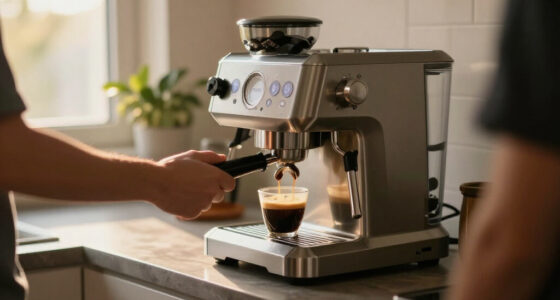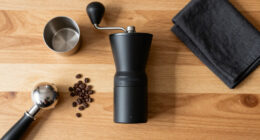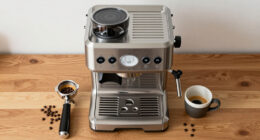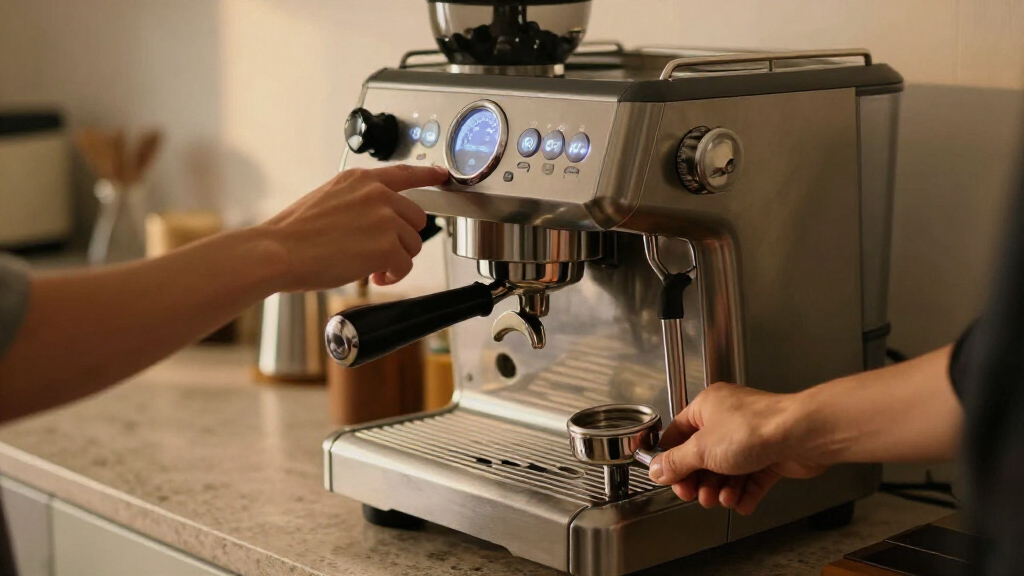

The best dual boiler espresso machines with PID let you brew espresso and steam milk at the same time while giving you more stable control over brew temperature. I rank the Diletta Alto as the best overall for its focused dual-boiler setup and useful shot timer, while the Rancilio Silvia Pro X stands out for buyers who want a more hands-on machine and the Breville Oracle for those who want more automation. The main tradeoff is between control and convenience: built-in grinders and assisted workflows reduce setup work, but add complexity and can limit how much you manage yourself. Other buyers may prefer a simpler machine with a separate grinder for greater flexibility. Read on for the full breakdown and the factors that matter most when choosing.

Get coffee and tea gear delivered free — and shop member deals
- Fast, free delivery on millions of items
- Access to Prime Big Deal Days deals on October 6–7
- Prime Video, Amazon Music and more included
Complete the kit


Key Takeaways
- The Diletta Alto leads as the focused all-rounder: its PID and shot timer support controlled brewing without making a grinder-integrated workflow the center of the experience.
- Automation separates the Breville Oracle from conventional machines: it suits buyers who want more assistance, while the Silvia Pro X better fits hands-on espresso preparation.
- Several picks combine brewing and grinding: Gevi, Meraki, Chefman, and the Breville Dynamic Duo bundle reduce the need to source equipment separately, but their integrated workflows differ.
- The list spans machine-only options and bundled or grinder-equipped setups: buyers should compare the whole workflow, not just the dual-boiler label.
- A PID is only one part of temperature control: usability, grinder choice, maintenance demands, and how much automation you want also shape the fit.
| Diletta Alto Dual Boiler Espresso Machine with PID and Shot Timer, Black |  | Best for Hands-On Temperature Control | Boiler system: Dual boiler | Temperature control: PID for brew and steam | Portafilter size: 58 mm | VIEW LATEST PRICE | See Our Full Breakdown |
| Breville Oracle Dual Boiler Espresso Machine, Stainless Steel |  | Best for Automated Preparation | Boiler and heating system: Dual stainless-steel boilers, heated group head, and triple-heating system | Temperature control: PID | Grinder: Baratza European precision burrs with 45 adjustable settings | VIEW LATEST PRICE | See Our Full Breakdown |
| Rancilio Silvia Pro X Espresso Machine |  | Best for Shot-Tuning Features | Boilers: 300 ml brew boiler and 1-liter steam boiler | Temperature control: Dual PID | Preinfusion: Adjustable, low-pressure | VIEW LATEST PRICE | See Our Full Breakdown |
| Gevi Dual Boiler Espresso Machine with Built-In Burr Grinder |  | Best All-in-One Grinder Setup | Operation: Semi-automatic | Coffee input: Ground coffee and whole beans | Grinder: Built-in burr grinder with 31 grind levels | VIEW LATEST PRICE | See Our Full Breakdown |
| Meraki Dual Boiler Espresso Machine with Grinder and Built-In Scales |  | Best for Integrated Dose and Yield Weighing | Boilers: 350 ml brew boiler and 550 ml steam boiler | Temperature control: PID with heated group head | Grinder: 45 marked settings with micro-adjustment | VIEW LATEST PRICE | See Our Full Breakdown |
| Meraki Dual Boiler Espresso Machine with Grinder and Built-In Scales |  | Best for Integrated Dose and Yield Control | Brew boiler capacity: 350 ml | Steam boiler capacity: 550 ml | Grinder settings: 45 marked settings with micro-adjustment | VIEW LATEST PRICE | See Our Full Breakdown |
| Tuni E2 Gen3 Dual Boiler Espresso Machine with Super+ Steam Power, Ivory |  | Best for Hot and Cold Brewing Options | Boiler system: Dual boiler | Brew head: 58 mm | Output pressure: 20 bar | VIEW LATEST PRICE | See Our Full Breakdown |
| Breville BES920XL Dual Boiler Espresso Machine, Brushed Stainless Steel |  | Best for PID Temperature Precision | Boiler construction: Dual stainless steel boilers | Temperature control: PID, ±2°F | Portafilter size: 58 mm | VIEW LATEST PRICE | See Our Full Breakdown |
| Chefman Crema Deluxe Espresso Machine with Double Boiler and 30-Setting Grinder |  | Best for a Large Removable Water Reservoir | Boiler: Double boiler | Grinder: Conical burr grinder with 30 settings | Pump pressure: 15 bar | VIEW LATEST PRICE | See Our Full Breakdown |
| Breville Dynamic Duo Espresso Machine Bundle with Dual Boiler and Smart Grinder Pro |  | Best Grinder-and-Machine Bundle | Model: BEP920BSS | Boiler system: Dual boiler | Grinder: Precision conical burr grinder | VIEW LATEST PRICE | See Our Full Breakdown |
| dual boiler espresso machines with PID | Temperature control | Dimensions | Grinder | Portafilter |
|---|---|---|---|---|
| Diletta Alto Dual Boiler Espre | PID for brew and steam | 19.75 × 12 × 14.5 inches (D × W × H) | — | — |
| Breville Oracle Dual Boiler Es | PID | 18 × 18 × 22.5 inches | Baratza European precision burrs with 45 adjustable settings | — |
| Rancilio Silvia Pro X Espresso | Dual PID | 16.5 × 10 × 15.2 inches (D × W × H) | — | — |
| Gevi Dual Boiler Espresso Mach | NTC and PID | 18.85 × 15.66 × 18.85 inches | Built-in burr grinder with 31 grind levels | 58 mm |
| Meraki Dual Boiler Espresso Ma | PID with heated group head | — | 45 marked settings with micro-adjustment | 58 mm, E61-compatible |
| Meraki Dual Boiler Espresso Ma | PID | — | — | 58 mm, E61-compatible |
| Tuni E2 Gen3 Dual Boiler Espre | PID + NTC | — | — | — |
| Breville BES920XL Dual Boiler | PID, ±2°F | 14.7 × 14.8 × 14.7 in | — | — |
| Chefman Crema Deluxe Espresso | — | — | Conical burr grinder with 30 settings | 58 mm, with single- and double-shot baskets |
| Breville Dynamic Duo Espresso | PID | — | Precision conical burr grinder | 58 mm stainless steel |
More Details on Our Top Picks
Diletta Alto Dual Boiler Espresso Machine with PID and Shot Timer, Black
The Alto suits espresso makers who want separate brew and steam boilers with direct control rather than automated preparation. Its PID settings cover both boilers, and the built-in shot timer helps track extraction without adding another device. Compared with the Rancilio Silvia Pro X, the Alto has a larger listed capacity and includes both double and bottomless portafilters, while the Silvia Pro X adds adjustable preinfusion and programmable wake-up. The Alto’s adjustable OPV, accessible beneath the drip tray, gives experienced users another tuning point. Its tradeoffs are practical: a 22-minute warm-up makes spontaneous shots less convenient, and its 40-pound stainless-steel body is a substantial fixture on the counter. I’d choose it for manual workflow and boiler-level control, not for speed or a compact setup.
Pros:- Dedicated brew and steam boilers with PID temperature control for both
- Shot timer integrated into the PID screen
- Adjustable OPV is accessible beneath the drip tray
- Includes double and bottomless portafilters and multiple baskets
Cons:- Takes about 22 minutes to reach brew temperature
- At 40 pounds, it is heavy to reposition
- Manual operation requires the user to manage grinding, dosing, and extraction
Best for: Experienced home baristas who want independent brew and steam temperature control, manual operation, and a built-in shot timer.
Not ideal for: People who want quick, on-demand espresso or need a light machine that is easy to move; its listed warm-up is 22 minutes and it weighs 40 pounds.
- Boiler system:Dual boiler
- Temperature control:PID for brew and steam
- Portafilter size:58 mm
- Capacity:3 liters
- Power and voltage:1400 watts; 120 volts
- Warm-up time:22 minutes to brew temperature
- Dimensions:19.75 × 12 × 14.5 inches (D × W × H)
- Weight and material:40 pounds; stainless steel
Our verdict“Choose the Alto if manual espresso control and dual-boiler PID adjustment matter more to you than a short warm-up or easy portability.”
Breville Oracle Dual Boiler Espresso Machine, Stainless Steel
The Oracle is the clearest fit here for buyers who want dual-boiler espresso with less hands-on prep. Automatic grinding, dosing, and tamping take several repetitive tasks off the user’s plate, while the auto dial-in system can adjust grind settings to support more consistent shots. Its 5.7-inch touchscreen and heated group head give it a more guided, feature-rich approach than the manual Diletta Alto or the semi-automatic Rancilio Silvia Pro X. It can brew and steam at the same time, so milk drinks need not wait for one function to finish. That convenience comes with a large 18 × 18 × 22.5-inch footprint and a listed weight of 17.24 kg, making it a poor choice for tight counters or frequent moves. I’d favor it for assisted workflow, not for a compact or fully manual setup.
Pros:- Dual boilers and a heated group head support simultaneous brewing and steaming
- Automatic grind, dose, and tamp reduce hands-on preparation
- Auto dial-in system adjusts grind settings to support shot consistency
- Large touchscreen provides a guided control interface
Cons:- Large 18 × 18 × 22.5-inch footprint can be difficult to accommodate
- Listed weight of 17.24 kg makes moving it less convenient
- Automation offers less direct control over grinding and puck preparation than a manual setup
Best for: Home users who want dual-boiler brewing and steaming with automated grinding, dosing, tamping, and guided dial-in.
Not ideal for: Buyers with limited counter space or those who prefer to control every step manually; the machine is large and automates key preparation tasks.
- Boiler and heating system:Dual stainless-steel boilers, heated group head, and triple-heating system
- Temperature control:PID
- Grinder:Baratza European precision burrs with 45 adjustable settings
- Display:5.7-inch color touchscreen
- Water tank capacity:77 fluid ounces
- Power and voltage:1600 watts; 120 volts
- Dimensions:18 × 18 × 22.5 inches
- Weight and connectivity:17.24 kg; Wi-Fi
Our verdict“Pick the Oracle if you want dual-boiler performance with extensive preparation assistance and have room for a large, heavy machine.”
Rancilio Silvia Pro X Espresso Machine
The Silvia Pro X is a strong match for baristas who want a focused semi-automatic machine with useful extraction controls. Its dual PID system manages the separate 300 ml brew and 1-liter steam boilers, while adjustable low-pressure preinfusion gives users a way to shape the start of an extraction. A shot timer and programmable wake-up add practical day-to-day control. Compared with the Diletta Alto, the Silvia Pro X is smaller in listed capacity and includes fewer accessories, but its preinfusion and wake-up functions make it the more appealing choice for recipe tuning and planned morning use. Its 2-liter removable tank is straightforward to refill, though the machine still needs about 15 minutes to warm up and its depth may challenge shallow counters. Choose it for control features, not the smallest footprint.
Pros:- Separate brew and steam boilers allow simultaneous brewing and steaming
- Dual PID controls manage brew and steam temperatures
- Adjustable low-pressure preinfusion and shot timer support extraction tuning
- Programmable wake-up and removable 2-liter tank add practical convenience
Cons:- Requires about 15 minutes to warm up
- Its 16.5-inch depth may be awkward on shallow counters
- The listed 4-inch cup clearance limits room for taller cups
Best for: Home baristas who want dual PID control, adjustable preinfusion, and programmable wake-up in a semi-automatic machine.
Not ideal for: Buyers seeking near-instant startup or a shallow machine for a narrow counter; it takes about 15 minutes to warm up and measures 16.5 inches deep.
- Boilers:300 ml brew boiler and 1-liter steam boiler
- Temperature control:Dual PID
- Preinfusion:Adjustable, low-pressure
- Water tank:Removable 2-liter tank
- Power and voltage:1000 watts; 120 volts
- Dimensions:16.5 × 10 × 15.2 inches (D × W × H)
- Material:Stainless steel
- Cup clearance:4 inches
Our verdict“Choose the Silvia Pro X if adjustable preinfusion and scheduled wake-up matter more than a smaller counter footprint or a faster warm-up.”
Gevi Dual Boiler Espresso Machine with Built-In Burr Grinder
The Gevi combines a built-in burr grinder with PID and NTC temperature control, giving buyers an integrated route from whole beans to espresso without a separate grinder. Its 31 grind levels and 58 mm portafilter provide familiar points of adjustment, while the steam wand covers milk drinks. Compared with the Meraki MEM03 Gen2, the Gevi also supplies an integrated grinder but does not list Meraki’s built-in scales, micro-adjustment, or specific boiler capacities. The Gevi’s listed 15-pound weight is lighter than the Diletta Alto’s 40 pounds, yet its 18.85-inch dimensions in multiple directions still call for meaningful counter space. It is semi-automatic, so the grinder does not remove the need to prepare and manage each shot. I’d pick it for an integrated setup, while buyers prioritizing measured dosing may prefer the Meraki.
Pros:- Built-in burr grinder offers 31 grind settings
- PID and NTC temperature control support brewing and milk preparation
- 58 mm portafilter supports a familiar accessory format
- Detachable water tank and drip tray simplify cleaning
Cons:- Semi-automatic workflow still requires hands-on shot preparation
- Listed dimensions of 18.85 × 15.66 × 18.85 inches take substantial counter space
- Product data does not specify boiler capacities or independent PID settings for each boiler
Best for: Home espresso beginners or space planners who want a built-in burr grinder and temperature control in one machine, without buying a separate grinder.
Not ideal for: Baristas who want built-in dose and yield weighing or a compact counter footprint; the Gevi lists neither scales nor a small overall size.
- Operation:Semi-automatic
- Coffee input:Ground coffee and whole beans
- Grinder:Built-in burr grinder with 31 grind levels
- Temperature control:NTC and PID
- Portafilter:58 mm
- Dimensions:18.85 × 15.66 × 18.85 inches
- Weight:15 pounds
- Warranty:12 months with lifetime technical support
Our verdict“Choose the Gevi if an integrated grinder is your priority, but look at the Meraki if built-in weighing and more detailed boiler specifications matter more.”
Meraki Dual Boiler Espresso Machine with Grinder and Built-In Scales
The Meraki stands out for combining dual boilers, a burr grinder, and built-in scales in one semi-automatic machine. Its scales measure dose and yield within 0.2 g, which helps users repeat a recipe without placing a separate scale under the cup. The 45 marked grinder settings, micro-adjustment, PID control, heated group head, and controlled preinfusion offer more detail for dialing in than the Gevi’s listed grinder and temperature features. The tradeoff is that this remains a hands-on workflow: integrated equipment does not automate puck preparation or shot management. Its listed capacity is one cup, so it is aimed more at individual drinks than serving several people in quick succession. Compared with the larger Breville Oracle, it provides built-in weighing in a smaller listed footprint, but less automation.
Pros:- Dual boilers support brewing and milk texturing at the same time
- Built-in scales measure dose and yield within 0.2 g
- Grinder has 45 marked settings plus micro-adjustment
- PID control, heated group head, and controlled preinfusion support repeatable brewing
Cons:- Listed capacity is limited to one cup
- Semi-automatic preparation still requires hands-on puck preparation and shot management
- Metal-and-plastic construction may not suit buyers seeking an all-metal build
Best for: Single-serve-focused home baristas who want to weigh coffee dose and espresso yield while keeping the grinder and dual boilers integrated.
Not ideal for: Households making drinks for several people at once or users seeking automated grinding, tamping, and preparation; its listed capacity is one cup and operation is semi-automatic.
- Boilers:350 ml brew boiler and 550 ml steam boiler
- Temperature control:PID with heated group head
- Grinder:45 marked settings with micro-adjustment
- Scale accuracy:Within 0.2 g
- Output pressure:9 bar
- Portafilter:58 mm, E61-compatible
- Power and voltage:1600 watts; 120 volts
- Dimensions and capacity:14.57 × 14.57 × 16.33 inches (D × W × H); 1 cup
Our verdict“Pick the Meraki if integrated weighing and fine grinder adjustment are more useful to you than high-volume serving or automated preparation.”
Meraki Dual Boiler Espresso Machine with Grinder and Built-In Scales
The Meraki stands out for combining dual boilers, a grinder, and built-in scales in one machine. Its scales measure both coffee dose and espresso yield within 0.2 g, making repeatable recipes easier without a separate scale on the counter. The 45 grinder settings with micro-adjustment give more room to tune a shot than the Chefman Crema Deluxe’s 30 settings, while controlled pre-infusion and a rotary pump add useful control over extraction. Like the Breville Dynamic Duo, it pairs grinding and brewing in one setup; the Meraki’s integrated scales are its clearest distinction. That added control has a learning curve, though, and its many settings may feel like extra work to someone who wants straightforward espresso. I’d favor it for recipe-focused home baristas, not buyers seeking minimal hands-on adjustment.
Pros:- Dual boilers support brewing and steaming at the same time.
- Integrated scales measure coffee dose and espresso yield within 0.2 g.
- 45 grinder settings with micro-adjustment allow detailed grind tuning.
- Rotary pump, 9-bar extraction, and controlled pre-infusion provide extraction control.
Cons:- The range of controls and adjustments may take time to learn.
- The built-in grinder and scales leave less flexibility to configure those components separately.
Best for: Home baristas who want dose and yield measurements built into a dual-boiler machine and enjoy dialing in coffee recipes.
Not ideal for: Beginners who want simple, guided operation or buyers who would rather choose and adjust a separate grinder and scale.
- Brew boiler capacity:350 ml
- Steam boiler capacity:550 ml
- Grinder settings:45 marked settings with micro-adjustment
- Scale accuracy:Within 0.2 g
- Pump:Commercial rotary pump
- Extraction pressure:9 bar
- Portafilter:58 mm, E61-compatible
- Temperature control:PID
- Pre-infusion:Controlled
Our verdict“Choose the Meraki if you want a highly integrated setup for weighing, grinding, and extracting espresso, and skip it if you prefer fewer controls.”
Tuni E2 Gen3 Dual Boiler Espresso Machine with Super+ Steam Power, Ivory
The Tuni E2 Gen3 earns its place for offering dual boilers with hot and cold brewing modes, a combination that gives it a different focus from the Breville BES920XL. Both can brew and steam concurrently, but the Tuni adds an adjustable steam mode and hot-and-cold options rather than centering its appeal on the Breville’s programmable LCD and stated ±2°F PID control. Its 58 mm brew system and included accessories give buyers the basic tools to start, while PID and NTC temperature controls are intended to help manage brewing heat. The product data lists a 20-bar pump, but does not establish that as the pressure used for espresso extraction, so I would not treat the number alone as a brewing advantage. This is a hands-on semi-automatic machine, and its 120-volt design limits buyers to compatible power setups.
Pros:- Dual boilers allow milk steaming while espresso extracts.
- PID and NTC controls support temperature management.
- Hot and cold brewing modes broaden its drink options.
- Includes a portafilter, filter baskets, milk pitcher, tamper, and cleaning accessories.
Cons:- Semi-automatic preparation requires the user to handle the brewing steps.
- Designed for 120-volt power, limiting where it can be used.
- The listed 20-bar pump figure does not specify espresso extraction pressure.
Best for: Home users who want a semi-automatic dual boiler with hot and cold brewing modes, adjustable steam, and included starter accessories.
Not ideal for: Buyers seeking assisted or automatic drink preparation, or anyone who needs a machine suited to power supplies other than 120 volts.
- Boiler system:Dual boiler
- Brew head:58 mm
- Output pressure:20 bar
- Temperature control:PID + NTC
- Wattage:1500 W
- Voltage:120 V
- Operation:Semi-automatic
- Special features:Auto shut-off, hot and cold brewing, adjustable steam mode
- Color:Ivory
Our verdict“Pick the Tuni if hot-and-cold brewing and adjustable steam matter more to you than the Breville BES920XL’s specified PID precision and programmable display.”
Breville BES920XL Dual Boiler Espresso Machine, Brushed Stainless Steel
The BES920XL is a strong choice for buyers who want a clearly specified PID system: its dual stainless steel boilers maintain water temperature within ±2°F, and they let you steam while pulling a shot. Compared with the Tuni E2 Gen3, the Breville’s product details give a concrete temperature tolerance and add a programmable LCD with a shot timer; the Tuni instead offers hot and cold brewing modes. A manual steam wand gives the user control over milk texture, but it also means this machine will not automate that part of drink preparation. Its 58 mm portafilter accepts a substantial 19–22 g dose, which suits buyers who want room to work with espresso recipes. The tradeoff is a heavy, nearly square-footprint machine that also asks the owner to learn milk texturing by hand.
Pros:- Dual stainless steel boilers allow simultaneous brewing and steaming.
- PID temperature control is specified to maintain water within ±2°F.
- Programmable LCD includes a shot timer.
- 58 mm portafilter accommodates a 19–22 g coffee dose.
Cons:- Manual steaming requires practice to texture milk.
- At 28.4 lb, it is heavy to move.
- Its 14.7 × 14.8 × 14.7 in dimensions call for substantial counter space.
Best for: Espresso drinkers who value specified PID temperature control, programmable shot timing, and hands-on milk texturing.
Not ideal for: Buyers with limited counter or storage space, or people who want automatic milk preparation rather than a manual steam wand.
- Boiler construction:Dual stainless steel boilers
- Temperature control:PID, ±2°F
- Portafilter size:58 mm
- Coffee dose:19–22 g
- Water tank capacity:84 oz
- Power:1700 W
- Voltage:110–120 V
- Dimensions:14.7 × 14.8 × 14.7 in
- Weight:28.4 lb
Our verdict“Choose the BES920XL if specified temperature control and manual espresso craft take priority over compact size or automatic milk handling.”
Chefman Crema Deluxe Espresso Machine with Double Boiler and 30-Setting Grinder
The Chefman Crema Deluxe combines a double boiler and conical burr grinder with a removable 3-liter reservoir, making it a practical all-in-one option for households that brew frequently. Its reservoir is a standout against the Breville Dynamic Duo, whose supplied specifications focus more on grind choices and shot control than tank capacity. The Chefman’s 30 grind settings and customizable shot settings offer useful ways to adjust a recipe, although the Meraki provides 45 settings plus micro-adjustment for finer grind tuning. A 58 mm portafilter and included pitcher, tamper, and cleaning tools round out the setup. The tradeoff is a more limited feature picture: the supplied details do not list PID temperature control or a temperature tolerance, so buyers prioritizing documented temperature management should compare it with the BES920XL.
Pros:- Double boiler supports brewing and milk steaming at the same time.
- Conical burr grinder has 30 settings, with customizable shot settings.
- Removable 3-liter reservoir reduces refill interruptions.
- Includes a milk pitcher, tamper, and cleaning tools.
Cons:- The supplied product details do not specify PID temperature control or a temperature tolerance.
- Its 30 grinder settings offer less adjustment detail than the Meraki’s 45 settings with micro-adjustment.
- Semi-automatic operation takes practice and hands-on preparation.
Best for: Households that want a grinder-and-machine combination, simultaneous brewing and steaming, and a removable high-capacity reservoir.
Not ideal for: Buyers who prioritize specified PID temperature control or fine-grained grinder adjustment over reservoir capacity and an all-in-one setup.
- Boiler:Double boiler
- Grinder:Conical burr grinder with 30 settings
- Pump pressure:15 bar
- Portafilter:58 mm, with single- and double-shot baskets
- Water reservoir:3 liters, removable
- Power:1500 W
- Voltage:120 V
- Model:RJ54-G-SS-D-BLK
- Certification:cETL approved
Our verdict“Choose the Chefman if an integrated grinder and a large removable reservoir suit your routine, but favor the Breville BES920XL if documented PID precision is your priority.”
Breville Dynamic Duo Espresso Machine Bundle with Dual Boiler and Smart Grinder Pro
The Dynamic Duo is the most straightforward pick here for buyers who want a paired dual-boiler machine and programmable grinder rather than a machine with a grinder left to source separately. Its Smart Grinder Pro provides 60 settings, more than the Chefman’s 30 or the Meraki’s 45, while PID, low-pressure pre-infusion, and 9-bar extraction speak directly to controlled espresso preparation. Shot control can be volumetric, timed, or manual, giving users room to choose how hands-on they want to be. Compared with the Meraki, this bundle offers more listed grind settings, while the Meraki’s key differentiator is its built-in dose and yield scales. The Dynamic Duo’s broad set of controls may take time to learn, and the supplied data does not include boiler capacity or machine dimensions, limiting a detailed fit check.
Pros:- Dual boilers allow espresso extraction and steaming at the same time.
- PID temperature control, low-pressure pre-infusion, and 9-bar extraction support controlled brewing.
- Smart Grinder Pro offers 60 grind settings and programmable dosing.
- Shot control supports volumetric, timed, and manual operation.
Cons:- The detailed grinder and shot settings may take time to learn.
- Unlike the Meraki, the listed features do not include integrated scales for measuring dose and yield.
- Boiler capacity and machine dimensions are not provided in the supplied specifications.
Best for: Home espresso buyers who want a dual boiler and programmable grinder in one coordinated bundle, with several shot-control options.
Not ideal for: Buyers who want integrated dose-and-yield scales, a simpler control layout, or specified boiler capacities and dimensions before choosing.
- Model:BEP920BSS
- Boiler system:Dual boiler
- Grinder:Precision conical burr grinder
- Grind settings:60
- Portafilter:58 mm stainless steel
- Portafilter dose:22 g
- Extraction pressure:9 bar
- Temperature control:PID
- Shot control:Volumetric or timed; 1-shot, 2-shot, or manual
Our verdict“Choose the Dynamic Duo if you want a grinder and dual-boiler machine as a coordinated set, and choose the Meraki instead if integrated scales matter more than additional grinder settings.”
How We Picked
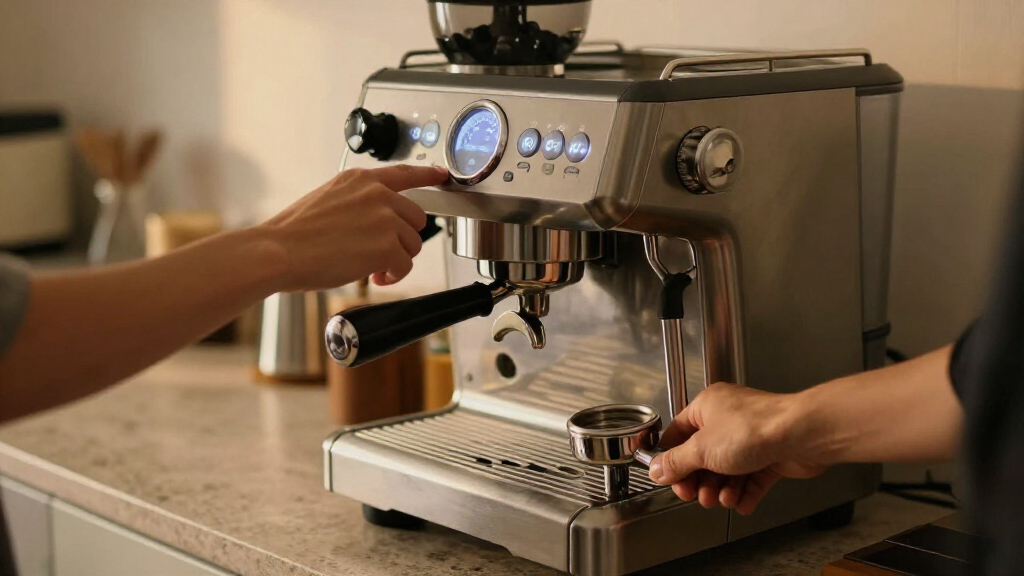
I ranked these machines around what matters in a dual-boiler, PID-equipped setup: whether the configuration supports simultaneous brewing and steaming, how clearly the controls support repeatable brewing, and whether the machine’s workflow matches its intended buyer. I also weighed build and feature choices, grinder integration, convenience, and likely upkeep. A built-in grinder or automation can simplify a routine, but I did not treat extra features as an automatic advantage.
The order favors machines with a clear role and a useful balance of control and day-to-day practicality. The Diletta Alto takes the overall spot as a focused machine with PID and shot timing; the Silvia Pro X is a strong fit for manual control, while the Oracle prioritizes assistance. Grinder-equipped models and bundles rank according to the convenience they add and the tradeoffs that come with a more integrated system. The two Meraki listings are the same named model, so they should be treated as one distinct option rather than separate designs.
Factors to Consider When Choosing Best Dual Boiler Espresso Machines With PID
Before choosing a machine, I would match its workflow to how you actually make coffee. A dual boiler can save time during milk-drink preparation, but it does not automatically make espresso easier, improve a mismatched grinder, or remove routine cleaning. These broader checks can help you avoid paying for features you will not use.
Decide Whether You Need Simultaneous Brewing and Steaming
Dual boilers matter most when you regularly make milk drinks and want to pull a shot while steaming milk. If you mostly drink straight espresso or prepare one drink at a time, the faster workflow may not justify a larger, more involved machine. Think about your busiest realistic routine, not an occasional gathering. A second boiler also does not remove the need to learn shot preparation or milk texturing. Compare machine footprint and warm-up habits with the time saved during service. For frequent back-to-back cappuccinos, simultaneous operation can be a meaningful convenience; for occasional espresso, simpler equipment may suit you better.
Treat PID as a Control Tool, Not a Guarantee
A PID helps regulate boiler temperature, but the label alone does not tell you how easy the machine is to adjust or whether its controls suit your habits. Check what temperature settings are available and whether brew and steam functions are clearly managed. Buyers sometimes assume that PID means every shot will taste consistent; beans, grind, dose, and puck preparation still matter. Avoid paying for advanced temperature features if you do not plan to change settings or track recipes. A simple interface may be more useful than a long menu of adjustments. Look for controls that make the level of precision you want practical to use.
Choose Between an Integrated Grinder and a Separate Setup
A machine with a built-in grinder can reduce counter clutter and make a complete setup easier to assemble. The tradeoff is that grinder performance and adjustment become tied to the machine, and a grinder issue can affect the whole workflow. A separate grinder gives you more freedom to choose, upgrade, or replace that part independently. Bundles sit between these approaches: they package equipment together but still use a separate grinder. Compare adjustment range, dose workflow, and cleaning access rather than choosing by convenience alone. If you already own a capable grinder, paying for a machine with another one may add little value.
Set Your Own Limit for Automation
Assisted tamping, grinding, or other guided steps can make espresso more approachable, especially when several people share the machine. Those features also mean more mechanisms and a workflow shaped by the manufacturer’s design. Manual machines ask you to control more variables, which can appeal to buyers who want to refine technique or change accessories. Do not confuse automation with a lack of quality, or manual control with better coffee by default. Decide which steps you want to learn and which you would rather simplify. That choice can narrow the field more effectively than comparing feature counts.
Account for Cleaning, Repairs, and Counter Space
Dual boilers and added grinder or automation features can make a machine larger and create more components to clean. Before buying, measure the space around the machine, including room to fill the water tank, access controls, and work with the portafilter. Check how the manufacturer describes routine cleaning and any required maintenance supplies. Integrated grinders need regular attention to keep old grounds from affecting fresh coffee, while milk systems need prompt cleaning after use. A machine that fits your counter but blocks everyday access may become frustrating. Favor a setup you can maintain consistently over one whose features look appealing but complicate cleanup.
Compare the Full Workflow, Not the Machine Name
Listings may describe a dual boiler, PID, grinder, or bundle, but those labels do not tell you whether the complete setup matches your needs. Include the grinder, accessories, water treatment, and cleaning routine in your decision. A machine-only pick may make sense if you already have compatible equipment, while an all-in-one approach may reduce initial setup decisions. Check what is actually included rather than assuming a portafilter, tamper, or grinder is part of every package. Also compare how much control you retain over dosing and extraction. The best fit is the one whose entire routine works for your space, skill level, and drink preferences.
Frequently Asked Questions
Is a dual boiler worth choosing if I mostly drink espresso without milk?
It can be, but the main speed advantage of a dual boiler is simultaneous brewing and steaming, which matters less if you rarely steam milk. You may still value PID temperature control and a dedicated brewing workflow, but those benefits should be weighed against the machine’s size and added complexity. Consider whether you often make several drinks in a row or want room to grow into milk drinks. If neither applies, a less involved machine may meet your needs with fewer components to maintain. The best reason to choose dual boilers is a routine that uses their extra capacity.
Does a built-in grinder make a dual boiler machine a better choice?
Not automatically. An integrated grinder can save counter space and simplify buying a complete setup, but it ties grinder maintenance and replacement to the machine’s design. A separate grinder offers more choice and can be upgraded without replacing the espresso machine. If you already own a grinder you like, an integrated one may duplicate equipment rather than add useful value. Compare the actual adjustment and dosing workflow, not just whether a grinder is included. Convenience matters most when it supports a routine you will use every day.
Should I choose an automated machine or a manual dual boiler?
Choose automation if reducing hands-on steps is a priority or multiple people with different skill levels will use the machine. A manual option makes more sense if you want direct control over grinding, dosing, tamping, and extraction. Neither approach guarantees better espresso; technique, beans, and grinder quality remain important. Automation can narrow your choices to the workflow built into that model, while manual preparation gives you more room to change tools and methods. Decide which tasks you want the machine to handle before comparing individual features.
Can I use my own grinder with a dual boiler machine?
Yes, a machine sold without an integrated grinder can generally be paired with a separate grinder suited to espresso. This can be a better route if you already have a grinder or want to choose that component independently. Check that the grinder can make fine, consistent adjustments and that its dosing method fits your routine. A bundle such as the Breville Dynamic Duo includes a separate grinder, while machine-only picks leave that choice to you. Do not assume a dual boiler alone makes a setup complete; grinder and accessories affect the overall workflow.
What should I check before buying a PID-equipped dual boiler online?
Confirm the exact model and included equipment, especially if a listing describes a grinder, bundle, or accessories. Review the machine’s dimensions and water-tank access against your available counter space. Look up the available temperature controls and the maker’s routine cleaning guidance rather than relying on the PID label alone. Check warranty coverage, service options, and parts availability for your region, since more involved machines may need specialized support. Finally, make sure the workflow fits your skill level and drink habits; a feature-rich machine is not a good match if its routine feels cumbersome.
Conclusion
For a balanced, focused setup, I would start with the Diletta Alto as best overall. The Breville Dynamic Duo is my best value direction for buyers who want a machine and separate grinder in one package, while the Breville Oracle is the best premium choice for people who prioritize assisted preparation. For beginners who want a more guided experience, I would look at the Oracle; for hands-on espresso control, the Rancilio Silvia Pro X is the better fit. Choose the Gevi or Meraki if built-in grinding and a consolidated counter setup matter most, and compare their specific workflows before deciding. If you want a focused machine with PID and shot timing rather than integrated grinding, the Alto remains the clearest starting point.
Halloween Picks
halloween
As an affiliate, we earn on qualifying purchases.