TL;DR
Open a free Amazon Business account
Business pricing, bulk buying and tax-exempt orders.
Create a free accountAs an affiliate, we earn on qualifying purchases.
Home espresso machines vary from manual to super-automatic, each suited for different needs. The right choice depends on your involvement level, budget, and desired drinks. A good grinder is just as important as the machine itself.
Ever poured a shot of espresso that tasted flat or bitter, even after trying different beans? The secret often lies in the machine. Home espresso machines have become more accessible, but their wide variety can be overwhelming. Knowing what features truly affect your coffee quality can save you time, money, and frustration.
In this guide, you’ll learn how different machine types work, what controls matter, and how to match your setup to your drinking habits. Whether you want to pull perfect shots every morning or get into the hobby of espresso brewing, understanding these essentials makes all the difference.
A good grinder is more important than a high-end machine—without it, your espresso suffers.
Temperature stability and pressure control are key for consistent, flavorful shots.
Dual boilers or heat exchangers make steaming and brewing smoother, especially for frequent milk drinks.
Routine maintenance and water quality directly impact your machine’s lifespan and performance.
Latest models combine speed, automation, and connectivity, making brewing easier without sacrificing control.
Which home espresso machine suits your style: manual, semi, or super-automatic?
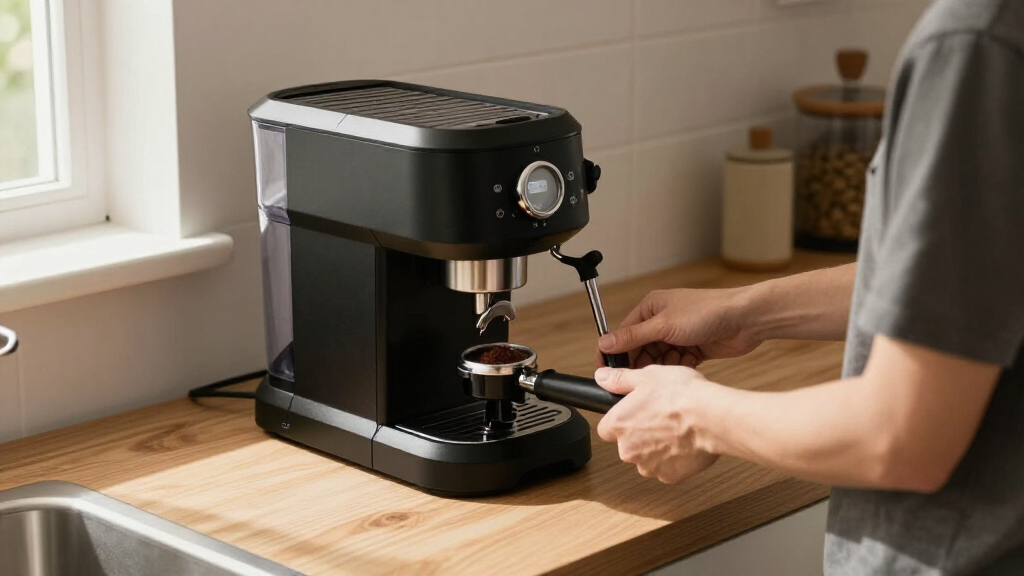
Choosing the right machine depends on your involvement and patience. Manual lever machines give you maximum control—think of it as playing barista in your kitchen. They require practice but reward with rich, personalized shots. The tradeoff is that mastering them takes time and skill; inconsistent technique can lead to uneven extraction, which affects flavor. Semi-automatic machines strike a balance—you’re responsible for grinding, tamping, and starting the shot, but the machine manages water flow. This gives you control over shot timing and quality, making them popular among enthusiasts who want to learn and refine their craft. Super-automatic machines handle everything: grinding, tamping, brewing, and even milk texturing. They’re designed for convenience, ideal for busy mornings or those who prefer consistency over control. However, they often limit customization, and their internal components can reduce the ability to fine-tune extraction parameters. Capsule machines are the fastest, but they generate waste and limit flavor variety, making them suitable for quick, simple coffee without much experimentation. The choice hinges on how much involvement you want—manual for control, semi for learning and flexibility, automatic for speed and consistency.
Understanding these differences helps you weigh the tradeoffs: control versus convenience, skill required versus ease of use, and potential for customization versus simplicity. Your lifestyle and willingness to learn will guide you toward the best fit, ultimately impacting your daily coffee experience and satisfaction.
home espresso machine with PID temperature control
As an affiliate, we earn on qualifying purchases.
As an affiliate, we earn on qualifying purchases.
How water temperature and pressure control shape your espresso’s flavor
Espresso’s signature flavor hinges on precise control of water temperature and pressure—these factors influence extraction quality and, ultimately, taste. The pressure—ideally around 9 bars—must be maintained consistently during extraction; too high or too low pressure can lead to undesirable flavors. Excessive pressure, often associated with higher pump pressures like 15 or 20 bars, can cause over-extraction, pulling out bitter compounds and resulting in a harsh taste. Conversely, insufficient pressure might under-extract, leaving your espresso sour, weak, or thin. The key is not just the pressure level but how steadily it’s maintained throughout the shot. Machines with better pressure management produce more balanced, nuanced flavors, while inconsistent pressure leads to variability and frustration.
Temperature stability is equally crucial. Fluctuations—even minor—can cause sourness or burnt flavors. Machines equipped with PID control maintain a consistent brew temperature, reducing the risk of flavor defects. Without PID, temperature fluctuations are common, especially in cheaper models, making shot-to-shot consistency difficult. Pre-infusion adds another layer of control by gently wetting the coffee puck with low pressure before full extraction, promoting even saturation. This process reduces channeling—where water bypasses parts of the coffee—leading to uneven extraction and inconsistent flavor. Recognizing how these controls influence extraction helps you troubleshoot issues, refine your technique, and achieve more complex, well-rounded espresso. When you understand the implications of pressure and temperature, you can better select equipment and adjust your workflow for optimal results, turning brewing into a precise yet rewarding craft.
As an affiliate, we earn on qualifying purchases.
Frequently Asked Questions
What is the best home espresso machine for beginners?
A semi-automatic machine with a built-in grinder is ideal for beginners. Look for models with PID temperature control, easy access to water, and straightforward controls. Brands like Breville and Gaggia offer reliable options in the $500–$1000 range.How much should I spend on a machine and grinder?
A good starting point is around $500–$800 for the machine and $200–$400 for a quality grinder. Remember, pairing a modest machine with a good grinder often yields better results than an expensive machine with a cheap grinder.Is a separate grinder better than a built-in grinder?
Absolutely. Dedicated grinders provide more control, consistency, and finer adjustments. Built-in grinders tend to have lower quality burrs and less adjustment, limiting your ability to dial in perfect shots.Are expensive espresso machines worth it?
If you’re serious about quality and enjoy experimenting, investing in a higher-end machine with features like dual boilers, PID control, and sturdy build quality pays off. For casual brewing, more affordable models often suffice.How long should a good espresso machine last?
With proper maintenance, a well-made machine can last 10–15 years or more. Parts like gaskets and seals will need occasional replacement, but a durable machine with accessible parts is a smart investment.automatic coffee machine with milk frother
As an affiliate, we earn on qualifying purchases.
As an affiliate, we earn on qualifying purchases.
Conclusion
Choosing a home espresso machine isn’t just about price or brand—it’s about matching features to your routine and passion. Invest in a quality grinder and learn the basics of extraction, and you’ll be surprised how good your coffee can taste. Every morning, as you hear that satisfying hiss of steam and see that rich, dark espresso swirl into your cup, you’ll know you’ve made the right choice.
Great coffee starts with understanding your equipment. With the right setup, you’re not just making drinks—you’re creating moments of everyday joy, one shot at a time.
best manual espresso lever machine
As an affiliate, we earn on qualifying purchases.
As an affiliate, we earn on qualifying purchases.
Back to school Picks
back to school
As an affiliate, we earn on qualifying purchases.